
Silence Is a Skill
Why Saying Less Can Mean Achieving More
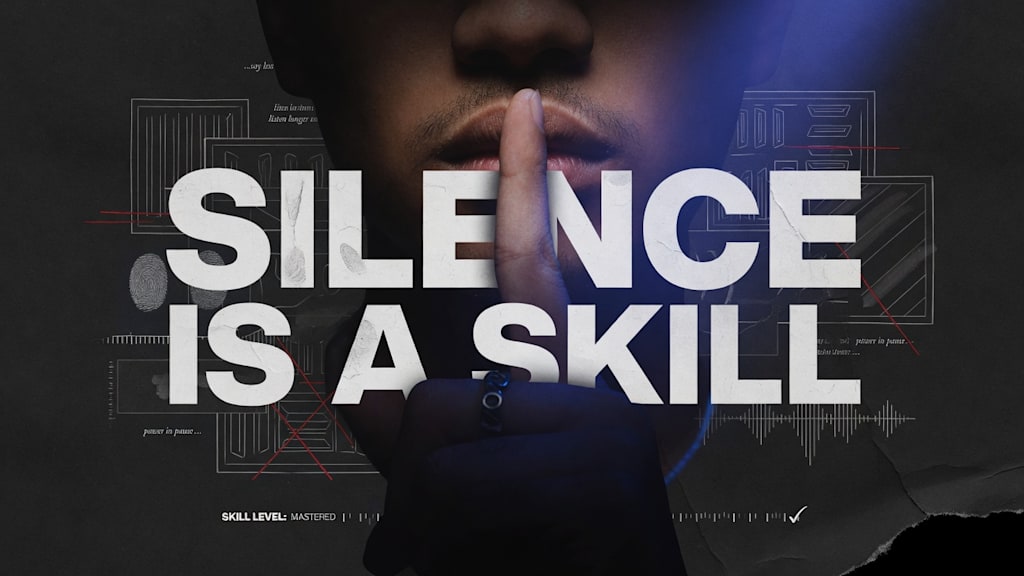
In a world that rewards noise, silence often feels like a disadvantage. We are taught to speak up, stand out, and constantly express ourselves. From meetings and social media to casual conversations, the pressure to fill every gap with words is overwhelming. Yet, the most powerful individuals—leaders, thinkers, and creators—often share a quiet trait: they know when not to speak.
Silence is not emptiness. It is control. It is awareness. And most importantly, it is a skill that can transform how you think, communicate, and succeed.
The Misunderstood Power of Silence
Silence is often mistaken for weakness, shyness, or lack of confidence. But in reality, it can signal the opposite.
When someone is comfortable with silence, it shows:
They are secure in themselves
They don’t need constant validation
They are thinking before reacting
Silence creates space. In that space, better ideas form, deeper understanding develops, and more meaningful interactions take place.
The loudest person in the room may get attention—but the quietest one often commands respect.
Why We Fear Silence
Most people avoid silence because it feels uncomfortable. That discomfort comes from several sources:
Fear of judgment: We worry that staying quiet makes us seem unprepared or uninterested
Desire for approval: Talking becomes a way to prove our worth
Habitual noise: We are used to constant stimulation—music, notifications, conversations
Silence forces us to confront our thoughts without distraction. And for many, that can feel overwhelming.
But what if that discomfort is actually where growth begins?
Silence Improves Thinking
When you speak less, you think more. It’s a simple trade-off, but one that most people ignore.
Constant talking:
Reduces time to process information
Encourages impulsive responses
Limits deep thinking
Silence, on the other hand:
Allows reflection
Encourages clarity
Improves decision-making
Great thinkers are not great because they talk more. They are great because they pause more.
Before responding, they consider:
What is actually being said
What is not being said
What response will create the best outcome
That level of awareness only comes with silence.
The Communication Advantage
Ironically, silence makes you a better communicator.
When you speak less:
Your words carry more weight
People listen more carefully
You avoid unnecessary conflict
Silence also improves listening—a skill far rarer than speaking.
Most people listen to respond. Skilled communicators listen to understand.
When you truly listen:
You pick up on tone and emotion
You understand intent, not just words
You respond more effectively
Sometimes, the most powerful response in a conversation is no response at all.
Silence Builds Emotional Control
One of the biggest benefits of silence is emotional regulation.
In moments of anger, frustration, or stress, our instinct is to react immediately. That reaction often leads to:
Regret
Miscommunication
Damaged relationships
Silence interrupts that pattern.
A pause gives you:
Time to process emotions
Distance from impulsive reactions
Control over your response
It turns reaction into intention.
The ability to stay silent when emotions are high is not suppression—it is mastery.
Silence as Confidence
Confident people do not feel the need to prove themselves constantly.
They:
Don’t interrupt
Don’t overshare
Don’t dominate conversations
Instead, they:
Speak when it adds value
Stay quiet when it doesn’t
Let their actions speak louder than words
Silence signals self-assurance. It shows that you are not desperate for attention or approval.
And in a world full of noise, that stands out.
The Strategic Use of Silence
Silence is not just a personal skill—it is a strategic tool.
In conversations and negotiations, silence can:
Encourage others to reveal more information
Create pressure without confrontation
Shift control of the interaction
For example:
After asking a question, staying silent often leads the other person to elaborate
In negotiations, silence can make the other party reconsider their position
In arguments, silence can de-escalate tension
Used correctly, silence becomes influence without force.
Silence and Productivity
Noise is not just external—it is internal.
Constant talking, scrolling, and stimulation clutter the mind, making it harder to focus.
Silence helps:
Improve concentration
Reduce mental fatigue
Increase creativity
When you remove distractions, your brain has the space to:
Connect ideas
Solve problems
Think deeply
Many of the best ideas don’t come in busy environments. They come in quiet moments—when nothing is demanding your attention.
The Role of Silence in Creativity
Creativity thrives in stillness.
When your mind is constantly occupied, there is no room for imagination. Silence creates that room.
In silence:
Thoughts wander
New connections form
Original ideas emerge
This is why many creatives value solitude. It’s not isolation—it’s creation.
Silence is where:
Writers find their voice
Designers discover new concepts
Innovators imagine the future
Without silence, creativity becomes repetition.
Learning to Be Comfortable with Silence
Developing this skill requires practice. It won’t feel natural at first—and that’s the point.
Here are simple ways to build comfort with silence:
1. Pause Before Speaking
Before responding, take a brief pause. Even a few seconds can:
Improve your response
Prevent unnecessary words
Show thoughtfulness
2. Listen Fully
Focus entirely on what the other person is saying:
Don’t plan your reply while they speak
Observe tone and body language
Let them finish completely
3. Limit Fillers
Avoid filling gaps with:
Small talk that adds no value
Repetitive explanations
Unnecessary opinions
4. Embrace Quiet Moments
Instead of reaching for your phone or turning on noise:
Sit with your thoughts
Reflect on your day
Let your mind slow down
5. Choose Words Carefully
When you do speak:
Be clear
Be concise
Be intentional
The goal is not to speak less randomly—but to speak better.
When Silence Speaks Louder Than Words
There are moments when silence communicates more than any sentence ever could:
Respect: Listening without interruption
Disagreement: Choosing not to engage in pointless conflict
Strength: Staying calm under pressure
Wisdom: Knowing that not everything needs a response
Silence can express:
Confidence without arrogance
Understanding without explanation
Authority without aggression
It is communication in its purest form.
The Balance Between Silence and Expression
Silence is powerful—but it is not about disappearing or suppressing your voice.
There is a balance:
Speak when it matters
Stay silent when it doesn’t
The skill lies in knowing the difference.
Too much silence can lead to:
Missed opportunities
Unspoken ideas
Lack of visibility
Too much talking can lead to:
Noise without value
Misunderstandings
Loss of credibility
Mastery is not in choosing one over the other—but in using both effectively.
A Quiet Advantage in a Noisy World
We live in an era where:
Everyone is sharing
Everyone is reacting
Everyone is trying to be heard
In such an environment, silence becomes rare—and therefore valuable.
When you choose silence:
You stand out without trying
You think more clearly
You communicate more effectively
It is not about withdrawing from the world. It is about engaging with it more intentionally.
Conclusion: Say Less, Achieve More
Silence is not the absence of communication—it is the refinement of it.
It allows you to:
Think deeply
Speak intentionally
Act wisely
In many ways, success is not about doing more or saying more. It is about doing and saying what truly matters.
And that requires restraint.
The next time you feel the urge to fill a gap with words, pause. Let the silence exist. Let it work for you.
Because sometimes, the most powerful thing you can say… is nothing at all.
About the Creator
Enjoyed the story? Support the Creator.
Subscribe for free to receive all their stories in your feed.
Comments
There are no comments for this story
Be the first to respond and start the conversation.