
Personal Growth & Mindset
Why consistency beats motivation every time
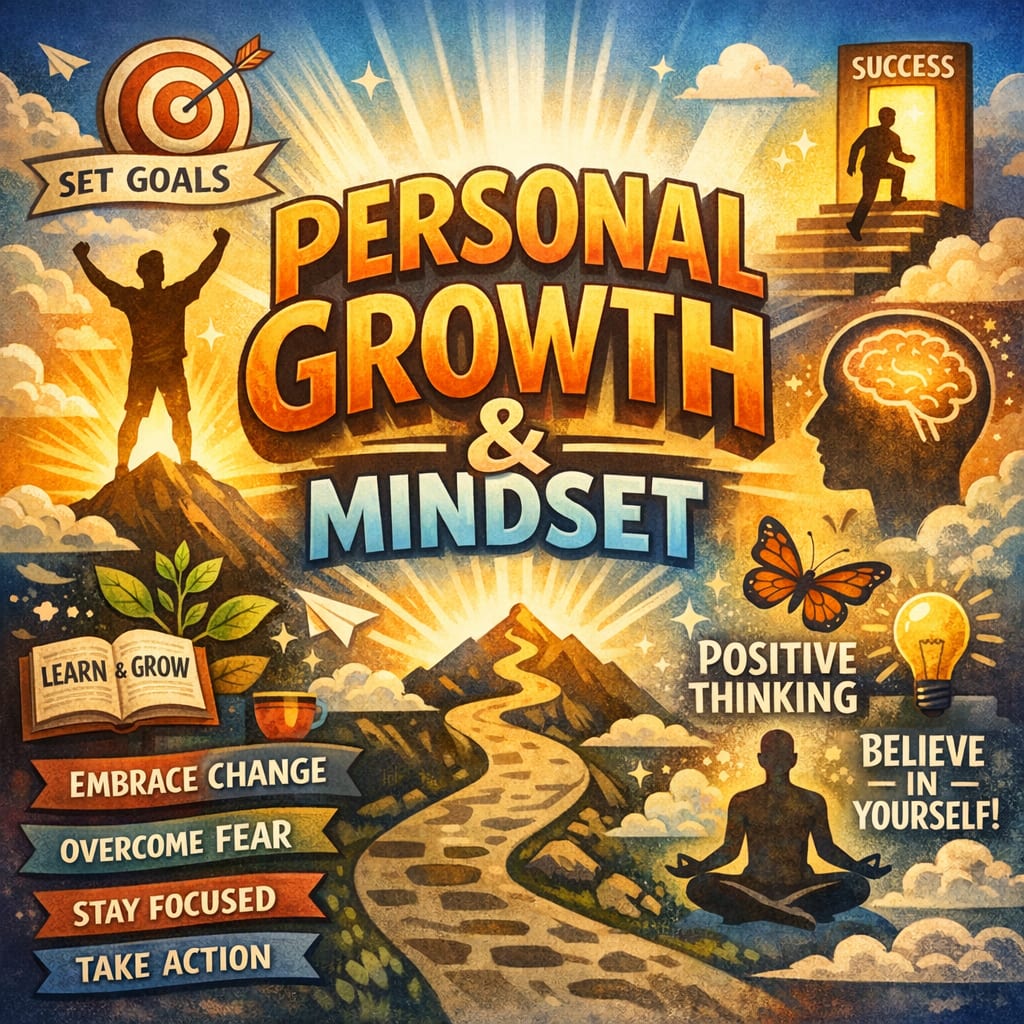
Introduction
Personal growth is not a one-time decision—it’s a continuous process of becoming better than you were yesterday. It’s about improving your thinking, refining your habits, and strengthening your mindset so you can handle life’s challenges with confidence and clarity. While many people focus on external success—money, status, or recognition—true growth begins internally.
Your mindset shapes how you see the world, how you respond to obstacles, and ultimately, the direction your life takes. A strong mindset doesn’t mean you never fail; it means you know how to rise every time you fall.
Understanding Personal Growth
Personal growth is the conscious effort to develop your abilities, character, and awareness. It involves:
Learning new skills
Improving emotional intelligence
Building discipline
Developing self-awareness
Growth doesn’t happen by accident. It requires intention, reflection, and action.
There are two key aspects:
1. Internal Growth
Mindset
Beliefs
Attitude toward challenges
2. External Growth
Skills
Career progress
Social relationships
Most people focus only on external growth, but without internal strength, success often feels empty or unstable.
The Power of Mindset
Your mindset is the lens through which you experience life. It determines whether you see obstacles as threats or opportunities.
There are two primary types:
Fixed Mindset
Believes abilities are static
Avoids challenges
Fears failure
Gives up easily
Growth Mindset
Believes abilities can be developed
Embraces challenges
Learns from criticism
Persists despite setbacks
A growth mindset is the foundation of personal development. It allows you to see failure not as an end, but as feedback.
Self-Awareness: The Starting Point
You can’t grow if you don’t know yourself.
Self-awareness means understanding:
Your strengths
Your weaknesses
Your triggers
Your habits
Ask yourself:
What holds me back?
What patterns do I repeat?
What do I truly want?
Honest answers create clarity, and clarity leads to better decisions.
The Role of Discipline
Motivation comes and goes, but discipline stays.
Discipline is:
Doing what needs to be done, even when you don’t feel like it
Sticking to your goals when distractions appear
Building routines that support your growth
Small daily actions create long-term results.
Examples:
Reading 10 pages a day
Exercising regularly
Limiting distractions
Consistency beats intensity every time.
Habits Shape Your Future
Your life is a reflection of your habits.
Good habits:
Improve productivity
Strengthen mental health
Build confidence
Bad habits:
Drain energy
Create stress
Delay progress
To build better habits:
Start small
Stay consistent
Track progress
Replace bad habits instead of just removing them
For example, replace scrolling with reading or learning a skill.
Overcoming Fear and Failure
Fear is one of the biggest barriers to growth.
Common fears:
Fear of failure
Fear of judgment
Fear of the unknown
But fear is not the enemy—inaction is.
Failure is not a sign of weakness. It’s a learning tool.
Every successful person has failed multiple times. The difference is they kept going.
Shift your thinking:
Instead of “What if I fail?” → “What can I learn?”
Growth begins where comfort ends.
The Importance of Resilience
Life will test you. Challenges are unavoidable.
Resilience is the ability to:
Stay strong during difficult times
Adapt to change
Recover quickly from setbacks
You build resilience by:
Facing problems instead of avoiding them
Learning from past experiences
Maintaining a positive outlook
Resilient people don’t have easier lives—they have stronger mindsets.
Positive Thinking and Mental Strength
Positive thinking doesn’t mean ignoring reality. It means choosing to focus on solutions instead of problems.
Benefits:
Reduces stress
Improves decision-making
Increases confidence
Train your mind:
Replace negative thoughts with constructive ones
Practice gratitude daily
Surround yourself with positive influences
Your thoughts shape your reality more than your circumstances.
The Influence of Environment
Your environment plays a huge role in your growth.
This includes:
People you spend time with
Content you consume
Physical surroundings
If you’re surrounded by negativity, growth becomes difficult.
Improve your environment:
Connect with ambitious, positive people
Limit toxic influences
Create a workspace that inspires focus
You don’t rise to your goals—you fall to your environment.
Setting Goals That Matter
Goals give direction to your growth.
Without goals:
You feel lost
You lack motivation
Progress becomes unclear
Effective goals are:
Specific
Measurable
Realistic
Time-bound
Instead of:
“I want to improve myself”
Say:
“I will read one book per month and exercise three times a week”
Clear goals lead to clear actions.
Taking Responsibility
Personal growth begins when you take full responsibility for your life.
Stop blaming:
Circumstances
Other people
Bad luck
Instead, focus on:
What you can control
How you respond
What actions you take
Responsibility gives you power. Without it, you remain stuck.
Continuous Learning
Growth never stops.
Ways to keep learning:
Read books
Watch educational content
Learn new skills
Seek feedback
The more you learn, the more you grow.
Curiosity keeps your mind active and open to new possibilities.
Balancing Growth and Patience
Growth takes time.
Many people quit because they don’t see immediate results.
Remember:
Progress is slow but steady
Small improvements add up
Consistency creates breakthroughs
Be patient with yourself.
You’re not behind—you’re evolving.
Conclusion
Personal growth and mindset are the foundation of a meaningful and successful life. It’s not about being perfect; it’s about improving continuously.
When you:
Develop self-awareness
Build discipline
Embrace challenges
Learn from failure
You become stronger, wiser, and more capable.
The journey of personal growth is lifelong. There will be ups and downs, but every step forward matters.
In the end, the goal is simple:
Become the best version of yourself—not for others, but for you.
About the Creator
Enjoyed the story? Support the Creator.
Subscribe for free to receive all their stories in your feed.
Comments
There are no comments for this story
Be the first to respond and start the conversation.