
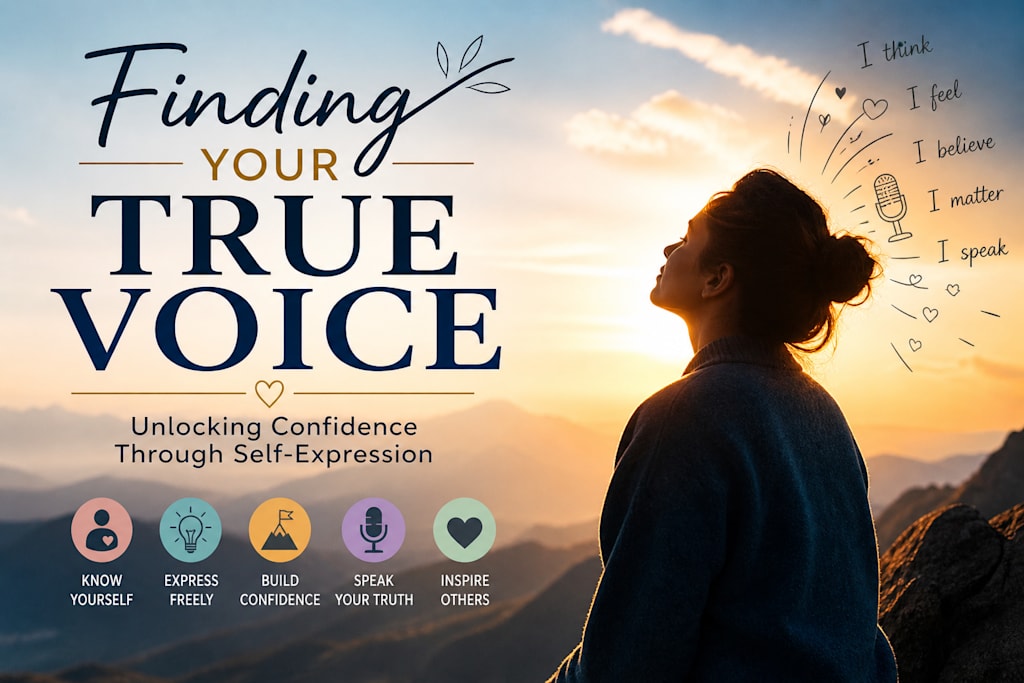
Finding Your True Voice
Unlocking Confidence Through Self-Expression
Introduction
In a world filled with noise, opinions, and expectations, finding your true voice can feel overwhelming. Many people spend years—sometimes a lifetime—trying to fit into molds created by society, family, or culture. Along the way, their authentic voice becomes quieter, often replaced by self-doubt or fear.
But your voice—your thoughts, beliefs, and way of expressing yourself—is one of the most powerful tools you possess. It shapes your identity, influences your relationships, and determines how you show up in the world. Finding your true voice is not about becoming someone new; it’s about uncovering who you’ve always been.
What Does “Your True Voice” Mean?
Your true voice is the honest expression of your thoughts, emotions, values, and beliefs. It’s how you communicate your inner world to the outside world—without filters, fear, or the need for approval.
It shows up in:
The way you speak and write
The choices you make
The boundaries you set
The ideas you stand for
It’s not about being loud or outspoken. Some of the strongest voices are calm, thoughtful, and quiet—but deeply authentic.
Why Do We Lose Our Voice?
Many people aren’t born disconnected from their voice—they lose touch with it over time. This usually happens due to external pressures and internal fears.
1. Fear of Judgment
From a young age, we are taught to seek approval. We hesitate to speak honestly because we fear criticism, rejection, or misunderstanding.
2. Social Conditioning
Society often rewards conformity. People may silence their true thoughts to “fit in” or meet expectations.
3. Past Experiences
Being ignored, criticized, or dismissed can create lasting hesitation. Over time, this can lead to self-censorship.
4. Lack of Confidence
When you doubt your worth or abilities, you’re less likely to express yourself openly.
The Cost of Staying Silent
Suppressing your voice may feel safe in the short term, but it comes with long-term consequences:
Loss of identity: You may feel disconnected from who you really are
Frustration and resentment: Unspoken thoughts often build emotional tension
Missed opportunities: Your ideas and talents remain hidden
Weak boundaries: Others may define your life for you
Living without your true voice is like living someone else’s story.
Steps to Finding Your True Voice
Finding your voice is a process—not a single moment of realization. It requires patience, self-awareness, and courage.
1. Listen to Yourself First
Before expressing your voice, you need to hear it.
Spend time in silence or reflection
Journal your thoughts freely
Ask yourself: What do I truly think? What do I feel?
This step helps separate your own voice from the noise around you.
2. Identify Your Values
Your voice is rooted in what matters to you.
Ask yourself:
What do I stand for?
What feels right or wrong to me?
What kind of person do I want to be?
When your words align with your values, your voice becomes clearer and stronger.
3. Start Small
You don’t have to make bold declarations right away.
Share your opinion in a conversation
Say “no” when you mean it
Express a simple idea honestly
Small steps build confidence over time.
4. Accept Imperfection
Your voice doesn’t have to be perfect to be valid.
You might:
Stumble over words
Change your mind
Feel nervous
That’s part of the process. Authenticity matters more than perfection.
5. Let Go of Approval
Not everyone will agree with you—and that’s okay.
Trying to please everyone weakens your voice. Instead:
Focus on being honest, not liked
Accept that disagreement is natural
Respect others without silencing yourself
6. Practice Self-Expression Daily
Your voice becomes stronger with use.
Ways to practice:
Writing (journals, blogs, social posts)
Speaking in discussions
Creative outlets like art, music, or storytelling
The more you express yourself, the more natural it feels.
7. Surround Yourself with Supportive People
Your environment matters.
Spend time with people who listen and respect your opinions
Avoid spaces where your voice is constantly dismissed
Seek communities that encourage growth and authenticity
Supportive people help you feel safe to be yourself.
Overcoming Fear
Fear is one of the biggest barriers to finding your voice. But fear doesn’t disappear—you learn to move forward despite it.
Reframe Fear
Instead of seeing fear as a stop sign, see it as a signal of growth.
Prepare, But Don’t Overthink
Think about what you want to say, but don’t wait for the “perfect” moment—it rarely comes.
Focus on Impact
Your voice could:
Inspire someone
Solve a problem
Bring clarity
That impact matters more than your fear.
The Role of Confidence
Confidence doesn’t come before using your voice—it comes because you use it.
Every time you:
Speak honestly
Share your ideas
Stand by your beliefs
…you build confidence.
Confidence is not about never feeling nervous. It’s about trusting yourself enough to speak anyway.
Finding Your Voice in Different Areas of Life
1. Personal Life
Express your feelings clearly in relationships. Honest communication builds stronger connections.
2. Professional Life
Share ideas, ask questions, and contribute. Your voice can create opportunities and growth.
3. Creative Expression
Art, writing, and storytelling are powerful ways to explore and express your true voice.
The Power of Authenticity
When you find your true voice, something powerful happens—you become authentic.
Authenticity:
Builds trust with others
Creates deeper connections
Gives you a sense of peace and clarity
People are drawn to authenticity because it feels real.
Challenges Along the Way
Finding your voice isn’t always easy. You may face:
Self-doubt
Criticism
Setbacks
But these challenges are part of growth. Each obstacle teaches you to stand stronger in your truth.
Your Voice Is Unique
No one else has your exact experiences, thoughts, or perspective. That makes your voice valuable.
Even if:
Someone else says something similar
You feel like your ideas aren’t new
Your perspective still matters—because it’s yours.
A Continuous Journey
Finding your voice is not a one-time achievement. It evolves as you grow.
Your beliefs may change
Your confidence may increase
Your expression may deepen
And that’s a good thing. Your voice grows with you.
Conclusion
Finding your true voice is one of the most important journeys you can take. It’s not about being the loudest person in the room—it’s about being the most authentic version of yourself.
When you speak with honesty and confidence:
You reclaim your identity
You strengthen your relationships
You create a life that reflects who you truly are
Your voice deserves to be heard—not because it’s perfect, but because it’s real.
So start where you are. Speak a little more honestly today than you did yesterday. Over time, those small moments of courage will build into something powerful: a voice that is unmistakably, unapologetically yours.
About the Creator
Enjoyed the story? Support the Creator.
Subscribe for free to receive all their stories in your feed.
Comments
There are no comments for this story
Be the first to respond and start the conversation.