
Digital Approval Addiction
How social media validation is reshaping self-worth
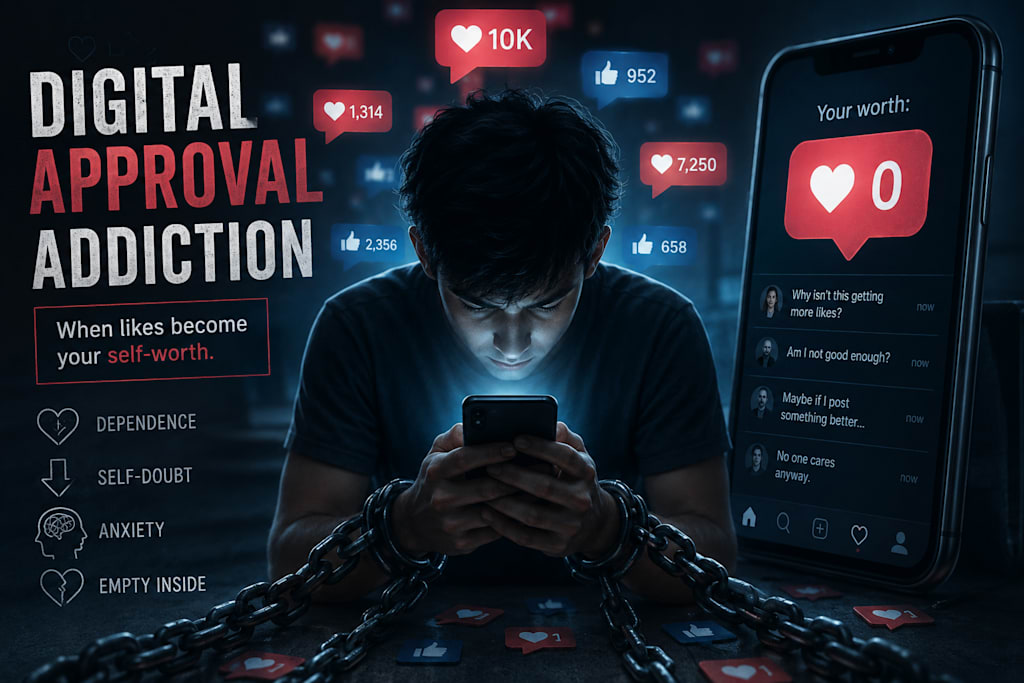
In a world where nearly every moment can be shared, liked, and judged, approval has taken on a new form—digital, immediate, and addictive. What once came from close relationships or personal achievements is now often measured in likes, comments, shares, and views. Social media platforms have transformed validation into a visible, quantifiable currency. While this system can feel rewarding, it has quietly reshaped how people see themselves, often tying self-worth to online reactions.
Digital approval addiction isn’t just about enjoying a compliment or feeling good when a post performs well. It’s about the growing dependence on external validation to feel valued, seen, and accepted. Over time, this dependency can influence behavior, emotions, and identity in ways that many people don’t fully recognize.
The Mechanics of Validation
At its core, digital approval works on a simple psychological loop: action, reward, repetition. You post something—a photo, a thought, a video—and wait. When notifications start appearing, they bring small bursts of satisfaction. Each like or comment acts as a reward, reinforcing the behavior that led to it.
This system is powerful because it taps into the brain’s reward center. The anticipation of feedback becomes just as compelling as the feedback itself. Over time, people begin to check their phones more frequently, not out of necessity, but out of habit. The possibility of approval keeps them coming back.
What makes this especially addictive is unpredictability. Not every post performs the same way. Some receive a flood of attention, while others go unnoticed. This inconsistency strengthens the cycle, making users chase the next “successful” post, hoping to recreate the high.
When Self-Worth Becomes Measurable
One of the most subtle yet impactful consequences of digital approval addiction is the shift in how self-worth is defined. Instead of being rooted in internal values—such as personal growth, kindness, or resilience—it becomes tied to external metrics.
A photo with hundreds of likes can feel like confirmation of attractiveness or popularity. A post with little engagement can feel like rejection, even if it has no real-world significance. Over time, these signals start to influence how individuals perceive themselves.
This creates a fragile sense of self-worth. If confidence depends on online feedback, it becomes unstable. A single post performing poorly can affect mood, while a highly successful post can temporarily boost confidence. This emotional fluctuation can become exhausting, leaving people constantly seeking reassurance.
The Curated Self
Social media encourages people to present the best version of their lives. This often leads to careful curation—selecting the most flattering photos, editing captions, and sharing only positive or impressive moments. While there’s nothing inherently wrong with wanting to present oneself well, problems arise when this curated version begins to replace authenticity.
People may start to post what they think will gain approval rather than what genuinely reflects their thoughts or experiences. Interests, opinions, and even personality traits can shift to align with what is popular or widely accepted.
This creates a gap between the online self and the real self. Maintaining this gap requires effort and can lead to feelings of inauthenticity. The more someone relies on digital approval, the harder it becomes to step outside of that constructed identity.
The Comparison Trap
Digital approval addiction is closely linked to comparison. Social media platforms expose users to a constant stream of curated lives—people traveling, achieving, celebrating, and appearing happy. When combined with visible metrics of approval, this creates a powerful environment for comparison.
It’s easy to look at someone else’s post with thousands of likes and feel inadequate. Even when users intellectually understand that social media shows only highlights, the emotional impact remains. The comparison isn’t just about lifestyle or achievements—it’s about perceived worth.
This can lead to a cycle where people try to compete for attention, adjusting their content to match trends or outperform others. Instead of self-expression, posting becomes a strategy for validation.
Emotional Consequences
The emotional impact of digital approval addiction can be significant. While occasional validation can boost mood, dependence on it often leads to anxiety, self-doubt, and dissatisfaction.
Waiting for feedback can create tension. A lack of engagement can lead to overthinking—questioning appearance, content, or even personal value. On the other hand, positive feedback can create pressure to maintain or exceed that level of response in future posts.
This cycle can also affect offline life. Moments may feel incomplete if they aren’t shared or validated online. Experiences become less about personal enjoyment and more about how they will be perceived by others.
Over time, this can reduce genuine satisfaction. Even meaningful achievements may feel less rewarding if they don’t receive enough attention online.
The Role of Algorithms
Social media platforms are designed to maximize engagement. Algorithms prioritize content that generates interaction, encouraging users to spend more time on the platform. This design reinforces the importance of approval metrics.
Content that performs well is more likely to be shown to a wider audience, creating a feedback loop. Users who receive high engagement are encouraged to continue similar behavior, while those who don’t may feel discouraged or invisible.
This system doesn’t just reflect user preferences—it shapes them. It influences what people post, how often they post, and how they measure success. Over time, it can create a narrow definition of what is considered valuable or worthy of attention.
Breaking the Cycle
Overcoming digital approval addiction doesn’t require abandoning social media entirely. Instead, it involves changing the relationship with it.
The first step is awareness. Recognizing the patterns—checking notifications frequently, feeling anxious about engagement, or tying mood to online feedback—can help create distance from them.
Setting boundaries is another important step. This might include limiting time on social media, turning off non-essential notifications, or designating specific times to check apps. These small changes can reduce the constant pull of validation.
Shifting focus from external to internal validation is crucial. This means finding value in personal experiences, achievements, and relationships that don’t rely on public acknowledgment. It involves asking questions like: “Would this still matter if no one else saw it?” or “Am I doing this for myself or for approval?”
Practicing authenticity can also help. Sharing content that genuinely reflects one’s thoughts or experiences—even if it doesn’t align with trends—can reduce the pressure to perform. It may not always generate high engagement, but it fosters a more honest connection with oneself.
Rebuilding Self-Worth
True self-worth is stable. It doesn’t fluctuate based on likes or comments. Rebuilding it requires a shift in perspective—valuing qualities that aren’t easily measured or displayed online.
This might include focusing on personal growth, developing skills, nurturing relationships, or contributing to something meaningful. These sources of value are less visible but far more sustainable.
It’s also important to recognize that digital approval is not a reliable measure of worth. It reflects algorithms, timing, audience preferences, and countless other factors that have little to do with an individual’s value as a person.
Detaching self-worth from these metrics can be challenging, especially in a culture that emphasizes visibility. However, it is essential for long-term emotional well-being.
A More Balanced Relationship
Social media isn’t inherently harmful. It can connect people, provide inspiration, and offer opportunities for expression. The issue arises when it becomes the primary source of validation.
A balanced relationship involves using social media intentionally rather than reactively. It means engaging with content without constantly seeking approval, and sharing without needing a specific response.
This shift allows people to enjoy the benefits of social media without becoming dependent on it. It creates space for genuine experiences—both online and offline—without the pressure of constant evaluation.
Conclusion
Digital approval addiction is a modern challenge, shaped by technology and human psychology. It turns validation into a visible, measurable system that can easily become addictive. While it offers moments of satisfaction, it often comes at the cost of authenticity, emotional stability, and true self-worth.
Breaking free from this cycle isn’t about rejecting social media—it’s about redefining its role. By shifting focus from external approval to internal value, individuals can build a more stable sense of self. They can engage with digital platforms without being controlled by them.
In the end, self-worth cannot be measured in numbers on a screen. It is built quietly, through experiences, choices, and personal growth—far beyond the reach of likes and comments.
About the Creator
Enjoyed the story? Support the Creator.
Subscribe for free to receive all their stories in your feed.
Comments
There are no comments for this story
Be the first to respond and start the conversation.