Resolution
Bangladesh July Charter Referendum 2026 Full Breakdown of 84 Reform Proposals Constitutional Changes & What a ‘Yes’ Vote Means
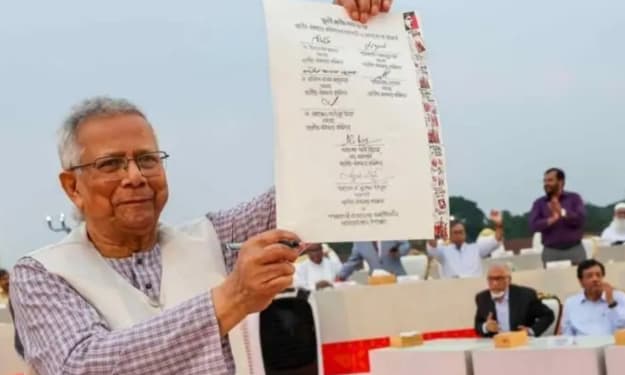
The referendum on the implementation of the July Charter was held on February 12, the day of the elections to the 13th National Parliament. The referendum on which voters will vote today on separate ballots will have only four very specific issues written on it. Voters will vote ‘yes’ or ‘no’ on the question of whether voters support the implementation of the Charter. For the past several days, the government has been campaigning for the referendum across the country on behalf of the interim government. Initially, the government campaigned on the referendum only from a neutral position. However, later, it deviated from this position and began directly campaigning for a ‘yes’ vote in the referendum. A few days ago, Chief Advisor Professor Muhammad Yunus also gave a video message to be broadcast on radio and television. Encouraging people to vote 'yes', Professor Yunus said, "Voting 'yes' will free the country from discrimination, exploitation and oppression and open the door to building a new Bangladesh." The Reform Commission's report, after a series of meetings with political parties, includes a total of 84 reform proposals for the referendum. The government has also announced that 47 of these proposals will be implemented through constitutional means and 37 through ordinary laws or executive orders. Although there are 84 reform proposals in the referendum, some of them have dissenting notes from other political parties, including the BNP, while others are from the party. Initially, the proposal was that if the political party that has a dissenting note comes to power, it will not be bound to implement these proposals. However, ultimately unable to resolve the issue, the government decided to hold a referendum. If the referendum results in a yes vote, the next parliament will The referendum will be binding on the parties that voted in the referendum, including the caretaker government system, reforms to the electoral commission and the upper house. The remaining articles are said to be implemented in accordance with the political promises of the winning party. And if they do not win, there will be no obligation to implement the July Charter. If the referendum results in a yes vote, members of the next parliament will serve as members of the Constitutional Reform Council. They will take steps to implement the constitutional reforms in accordance with the July Charter within 180 days, or six months. The four issues that the government has included on the referendum ballot make it difficult for many voters to understand what changes they will get if they vote ‘yes’ in the referendum in their constituency, and what changes they will not get if they do not. Language, ethnicity and fundamental reforms The current constitution of Bangladesh does not recognise any language other than Bengali. However, the July Charter states that Bengali will be the state language of the Republic. All other mother tongues will also be recognised. Although the citizens of Bangladesh are still known as the Bengali nation, after the reforms they will be identified as Bangladeshis. According to the current constitution, a two-thirds majority in Parliament is required to amend the constitution and a referendum is not required. However, the July Charter states that a two-thirds majority in the Lower House of Parliament and a majority in the Upper House are required to amend the constitution. On the other hand, a referendum will be required to amend the preamble of the constitution, namely Articles 8, 48, 56 and 142, and to change the system of caretaker government. According to the current constitution, Sections 7(a) and (b), there was a provision for maximum punishment in case of repeal of the constitution, but this was abolished in the July Charter. Bengali nationalism, democracy, socialism and secularism are the basic principles of the current constitution. However, if the July Charter is implemented in the referendum, the basic principles of the constitution will be - equality, human dignity, social justice, religious freedom and harmony The current constitution of Bangladesh mentions secularism and religious freedom. The July Charter will include that article - ensuring the coexistence and due dignity of all communities. The constitution currently has 22 fundamental rights. However, the July Charter added the issue of uninterrupted internet and protection of personal information. President and Prime Minister. Powers and Balance According to the current constitution of Bangladesh, a state of emergency is declared with the signature of the Prime Minister. As a result, fundamental rights are suspended. The new proposal brought in the charter states that the approval of the cabinet is necessary to declare a state of emergency. The opposition leader/deputy leader must also be present at this meeting. On the other hand, according to Article 35 of the constitution, fundamental rights cannot be taken away during a state of emergency. The President of Bangladesh is elected by the members of parliament. This vote should be public. If the July charter is implemented, the president will be elected by the members of the upper and lower houses of parliament through a secret ballot. According to the current constitution, the president can appoint the prime minister and the chief justice under his powers. After the implementation of the July charter, the president can appoint the chairmen and members of the National Human Rights Commission, Information Commission, Press Council, Law Commission and Energy Regulatory Commission without consulting the prime minister. Although the BNP had a different opinion on this proposal. Impeachment of the president requires a two-thirds majority of the members of parliament. The July Charter included the issue of both houses of parliament. That is, the president can be impeached with two-thirds votes of the lower house and the upper house. Earlier, the president could pardon any criminal with the approval of the government. The July Charter states that the president can pardon a criminal only if the affected person or his family agrees. The ousted Sheikh Hasina was sworn in as prime minister four times after being elected in 2008. The current constitution does not have a term limit for the post of prime minister. However, the July Charter states that a person cannot remain prime minister for more than 10 years in a lifetime, i.e. more than two terms. On the other hand, under the current constitution, the prime minister can hold multiple positions. However, if the July Charter is implemented, the prime minister will not be able to hold multiple positions. Although five parties, including the BNP, expressed disagreement on the issue Parliament Elections and Governance The current constitution of Bangladesh does not provide for a caretaker government during elections. The July Charter includes the caretaker government system, and the caretaker government will be formed based on the opinions of the ruling party, the opposition party and the second opposition party in the appointment process, which will also include the caretaker government's chief advisor. Although Bangladesh's parliament has been unicameral since independence the July Charter proposes to make it bicameral. In this case, the number of members of the upper house will be 100. In this case, the July Charter also states that the seats in the upper house will be distributed in proportion to the votes received by political parties in parliamentary elections. The country's national parliament currently has 50 reserved seats for women. The current constitution does not provide for an increase in this. The July Charter proposes to gradually increase this to 100. The speaker and deputy speaker of parliament are elected from the ruling party. If the charter is implemented in the referendum, the deputy speaker will be elected from the opposition party. According to the current constitution, if MPs vote against their party line, they become ineligible to vote in parliament. However, the July charter states that MPs will be able to vote independently on issues other than the budget and confidence bills. Till now, the government did not need parliamentary approval to enter into any agreement with a foreign country. However, the July charter states that any agreement related to national security must be approved by both houses of parliament. Although the Election Commission has so far had the sole authority to determine the boundaries of parliamentary constituencies, if the July charter is approved in the referendum, the Election Commission will lose its sole authority. After that, an expert committee will also carry out this responsibility along with the EC. Although there were search committees to form various election commissions earlier, their control was completely in the hands of the prime minister. The July Charter states that the Election Commission will constitute a committee headed by the Deputy Speaker, the Prime Minister, the Leader of the Opposition and the Speaker, with the Appellate Division judge as its chairman. What changes have been made to the law and the judicial system? If the July Charter is implemented, Article 95 of the Constitution will be amended. This article of the Constitution states that the President can appoint anyone as the Chief Justice. However, this section of the July Charter states that the Chief Justice of Bangladesh should be appointed from the Appellate Division. The current Constitution states that the government is to determine the number of judges in the Appellate Division. However, the July Charter states that the number of judges will be determined based on the needs of the Chief Justice. While the appointment of High Court judges was previously under the control of the Prime Minister, the July Charter has given this responsibility to a commission headed by the Chief Justice. In addition, the July Charter includes provisions such as constitutionally guaranteeing complete independence of the judiciary, establishing one or more high court benches in each division, strengthening the Supreme Judicial Council, and entrusting the Supreme Court with control over the employment of judges of lower courts. Although this was previously present in the constitution, no ombudsman has been appointed so far. The July Charter states that the ombudsman will be appointed by a seven-member committee comprising the Deputy Speaker, the Prime Minister, the Leader of the Opposition, a representative of the second largest opposition party, a representative of the President, and a judge of the Appellate Division headed by the Speaker. Similarly, the July Charter calls for the formation of separate committees comprising opposition parties for the appointment of the Public Service Commission, the appointment of the Auditor General and Comptroller, and the appointment of the ACC chairman and commissioner. However, seven parties, including the BNP, have objected to these. Although the current law does not have a mechanism to prevent the abuse of constitutional power, it has been included in the July Charter The law amendment will make 37 reforms In addition to the 47 constitutional reforms, the July Charter proposes 37 other reforms that can be amended through laws, rules and executive orders. The July Charter promises to define the special rights, limitations of rights, and responsibilities of committees and members of parliament through legislation. The delimitation law before the 13th parliamentary elections, a mandatory code of conduct for judges, a mandatory code of conduct for former judges, the establishment of a separate secretariat for the Supreme Court, the creation of an independent criminal investigation service, increasing the workforce of the judiciary, transforming the National Legal Aid Agency, the digitalization of judges and the digitalization of staff. Issues related to court management, and the code of conduct for lawyers have been put forward for reform through ordinances, rules and executive orders. In addition, the July Charter calls for the formation of an independent and permanent Public Administration Reform Commission to implement public administration reform programs, and the formation of the Public Service Commission (General), Public Service Commission (Education), and Public Service Commission (Health) to recruit manpower for the work of the republic. On the other hand, the July Charter also mentions the creation of two administrative divisions, Comilla and Faridpur, keeping in mind the geographical location and transportation issues.
By Real content8 months ago in Chapters
Bangladesh Student Revolution 2024: Rahat Hossain Story and the Future of Bangladesh Politics
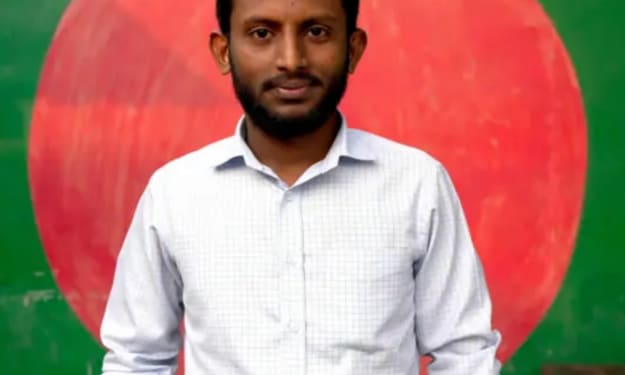
Rahat Hossain was close to being killed himself while trying to save his friend, as the rebellion of many young people like him turned into one of the bloodiest episodes in Bangladesh’s history. In a video that went viral during the recent revolution in the country, he is seen trying to carry Imam Hasan Taim Bhuiyan to safety after he had been shot by police. On 20 July 2024, during the crackdown on protests, 24-year-old Rahat Hossain and 19-year-old Imam Hasan Bhuiyan took refuge at a tea stall in Dhaka. Police dragged them out, beat them and ordered them to run. Bhuiyan was shot. Seeing him fall to the ground, Rahat Hossain began dragging him away, but the police continued firing. Rahat realized that a bullet had struck his own leg. “I had to leave him behind,” Rahat says. Later, Imam Hasan Bhuiyan was declared dead at the hospital. Such violence transformed the student-led demonstrations into large-scale nationwide protests centered on the capital, Dhaka. Within two weeks, the government was removed from power and Prime Minister Sheikh Hasina fled the country. According to the United Nations, nearly 1,400 people were killed during the protests, most of them in the security crackdown ordered by Sheikh Hasina. Hasina’s fall appeared to promise a new era. The uprising was regarded around the world as the first and most successful Gen-Z protest movement. Some Bangladeshi student leaders assumed important positions in the interim government and tried to shape the country for which they had taken to the streets. After decades of rule by Sheikh Hasina’s Awami League and the rival Bangladesh Nationalist Party (BNP), they were expected to play a role in the country’s future administration. But as Thursday’s general elections approach, the newly formed student political party appears deeply divided. The Awami League is banned, and decades-old parties seem to be filling the vacuum. Rahat Hossain had taken part in the student-led protests of 2024. Those demonstrations brought together the younger generation—men and women, secular and religious people alike. Initially the protests were against new quotas in civil service jobs, but gradually they developed a “single common goal”: the end of authoritarian rule. “The interim government has failed to build the beautiful Bangladesh based on peace, equality and justice that was expected from it.” He is not alone in feeling that the student-led National Citizens Party (NCP) is inexperienced. Instead, many believe it is influenced by another older party, Jamaat-e-Islami. This Islamist party has historically played the role of a small ally in Bangladeshi politics, but its popularity has grown ahead of the 12 February elections, in which the Awami League is barred. Founded in 1941, the party has always been questioned over its stance during the 1971 war of independence from Pakistan, in which millions were killed and more than ten million displaced. Some of its politicians were accused of siding with West Pakistan at the time. But this history does not trouble Rahat Hossain. He believes the party has changed. He explains, “Jamaat supported the July uprising and the students in many ways.” Party leader Shafiqur Rahman said Jamaat promises to eradicate corruption and restore the independence of the judiciary. Although such claims are difficult in a country with historically high levels of corruption, they are resonating with many people. Professor Towfique Haque of North South University in Dhaka says most young voters born after 1971 can separate Jamaat from its past and do not see it as a “red line.” He says, “It is a generational issue,” arguing that the new generation does not want to be entangled in that debate. Haque adds that young voters see Jamaat as a party like themselves—one that suffered under Sheikh Hasina’s repression, was banned from politics, and whose leaders were jailed. Rahat Hossain is not alone in leaning toward Jamaat-e-Islami. Last September, candidates backed by Jamaat’s student wing won major victories in elections at Bangladesh’s top universities, seen as a sign of a national trend. Notably, for the first time since independence, an Islamist group gained control of the student union at Dhaka University. This was a major signal for student leaders, especially in a country where nearly four out of ten voters are under 37. A controversial compromise The lack of confidence in the NCP has been a major setback for student leaders. Twenty-seven-year-old Asif Mahmud, former adviser in the interim government and now chairman of the NCP election committee, admits, “We hoped to do far better.” But he argues the challenges were enormous. “For the last 50 years only two parties have ruled Bangladesh… we are trying to prove ourselves.” So the NCP made a decision. In December it announced a multi-party alliance with Jamaat-e-Islami. Like Jamaat, the NCP also promises to eliminate corruption. Its manifesto includes other pledges for young voters: justice for families of those killed in the uprising, lowering the voting age to 16, and creating jobs through tax and economic reforms. Asif Mahmud says, “We may disagree on some issues, but Jamaat has grassroots reach and the NCP needs that.” “We have always said we are not an Islamist party. This is not an ideological alliance.” However, Jamaat allowed the NCP to field only 30 candidates—just two of them women—while Jamaat itself has more than 200 candidates, all men. This compromise has been called an “ethical red line” by senior NCP women like Tasnim Zara, who along with others resigned from the party. Twenty-five-year-old student Shima Akhter, who played a key role in the protests, says, “They wanted to push us out.” Although women were central to the uprising, Shima says the interim government under Muhammad Yunus remains largely male-dominated. After the revolution, Shima and other female activists were targeted in social-media posts. “Some meme videos were very violent and depressing. We were defamed and mocked,” she recalls. Videos circulated calling them unintelligent, claiming their marriage prospects were ruined, and even mocking Shima’s complexion. Both parties deny ignoring women and claim the number of female candidates reflects Bangladesh’s “social structure.” Jamaat leader Shafiqur Rahman said he hopes the situation will change. Shima dismisses this as “just a patriarchal excuse.” She leans toward the BNP, which has fielded 10 women among more than 250 candidates. “At least it’s better than the worst,” she says. Will dynastic politics continue? The lack of support for the NCP and the ban on the Awami League are also benefiting the BNP, which now presents itself as a liberal democratic force. After seeing thousands of supporters and senior members jailed under Awami rule, the BNP is now the largest party contesting the elections, further pressuring the student party. Just as the Awami League was led by Sheikh Hasina, daughter of the country’s founding leader Sheikh Mujibur Rahman, the BNP is also tied to a political dynasty. Its new leader Tarique Rahman is the son of Khaleda Zia, Bangladesh’s first female prime minister. Khaleda herself came to power after her husband, a former president, was assassinated in a military coup. Former BNP commerce minister Amir Khasru Mahmud Chowdhury said, “Whether you belong to a family or not is irrelevant.” Ironically, this family legacy revived because of the student-led uprising, which allowed Rahman to return after 17 years of self-exile. After Hasina’s departure, both he and his mother were cleared of corruption charges they called politically motivated. He has criticized Jamaat for exploiting religious sentiment for votes and promises economic and democratic reforms and a “rainbow nation,” with a new national reconciliation commission to heal divisions. Sheikh Hasina ruled Bangladesh for 15 years, overseeing economic growth but continually silencing opposition through politically motivated arrests, disappearances and extrajudicial killings. Last year the Bangladesh war crimes tribunal sentenced her to death for the 2024 crackdown. A hidden district leader of the Awami League said, “Free and fair elections are impossible without including the Awami League. If Sheikh Hasina orders it, the party and its supporters will resist the elections.” He warned, “If she says people should not go to polling stations, we will not go. If she says disrupt the elections, we will do so.” He called allegations by independent human-rights groups of political arrests and extrajudicial killings “false and fabricated.” After the 12 February elections, students will know whether their revolution and bloodshed achieved anything. Rahat Hossain sits near the Jatrabari flyover in Dhaka—the place where he lost his friend. He is still waiting for the trial of the police officers accused in his friend’s death to be completed. Imam Hasan Bhuiyan’s father is himself a police officer. When he identified his son’s body, he called a senior officer and asked, “Sir, how many bullets does it take to kill a boy?” Rahat says he still feels fear from the day his friend was shot. He watched the video eight days later when the internet was restored. “My screams can be heard… I kept crying.” A year later, on 5 August, he marked the first anniversary of Hasina’s ouster with his “fellow rebels. But Rahat admits that his “new Bangladesh” has not yet been realized. He believes this will not be possible until an elected government carries out reforms. “You cannot expect mangoes from a tamarind tree,” he says.
By Real content8 months ago in Chapters
Corruption, Power, and Global Security Concerns
China’s Military Under Scrutiny: Corruption, Power, and Global Security Concerns China’s military, known as the People’s Liberation Army (PLA), is facing increased attention after reports of investigations into senior officials. According to international media, including reports discussed by security analysts, China has placed high-ranking military figures under investigation as part of its long-running anti-corruption campaign. While China describes these actions as internal discipline, the developments have raised questions about stability, command control, and global security.
By Wings of Time 8 months ago in Chapters