Politics
India vs Vietnam: Will 2026 Free Trade Agreements Transform India’s Export Economy?
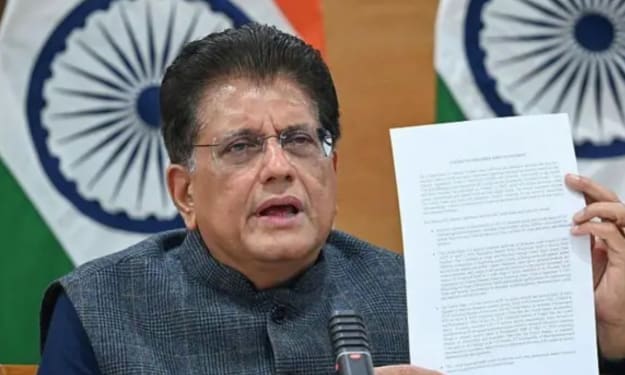
From a commercial perspective, the year 2026 is likely to be considered historic for India. March has not even begun yet, and New Delhi has already concluded what is being called the “mother of all trade deals” with the European Union. At the same time, it has signed an agreement with the United States that is now being described as the “father of all trade deals.” Although many experts argue that the United States will benefit more from this agreement, there are serious concerns about the imbalanced nature of this interim deal. Even so, this is India’s tenth free trade agreement (FTA) since 2014. In the past, India’s cautious approach meant that negotiations with several countries remained stalled for decades. Immediately after these new agreements, India also agreed to begin negotiations with the six-member Gulf Cooperation Council (GCC), which accounts for 15 percent of India’s total global trade. Experts say that while this progress is positive, it does not offer a magic solution for rapidly increasing exports, nor can it replace deep structural trade reforms. Sumedha Dasgupta of the Economist Intelligence Unit said that the success of any FTA depends on how effectively it is utilized. Historically, India has shown a utilization rate of only 25 percent, compared to 70 to 80 percent in developed economies. This is because many Indian exporters, particularly small companies, fail to take advantage of tariff reductions due to the burden of paperwork, audit risks, and a lack of understanding of FTA provisions. History shows that this situation has long persisted. According to consultancy firm EY, between 2017 and 2022, India’s exports to countries with which it signed FTAs increased by 31 percent, while imports from those countries rose by 82 percent. EY described this large gap between exports and imports as a “concerning failure” to benefit from preferential market access. However, the government reviewed the situation, and after 2023, agreements signed with countries such as Australia and the United Arab Emirates showed an increase in exports. EY attributed this to steps such as improving the trade framework and establishing mechanisms for quicker dispute resolution. Experts say much still needs to be done. Kiran Kotla, CEO of export documentation assistance company Dista, said: “A free trade agreement creates opportunities on paper, but difficulties arise when it comes to implementation.” According to Kotla, major issues include proving that goods were produced domestically, high documentation costs, non-tariff barriers such as testing and labeling requirements, and frequent changes in customs authorities’ interpretation of rules. He added: “Many exporters are technically eligible to pay lower duties but still pay full duties because the process of proving eligibility for reduced tariffs is slow, risky, or expensive. Rules of origin are particularly controversial. Under these rules, exporters must prove that goods were genuinely manufactured or produced in India and not merely assembled there. Previously, these verification certificates were issued by the Indian government. However, according to New Delhi’s think tank Global Trade and Research Initiative (GTRI), under the new agreement with the European Union, exporters will now have to self-certify. According to Ajay Srivastava of GTRI, this means exporters will now bear the legal and financial risks themselves in case of mistakes. Since incorrect claims can result in penalties, the India-European Union FTA will only deliver benefits if rules of origin are properly understood and implemented. Beyond these complex reforms, there are also fundamental concerns that must be addressed if India is to compete with Asian rivals such as Vietnam in US and European markets. Kotla said: “Competition is not won through agreements, but through execution. Vietnam’s advantage comes not from tariff concessions but from speed, predictability of systems, and supply chain integration.” This means goods must move quickly, clear customs efficiently, infrastructure must be reliable, and transaction costs must remain low. “Without these, tariff parity alone will not increase market share. Priyanka Kishore, founder of the Singapore-based think tank Asia Decoded, said that Vietnam, and even Bangladesh, built export-led manufacturing models focused on designing export-promotion policies and attracting large-scale foreign investment. In contrast, “India’s industrial strategy is fragmented. It lacks urgency and hesitates to expose domestic companies to foreign competition. That needs to change quickly.” The success of Vietnam’s strategy is evident. According to World Bank data, Vietnam’s exports in 2010 were roughly one-third the size of India’s exports, and have now reached nearly the same level as India’s—despite Vietnam’s GDP being only about one-tenth the size of India’s. Asia Decoded notes that over the past decade, nearly all major Asian exporters—including Malaysia, Bangladesh, and Indonesia—have outperformed India in export growth rates. Although India has worked hard to carve out a space in high-tech manufacturing—for example, producing iPhones for Apple—it still lags in more labor-intensive sectors such as textiles, footwear, furniture, and other low value-added products. Priyanka Kishore said: “Even if Nike were to face higher tariffs in Vietnam, it would not automatically see India as the best alternative. India’s high logistics costs, import duties, and complex customs regulations remain burdensome.” Experts say that now that free trade agreements have been concluded, New Delhi must focus on removing these barriers. These are the steps that will help India attract more investment, create jobs, and achieve its annual export target of one trillion dollars.
By Real content8 months ago in Chapters
Pakistan Dismisses Former Israeli PM Naftali Bennett’s Allegations Over Regional Alliance
Pakistan’s Foreign Office has described the statement made by the former Israeli prime minister regarding Pakistan as speculative. During the weekly press briefing on Thursday, when the spokesperson of the Foreign Office was asked about the remarks made by former Israeli Prime Minister Naftali Bennett concerning Pakistan, he said: “This is purely based on speculation. We will not comment on the statement of an official from a country that we do not recognize.” The spokesperson further added that the “nature of the former Israeli prime minister’s statement is, in any case, inherently speculative.” A few days ago, former Israeli Prime Minister Naftali Bennett said that a new axis is emerging in the region that includes Turkey, Qatar, the Muslim Brotherhood, and nuclear-armed Pakistan. While addressing the Conference of Presidents of Major American Jewish Organizations in Jerusalem, Bennett said that this alliance is fueling hostility against Israel and efforts are also being made to influence Saudi Arabia. What else did the former Israeli prime minister say? Naftali Bennett warned at the conference that Turkey is becoming a new threat to Israel and that the government is unaware of it. The former Israeli prime minister said, “Turkish President Recep Tayyip Erdoğan is a dangerous rival who is trying to encircle Israel. We must not close our eyes again.” Criticizing the Israeli government, Bennett said, “The current government is asleep once again. Fundamentalist threats on our borders are increasing. An axis of the Muslim Brotherhood, supported by Pakistani nuclear weapons and led by Turkey, is emerging.” Bennett further said, “We must work together in different ways against the Iranian threat and Turkish hostility. Turkey is the new Iran. Pakistan’s closeness with Saudi Arabia and Turkey
By Real content8 months ago in Chapters
US-Iran Nuclear Talks in Geneva: Progress, Red Lines, and Rising Military Tensions
On Tuesday (17 February), following the second round of negotiations between the United States and Iran in Geneva, both Washington and Tehran expressed concerns as well as some encouraging statements. After the meeting, U.S. Vice President J.D. Vance said that diplomatic talks between the United States and Iran had gone well “in some respects,” and that both sides had agreed to hold another meeting. Meanwhile, Iranian Foreign Minister Abbas Araghchi stated that “an understanding on fundamental principles” had been reached with the United States. Vance also said that Iran is still not prepared to accept certain “red lines” defined by President Trump. He indicated that the United States would continue on the diplomatic path, but that President Trump would ultimately decide “when to abandon diplomacy.” He added that Washington does not expect matters to reach that point, “but if they do, the decision will be President Trump’s.” On the other hand, Araghchi described the second round of talks as more positive than the first. He said that both sides would prepare two draft versions of a possible agreement document and exchange them. “However, this does not mean we will reach an agreement soon, but we have certainly started moving along the path toward one.” Araghchi further said that there are still some issues requiring additional work. Meanwhile, Iranian President Masoud Pezeshkian stated that his country is ready to allow “verification” that Iran is not seeking to develop nuclear weapons. In remarks published on the presidential website, Pezeshkian said: “We are absolutely not trying to acquire nuclear weapons, and if anyone wants to verify this, we are ready to take the necessary steps.” The Iranian president added that Tehran will never abandon its “peaceful” nuclear program. Threatening Statements by Trump and Khamenei
By Real content8 months ago in Chapters
UK Passport Changes 2026: New Entry Rules for Dual British Citizens Explained
Big Changes to UK Passport Rules Starting February 25, 2026: What Dual Citizens and Travelers Need to Know Starting February 25, 2026, the UK is rolling out new passport and border rules, and they’re going to hit a lot of people—especially Brits who also hold another passport. This is all part of the UK government’s move to a digital Electronic Travel Authorisation (ETA) system. It’s meant to tighten up and modernise border security. In just a few weeks, the ETA becomes mandatory for most non-UK visitors, but there’s a twist for dual nationals. what’s actually changing? If you’re a British citizen and you also have another nationality, you won’t be able to use just your foreign passport to get into the UK anymore. No more breezing through on your Canadian, Australian, American, or EU passport if you’re also British. Here’s what you need to know: -You’ll have to show a valid British passport to board any flight, ferry, or train heading to the UK. If you don’t have a British passport, you’ll need a Certificate of Entitlement in your foreign passport—this document proves you have the right to live in the UK. Irish passports are still fine, thanks to the Common Travel Area rules. If you don’t have one of these documents, airlines and other carriers can turn you away—even if you’re a British citizen. Now, about the costs… Getting a Certificate of Entitlement isn’t cheap. A British passport runs about £94.50 (a bit more if you’re applying from overseas), but a Certificate of Entitlement? That’ll set you back around £589, and you’ll have to renew it every time you get a new passport from your other country. A lot of dual nationals got used to traveling on their non-UK passports, and, honestly, the rules were pretty relaxed. That’s over now. The new system will check everyone, every time. Why is this happening? The UK wants to bring its border controls in line with places like the US and Canada. The ETA is basically a digital permission slip for people coming from visa-free countries. But British and Irish citizens don’t need an ETA. The snag is, if you’re a dual national and you show up with your non-UK passport, you can’t get an ETA—and you can’t prove you’re British without the right paperwork. So, the government says, you have to travel with your British passport (or that pricey certificate) from now on. The Home Office says it’s all about keeping borders modern and secure, and having a clearer picture of who’s coming in and out. Not everyone’s happy There’s been a lot of pushback. Some dual nationals say the new rules are confusing, expensive, and honestly, pretty unfair—especially for Brits living abroad who’ve used their other passport for years. Families with kids born overseas might get caught out if they don’t sort out British passports in time. Last-minute travel plans? That could be a headache. People have also pointed out that other countries—like Canada and the US—make it much cheaper and easier for dual citizens to travel. What should you do? If you’ve got British citizenship and another passport, check your documents now. Make sure your British passport is valid and, if not, apply to renew it as soon as you can. If you’re thinking about the Certificate of Entitlement, weigh up the costs especially if you’re worried about passport processing delays. Remember, if you’re Irish, your Irish passport still works fine for travel to the UK. These new rules are a big deal for British dual nationals and anyone traveling to the UK. With the ETA kicking in, you’ll need to prove your right to enter before you even get on the plane. Don’t wait until the last minute sort your documents out well before the February 25, 2026, deadline. Otherwise, you could end up stuck at the airport, watching your flight take off without you.
By Real content8 months ago in Chapters
Dragon Horse. Content Warning.
Date: Mono-12, Triakosia Location: Biodome, Stockade Theta Z: The nano medicinal pills have worked quite well. Most of the fractures in my trachea, hyoid bone, and thyroid and cricoid cartilages have faded, and I don’t have to wear my cervical collar anymore.
By Wen Xiaosheng8 months ago in Chapters
Bajaur Blast: 11 Security Personnel Killed in Suicide Attack on Check Post in Khyber Pakhtunkhwa
When we were pulling people out from under the rubble, there was still firing at the check post. The personnel stationed there returned fire. And when the wounded were being transported to the hospital in ambulances and vehicles, there was firing at that time as well. This is the account of an eyewitness who reached the site to help after an explosion at a joint check post of the FC and law enforcement agencies in Bajaur district of Khyber Pakhtunkhwa province on Monday evening. Given the situation in the area, he requested that his name not be disclosed. According to him, after the Isha prayer, a powerful explosion was heard in the area, and it felt as though it had occurred right in their immediate vicinity. “More or less, this was the situation in every house in the area, where people felt as if the powerful blast had happened near their own homes.” On Tuesday afternoon, in a statement issued by the military’s media wing, ISPR, it was said that 11 security personnel and one girl were killed in the attack. ISPR stated that on Monday, militants attacked a joint check post of the security forces and law enforcement agencies in Bajaur district. According to the statement, the militants rammed an explosives-laden vehicle into the check post, causing the building to collapse. According to ISPR, nearby buildings were also damaged in the explosion, resulting in the death of a girl and injuries to seven civilians. Firing also took place while the injured were being transported Since the incident, there has been an atmosphere of fear in Bajaur district. According to local residents, security forces have cordoned off the blast site in the Loi Mamond area and are not allowing anyone to approach. Residents said that helicopters were seen in the sky early in the morning, after which the bodies were transported to the hospital. So far, no organization has claimed responsibility for the attack. The Chairman of Tehsil Nawagai, Dr. Khalil-ur-Rehman, said that he was in his hujra (guest house) last night when suddenly the door burst open due to the powerful explosion. “We couldn’t understand what was happening. Our hujra is located a few kilometers from the blast site.” He said he received calls from nearby areas reporting that an explosion had occurred near their homes. Similar reports were coming in from nearby villages, but it was unclear what exactly had happened. According to Dr. Khalil-ur-Rehman, he went to the affected check post after receiving the information. He said that residential houses near the check post were also damaged in the explosion and several civilians were injured. Dr. Khalil-ur-Rehman added that when the injured were being transported in ambulances, unidentified individuals opened fire, to which the forces responded. An eyewitness, describing the incident and subsequent rescue operations, said that the destroyed check post was a two-story building. He said that after the explosion, announcements were made from local mosques informing residents and asking them to come to the site to help rescue those trapped under the rubble. According to locals, the building had previously been used as a religious seminary. The eyewitness said, “When we arrived there and began pulling people out from the rubble, unidentified individuals were still firing at the check post.” He added, “It was a difficult time. Six bodies were recovered during the night.” The Chief Minister of Khyber Pakhtunkhwa, Suhail Afridi, condemned the attack, calling it a cowardly act. He said that after the Bajaur blast, rescue agencies had been directed to carry out immediate and comprehensive relief operations. The Chief Minister added that a comprehensive and effective strategy is essential for the complete elimination of terrorism. ‘A month and a half ago, people were sent back saying the area had been cleared’ A few months ago, a military operation was carried out in the Loi Mamond area against armed militants. Dr. Khalil-ur-Rehman said that a large number of people had displaced themselves for the operation, leaving their homes and staying in camps. He said that people spent about a month and a half in the camps. According to him, about a month and a half ago, people were sent back to their areas after being told that the region had been cleared. He said the government should review its policies, as such policies are causing harm to the people. The situation in Bajaur has been tense for a long time, and attacks have targeted not only security forces but also religious leaders and their gatherings. Some attacks have been claimed by the banned organization ISIS. On July 30, 2023, a suicide bombing at a Jamiat Ulema-e-Islam (Fazl-ur-Rehman) rally in the Khar area killed 60 people and injured more than 100. ISIS claimed responsibility for that attack. Similarly, in July 2025, an attack was carried out on the Assistant Commissioner’s convoy on Nawagai Road in Bajaur, in which the Assistant Commissioner and four others were killed. During that period, there were also incidents of targeted killings of police officers and attacks on tribal leaders.
By Real content8 months ago in Chapters
US Military Assets Near Iran: USS Abraham Lincoln, Gerald R. Ford and Growing Middle East Tensions
The U.S. aircraft carrier USS Abraham Lincoln is currently positioned near Iran. It is worth noting that Washington has been increasing pressure on Iran over its nuclear program and its bloody crackdown on recent protests, even as negotiations continue. Meanwhile, U.S. and Iranian officials are set to begin a second round of talks in Switzerland on Tuesday. Iran has stated that the meeting in Switzerland will focus on its nuclear program and the possible lifting of U.S. economic sanctions, while Washington has indicated it wants to raise additional issues during the negotiations. The Abraham Lincoln is accompanied by three guided missile destroyers, 90 aircraft including F-35 fighter jets, and 5,680 personnel. Although the carrier was deployed to the Gulf region at the end of January, it had not appeared in satellite imagery until now. According to the latest information, the vessel is currently near the coast of Oman, approximately 700 kilometers from Iran. Reports also indicate that the United States has dispatched the world’s largest warship, the USS Gerald R. Ford, toward the Middle East, where it could arrive within the next three weeks. The presence of the Abraham Lincoln further underscores that the U.S. has increased its military footprint in the Middle East in recent weeks. There has been a notable rise in the number of American destroyers, warships, and fighter jets in the region. What military assets has the U.S. moved to the Middle East? Publicly available images from the European Sentinel-2 satellite show the aircraft carrier Abraham Lincoln in the Arabian Sea, currently about 150 miles (240 kilometers) off the coast of Oman. The carrier had not been visible in satellite images after entering the region in January because it was operating in open waters where satellite coverage is limited. Unlike land-based military assets, which are often clearly visible in satellite imagery, naval vessels are harder to track in open seas. This latest development means that satellite imagery has now identified up to 12 U.S. warships in the Middle East, including the Abraham Lincoln, a nuclear-powered Nimitz-class carrier that forms a carrier strike group with three destroyers. Additionally, two long-range missile-capable destroyers and three specialized combat ships designed for littoral operations are currently stationed at the naval base in Bahrain. Two more destroyers have been spotted in the eastern Mediterranean near the U.S. base at Souda Bay, while another vessel is present in the Red Sea. At Muwaffaq Salti Air Base in Jordan, the number of F-15 and EA-18 fighter jets has increased. There has also been a rise in cargo aircraft, refueling planes, and communications aircraft arriving in the Middle East from the U.S. and Europe. How is Iran responding? On February 6, U.S. Central Command released images of the Abraham Lincoln operating in the Arabian Sea alongside destroyers, fighter jets, surveillance aircraft, and Coast Guard vessels. The move appeared to be a display of American military strength, and Iran responded accordingly. On Monday (February 16), Iran’s Islamic Revolutionary Guard Corps (IRGC) launched naval exercises in the Strait of Hormuz. During the drills, IRGC Commander-in-Chief Major General Mohammad Pakpour was seen inspecting naval vessels at a port, after which missiles were fired from one of the ships. These scenes were reported by the IRGC-affiliated Iranian news agency Tasnim. The Strait of Hormuz is considered one of the world’s most vital commercial waterways and a key route for global oil shipments. One-fifth of the world’s oil and gas passes through this strait. Tasnim’s report showed the Iranian commander flying by helicopter and observing the exercises. Expert opinion on U.S. military preparations Military intelligence expert Justin Crump said the current U.S. military preparations in the Middle East show “greater depth” and differ from preparations made before the arrest of former Venezuelan President Nicolás Maduro in January 2026 or before last June’s airstrikes on Iranian nuclear facilities. In all those U.S. military actions, a carrier strike group and several destroyers were involved, but assets were deployed under very different circumstances in Venezuela and Iran. Before operations against Venezuela, the U.S. had deployed the Gerald R. Ford to the Caribbean, where eight other warships were already present. However, fewer aircraft were used at that time because fighter jets could easily be dispatched from U.S. mainland bases or from Puerto Rico if necessary. The U.S. had also deployed amphibious assault ships in the Caribbean, which served as helicopter launch platforms, as seen during Maduro’s arrest. However, Venezuela’s military is generally considered weak and lacks the capacity to mount effective defense or retaliation against the United States. Last year, when the U.S. carried out Operation Midnight Hammer targeting Iranian nuclear facilities, it was striking a country with a far more capable military than Venezuela’s. It should be noted that Iran has the capability to target U.S. bases across the Middle East. During Midnight Hammer, the U.S. deployed two carrier strike groups in the region, five destroyers in the Mediterranean and Red Sea, and three warships in the Gulf. It also moved squadrons of fighter jets and refueling aircraft from the U.S. to Europe. However, the B-2 stealth bombers that struck Iran’s nuclear facilities at Fordow, Isfahan, and Natanz were launched from bases in Missouri. Justin Crump, CEO of the risk and intelligence firm Sibylline, said the presence of U.S. warships and aircraft, along with eight air bases in the region, gives the U.S. the capacity to conduct around 800 missions per day to render any Iranian retaliation “ineffective.” He added that what is currently being observed is not merely preparation for an attack but a broader defensive deployment that can be scaled up or down depending on circumstances. Compared with Venezuela or last year’s Operation Midnight Hammer, this posture has greater depth and sustainability. It is designed to neutralize any potential Iranian response and to defend U.S. assets in the region as well as Israel.
By Real content8 months ago in Chapters