500 Word Shockwave
View DetailsThe Winners!
The Genesis Clone. Runner-Up in 500 Word Shockwave Challenge.
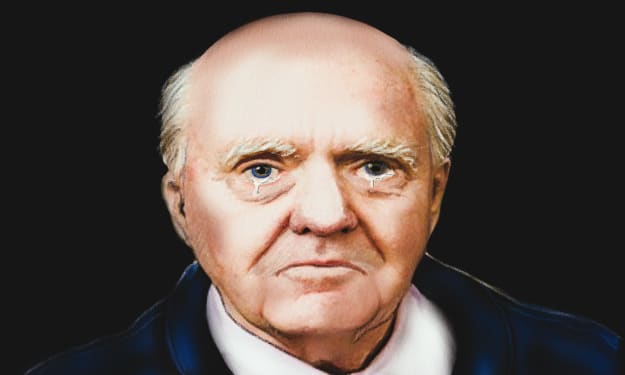
Eva’s eyes widened before she ducked her head. “Stay still,” Mom criticized her, sounding more harsh than usual. Eva stopped herself from flinching because she understood. Something was wrong with Dad. They wouldn’t tell her what, but they tested her blood not long ago. The three of them were now waiting in the hospital for the results. What results they were hoping for, they didn’t tell her either. Eva would ask but her parents got annoyed when she asked questions. Maybe they wanted to see if she had what Dad had? No...that didn’t sound like them. It didn’t sound like any adult Eva had met in her life to be concerned about her, about any child clone. She doubted even Johnathan Apple, who created the Genesis Flower, would care about them.
By Rebecca Patton2 years ago in Fiction
Primal Appetite. Runner-Up in 500 Word Shockwave Challenge.
The jungle's daytime cacophony, mostly birds and mammals, gives way to its nighttime cacophony, mostly amphibians and insects. Every scent stimulates me. I breathe cloying flowers, sour fruit, and the overripe odors of countless things thriving on the corpses of countless other things.
By Deanna Grey2 years ago in Fiction
The Meeting Could’ve Been An Email . Runner-Up in 500 Word Shockwave Challenge.
At 9:00 a.m. sharp, we gather in the windowless room with the flickering lights and the smell of burnt tires and stale coffee grounds. Carol from HR is already there, smiling like she’s been reanimated especially for the occasion.
By E.K. Daniels2 years ago in Fiction
The Snow Weavers. Runner-Up in 500 Word Shockwave Challenge.
It was summer when the snow fell. I was only 8. I'd never seen snow before, except in videos and online. But from my bedroom window, I saw a white dusting. No, heavier than a dusting... A blanket, like linen laid across the yard and into the fields beyond the fence.
By Addison Alder2 years ago in Fiction
Familiar Faces. Runner-Up in 500 Word Shockwave Challenge. Content Warning.
Detective Xavier Perry bent over to check and re-check for the pulse on the young man that he had just shot, mistaking him for having a gun. Stunned to see only a cell phone in the right hand of a somewhat familiar face that he couldn't put a name to just yet. It was probably someone he had arrested before, he told himself. It was the shock and disbelief, the deep remorse of taking the life of an unarmed kid. A kid probably not even sixteen or seventeen. The kid with no pulse to be found.
By Shirley Belk2 years ago in Fiction
Perchance to Dream. Runner-Up in 500 Word Shockwave Challenge.
I wasn’t too thrilled when the new neighbors moved in. Look, I don’t care if they’re gay or not, really, but… did they have to be next door? Oh, don’t look at me like that, I just don’t want to be close enough to hear their extracurriculars, and you know this development’s walls are paper thin. One can only do so much with noise-cancelling headphones.
By Meredith Harmon2 years ago in Fiction
No Witnesses. Runner-Up in 500 Word Shockwave Challenge.
No witnesses. That was the key. It’s tough enough to get away with murdering someone you know. But killing someone you’re married to is guaranteed to put you in the frame - especially if an unaccounted-for witness sees the killing.
By Pitt Griffin2 years ago in Fiction
Diplomas Flambé. Runner-Up in 500 Word Shockwave Challenge.
Opening the old notebook, an aroma flutters from its pages: not mold, not dust, but love gone sour, the ripe odour of hate. Yet all its pages seem untouched, immaculate as unruffled snow, a virgin notebook. Then I glimpse his scrawl on a few pages in the middle. There’s the stench.
By Marie Wilson2 years ago in Fiction
Beneath the Surface. Runner-Up in 500 Word Shockwave Challenge.
On a Friday afternoon, Ruby Dayne had just finished another week of college classes, and as she was on the parking lot heading to her car, Ruby was approached by the dean of her college, Valeria Stanton.
By Clyde E. Dawkins2 years ago in Fiction
Don't Shoot the Messenger. Honorable Mention in 500 Word Shockwave Challenge.
I grabbed my bag, laptop, papers and a granola bar, and flew out the door. I waved to my neighbour but lowered my hand when I saw her stern look as she sharply yanked her son next to her by his hood.
By Cristal S.2 years ago in Fiction
Groundhog. Honorable Mention in 500 Word Shockwave Challenge.
Every morning, the first thing the Victorious, the city's top Superhero team, did was check on Groundhog. Groundhog could shape-shift, but their real power was an odd form of fail-safe/time-travel. If something went badly wrong, the day would reset for them, granting a do-over. If Groundhog was undisturbed, everything was fine. If Groundhog was upset, or repeated any of the code-phrases to signal that they were on a re-set… well, that was when Shit-Got-Real, as the kids said.
By Natasja Rose2 years ago in Fiction
Annabeth's Home. Honorable Mention in 500 Word Shockwave Challenge.
There was nothing in the world Annabeth loved more than her house. It had been in her family for four generations, built by her great-grandfather's own hands. Annabeth was born in that house, and she planned to die in it someday. Every room was meticulously decorated to her liking; each stick of furniture and knickknack placed in exactly the right spot. Everything was absolutely perfect... until one day, it wasn't.
By Natalie Gray2 years ago in Fiction
Have I told you? . Honorable Mention in 500 Word Shockwave Challenge. Content Warning.
Your giggle bubbles from your mouth even as you tumble face-first into the soft grass, your wobbly, dimpled toddler legs still unable to keep up with your joy of running through the sunshine. I laugh too, call out to you to be careful. You rise unsteadily, fists clasping mounds of new spring grass and black dirt, which you promptly throw in the air, delighted with the fresh smell, the squiggling earthworms, the small taste of freedom.
By Kristen Knutson2 years ago in Fiction
Stone Wall. Honorable Mention in 500 Word Shockwave Challenge. Content Warning.
The blonde-haired eight-year-old had been outside playing in his front yard when Luiz and Murielle Lopez, Lucinda’s parents, came over. Hysterically, they had asked his parents if they had seen their little girl. Winston listened as his father told Lucinda’s parents that they hadn’t. Then his father had said he would organize a neighborhood search for the little girl, while his mother said she’d call the sheriff to come out with some help.
By Mother Combs (Sharon)2 years ago in Fiction
Tonight For Dinner, We'll Be Serving Revenge . Honorable Mention in 500 Word Shockwave Challenge. Content Warning.
It all started when he asked me what size I was. I was taken back, but he was a friend of my father’s and he was sitting at my dining room table, which to my parents is sacred ground. So, I swallowed my need to ask him why the fuck that was any of his business and told him with a gentle smile, size 6.
By Mikayla Rose2 years ago in Fiction


























































All the great Submissions
The Unseen Canvas
In the quiet town of Meadowgrove, where whispers were the loudest sounds, lived an artist named Elara. Her paintings were windows into souls, each stroke telling a story words could not. Yet, Elara had not painted in years, not since the fire that claimed her studio and left her with scars mirroring her shattered spirit.
By Alain SUPPINI2 years ago in Fiction
Broken Dreams and Pony Screams. Content Warning.
It was Sunday and raining. It was April, 1822. My father was teaching me how to ride a horse through the mud. He said it was dangerous in New York for a young lady such as myself, being both beautiful and wealthy, not to know how to ride a horse. I might need to escape aggressive, or worse, peasant suitors.
By Alex H Mittelman 2 years ago in Fiction
Perchance to Dream. Runner-Up in 500 Word Shockwave Challenge.
I wasn’t too thrilled when the new neighbors moved in. Look, I don’t care if they’re gay or not, really, but… did they have to be next door? Oh, don’t look at me like that, I just don’t want to be close enough to hear their extracurriculars, and you know this development’s walls are paper thin. One can only do so much with noise-cancelling headphones.
By Meredith Harmon2 years ago in Fiction
The Truth The Truth Behind a Famous Quote: Did Aristotle Really Say It
The famous quote often attributed to Aristotle, "We are what we repeatedly do. Excellence, then, is not an act, but a habit, is widely known as a guiding principle for personal growth and success. However, the origins of this quote are often misunderstood. It was not Aristotle himself who stated it directly, but rather historian and philosopher Will Durant, who paraphrased Aristotle’s ideas in his book The Story of Philosophy while summarizing the Greek philosopher’s thoughts on habit and virtue. Understanding the origins of this quote requires a closer look at Aristotle’s philosophy. Aristotle, one of the greatest thinkers of ancient Greece, explored the concept of virtue and moral excellence in his work Nicomachean Ethics. In this text, he emphasized the importance of habit in shaping character. Aristotle believed that virtues are not innate qualities but rather traits developed through practice and repetition. He argued that people become virtuous by repeatedly performing virtuous actions, just as a skilled musician becomes proficient through continuous practice. Will Durant, in The Story of Philosophy, sought to summarize Aristotle’s teachings in a way that made them accessible to modern readers. While discussing Aristotle’s views on virtue, Durant wrote, “We are what we repeatedly do. Excellence, then, is not an act, but a habit. This paraphrased version of Aristotle’s philosophy gained widespread popularity and was frequently cited as if Aristotle himself had said it. Despite the misattribution, the essence of the quote remains aligned with Aristotle’s philosophy. The idea that excellence and virtue are cultivated through consistent action is a fundamental aspect of his ethical framework. Aristotle argued that individuals achieve eudaimonia, or a flourishing life, by developing good habits and engaging in ethical behavior. He maintained that moral excellence is not achieved through occasional grand gestures but through a commitment to virtuous living in everyday actions. This principle has significant implications in various aspects of life, including personal development, education, sports, and business. The notion that repeated actions shape one’s character and determine success has been embraced by motivational speakers, educators, and leaders across different fields. It highlights the importance of discipline and consistency in achieving excellence. For instance, in the world of athletics, top-performing athletes follow rigorous training routines, practicing their skills repeatedly until they become second nature. A basketball player does not become great by making one incredible shot but by shooting thousands of baskets during practice. Similarly, in academics, students who develop effective study habits through repetition are more likely to excel in their studies. The same principle applies to entrepreneurship and professional growth those who consistently work on their skills and improve their craft are more likely to succeed. The misattribution of the quote to Aristotle also sheds light on how historical figures’ ideas are often simplified or reinterpreted over time. In an effort to make complex philosophical ideas more digestible, writers and historians sometimes condense concepts into concise statements. While this can help popularize important ideas, it can also lead to inaccuracies regarding their original sources. The popularity of this particular paraphrase demonstrates how powerful and influential Aristotle’s ideas remain today. Even though the exact wording was Durant’s interpretation, the underlying philosophy is deeply rooted in Aristotle’s ethical teachings. It serves as a reminder that success and personal growth are not the result of isolated efforts but of consistent and deliberate practice. In contemporary discussions on self-improvement, the concept of habit formation is widely studied. Books such as Atomic Habits by James Clear and The Power of Habit by Charles Duhigg explore how small, repeated actions lead to lasting change. These modern perspectives align with Aristotle’s notion that habits shape our character and ultimately define who we are. The scientific study of habits supports the idea that behaviors repeated over time become ingrained, influencing our success and well-being. Understanding the true origin of this quote also encourages critical thinking when it comes to widely accepted statements. Many famous quotes attributed to historical figures are often altered or paraphrased, leading to misconceptions about their original context. Recognizing the contributions of historians like Will Durant in making philosophical ideas more accessible allows for a deeper appreciation of the thinkers who influenced them. While Aristotle did not explicitly state the famous quote, his philosophy undeniably supports the idea that excellence is achieved through habitual actions. His teachings continue to inspire individuals seeking to improve themselves and attain a higher standard of living through consistent effort. By acknowledging both Aristotle’s original ideas and Will Durant’s role in summarizing them, we gain a more accurate understanding of the timeless wisdom behind the phrase. The key takeaway from this discussion is that our daily habits and actions define us. Whether in personal development, professional growth, or ethical conduct, what we repeatedly do shapes our character and our destiny. By embracing this philosophy, individuals can cultivate a life of excellence through conscious effort and discipline, staying true to the spirit of Aristotle’s teachings.
By Nora Ariana2 years ago in Education
War Bride. Top Story - April 2025.
Princess Kathryn hadn't expected to actually marry her kidnapper. Kathryn would have done her duty as it was laid before her - she'd fantasized only briefly about shipwrecks and daring rescues, or the carriage breaking a wheel and necessitating that they turn back - on her way to her wedding. The price of a princess's privilege was that her life was not hers to command, but at the service of her people. That didn't mean that she couldn't have quiet complaints about marrying someone nearly her father's age, as Duke James of Slesian was.
By Natasja Rose2 years ago in Fiction
The Truth About Success: Why Hard Work Always Comes First
Success is often seen as the ultimate goal in life. Many people dream of achieving great things, whether in their careers, businesses, or personal lives. However, one fundamental truth remains unchanged: success does not come without effort. The famous quote, "The only place where success comes before work is in the dictionary," perfectly illustrates this reality. It emphasizes that hard work is the foundation of any meaningful achievement. In today's world, many individuals seek shortcuts to success. Some believe that luck, talent, or external circumstances are the primary drivers of achievement. While these factors can play a role, they are not substitutes for dedication, persistence, and effort. Hard work remains the common denominator among those who achieve lasting success. This is evident in various fields, from sports to entrepreneurship, science, and the arts. Those who rise to the top often dedicate countless hours to honing their craft, overcoming obstacles, and pushing beyond their limits. The journey to success is rarely a straight path. It is filled with challenges, setbacks, and failures. Many successful individuals have experienced significant difficulties before reaching their goals. Thomas Edison, for example, made thousands of attempts before successfully inventing the light bulb. His perseverance and refusal to accept failure as the final outcome demonstrate the power of hard work. Similarly, Oprah Winfrey faced numerous rejections and hardships before becoming a media mogul. Her story is a testament to resilience, determination, and the importance of never giving up. The misconception that success happens overnight has been fueled by social media and viral stories of individuals who seemingly achieve greatness instantly. However, what often goes unnoticed is the effort and sacrifice behind the scenes. People who succeed in any field usually spend years perfecting their skills, making sacrifices, and learning from failures. The truth is that overnight success is a myth. The most accomplished individuals build their success over time through consistent effort, learning, and adaptation. Discipline and consistency are crucial elements in the pursuit of success. Many people start with enthusiasm but struggle to maintain momentum when faced with difficulties. Successful individuals cultivate discipline by creating routines, setting goals, and staying committed to their objectives. They understand that success is not a one-time event but a continuous process that requires daily effort. Small, consistent actions over time lead to significant results. Whether it is studying for an exam, building a business, or improving health and fitness, consistent effort is what sets achievers apart from those who give up. Another key aspect of success is the willingness to embrace failure as a learning opportunity. Failure is often viewed as a negative outcome, but in reality, it is a valuable teacher. Each setback provides insights, lessons, and experiences that contribute to growth. Successful individuals do not let failures define them. Instead, they analyze their mistakes, adjust their strategies, and keep moving forward. This mindset shift is essential for overcoming obstacles and achieving long-term success. The importance of self-discipline and a strong work ethic cannot be overstated. People who excel in their fields do not rely on motivation alone. Motivation can be fleeting, but discipline ensures consistent progress. Developing habits that support success, such as time management, prioritization, and perseverance, is essential. When individuals commit to putting in the necessary work, they increase their chances of achieving their goals. Mentorship and continuous learning also play a significant role in the path to success. Seeking guidance from those who have already achieved similar goals can provide valuable insights and shortcuts to avoid common mistakes. Learning from experts, reading books, attending seminars, and staying updated with industry trends are essential steps toward growth. The willingness to learn and adapt is what keeps successful individuals ahead in their fields. Passion is another driving force behind success. People who genuinely love what they do are more likely to stay committed and push through challenges. Passion fuels perseverance, making the journey toward success more fulfilling. While hard work is necessary, doing something meaningful and enjoyable can make the process more rewarding. Identifying one’s strengths, interests, and purpose can help align efforts with long-term aspirations. Surrounding oneself with the right people is also crucial. The environment and social circle influence an individual’s mindset, motivation, and success. Associating with like-minded, ambitious individuals can provide inspiration, support, and encouragement. Positive influences can help maintain focus and drive, while negative influences can hinder progress. Success is not an endpoint but a continuous journey of growth, learning, and improvement. It requires a strong mindset, resilience, and an unwavering commitment to hard work. While luck and talent can play a role, they are not substitutes for perseverance, discipline, and dedication. Those who embrace the process, learn from failures, and remain committed to their goals are the ones who ultimately achieve lasting success. The saying remains true: the only place where success comes before work is in the dictionary.
By Nora Ariana2 years ago in Motivation
Groundhog. Honorable Mention in 500 Word Shockwave Challenge.
Every morning, the first thing the Victorious, the city's top Superhero team, did was check on Groundhog. Groundhog could shape-shift, but their real power was an odd form of fail-safe/time-travel. If something went badly wrong, the day would reset for them, granting a do-over. If Groundhog was undisturbed, everything was fine. If Groundhog was upset, or repeated any of the code-phrases to signal that they were on a re-set… well, that was when Shit-Got-Real, as the kids said.
By Natasja Rose2 years ago in Fiction