
The Simple Path to Wealth: A Father’s Loving Financial Guidance
They say a father’s love for his daughter is a powerful and enduring bond, characterized by protection, nurturing, and unwavering support. The love JL Collins has for his daughter is no different. As she approached adulthood, he wrote her several letters about money. These letters evolved into a blog, which later became his bestselling book: The Simple Path to Wealth: Your Road Map to Financial Independence and a Rich, Free Life.
Throughout this book, JL Collins teaches that financial independence is accessible through disciplined saving, simple investing in low-cost index funds, and avoiding debt traps. His philosophy empowers readers to pursue a life focused on freedom, purpose, and peace of mind, rather than consumerism or market speculation.
Unlike many finance books that condemn debt and leave readers feeling guilty or ashamed, The Simple Path to Wealth takes a more compassionate approach. Many people find themselves in debt due to emotional spending, using credit cards and small guilty pleasures as “pick-me-ups” to momentarily feel better. Rather than instilling guilt, Collins’ writing feels like receiving advice from a loving father who genuinely wants the best for you, not a judgmental finance guru.
Key Concepts from The Simple Path to Wealth
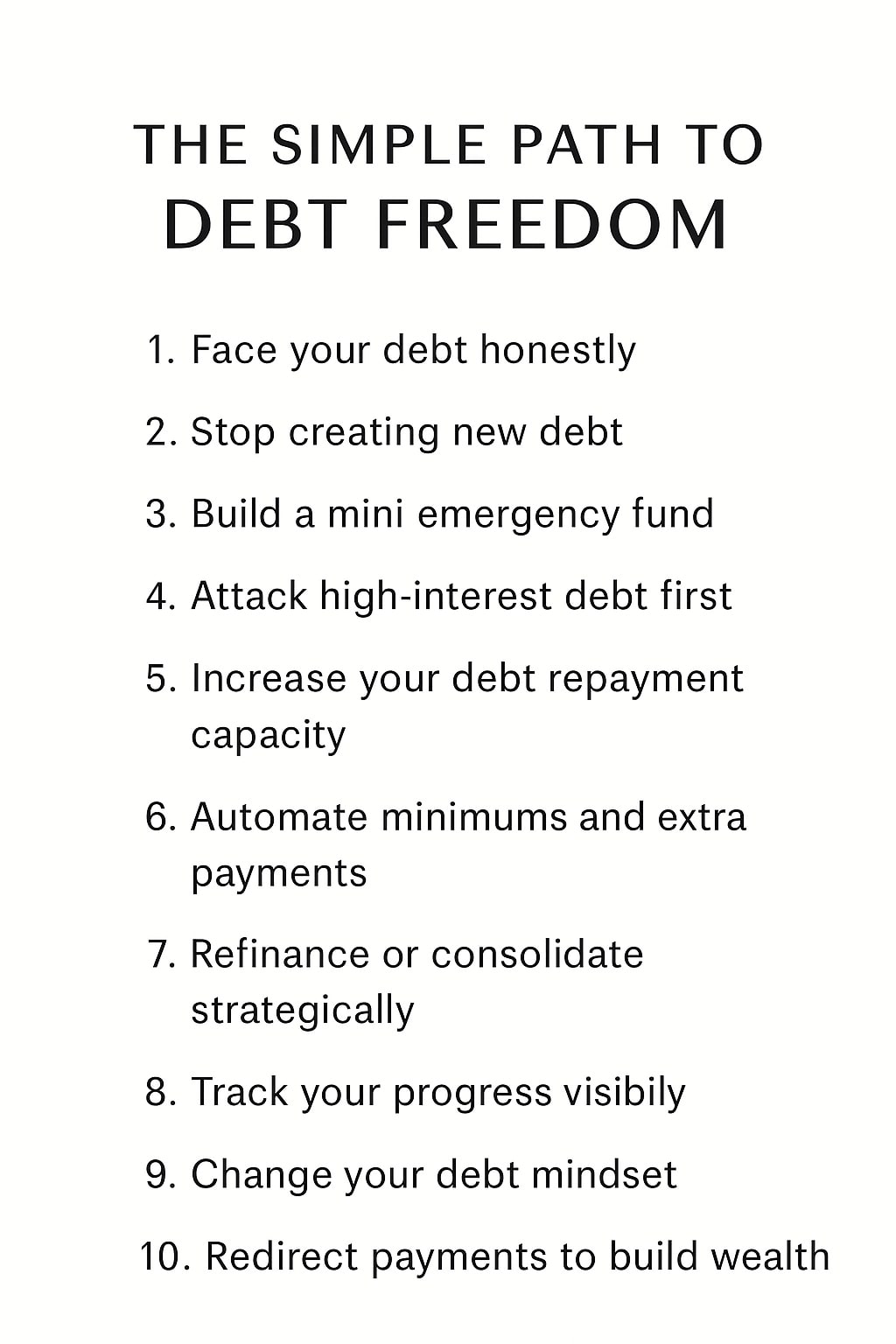
- Avoid Debt and Build Savings: Debt is a financial anchor; avoid it except for rare strategic uses, such as a manageable mortgage. Build an emergency fund to avoid dependency on credit.
- The Importance of F-You Money: Having enough savings to walk away from any job or situation gives you real freedom and negotiating power.
- Invest in Broad-Based Index Funds: Collins heavily advocates for Vanguard’s Total Stock Market Index Fund (VTSAX) due to its low fees, broad diversification, and market-matching returns. He warns against trying to beat the market or paying high fund management fees.
- Understand the Stock Market: The market is volatile in the short term but reliably grows over long periods. Fear-based selling and greed-based buying ruin returns. Stay the course.
- Spend Less Than You Earn: Wealth is built by widening the gap between income and expenses, then investing the surplus.
- The Financial Independence (FI) Formula: Save and invest aggressively until your assets equal 25x your annual spending, allowing you to live safely on a 4% withdrawal rate.
- Simplicity Wins: Complex strategies or frequent trading rarely outperform a simple, disciplined index fund approach.
- Freedom Over Luxury: True wealth is the ability to control your time and choices, not necessarily living a luxurious life.
Collins’ Overall Principle
“Avoid debt like the plague it is. Pay it off quickly. Once it’s gone, the money you were using to service debt becomes your freedom fund.”
Blind Spots in The Simple Path to Wealth
While the book is well-written and fully capable of empowering readers to improve their financial situations, there are some blind spots JL Collins may not have considered.
Firstly, the book is heavily US-centric. While Collins notes that only a couple of chapters (those discussing HSAs and US retirement plans) are specific to US readers, his main strategy revolves around investing in VTSAX. However, VTSAX is a US mutual fund unavailable to investors outside the US due to regulatory restrictions. If you live outside the US, don’t be discouraged – you can still apply the book’s philosophy by researching local index fund alternatives.
Secondly, Collins seems to push heavily towards Vanguard. While Vanguard is one of the largest and most respected investment companies, it can be somewhat outdated in its offerings. For instance, it does not always allow fractional share purchases, especially for ETFs created by other companies, which can limit flexibility for new investors with smaller capital.
Finally, while his wealth-building strategy is solid, I personally wouldn’t rely solely on VTSAX to build wealth. Mutual funds like VTSAX can sometimes be outperformed by ETFs. Take VOO, for example. VOO is Vanguard’s S&P 500 ETF, tracking the performance of the 500 largest US companies. Unlike VTSAX, VOO leans more towards mega-cap stocks, and as an ETF, it often comes with better tax efficiency and trading flexibility.
During an interview with Paula Pant, JL Collins himself admitted that his approach might not be the most efficient for optimizing returns, but it is the simplest – especially from a psychological perspective. Since the S&P 500 and VTSAX generally move in the same direction and at roughly the same speed, that potential 1% difference in returns is, in his view, a small price to pay for the simplicity and peace of mind his strategy provides.
Conclusion
The Simple Path to Wealth is a timeless piece of financial wisdom packaged as a father’s loving guidance for his daughter – and by extension, for all of us seeking financial freedom. While the US-centric approach and focus on VTSAX may not apply universally, the underlying philosophy remains powerful and adaptable. Whether you’re just starting your financial journey or seeking to simplify your wealth-building approach, Collins reminds us that true wealth isn’t about flashy cars or designer clothes. It’s about having the freedom to live life on your own terms, with peace of mind, confidence, and purpose.
About the Creator
Joann Bloom
An accountant in her 30s sharing the real, messy journey from heartbreak to financial freedom. Honest stories, practical tips, and a little humor for anyone paying off debt and rebuilding life.
https://theunbalancedaccountant3.wordpress.com/
Enjoyed the story? Support the Creator.
Subscribe for free to receive all their stories in your feed.
Comments
There are no comments for this story
Be the first to respond and start the conversation.