Discussion
Rachel Reviews: Afterburn by D. Andrews
D. Andrews's Afterburn is a vividly imagined tale which concerns itself with Kara and Caethiid who have known each other since childhood. Both are orphans and so it seems only natural that they should become friends, thrown as they are into the same orphanage and having no-one else. However, Caethiid is also intrigued by Kara due to her difference.
By Rachel Deeming3 years ago in BookClub
Main Character Vibes
“You are alive, and you don’t need to justify your existence. You can be the biggest mystery in your own story.” I recently discovered the work of Don Miguel Ruiz and it changed my life. After inhaling The Four Agreements, I decided to read The Voice of Knowledge. I had to stop reading the book for a bit because of how profoundly it shook me to the core.
By Chloe Unfiltered3 years ago in BookClub
The Psychological Impact of Isolation: A Look into 'I Who Have Never Known Men'
The Psychological Impact of Isolation: A Look into 'I Who Have Never Known Men' Book Stats: I Who Have Never Known Men, written by Jacqueline Harpman, was originally published in French as 'Moi qui n'ai jamais connu les hommes' in 1995. It was translated into English by Ros Schwartz, and the English version was published in 1997.
By Staringale3 years ago in BookClub
Amanda Hocking is My Inspiration
“When you dance with the devil, the devil doesn't change. The devil changes you.” ― Amanda Hocking, My Blood Approves I remember being twelve years old. I had happened to be addicted to vampire YA fiction because of the Twilight saga. I inhaled those novels faster than you can say "Edward Cullen". But everything changed when I discovered the book series titled My Blood Approves by Amanda Hocking. She wrote from her own voice and I loved that. I maybe was a little young to be reading novels like that but wow did she ever make a name for herself from such a young age.
By Chloe Unfiltered3 years ago in BookClub
National Science Day in India
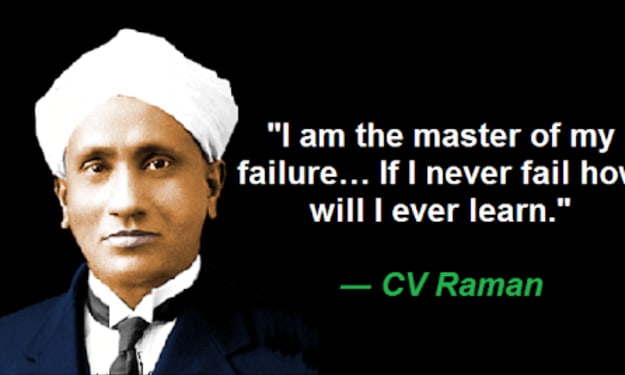
Introduction: National Science Day, observed on February 28th each year in India, holds profound significance as it commemorates the discovery of the Raman Effect by the renowned physicist Sir C.V. Raman in 1928. This monumental breakthrough revolutionized our understanding of light and matter interactions, earning Raman the Nobel Prize in Physics in 1930. Since its inception in 1987, National Science Day has evolved into a celebration of scientific inquiry, innovation, and discovery. This article delves into the rich tapestry of National Science Day, exploring its themes, significance, and impact on fostering scientific awareness and curiosity across India. The Evolution of National Science Day: National Science Day traces its roots back to 1986 when the National Council for Science and Technology Communication (NCSTC) proposed to the Indian government the designation of February 28th as National Science Day. This proposal was accepted, and the inaugural National Science Day was celebrated on February 28, 1987. Since then, it has become an annual event celebrated with enthusiasm and fervor across the country. Themes of National Science Day: Each year, National Science Day is celebrated with a specific theme aimed at promoting scientific awareness and addressing contemporary issues. Over the years, these themes have covered a wide range of topics, reflecting the diverse facets of scientific exploration and innovation. From clean energy and gender equity to sustainable development and space exploration, these themes highlight the relevance of science in addressing societal challenges and shaping our collective future. The theme for National Science Day 2024, "Indigenous Technologies for Viksit Bharat," underscores India's commitment to self-reliance and innovation. It emphasizes the importance of harnessing homegrown technologies to address pressing issues and foster overall well-being. This theme resonates deeply with India's rich heritage of scientific achievements and its aspirations for the future. Significance of National Science Day: National Science Day holds immense significance as it serves as a platform for promoting scientific awareness, curiosity, and innovation. By commemorating the discovery of the Raman Effect, National Science Day celebrates the contributions of Indian scientists to the global scientific community. It also highlights the importance of scientific research and its impact on society. One of the primary objectives of National Science Day is to inspire and engage the youth in scientific exploration. Through a variety of activities such as science fairs, exhibitions, and workshops, young minds are encouraged to explore the wonders of science and consider careers in STEM fields. By showcasing the achievements of eminent scientists and highlighting the relevance of science in everyday life, National Science Day ignites curiosity and fosters a spirit of inquiry among the youth. National Science Day also serves as a platform for recognizing and honoring individuals and organizations that have made significant contributions to science communication and popularization. Through awards and accolades, their efforts are celebrated, inspiring others to actively engage with science and contribute to scientific progress. Impact of National Science Day: The celebration of National Science Day has had a profound impact on fostering scientific awareness and curiosity across India. Through its various activities and programs, National Science Day has succeeded in democratizing science and making it accessible to people of all ages and backgrounds. By showcasing the practical applications of science and highlighting its role in addressing societal challenges, National Science Day inspires individuals to become active participants in the scientific journey. Furthermore, National Science Day has played a crucial role in promoting STEM education and careers in India. By exposing young minds to the wonders of science and providing them with opportunities for hands-on learning and exploration, National Science Day encourages the pursuit of scientific knowledge and innovation. This, in turn, helps nurture a new generation of scientists, engineers, and innovators who will drive India's scientific and technological advancement in the years to come. Conclusion: National Science Day is not just a day of celebration; it is a testament to India's rich scientific heritage and its aspirations for the future. By commemorating the discovery of the Raman Effect and celebrating the achievements of Indian scientists, National Science Day inspires curiosity, fosters innovation, and promotes scientific awareness across the country. As India continues its journey towards scientific excellence and self-reliance, National Science Day serves as a beacon of inspiration, reminding us of the transformative power of science in shaping our collective future.
By Avhishek Agarwal3 years ago in BookClub
Inside Out: Understanding the Inner Mechanisms of eBooks
Before we dive into the inner mechanisms and how eBook works, we must understand the history of this revolutionary technology that stopped the extinction of literature. E-books are digital files including text and graphics that are like printed books and may be distributed electronically or viewed on-screen. They may be made by converting printer files or drawing on databases and text files. The e-book sector acquired public prominence in the late 1990s, when firms such as Peanut Press began providing literature for personal digital assistants. Despite a dip during the dot-com disaster, it rebounded with Sony's 2006 e-reader and Amazon's Kindle in 2007, resulting in a strong rise in US e-book sales.
By AMZ Publishers Pro3 years ago in BookClub
Atomic Habits
In the bustling tapestry of our daily lives, the habits we cultivate often serve as the unseen architects of our success or the unwitting saboteurs of our potential. In the midst of this intricate dance between routine and transformation, James Clear's "Atomic Habits" emerges as a guiding light—a manifesto that illuminates the profound impact of incremental changes on the trajectory of our lives. As we embark on this exploration of "Atomic Habits," we invite you to delve into the intricacies of behavior change, unlocking the secrets to transforming your life, one tiny change at a time.
By Kyle Britz3 years ago in BookClub
The Last Ruler of Jammu and Kashmir. Content Warning.
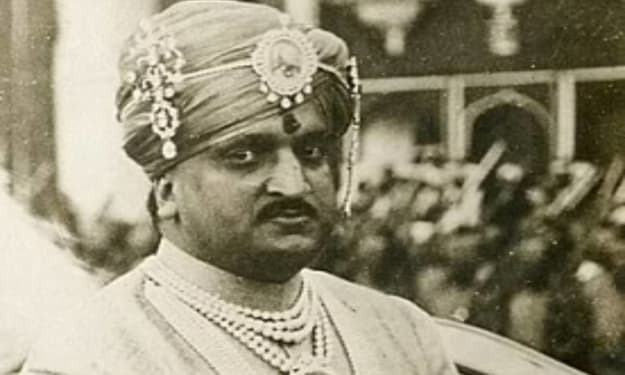
Maharaja Sir Hari Singh GCSI GCIE GCVO, born in September 1895, occupies a significant place in the annals of Jammu and Kashmir's history. As the last ruling Maharaja of the princely state, his reign was characterized by both opulence and tumult, culminating in the pivotal decision of accession to the Dominion of India. Let's embark on a comprehensive exploration of the life, legacy, and controversies surrounding this enigmatic figure. Early Life and Education: Hari Singh was born into the esteemed royal family of Jammu and Kashmir, the son of Raja Amar Singh and Bhotiali Chib, at the majestic Amar Mahal Palace in Jammu. His birth in 1895 marked the emergence of a future ruler, as he was designated the heir presumptive to the throne due to the absence of a direct successor. His early years were steeped in privilege and tradition, with an upbringing that reflected the grandeur of his lineage. In 1903, Hari Singh's journey into the corridors of power began as he served as a page of honor to Lord Curzon during the grand Delhi Durbar, a spectacle of imperial grandeur. Subsequently, his educational pursuits led him to Mayo College in Ajmer, where he embarked on a journey of intellectual and personal growth. However, tragedy struck in 1909 with the demise of his father, prompting the British authorities to take a keen interest in his education, appointing Major H. K. Brar as his guardian. Rise to Power: The trajectory of Hari Singh's life took a decisive turn in 1923 following the passing of his uncle, heralding his ascension to the throne of Jammu and Kashmir. His coronation in 1926 at the majestic Mubarak Mandi Palace in Jammu was a spectacle of extravagance, symbolized by the adornment of jewels valued at an astonishing twenty million dollars. However, amidst the pomp and ceremony, challenges loomed on the horizon, foreshadowing the turbulent years that lay ahead. Controversial Rule: The tenure of Maharaja Hari Singh was fraught with challenges and controversies that left an indelible mark on his legacy. Rebellion reared its head in various regions, most notably in Poonch and Gilgit-Baltistan, challenging the stability of his rule. Furthermore, accusations of complicity in the 1947 Jammu massacres tarnished his reputation, casting a shadow over his governance. Despite these tumultuous times, Hari Singh's reign was not devoid of progress. He implemented reforms aimed at modernization, including initiatives to promote education, combat child marriage, and foster social inclusivity. Accession to India: The watershed moment in Hari Singh's reign arrived in 1947 with the dawn of Indian independence. Faced with escalating tensions and external threats, particularly from Pakistan-backed tribal forces, Singh found himself at a crossroads. In October 1947, he made the fateful decision to accede to the Dominion of India, signing the Instrument of Accession. This pivotal moment not only altered the course of Jammu and Kashmir's history but also set the stage for future conflicts and geopolitical dynamics in the region. Legacy and Commemorations: Following the abolition of monarchy in 1952, Maharaja Hari Singh's life took a poignant turn as he retreated from the corridors of power to spend his remaining years in Bombay. His death in 1961 marked the end of an era, but his legacy endured through various commemorations and tributes across Jammu and Kashmir. Parks, statues, and public holidays stand as tangible reminders of his enduring influence, sparking conversations about his complex legacy and the broader historical narrative of the region. Conclusion: Maharaja Hari Singh's reign encapsulates a tumultuous chapter in the history of Jammu and Kashmir, characterized by opulence, controversy, and political upheaval. While his rule was marred by challenges and criticisms, his contributions to the region's development and his pivotal role in shaping its destiny cannot be understated. As the last ruling Maharaja of Jammu and Kashmir, his legacy continues to resonate, prompting reflection on the complexities of governance, identity, and historical legacy in the region. In essence, Maharaja Hari Singh's life and times serve as a poignant reminder of the intricate tapestry of history that defines Jammu and Kashmir's identity. Through commemorative efforts and ongoing discussions about his legacy, his influence endures, underscoring the enduring impact of his rule on the socio-political landscape of the region.
By Avhishek Agarwal3 years ago in BookClub
"If You Tell" by Gregg Olsen: A Gripping Dive into the Dark Depths of True Crime
Gregg Olsen's "If You Tell" is not merely a true crime thriller; it is an immersive journey into the chilling realms of human depravity, resilience, and the unbreakable bonds of sisterhood. In this riveting non-fiction narrative, Olsen meticulously unravels a tale that transcends the conventions of traditional crime literature, leaving readers both captivated and horrified by the shocking events that transpired within the walls of a seemingly ordinary family home.
By Lilly Goldberg3 years ago in BookClub
Revolutionize Virtual Realms with Expert Metaverse App Development Services
In the dynamic realm of digital innovation, the metaverse stands out as a groundbreaking concept, reshaping the way we interact with virtual spaces. At the forefront of this revolution are expert metaverse app development services, poised to redefine our digital experiences. At the heart of this transformation lies expert metaverse app development services, poised to revolutionize virtual realms like never before.
By fauzia sumbul3 years ago in BookClub