Book of the Week
Reading Books Is Useless: Here’s a Better Way to Read
I love to read books. I always spend some time just sitting down and reading; it doesn’t matter how many pages I read or how long. I just stay still and read. When I really can’t use paper books, I use ebooks as an alternative.
By Aabusad Pathan3 years ago in BookClub
Rachel Reviews: The Lost Immortal by Tony Huston
The Lost Immortal was an enjoyable book to read for many reasons. The idea of immortality and the hunt for it when it is discovered to exist in the world is one that has woven its way through many a good novel and Huston uses the tragic figure of his protagonist, a man of many names but for this review we'll call him Alexandros, to show that it might not be all that it's cracked up to be.
By Rachel Deeming3 years ago in BookClub
Grapes of Wrath Review
In Chapters 1-3 of “The Grapes of Wrath” where the Joad family begins their journey to California in hope for a better life is a very intriguing scene. The author John Steinbeck exposes the desperate conditions under which the migratory farm families of America, along with focusing on the hardships and migration from Oklahoma to California of the Joad family during the Great Depression of the 1930s. Set during the Great Depression, the novel focuses on the Joads, a poor family of tenant farmers driven from their Oklahoma home by drought, economic hardship, agricultural industry changes, and bank foreclosures forcing tenant farmers out of work. Due to their nearly hopeless situation, and in part because they are trapped in the Dust Bowl, the Joads set out for California on the "mother road", along with thousands of other "Okies" seeking jobs, land, dignity, and a future.
By Kylecovey Smith3 years ago in BookClub
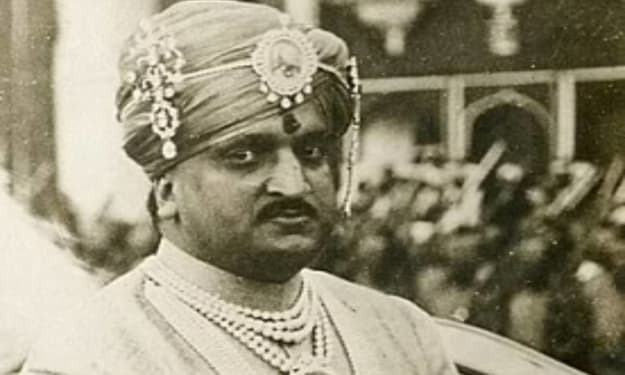
The Last Ruler of Jammu and Kashmir. Content Warning.
Maharaja Sir Hari Singh GCSI GCIE GCVO, born in September 1895, occupies a significant place in the annals of Jammu and Kashmir's history. As the last ruling Maharaja of the princely state, his reign was characterized by both opulence and tumult, culminating in the pivotal decision of accession to the Dominion of India. Let's embark on a comprehensive exploration of the life, legacy, and controversies surrounding this enigmatic figure. Early Life and Education: Hari Singh was born into the esteemed royal family of Jammu and Kashmir, the son of Raja Amar Singh and Bhotiali Chib, at the majestic Amar Mahal Palace in Jammu. His birth in 1895 marked the emergence of a future ruler, as he was designated the heir presumptive to the throne due to the absence of a direct successor. His early years were steeped in privilege and tradition, with an upbringing that reflected the grandeur of his lineage. In 1903, Hari Singh's journey into the corridors of power began as he served as a page of honor to Lord Curzon during the grand Delhi Durbar, a spectacle of imperial grandeur. Subsequently, his educational pursuits led him to Mayo College in Ajmer, where he embarked on a journey of intellectual and personal growth. However, tragedy struck in 1909 with the demise of his father, prompting the British authorities to take a keen interest in his education, appointing Major H. K. Brar as his guardian. Rise to Power: The trajectory of Hari Singh's life took a decisive turn in 1923 following the passing of his uncle, heralding his ascension to the throne of Jammu and Kashmir. His coronation in 1926 at the majestic Mubarak Mandi Palace in Jammu was a spectacle of extravagance, symbolized by the adornment of jewels valued at an astonishing twenty million dollars. However, amidst the pomp and ceremony, challenges loomed on the horizon, foreshadowing the turbulent years that lay ahead. Controversial Rule: The tenure of Maharaja Hari Singh was fraught with challenges and controversies that left an indelible mark on his legacy. Rebellion reared its head in various regions, most notably in Poonch and Gilgit-Baltistan, challenging the stability of his rule. Furthermore, accusations of complicity in the 1947 Jammu massacres tarnished his reputation, casting a shadow over his governance. Despite these tumultuous times, Hari Singh's reign was not devoid of progress. He implemented reforms aimed at modernization, including initiatives to promote education, combat child marriage, and foster social inclusivity. Accession to India: The watershed moment in Hari Singh's reign arrived in 1947 with the dawn of Indian independence. Faced with escalating tensions and external threats, particularly from Pakistan-backed tribal forces, Singh found himself at a crossroads. In October 1947, he made the fateful decision to accede to the Dominion of India, signing the Instrument of Accession. This pivotal moment not only altered the course of Jammu and Kashmir's history but also set the stage for future conflicts and geopolitical dynamics in the region. Legacy and Commemorations: Following the abolition of monarchy in 1952, Maharaja Hari Singh's life took a poignant turn as he retreated from the corridors of power to spend his remaining years in Bombay. His death in 1961 marked the end of an era, but his legacy endured through various commemorations and tributes across Jammu and Kashmir. Parks, statues, and public holidays stand as tangible reminders of his enduring influence, sparking conversations about his complex legacy and the broader historical narrative of the region. Conclusion: Maharaja Hari Singh's reign encapsulates a tumultuous chapter in the history of Jammu and Kashmir, characterized by opulence, controversy, and political upheaval. While his rule was marred by challenges and criticisms, his contributions to the region's development and his pivotal role in shaping its destiny cannot be understated. As the last ruling Maharaja of Jammu and Kashmir, his legacy continues to resonate, prompting reflection on the complexities of governance, identity, and historical legacy in the region. In essence, Maharaja Hari Singh's life and times serve as a poignant reminder of the intricate tapestry of history that defines Jammu and Kashmir's identity. Through commemorative efforts and ongoing discussions about his legacy, his influence endures, underscoring the enduring impact of his rule on the socio-political landscape of the region.
By Avhishek Agarwal3 years ago in BookClub
"If You Tell" by Gregg Olsen: A Gripping Dive into the Dark Depths of True Crime
Gregg Olsen's "If You Tell" is not merely a true crime thriller; it is an immersive journey into the chilling realms of human depravity, resilience, and the unbreakable bonds of sisterhood. In this riveting non-fiction narrative, Olsen meticulously unravels a tale that transcends the conventions of traditional crime literature, leaving readers both captivated and horrified by the shocking events that transpired within the walls of a seemingly ordinary family home.
By Lilly Goldberg3 years ago in BookClub
ACCESSORY BEFORE THE FACT, Part 3/3
ACCESSORY BEFORE THE FACT, Part 3/3 He remained in his corner without moving, puffing violently at an extinguished pipe, gripped helplessly by the return of that first vile terror. It came again to him with an absolute clarity of certainty that it was not with himself they had to do, these men, and, further, that he had no right in the world to interfere. He had no locus standi at all; it would be immoral ... even if the opportunity came. And the opportunity, he felt, would come. He had been an eavesdropper, and had come upon private information of a secret kind that he had no right to make use of, even that good might come—even to save life. He sat on in his corner, terrified and silent, waiting for the thing that should happen next.
By Mountain Tree3 years ago in BookClub
ACCESSORY BEFORE THE FACT, Part 2/3
ACCESSORY BEFORE THE FACT, Part 2/3 Uneasy and distressed, he increased his pace. Midway in thinking what an unnecessarily clanking noise his nailed boots made upon the hard white road, there came upon him with a rush together the company of these things that haunted him as “unexplained.” They brought a single definite message: That all this business was not really meant for him at all, and hence his confusion and bewilderment; that he had intruded into someone else’s scenery, and was trespassing upon another’s map of life. By some wrong inner turning he had interpolated his person into a group of foreign forces which operated in the little world of someone else. Unwittingly, somewhere, he had crossed the threshold, and now was fairly in—a trespasser, an eavesdropper, a Peeping Tom. He was listening, peeping; overhearing things he had no right to know, because they were intended for another. Like a ship at sea he was intercepting wireless messages he could not properly interpret, because his Receiver was not accurately tuned to their reception. And more—these messages were warnings!
By Mountain Tree3 years ago in BookClub
ACCESSORY BEFORE THE FACT, Part 1/3
At the moorland cross-roads Martin stood examining the sign-post for several minutes in some bewilderment. The names on the four arms were not what he expected, distances were not given, and his map, he concluded with impatience, must be hopelessly out of date. Spreading it against the post, he stooped to study it more closely. The wind blew the corners flapping against his face. The small print was almost indecipherable in the fading light. It appeared, however—as well as he could make out—that two miles back he must have taken the wrong turning.
By Mountain Tree3 years ago in BookClub
THE RED ROOM, Final Chapter.
Final Chapter. As I stood undecided, an invisible hand seemed to sweep out the two candles on the table. With a cry of terror I dashed at the alcove, then into the corner and then into the window, relighting three as two more vanished by the fireplace, and then, perceiving a better way, I dropped matches on the iron-bound deedbox in the corner, and caught up the bedroom candlestick. With this I avoided the delay of striking matches, but for all that the steady process of extinction went on, and the shadows I feared and fought against returned, and crept in upon me, first a step gained on this side of me, then on that. I was now almost frantic with the horror of the coming darkness, and my self-possession deserted me. I leaped panting from candle to candle in a vain struggle against that remorseless advance.
By Mountain Tree3 years ago in BookClub