
Donna Tartt's 'The Little Friend' Deserves a Screen Adaptation
Donna, if you're listening, just hear me out.


Donna Tartt’s acclaimed literary fiction books have proven difficult to adapt, to say the least. Two early attempts were made to adapt her beloved debut novel, The Secret History, neither of which materialized. Her Pulitzer-Prize-winning text, The Goldfinch, did make it to the big screen in 2019, with John Crowley directing. Sternly critiqued and a misfire at the box office, the film’s poor reception affirmed many readers’ suspicions that Tartt’s literary masterpieces should simply be left alone. That said, perhaps Hollywood has been fixating on the wrong book.
Tartt’s second novel, The Little Friend, has slipped under the radar since its publication almost 25 years ago. Far from a traditional whodunit, The Little Friend is a wonderfully intimidating entry into the Southern Gothic mode, set in her home state of Mississippi in the 1970s. Its wide range of characters, contrasting viewpoints, and unrelenting misdirection make it the strongest candidate, arguably, for a limited series.
The Little Friend is not a True Crime Thriller
Part of the reason The Little Friend never soared to the same heights as Tartt’s other novels is because of misleading marketing. The dust jacket blurb lures readers in with the expectation of a straightforward murder mystery. The suspense plot is focalized through 12-year-old Harriet Dufresnes - a fierce and independent girl, who becomes precariously fixated on the Ratliffs: a local family of drug dealers who she believes are connected to the death of her brother, Robin. However, audiences expecting a neat and tidy thriller are met, instead, with a slow-moving family saga of sorts, steeped in dread and scarce with answers.
In Tartt’s own words, The Little Friend is “a much broader book—socially and inter-generationally” than The Secret History, which dazzles as an insular campus novel. Themes of prejudice, class divide, addiction, rural industrial collapse, and coming-of-age take precedence over the cold case that incites the narrative. Tartt is more concerned with showcasing how entire families become trapped by the myths they cling to…the stories they tell themselves to their detriment. Tonally, it’s Sharp Objects meets Succession.
Any faithful screen adaptation would, therefore, need to resist packaging The Little Friend as a true crime-style thriller. The novel’s six hefty chapters are languid and broody à la Season 1 of True Detective, but do not escalate toward catching a killer. There’s some climactic action to be had, including shootouts, break-ins, and on-foot chase sequences, but The Little Friend stubbornly evades the crime drama template’s pursuit of justice. Its Gothic foothold luxuriates in half-truths and near-escapes, reader expectations (and frustrations) be damned.
Television Suits Tartt's Storytelling Better Than Film
As The Goldfinch’s disappointing adaptation demonstrated, a film is prone to constrain, or rather, flatten, Tartt’s intricately woven 600-page tomes for a palatable run time. A limited series, by contrast, could trace each of the novels’ throughlines simultaneously – from Harriet's amateur sleuthing with her neighborhood sidekick, Hely Hull, to the Ratliff family’s criminal enterprise, to the vivid lore of the wealthy Dufresnes household.
What further distinguishes The Little Friend and primes it for a screen adaptation is that it’s the only one of Tartt’s novels told in third-person omniscient. Tartt’s other two books are firmly tethered to first-person narrators, Richard Papen and Theo Decker, whose internal monologues do all the heavy lifting. In The Little Friend, Tartt’s storytelling is much more detached and panoramic. The young female lead, Harriet, is the emotional anchor, but the story’s breadth lends itself to a television ensemble cast, where multiple families and social spheres are explored in parallel.
Whether Tartt’s books are too long or too overwrought continues to be a matter of literary debate. Speaking exclusively to The Little Friend, the Southern Gothic narrative sprawl is rather strategic as opposed to a creative blunder. The narrative overgrowth, no matter how demanding to read, does cleverly encapsulate how Southern aesthetics are recovered, performed, and mythologized at large. Rather than trimming the fat of the story’s manifold entanglements and roundabout hauntings, a limited series could indulge them in richly layered visuals.
Southern Gothic Stories Are Having a Moment
Even those who take issue with Tartt’s busy prose and wish for a more cinched plot line can agree on one thing: The Little Friend triumphs in its ability to cultivate a stifling, deeply immersive Southern Gothic backdrop. Summer in the Deep South truly envelops the reader from start to finish. Tartt’s eerie settings often conjure the rusted color palette of The Texas Chainsaw Massacre’s rural horror, minus the slasher gore, of course.
These atmospheric strengths are well-suited to contemporary audiences' ongoing infatuation with Southern Gothic stories. The mobilization of Southern Gothic iconography – a collage of decaying Old South mansions, doomed innocence, drug economies, and a mishmash of cryptic road signs screaming REPENT! – has long found appeal on screen (think HBO’s 2000s hit True Blood). More recently, Ryan Coogler's Sinners illustrated the power of the Southern Gothic in fusing folklore, religion, and intergenerational trauma to record-breaking box office success. Not to mention, beyond film and television, the Southern Gothic aesthetic continues to evolve in contemporary music and culture through popular artists like Ethel Cain.
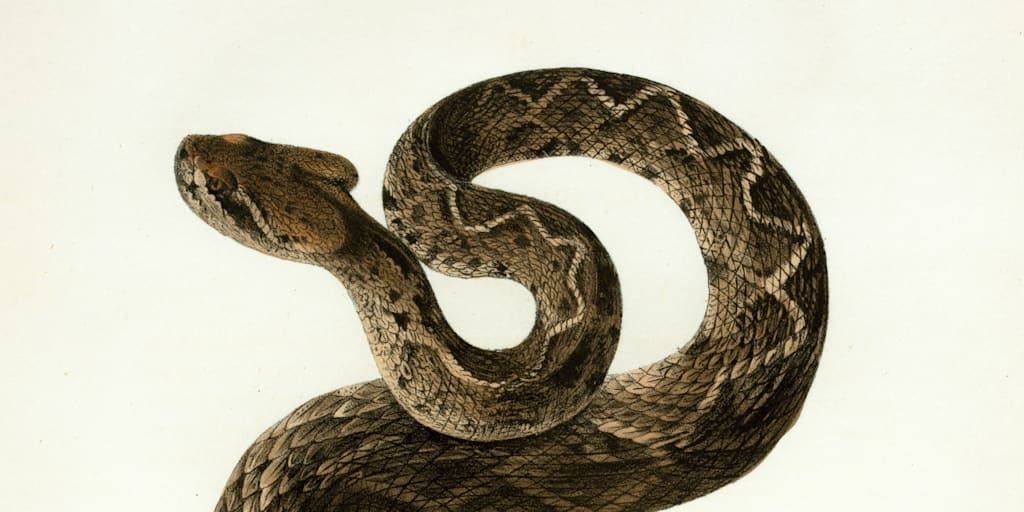
The Little Friend’s desolate landscapes channel this in-demand aesthetic abundantly. Some memorable encounters feature an oft-flooded housing development, a derelict hotel, a meth lab in a taxidermy shop, a toxic water tank, and a snake-handling traveling preacher. Tartt’s long-winded Gothic world-building dwells on the minutiae of place in a way that, while frustrating to some readers seeking narrative momentum, would be a dream for production designers and cinematographers.
Although The Secret History is the screen adaptation everyone pines for and dreams about, if Hollywood is looking for the Tartt novel most suited to episodic television, it may be time to shelve the dark academia and give The Little Friend the attention it deserves as a Southern Gothic goldmine.
Granted, for Tartt, an elusive figure who seldom does press tours or interviews, it would be a big ask to give the Hollywood system another go-around, especially after she was benched from The Goldfinch’s adaptation decisions. Fiercely protective of her work, and rightly so, any screen adaptation moving forward must have Tartt on board and at the helm of the creative process.
About the Creator
Erin Latham Shea
Co-Founder and EIC of Housebound Magazine
Assistant Poetry Editor at Wishbone Words
Instagram: @somebookishrambles
Bluesky: @elshea.bsky.social
Enjoyed the story? Support the Creator.
Subscribe for free to receive all their stories in your feed. You could also become a paid subscriber, letting them know you appreciate their work.
Comments
There are no comments for this story
Be the first to respond and start the conversation.