
Your Cleanser Might Be the Reason Your Skin Never Quite Looks Right
The product you use to clean your face is the foundation of everything else in your routine. Most people are getting it wrong and their skin is showing it.

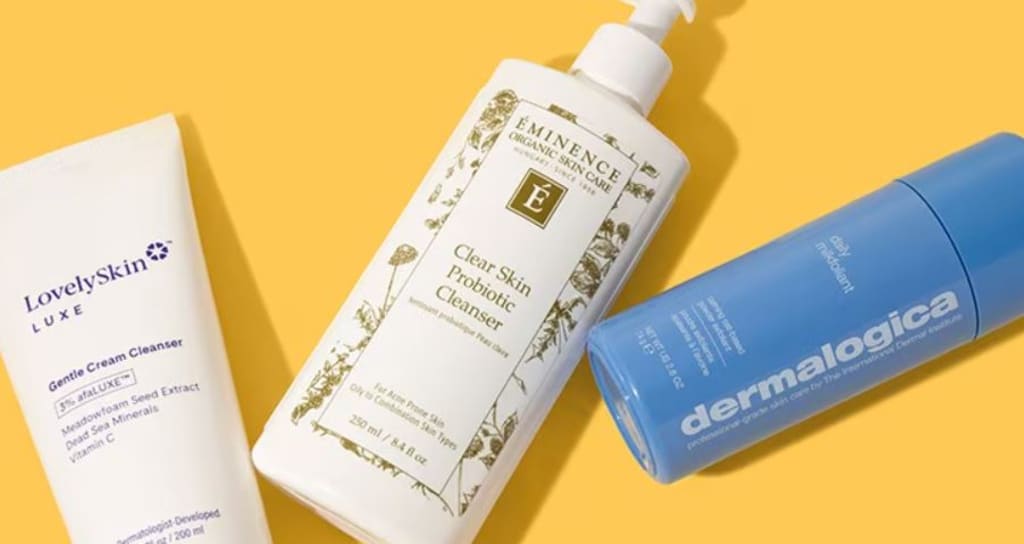
What is your cleanser actually doing to your skin?
Not what it claims to do on the packaging. Not how it makes your face feel in the thirty seconds after you rinse it off. What is it actually doing to the biology of your skin, to the barrier that keeps moisture in and irritants out, to the microbiome that keeps inflammation in check, to the balance that every other product in your routine depends on?
For a lot of people, the honest answer is: damaging it. Slowly, consistently, every single day.
The Squeaky-Clean Myth
For decades, the gold standard for a good face wash was the squeaky-clean feeling that tight, slightly taut sensation after rinsing that signalled your skin was thoroughly clean. Skincare marketing leaned into it. Products were designed to produce it. And most people interpreted it as evidence that something good had happened.
It wasn't. That feeling is your skin telling you it has been stripped.
Dr. Joel Schlessinger, board-certified dermatologist and cosmetic surgeon, is direct about this: "It used to be that 'squeaky-clean' was preferred, but now we know that this is just stripping the skin of its natural oils and causing damage."
What the squeaky-clean sensation actually indicates is that the cleanser has removed not just the dirt, oil, and makeup you wanted gone, but also the natural lipids and moisture factors that your skin barrier needs to function. You have cleaned your face and compromised it at the same time.
What the Skin Barrier Actually Does and Why It Matters
Your skin barrier is not a passive thing. It is an active, dynamic system that performs several essential functions simultaneously: it locks moisture in, keeps environmental irritants and pathogens out, regulates the skin's pH, and supports the microbiome of beneficial bacteria that helps keep inflammation under control.
When the barrier is healthy, skin looks and behaves the way you want it to be: balanced, clear, resilient, neither excessively oily nor dry. When it is compromised, you get redness, tightness, flaking, unexpected breakouts, heightened sensitivity, and a general sense that your skin is difficult and unpredictable.
Here is the thing that most people never connect: a damaged skin barrier is frequently caused by the cleanser. Not by genetics. Not by diet. Not by stress. By the product you are using twice a day, every day, to clean your face.
Dr. Daniel Schlessinger has seen this pattern repeatedly in clinical practice: "People who are over-cleansing often think to themselves that the inflammation and irritation are intrinsic to their skin, but in reality, it is caused by the cleansing routine itself."
If your skin has always felt reactive, sensitive, or hard to manage, it is worth asking whether your cleanser is the culprit.
What Makes a Cleanser Actually Gentle
Gentle is a word that appears on a lot of skincare packaging. It does not always mean much. Understanding what actually makes a cleanser gentle at the ingredient level helps you evaluate whether a product is living up to its label.
The most important variable is the surfactant, which is the cleansing agent that lifts dirt and oil from the skin. Harsh surfactants, such as sodium lauryl sulphate, being the most well-known, are highly effective at removing oil but do so indiscriminately, stripping protective lipids along with the impurities you actually want gone. They also disrupt the skin's pH and can cause measurable barrier damage with repeated use.
Mild surfactants, such as coco-glucoside or sodium cocoyl isethionate, clean effectively without the same level of disruption. They foam less dramatically, which can feel less satisfying, but they leave the skin's barrier meaningfully more intact.
Beyond the surfactant, a genuinely gentle cleanser will typically include hydrating agents to replace moisture during the cleansing process. Glycerin, hyaluronic acid, and squalane are the ingredients to look for here. They draw moisture to the skin and help counteract any drying effect from the cleansing action itself.
Soothing ingredients like niacinamide, oat extract, aloe vera, and thermal spring water address inflammation and redness, which is particularly useful for skin that is already sensitised. Barrier-supporting lipids, such as ceramides and fatty acids, help reinforce the protective layer rather than degrade it.
What to avoid, beyond sodium lauryl sulphate: drying alcohols, synthetic fragrances, and harsh exfoliants in a daily cleanser. These ingredients may produce an immediately satisfying sensory experience, a clean smell, squeaky feel, but they cause more long-term damage than the temporary sensation is worth.
Gentle Does Not Mean Weak
The most persistent misconception about gentle cleansers is that they sacrifice effectiveness for mildness. Choosing a gentler formula means accepting that your skin will not be as thoroughly clean.
This is not true, and it is important to be clear about that.
A well-formulated, gentle cleanser removes sunscreen, makeup, excess oil, pollution, and daily debris just as effectively as a harsh one. The difference is not in what it removes but in what it leaves behind, specifically, the moisture and lipids your skin barrier needs to function. Thoroughness and gentleness are not in opposition. They are both achievable in the same formula.
For people who wear sunscreen or makeup daily, Dr. Joel Schlessinger recommends a double-cleanse approach: an oil-based first cleanser to dissolve and lift oil-based products, followed by a mild, gentle cleanser to complete the cleanse without over-stripping. This approach minimises friction, reduces the need for scrubbing, and produces a cleaner result than a single harsh cleanser would.
Who Actually Needs a Gentle Cleanser
The short answer is: probably you.
Gentle cleansers are most obviously essential for people with sensitive skin, dry skin, eczema, or rosacea conditions, where the barrier is already compromised, and harsh cleansing makes things meaningfully worse. But the honest answer is that most skin types benefit from a gentler approach than the one they are currently using.
If you experience any of the following, your cleanser is likely too harsh: tightness or dryness after washing, redness or stinging during or after cleansing, breakouts that worsen when you use stronger products, or skin that feels perpetually reactive without a clear cause.
It also matters more if you are using active ingredients such as retinoids, exfoliating acids, benzoyl peroxide, and prescription treatments. These ingredients already place stress on the skin barrier. Using a harsh cleanser on top of them compounds that stress. The gentler your cleansing step, the better your skin can tolerate the actives that are doing the therapeutic work.
Start Here
If you are going to make one change to your skincare routine, changing your cleanser is the highest-leverage place to start.
Everything else you apply moisturiser, serum, SPF, active treatments works better on a skin barrier that is intact and healthy. A harsh cleanser undermines all of it, twice a day, before anything else has a chance to work. A gentle one supports it.
The goal of cleansing is not to feel aggressively clean. It is to remove what does not belong while keeping everything that does. A cleanser that achieves the first without the second is not doing its job, no matter how satisfying it feels in the moment.
About the Creator
Mark Lim
Hi I am mark an automotive student and a car, tech and food enthusiast ! Im gonna try and post daily & hope you enjoy what I write and do share my page with people you know. I would gladly appreciate it! Cheers
Enjoyed the story? Support the Creator.
Subscribe for free to receive all their stories in your feed.
Comments
There are no comments for this story
Be the first to respond and start the conversation.