art
See why they say beauty and art go hand in hand; makeup designs and show stopping hairstyles that will dazzle you.
A Life on the Court: Discipline, Silence, and the Love That Shapes Andreas Szakacs
Andreas Szakacs represents a life shaped by discipline, repetition, and quiet emotional depth. His journey is not defined only by tennis, but by the way he lives through it—day after day, moment after moment, with focus that rarely breaks.
By Andreas szakacs6 months ago in Blush
Caring for Your Voice
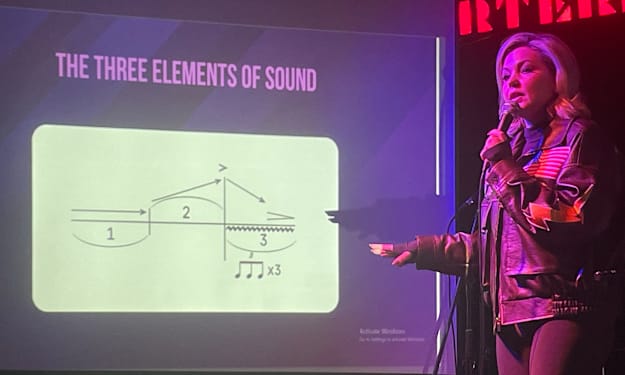
On April 4, 2026, I had one of those experiences that gives you a fresh perspective on everything you know. I've attended Riffs & Runs, a vocal workshop by a world-known vocal coach. I am publishing this in Blush community because we often underestimate how important voice is in our life and how it needs to be taken care of as a part of our body.
By Lana V Lynx7 months ago in Blush
A Deep-Dive Review of The Ebook Atelier
In a digital economy increasingly dominated by short attention spans, fleeting trends, and disposable content, very few platforms manage to distinguish themselves as genuinely valuable learning environments. The Ebook Atelier is one of those rare spaces. Rather than promising overnight success, viral shortcuts, or vague “make money online” formulas, The Ebook Atelier positions itself as something far more meaningful: a structured creative ecosystem designed to help individuals build high-quality digital products with longevity, purpose, and professional polish.
By Press Release 7 months ago in Blush
Willie Lynch
The document commonly known as the “Willie Lynch Letter” claims to be a 1712 speech given by a West Indian slave owner named William Lynch, instructing Virginia plantation owners on how to psychologically and socially control enslaved Africans. Although historians have widely debunked it as a modern fabrication, the themes it presents have resonated because they echo real practices of division, exploitation, and mental conditioning used throughout the era of slavery.
By Press Release 7 months ago in Blush
The Handshake Talent
Open opportunities Hey! I hope everything is going well for you. I wanted to reach out because I recently started sharing information about an opportunity that’s been gaining a lot of traction, and I think it’s something you or someone in your network might benefit from. It involves Handshake AI — a company that’s actively recruiting skilled professionals across a wide variety of specialized fields — and they’ve opened up a referral program that actually pays meaningful bonuses for connecting them with talented people.
By Press Release 7 months ago in Blush
The Science of Beauty: Why We Can’t Help But Judge a Face
Beauty. We’ve all heard the saying: “Beauty is skin-deep.” But let’s be honest, no matter how much we claim to value personality over appearance, our brains are wired to notice looks first. From the moment we meet someone, we subconsciously categorize them as good-looking, average, or unattractive. It’s an unavoidable truth of human nature.
By Areeba Umair8 months ago in Blush
Every Sheldon Finds Their Own Amy
The world is a loud place, but for some of us, it is mostly a confusing one. We spend our lives feeling like we were handed a script written in a language everyone else speaks fluently, while we are still struggling with the basic nouns. We are the ones who notice the hum of the refrigerator when everyone else is focused on the conversation. We are the ones who find comfort in the rigid structure of a schedule or the predictable patterns of a complex hobby. We are the "Sheldon Coopers" of the world. To be a Sheldon is to exist in a state of permanent, unintentional isolation. It is not always about being a genius, though it often involves a mind that refuses to turn off. It is more about a specific kind of social friction. You say the wrong thing at the right time. You miss the subtle sarcasm that makes a room erupt in laughter. You value truth over tact, and you find that the world often finds your honesty exhausting. Eventually, you start to believe that the safest way to live is to build a fortress of one. You convince yourself that you don't need a partner because no one could possibly navigate the labyrinth of your specific needs. But then, the world proves you wrong. Because the universe has a strange way of balancing itself out. For every person who feels like an outlier, there is another person wandering the same periphery. The saying goes that every Sheldon finds their own Amy, and it is perhaps the most hopeful promise for the misunderstood heart. Finding your Amy is not about finding someone who fixes you. That is a common misconception that ruins many relationships. A Sheldon doesn't need to be cured of their quirks, and an Amy isn't a therapist. Instead, finding your Amy is about finding the first person who looks at your fortress and doesn't see a wall. They see a home. An Amy is the person who understands that your need for routine isn't a burden, but a rhythm they can dance to. They are the person who hears your long, obsessive rants about a niche topic and doesn't just nod politely while checking their watch. They actually listen. They ask questions. They find the architecture of your mind fascinating rather than tiring. The beauty of this connection is that it is often founded on a shared sense of being "different." When two people who have spent their lives feeling like puzzle pieces from the wrong box finally meet, there is a profound sense of relief. It is the moment the static finally clears from the radio. You realize that you weren't broken after all. You were just a specific frequency waiting for the right receiver. For the observers on the outside, a Sheldon and Amy relationship can look baffling. People might wonder what she sees in him or why he has finally lowered his guard for her. They see the logic and the eccentricity, but they miss the quiet intimacy of being truly known. They miss the way she knows exactly how to calm his anxiety without making him feel small. They miss the way he shows his love not through grand, sweepingly emotional gestures, but through the steadfast loyalty of his presence. This isn't just a story for characters on a television screen. It is a reality for the person reading this who feels they are too much to handle or too difficult to love. We live in a culture that prizes "easy" relationships. We are told to find someone who fits perfectly into our existing lives without causing a ripple. But for the outliers, love is rarely easy. It is earned through patience and a willingness to learn a whole new set of rules. If you are currently sitting in your fortress, wondering if the gate should stay locked forever, remember that the world is vast. Somewhere out there is a person who isn't looking for a standard, easy love. They are looking for someone who thinks like you do. They are looking for the very things you try to hide because you’ve been told they are too much. Every Sheldon finds their Amy because the human heart is designed for companionship, even the hearts that are a little more complicated than the rest. It might not happen in your twenties, and it might not happen the way you imagined it would. But there is a profound, quiet magic in the moment you realize that your "weirdness" is actually the very thing that makes you beautiful to someone else. The script you’ve been struggling to read for so long finally makes sense when you’re reading it with someone else. You don't have to change the language you speak. You just have to wait for the person who took the time to learn it. So, keep your mind sharp and your heart open. Your person is coming, and you will realize that the things you once thought made you "unlovable" are actually the very reasons they fell for you in the first place.
By Nanu Nnabuife9 months ago in Blush
The Warmest Christmas Decor Starts with Felt: Eco-Friendly Ornaments & Handmade Magic from Nepal
This Christmas season, felt products are taking the spotlight as families look for sustainable, handmade Christmas craft home decor with meaning. From adorable felt Santas and ornaments to garlands, wreaths, and festive table accents, felt adds warmth, nostalgia, and eco-friendly beauty to any home. In this blog, we explore why felt is the perfect choice for holiday decorating, the craftsmanship behind Nepali felt artisans, and why buyers in the USA, UK, and Canada increasingly prefer these handmade treasures. Also included: decorating ideas, gift inspiration, care tips, and a simple DIY felt Santa ornament tutorial.
By Michael Philips11 months ago in Blush
Salsa Dancing into the Social Sciences: How Passion and Structure Meet in Research
In *Salsa Dancing into the Social Sciences*, sociologist **Kristin Luker** redefines what it means to do research in the social sciences. Rather than treating research as a cold, mechanical process, Luker compares it to salsa dancing — a creative, passionate, and fluid art form that requires both discipline and spontaneity. Her book, published by Harvard University Press, serves as both a methodological guide and a call for intellectual freedom. She speaks to students, early-career researchers, and even established academics who feel constrained by the rigid norms of modern research. Luker begins by describing the current crisis in social science: too many researchers focus on technical precision and statistical sophistication while losing sight of the deeper human questions that make social inquiry meaningful. For Luker, real research starts not with data but with curiosity. Every study, she argues, must begin with a “burning question” — an issue that stirs the researcher emotionally and intellectually. This passion gives research its rhythm, just as music gives rhythm to a dance. Without it, even the most rigorous project becomes lifeless and disconnected. The author takes issue with the artificial divide between **quantitative and qualitative research**. She challenges the assumption that numbers automatically produce truth or that qualitative approaches lack rigor. Instead, she calls for “methodological salsa” — a blending of approaches where the researcher moves gracefully between interviews, field observations, and statistical patterns, choosing methods that best fit the research question rather than adhering to academic traditions. Luker believes this flexibility is crucial for understanding complex human realities that cannot be reduced to numbers alone. A major focus of the book is **how to develop a solid research design** while maintaining creativity. Luker encourages researchers to build what she calls a “conceptual map,” a dynamic framework that links theories, questions, and data. This map helps scholars stay oriented without becoming rigid. She likens it to the steps in salsa dancing: structure provides balance, but too much structure kills the movement. The best researchers, like the best dancers, know when to follow rules and when to improvise. Luker also dedicates several chapters to **the emotional and ethical dimensions of research**. She reminds readers that social scientists study living, breathing people whose stories carry pain, joy, and complexity. Researchers, therefore, must act with empathy and moral awareness. Objectivity, in her view, does not mean detachment. Instead, it means being honest about one’s own position and biases. Luker’s approach promotes a more human, reflective kind of scholarship — one that values understanding over authority. Another significant aspect of the book is its guidance on **writing and communication**. Luker insists that writing is not a final step but an integral part of thinking. Through writing, researchers discover what they truly mean and refine their interpretations. She urges scholars to write regularly, even imperfectly, and to treat writing as an evolving conversation rather than a polished performance. Like salsa practice, the process can be messy, but the rhythm eventually emerges. Luker’s advice on writing resonates with many young researchers who struggle with perfectionism or academic anxiety. Luker’s teaching background adds warmth and accessibility to her writing. She uses real examples from her career to show how researchers can adapt when projects take unexpected turns. She discusses how hypotheses sometimes fail, how data can surprise us, and how the best insights often appear when we least expect them. Her stories highlight the unpredictable, living nature of social research, contrasting sharply with the sterile, formulaic methods taught in many graduate programs. The **metaphor of salsa dancing** also extends to the collaborative side of scholarship. Luker views research as a social act that requires interaction with peers, mentors, and communities. A good dancer listens to their partner and adjusts to the music; similarly, a good researcher listens to participants, colleagues, and feedback. She emphasizes that communication beyond academia is essential — the public deserves to understand the findings of social research. For Luker, sharing knowledge is a democratic responsibility, not just an academic achievement. The book’s deeper message is a critique of **academic bureaucracy**. Luker argues that modern universities often reward conformity, funding, and publication counts rather than genuine insight. This system discourages creative and risky ideas. By bringing back the spirit of curiosity, play, and intellectual courage, she hopes to remind scholars why they entered the social sciences in the first place: to make sense of human life and contribute to society. Research, she insists, should feel alive — not like a checklist, but like a dance that connects mind, body, and emotion. Ultimately, *Salsa Dancing into the Social Sciences* is more than a research manual; it is a manifesto for passionate inquiry. Luker blends humor, storytelling, and philosophy to show that social science can be both disciplined and joyful. She invites readers to embrace imperfection, trust intuition, and move fluidly between theory and practice. In her words, “Good research is like salsa — it has rhythm, passion, and the courage to move even when the next step isn’t clear.” Her vision of research is liberating and deeply human, reminding us that understanding society requires not only method but also heart.
By America today 12 months ago in Blush