
New Salon Startup Budgeting: How Much Do Wholesale Hair Extensions Cost? A Salon Buyer’s Guide
New Salon Startup Budgeting: How Much Do Wholesale Hair

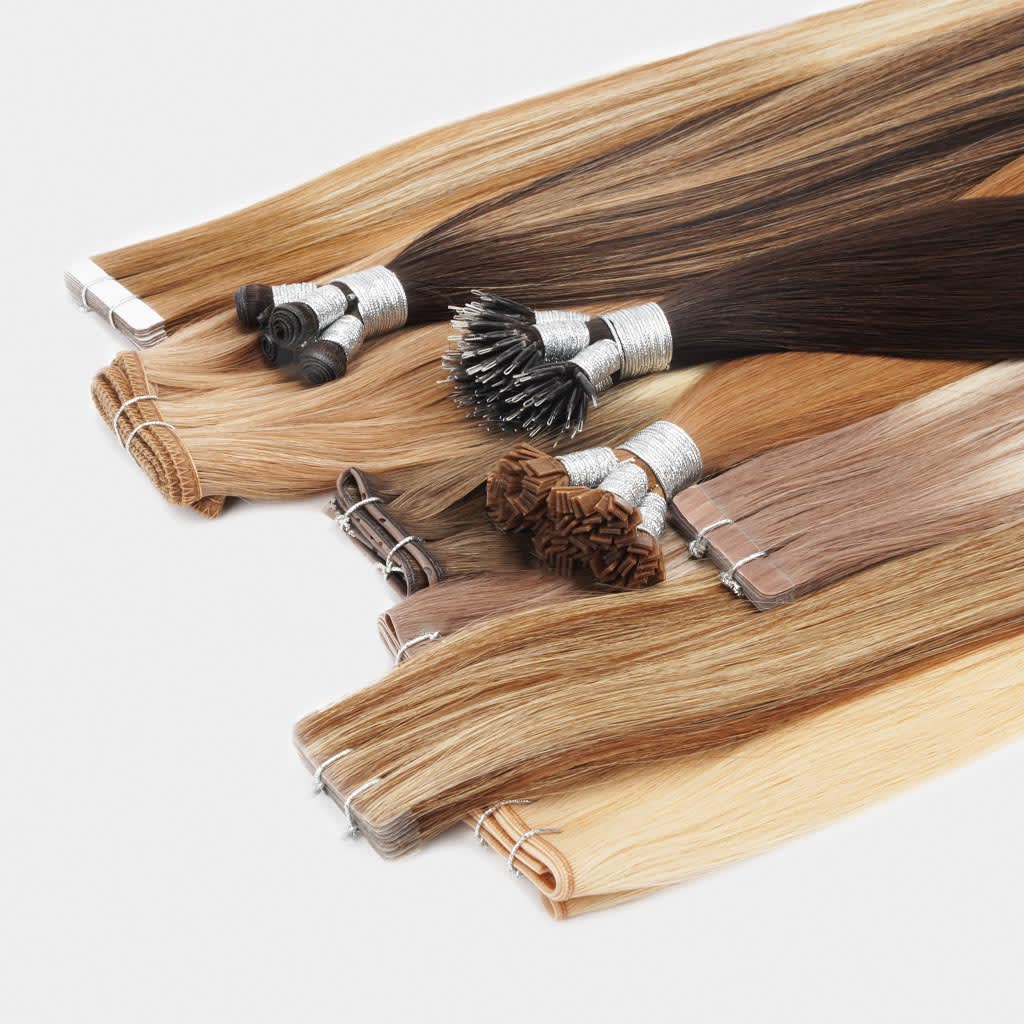
Your Salon Startup Cost begins with one main asset: Wholesale Hair Extensions. For most new salons, hair inventory isn't just some side bill to pay. It's the main investment that actually drives your service revenue and retail sales. Pricing, volume, and quality directly shape your upfront budget. So, to lock down your financial baseline, you've got to understand exactly how hair stock fits into the much bigger startup capital picture.
Key Takeaways
Allocate 20%–35% of your startup budget to initial hair inventory to maintain healthy cash flow.
Budget an extra 10%–25% above wholesale prices to cover hidden shipping, tax, and duty costs.
Maximize ROI with a lean inventory; stock core lengths (16"–22") and colors (#1B, #613) that drive 80% of sales.
Price services profitably by doubling the wholesale hair cost and adding your standard hourly installation rate.
Vet suppliers by seeking low minimum order quantities (5–20 bundles) and testing physical samples before bulk purchasing.
The Financial Blueprint: Integrating Inventory into Your Salon Startup Cost
Your Startup Capital acts as a strict ceiling for every single choice you make. And inventory lands right in the middle of a major conflict: Fixed vs. Variable Costs. Things like rent, licenses, and salon build-outs are fixed. You pay those no matter what. But hair stock plays by different rules. It grows as your sales grow, yet it still asks for cash upfront. Spend too much, and your cash flow dries up. Spend too little, and you can't actually do hair. Finding that sweet spot starts by asking one basic question about how you allocate your money.
What Percentage of a Salon Startup Budget Should Go Toward Initial Inventory?
Most owners block out roughly 20% to 35% of their total Salon Startup Cost just for their Inventory Budget. So if you're working with a $50,000 startup fund, you'll normally set aside somewhere between $10,000 and $17,500 specifically for hair stock.
Drop below that 20% mark, and you risk limiting your service options and retail sales. Go above 35%, and you might choke the operating cash you desperately need for rent and payroll.
The exact percentage really just depends on your specific salon model. A spot focused mainly on braids won't need as much stock as a full extension studio using Newtimes Hair. From there, that percentage quickly turns into real dollar amounts when you start buying wholesale.
The Hidden Costs of Wholesale: Beyond the Bundle Price
Buying Wholesale Hair Extensions almost never stops at the listed price per bundle. You have to factor in shipping fees, import duties, and taxes. These extras can easily slap another 10% to 25% on top of your first order.
You'll also need the right gear. Things like install kits, storage bins, and display setups can easily cost you another $1,000 to $3,000 right out of the gate.
Keep in mind that these little extras pull directly from your Startup Capital. They don't come out of your main inventory budget. Forget to track them, and you'll end up with massive budget gaps. But once you get a clear picture of these hidden costs, mapping out exact 2025–2026 pricing for bulk hair orders becomes completely manageable.
2025/2026 Wholesale Price Transparency: Benchmarking Your COGS
Wholesale hair extensions pricing in 2025–2026 follows some pretty clear patterns. Knowing them is the best way to keep your COGS (Cost of Goods Sold) in check before you even start negotiating. Most suppliers base their prices on the method, hair grade, and weight per bundle. Tape-ins are usually your cheapest option, while K-tips and premium wefts climb up the price ladder fast. Here's a quick benchmark to ground your numbers so you know exactly how each method stacks up.
Comparing Costs by Method: Tape-ins, Wefts, and K-Tips
Tape-in extensions usually land somewhere around $40–$80 per 100g when buying wholesale. They're much faster to make and install, which keeps the price down.
Hand-tied wefts jump up to about $80–$150 a bundle. The custom stitching and thinner tracks take a lot more work, so suppliers have to charge more for the labor.
K-tips usually range from $90 to $180 per 100g. Every single strand is pre-bonded. That adds production time and naturally pushes the cost up.
These price gaps aren't just random. Price usually points right to the hair grade, and that directly shapes how clients judge your end results.
Quality vs. Price Matrix: Remy vs. Virgin Wholesale Tiers
Remy hair usually runs about $60–$120 per bundle and lasts 6 to 12 months with regular salon maintenance. It keeps the cuticles aligned, but you might get hair from mixed donor sources.
Virgin or raw hair bundles start around $120 and can easily go over $250. They last 12 to 24 months and come from single donors, making the quality way more consistent.
Paying a higher price upfront can actually protect your profit margins. Fewer complaints. Fewer replacements.
Your choice in quality doesn't just change your expenses. It totally defines what SKUs you can confidently sell on your salon floor.
The "Lean Inventory" Strategy: Maximizing Newtimes Hair ROI
High margins don't mean much if your cash is stuck on the shelves. But the 80/20 rule fixes that: about 20% of your SKUs drive roughly 80% of your sales. By using Newtimes Hair as a sourcing benchmark, a tight SKU mix improves inventory turn and keeps your money moving instead of gathering dust in slow sellers. The goal is simple. Stock what sells fast, reorder often, and cut dead stock early. And that starts with picking the right core SKUs.
The Core 80/20 SKU Mix: Essential Lengths and Colors
Your profit actually sits in a small, repeatable SKU (Stock Keeping Unit) set. Focus first on 16–22 inch lengths. They easily fit most client requests without needing any custom cutting.
Color demand is even tighter. #1B (natural black) and #613 (blonde for toning) handle a massive chunk of your installs. This SKU-mix logic keeps your shelf lean while staying perfectly flexible for styling.
Here's a practical starter mix: 16", 18", 20", and 22" in #1B, plus 18" and 20" in #613. Just reorder based on weekly sales, not guesswork. Pinning down the right SKUs is the very first step in calculating your potential profit.
Stock-Heavy vs. Just-in-Time: Choosing Your Inventory Model
Inventory strategy really depends on your salon's scale. Small or brand-new salons usually win with just-in-time ordering. You buy after a consultation, lower your upfront spend, and avoid sitting on slow-moving hair extension inventory.
Larger salons often go stock-heavy on their core SKUs to speed up service and bump up daily capacity. That improves client flow, but it definitely ties up more of your cash.
Most owners land right in the middle. They stock the fast movers, then order specialty items as needed. This choice directly impacts your required startup capital.
Calculating Profitability: From Wholesale Cost to Six-Figure Revenue
Lean inventory only works if the numbers actually hold up. Hair extensions give you great profit margins because you control both the product markup and the service fees. A standard pricing setup just doubles your wholesale cost, then layers the installation on top. Buy a bundle from Newtimes Hair for $80, sell it for $160, and charge a $120 install fee. That's a $200 gross profit per client. This math scales fast. It also leads right into how you should price every service so you don't undercut yourself.
How to Calculate Hair Extension Pricing Without Losing Money
Start off with a simple rule. Your product price should be twice the wholesale cost, then just add your service time based on your normal hourly rate. If an install takes you two hours at $60 an hour, that’s a $120 service charge right on top of the marked-up hair.
Your pricing model also needs to account for future maintenance. Tightening, repositioning, or toning the hair every 6 to 8 weeks can easily add $80 to $150 per appointment. If you skip calculating this part, you're just underpricing your actual workload. Simple as that.
Taking this long-term approach naturally sets up the true profit driver—client lifetime value.
Annual Revenue Projections: The Lifetime Value of an Extension Client
Just one regular client can bring in $1,200 to $2,000 a year when you bundle the first install with five to seven maintenance trips. This isn't just a theory. It's repeatable math.
So, how many clients do you actually need to hit a six-figure income? Roughly 60 people spending $1,500 a year gets you right to $90,000. And that's before you even count tips or selling retail products.
Setting revenue goals like this shows you exactly how much capacity your salon truly needs to scale.
Selecting a Partner: Why Newtimes Hair Fits the Startup Model
Your margins might look great on paper, but they only mean something if your supplier actually delivers on time and scales with you. Newtimes Hair is a solid choice for startups because their MOQ (Minimum Order Quantity) is completely manageable. You won't end up tying your cash up in stock that just sits there. Reliability is just as big a deal as pricing. And that all begins with how you vet your vendors.
Vetting Your Vendor: MOQs, Samples, and Return Policies
Trying to figure out how to pick a wholesale hair vendor for your new salon? Start by looking at the MOQ. Try to find a sweet spot around 5–20 bundles per order. This lets you test the waters without blowing your budget.
Always get some samples before buying in bulk. Test the texture, see if it sheds, and make sure the colors actually look right under real salon lights.
Take a hard look at their return policies, too. You need to know exactly what happens if there's a defect, an order gets mixed up, or things just take too long to process.
Once you nail down these basics, you're ready to tackle the next big step: figuring out what tools you actually need to start serving clients.
Building Your Professional Extension Starter Kit
Wondering what a salon starter kit runs you wholesale? Plan on spending anywhere from $150 to $400, and that's on top of your hair inventory.
The main stuff you'll need includes pliers, beads, thread, needles, and a color ring to match shades. Don't worry about all the fancy extras in the beginning. Just focus on what you'll use every single day.
Grab some sanitation supplies and basic storage bins to keep your inventory clean and sorted.
When your kit is finally put together, you'll be fully ready to take on that first paying client with confidence.
Frequently Asked Questions for Salon Buyers
How much money is needed to start a hair salon?
Anywhere from $60k to $500k. Rent and build-outs drain your cash fast. Earmark exactly 20-35% of your total budget for initial hair inventory. Do not overspend on chairs while starving your retail stock.
What is the average cost to open a small hair studio?
$30k to $100k for a bare-bones setup. Cheaper rent, but inventory costs hit just as hard. Always add 10-25% to your wholesale hair budget for shipping and duties. Hidden fees will ruin your margins otherwise.
Should I let clients bring their own hair?
Never. You lose entirely on retail markup and quality control. Double your wholesale cost and add your hourly rate. That is your profit. If they bring trash hair and it tangles, they blame your install.
How many clients do I need to break even on my initial inventory?
5 to 10 clients if you price right. Keep stock lean. Only buy core lengths 16-22 inches and colors 1B or 613. Those specific items drive 80% of your sales. Dead inventory equals dead cash.
About the Creator
Leo
Passionate men's hairstylist with a keen eye for detail and a knack for creating on-trend looks. Dedicated to delivering hair restoration education that enhances individual style.
Enjoyed the story? Support the Creator.
Subscribe for free to receive all their stories in your feed.
Comments
There are no comments for this story
Be the first to respond and start the conversation.