
W.A.S.P. Tales
Four stories about a controversial metal band, the drummer who changed the way I played, and music that still hits hard.


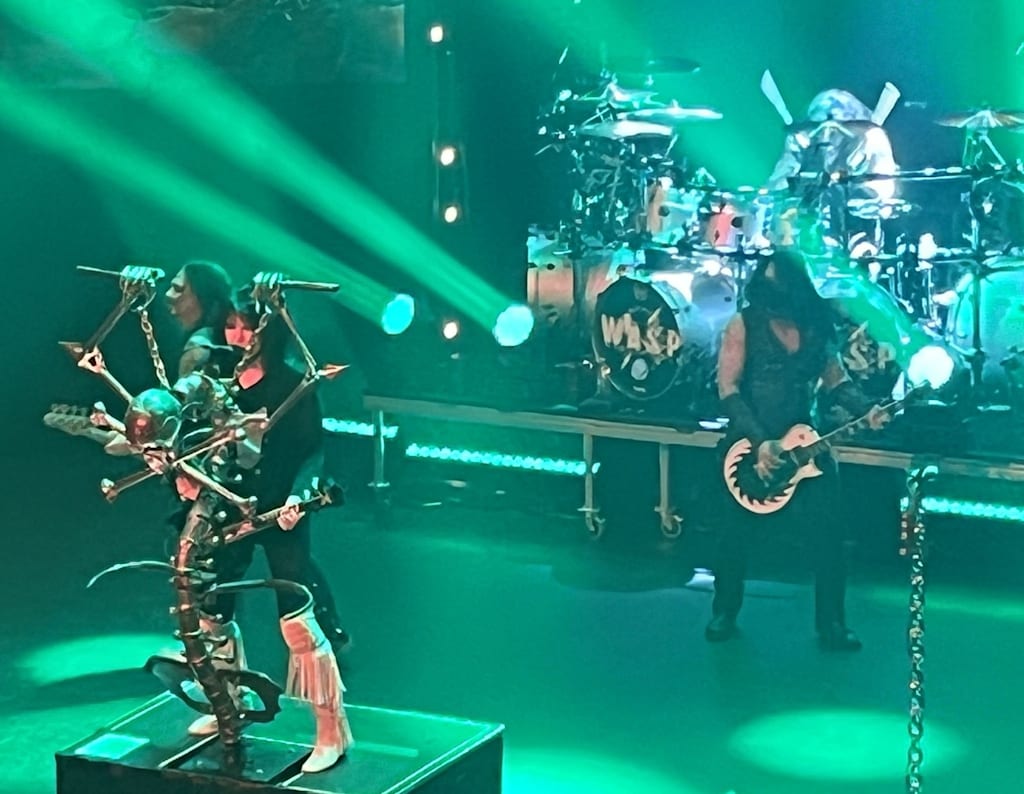
“The most outrageous band in the world…W.A.S.P.”
— Introduction to W.A.S.P.’s Live…In The Raw
Unbridled outrageousness was both a blessing and a curse for Blackie Lawless and W.A.S.P. Having Tipper Gore and her gang of Washington wives repeatedly bring up their name as an example of why children needed protection from music certainly gave the band street cred. But how seriously can a band be taken when its most notorious song is subtitled “F*** Like a Beast”?
That’s a shame, because underneath the vulgar lyrics and bloody stage presence was quality songwriting. Unlike KISS, I always felt W.A.S.P. didn’t fall apart without the spectacle.
While some other bands from the hair metal era broke up or faded away, W.A.S.P. has continued to tour, although only Lawless remains from the original ’80s lineup. As I prepared to see them at Seattle’s Moore Theatre, I thought about their place in my musical journey. They may not have always been a headline act, but their parts in my story were certainly memorable.
Here are four of them…
The Lone Headbanger
“My scars, insane
—Slayer, “Hate Worldwide”
My life, profane
I deny, defy
And spread a little hate worldwide”
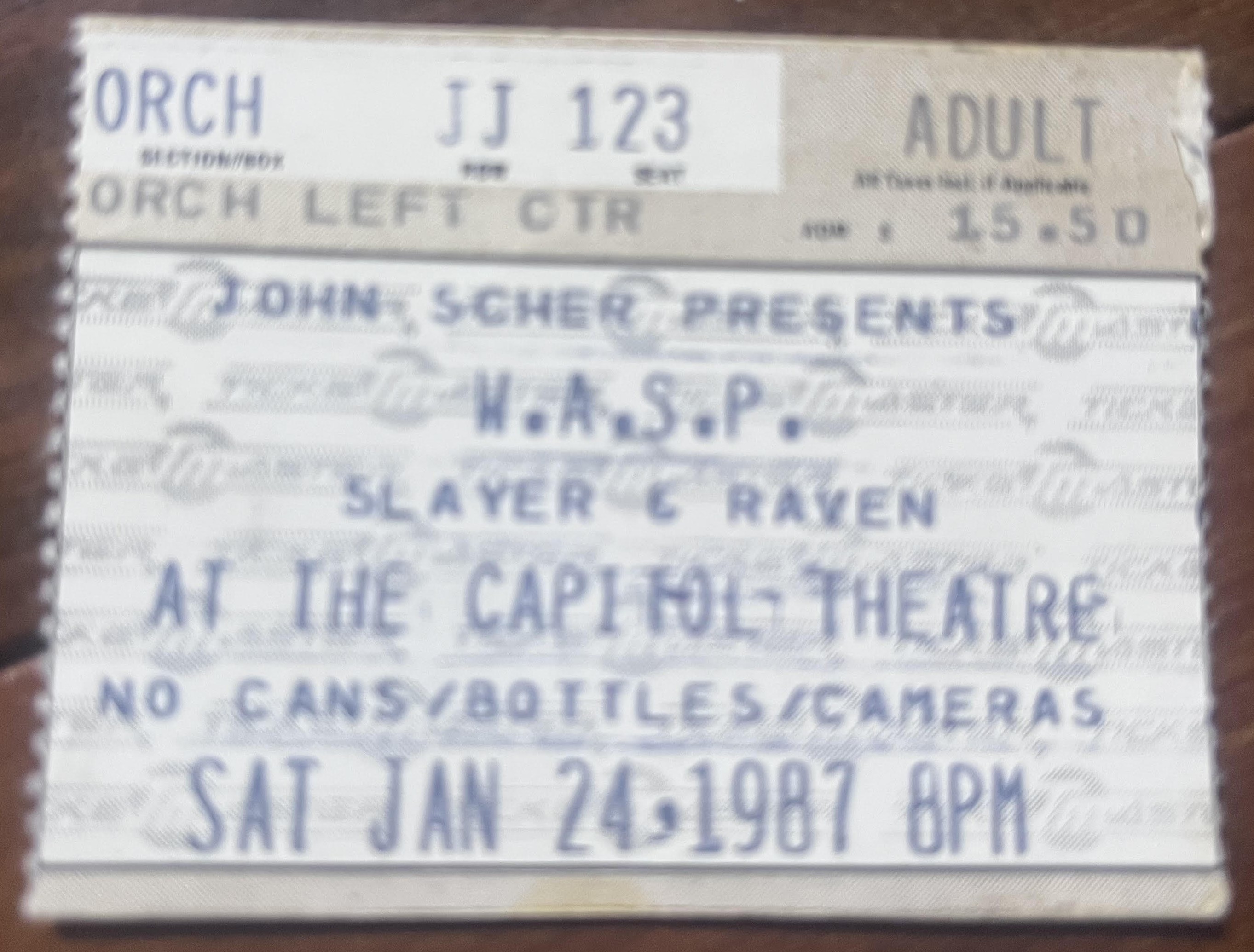
Was there a more appropriate place to see my first W.A.S.P. concert than the Capitol Theater in Passaic, New Jersey, a venue that showed porn when no concerts were scheduled? It seemed like the perfect setting for “9.5.-N.A.S.T.Y.” and “Sex Drive.”
The lineup for the 1987 tour supporting Inside the Electric Circus appealed to me, but I have eclectic tastes in music. Die-hard fans of the second support act, Slayer, have a reputation for being less tolerant. Some take that intolerance to the extreme, becoming downright hostile toward any band that isn’t Slayer.
After Raven finished their opening set, we ran into an example of these fans. He was bragging about how he had punched Raven’s bassist/vocalist when the musician dared to enter the audience during a song. His reason for the violence? They “sucked.”
Right after we returned from the lobby, someone took one of the seats in front of us. Attending the concert alone, he was dressed in the uniform of heavy metal: jeans and a leather jacket.
As Slayer took the stage, he stood up, carefully folded his jacket, and gently placed it on his seat. At the first note, he threw the devil horns in the air and started headbanging.
He remained standing, his hair flying, throughout the entire set. When the lights came up, he unfolded his jacket, put it on, and left. His ritual complete, he had no need for W.A.S.P.
I thought of the Lone Headbanger as I sat on the train headed to Seattle. Before meeting me almost 20 years ago, my wife probably wouldn’t have imagined going to a metal concert. But she’s been a trooper as I’ve dragged her to Anthrax, Slipknot, and Metallica concerts. W.A.S.P., however, proved to be a bridge too far.
If I was going to this show, I was going alone.
It turned out that attending the concert alone wasn't all that different. It’s not as if conversations are easy when the volume is high enough to make your eardrums bleed.
The difference came on the way home. It felt strange not being able to share my thoughts with someone else who had just experienced the same thing.
As I walked back to the train station after the show, I enjoyed eavesdropping on other people’s conversations about the concert. But I held my tongue instead of joining in. I’ve come a long way toward conquering my shyness, but I’m not quite there yet.
Owning It
“No escape from the post tonight,
—Detour, “Ball and Chain”
The handcuffs have no key.”
The guitarist in my first band, Detour, had written a song called “Ball and Chain.” While it was certainly much less explicit than “Animal,” it was clearly about S&M.
We were still breaking in a new bassist when we were booked for the Rockland County Fair's Battle of the Bands. As we put together the set list, our newest member said the song was offensive and demanded that we not play it.
The rest of us were obstinate teenagers, and we included the song without seeking consensus. When its turn came up in the set list, the bassist took off his instrument and sat down.
Our singer stepped up to the mic and introduced the song: “We’d like to play a song written by our bassist. This song is ‘Ball and Chain’…”
We then played the song, the bassist silent, but his mouth hanging open.
In a strange way, today's Blackie Lawless reminds me of that bassist. He has become a born-again Christian, and his beliefs clash with the raw sexuality of “Animal,” the song that first put his band on the map. In recent tours, he has admitted to skipping the song because it clashes with his current beliefs.
Unlike my band’s story, nobody in W.A.S.P. seems willing to challenge Lawless's decision to abandon the song. The band is clearly his to control.
At the Seattle show, it was left off a set list meant to celebrate the first four albums. Instead of sitting on a chair in protest, Lawless performed an interlude that repeatedly invoked Jesus’s name.
Lawless has argued that the song isn’t necessary because it didn’t appear on the original U.S. release of the album. But that excuse falls flat. “Animal” was supposed to open the band’s self-titled debut, but Capitol Records removed it to avoid problems with distribution. The band released it as a single in the UK on an independent label, and it became a highly sought-after import in the U.S. “Animal” was later restored as the lead track on a reissue of the debut album.
What Tipper Gore failed to accomplish, Lawless did himself.
Although audiences no longer get to hear “Animal,” other songs about sex (“On Your Knees”) and drinking to excess (“Blind in Texas”) retained their places in the setlist. Lawless's filters, it seems, are selective.
The Metal Drummer Emerges
“WANTED: Metal drummer to complete a band combining the power of Metallica with the progressiveness of Rush.”
A year at the Musicians Institute in Hollywood had given me the chops to get the gig with Through The Flesh, but Shaun, the band’s demanding leader, kept complaining that I wasn’t playing “metal enough.” During my practice time, I searched through my extensive CD collection, looking for the sound I needed to emulate.
The Christmas before I moved to Los Angeles, my mother had given me my first CD player. So I’d have something to play on it, she included W.A.S.P.’s Live…In The Raw.
I’d always laughed at the irony of my first example of this supposedly superior sound technology coming from a band not exactly known for its nuance. The fact that it was a live album, generally rawer than its studio counterparts, made the punchline even better.
But at that moment, it was exactly what I needed. Listening to the album on repeat, I began to understand how Steve Riley’s drumming punched through the rest of the band. It was hard to describe, but I was beginning to internalize it.
That lesson helped turn me into a metal drummer and finally silenced that complaint about my playing. Shaun still had plenty of others.
Shortly after the live album was recorded, Steve Riley left W.A.S.P. and became better known as the drummer for L.A. Guns. A few years later, I attended a drum show that included an autograph session with Riley.
While most people were handing him L.A. Guns merchandise to sign, I reached the front of the line and presented my copy of Live…In The Raw. He smiled, showed it to the person sitting next to him, and said something about it being a reminder of his past. I got the impression he was pleased that someone remembered his work with W.A.S.P.
I wish I’d told him what his playing had meant to me, but once again, my shyness got in the way.
Rest in peace, Steve Riley.
Aging Gracefully
“I’m never getting old.”
—W.A.S.P., “I Wanna Be Somebody”
One of the best parts about being a music fan in a new city is discovering new music venues. As I walked into the Moore Theatre, I was immediately reminded of the kind of theater you would see on Broadway in New York, although those venues generally have more shine. The interior had definitely seen better days.
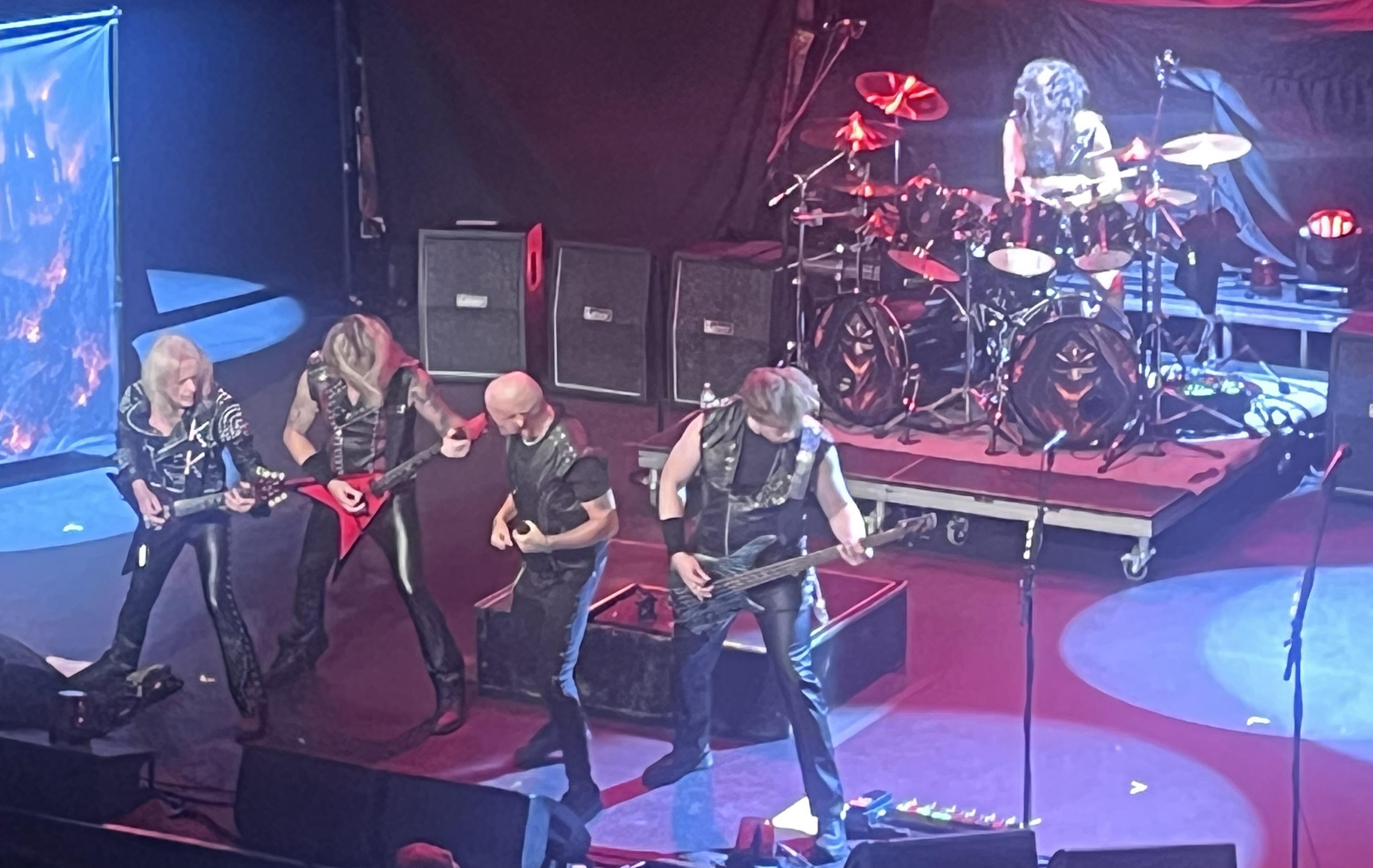
One reason I decided to buy tickets was that KK’s Priest was opening. If you’re going to have a band playing Judas Priest covers, you can’t do better than having two former members of the actual band on the roster. Actually, by that logic, they’re almost as much Judas Priest as Judas Priest.
It was great hearing Judas Priest songs, along with a few originals, played in such an intimate environment. The band looked the part, as if they’d just stepped out of a gay biker bar, and performed many of the expected stage moves. That wasn’t surprising, given that K.K. helped make them famous.
As the band left the stage, I found myself wondering whether the bassist had even been born when some of those songs were recorded.
As W.A.S.P. began to play, comparisons to Mötley Crüe’s subpar performance at SoFi were inevitable. It seems criminal that Mötley Crüe is playing stadiums while W.A.S.P. is holding court in venues that seat barely 1,800 fans. They sounded that good.
With this version of the band, Lawless had traded the chaos of Chris Holmes for power and precision. After seeing Holmes's infamous poolside interview in The Decline of Western Civilization Part II: The Metal Years, I'm relieved he's still alive. While his sound was instrumental in creating these songs, the current guitarist, Doug Blair, kept them sounding fresh.
That’s not to say Holmes was completely absent. In the second half of the set, the band’s music videos played in their entirety on screens behind them. At first, I thought this was a cool tribute to what had come before, but the videos’ constant presence eventually became a distraction from what was happening on stage.
The videos were also a reminder that the current drummer, Aquiles Priester, was following in the footsteps of Riley and his successor, the late Frankie Banali. These were big skins to fill, and Priester was up to the task.
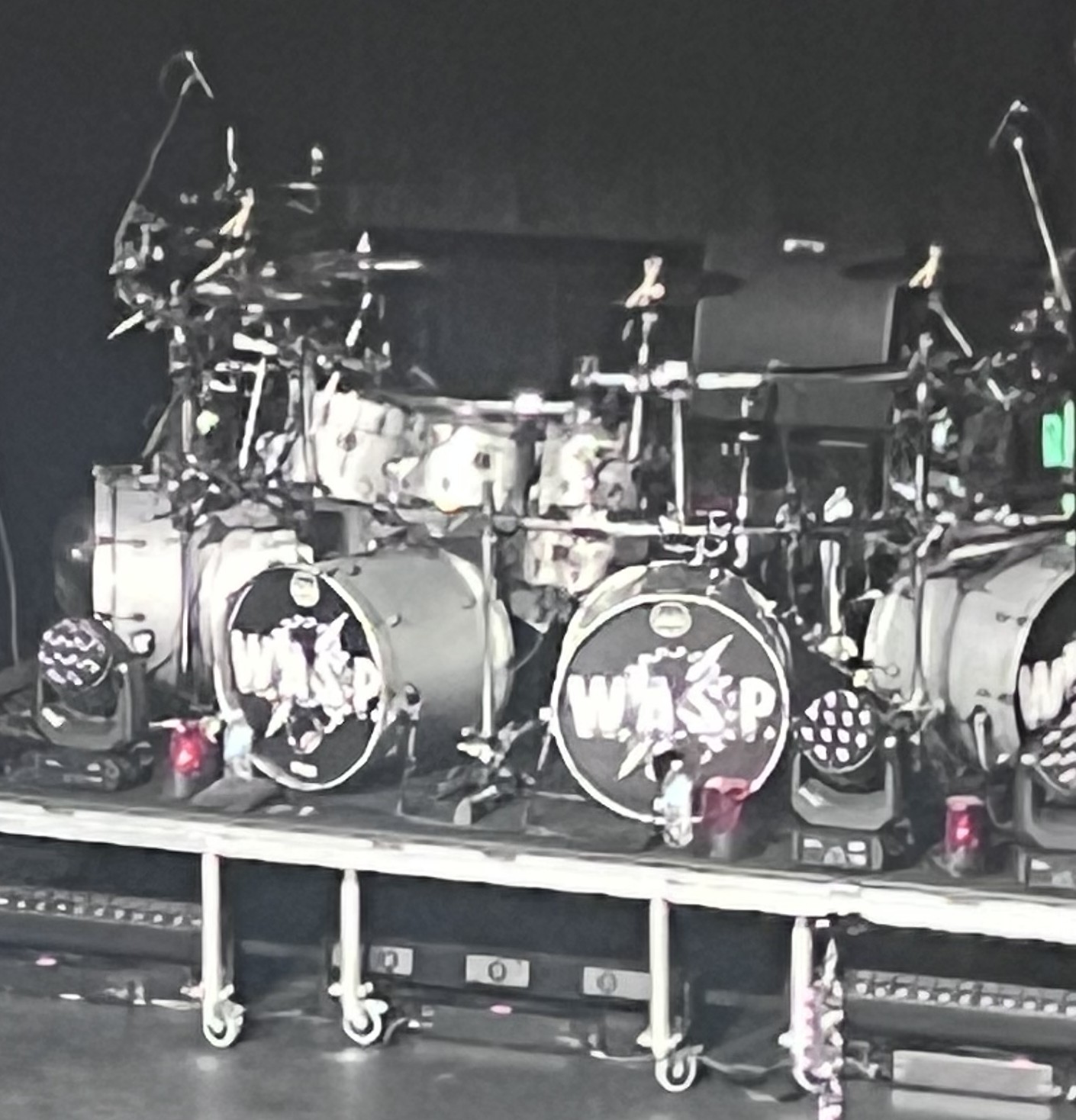
While too many metal drummers have given up the visually impressive double-bass-drum kit for the convenience of a single bass drum and double pedal, this kit had four bass drums. It was metal excess in its purest form.
Two weeks earlier, I was inspired watching Anika Nilles successfully pay tribute to Neil Peart’s intricate drum parts. At W.A.S.P.’s show, I sat in admiration of the power that can emanate from behind a drum kit.
It really made me miss the drum set I sold before moving up here.
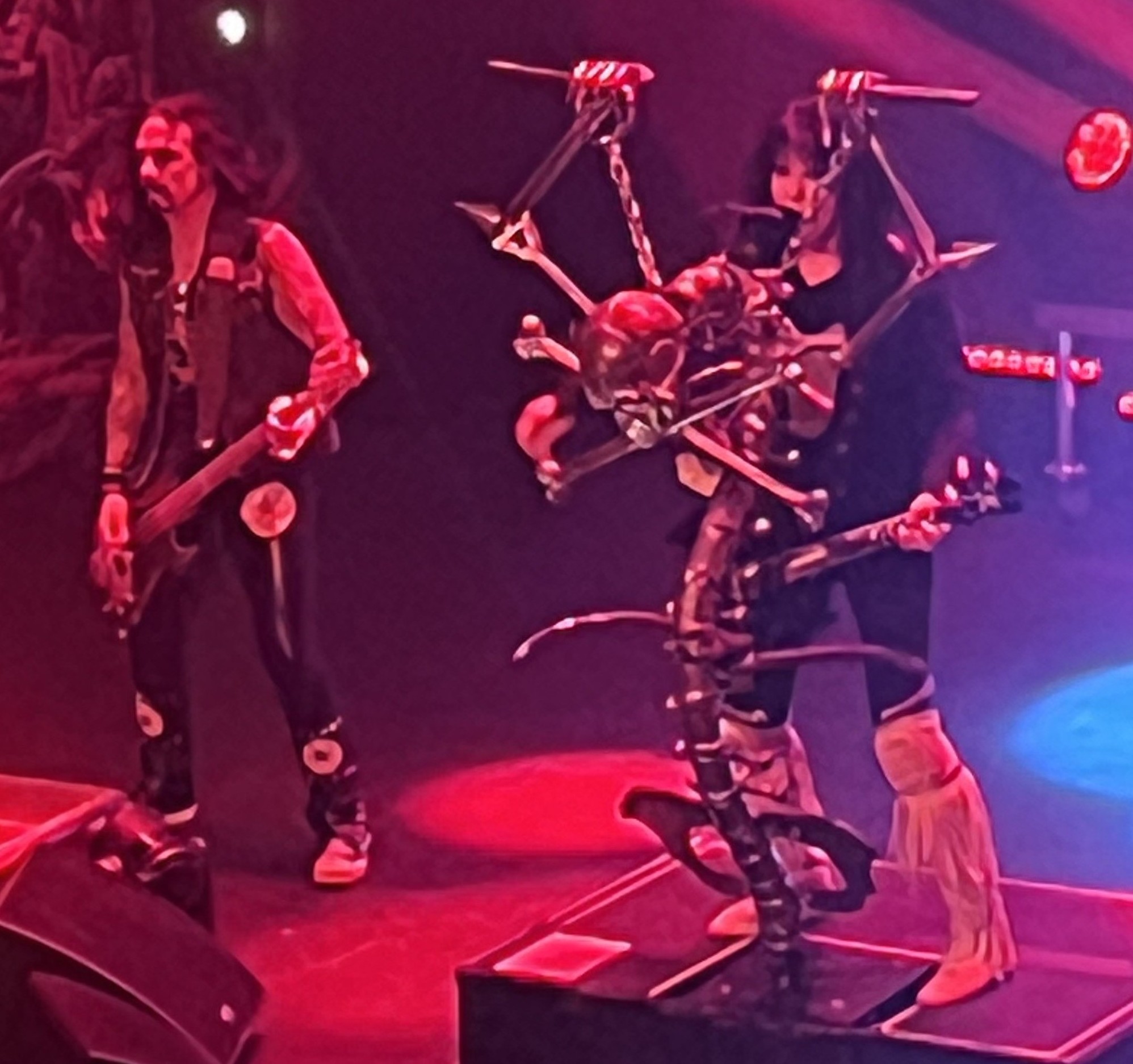
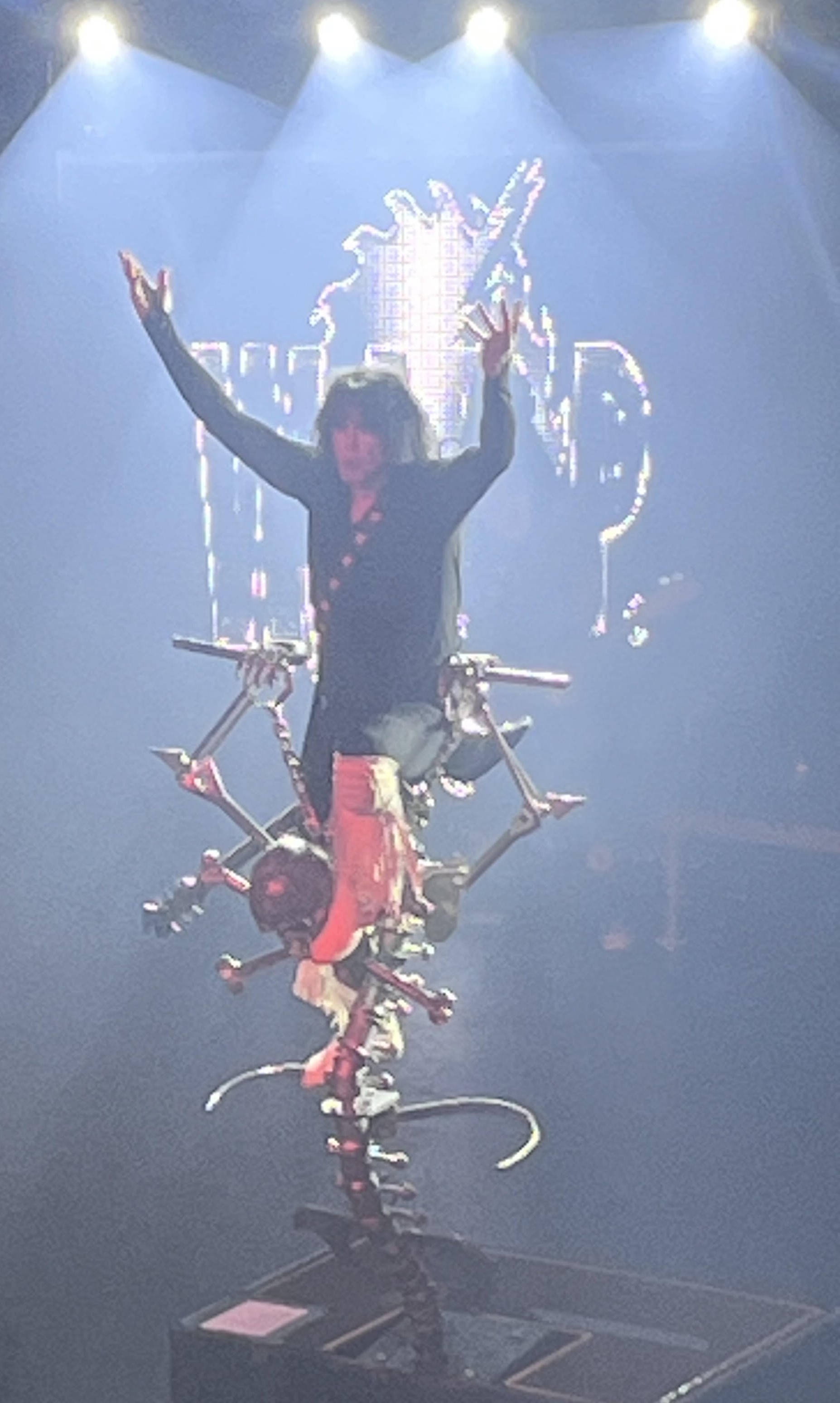
Lawless ended the night perched atop his elaborate microphone stand in a manner that defied his age. Seventy-year-olds aren’t supposed to be doing that. They could break a hip.
About the Creator
Carl J. Petersen
Carl Petersen is a former Green Party candidate for the LAUSD School Board and a longtime advocate for public education and special needs families. Now based in Washington State, he writes about politics, culture, and family.
Enjoyed the story? Support the Creator.
Subscribe for free to receive all their stories in your feed.
Comments
There are no comments for this story
Be the first to respond and start the conversation.