
Repetition, Rhythm and the Space Between - Raffaele Scoccia Takes on Philip Glass’s “Etude No. 6”
A hypnotic new piano performance finds Raffaele Scoccia exploring the subtle power of repetition in one of Philip Glass’s most compelling Etudes.

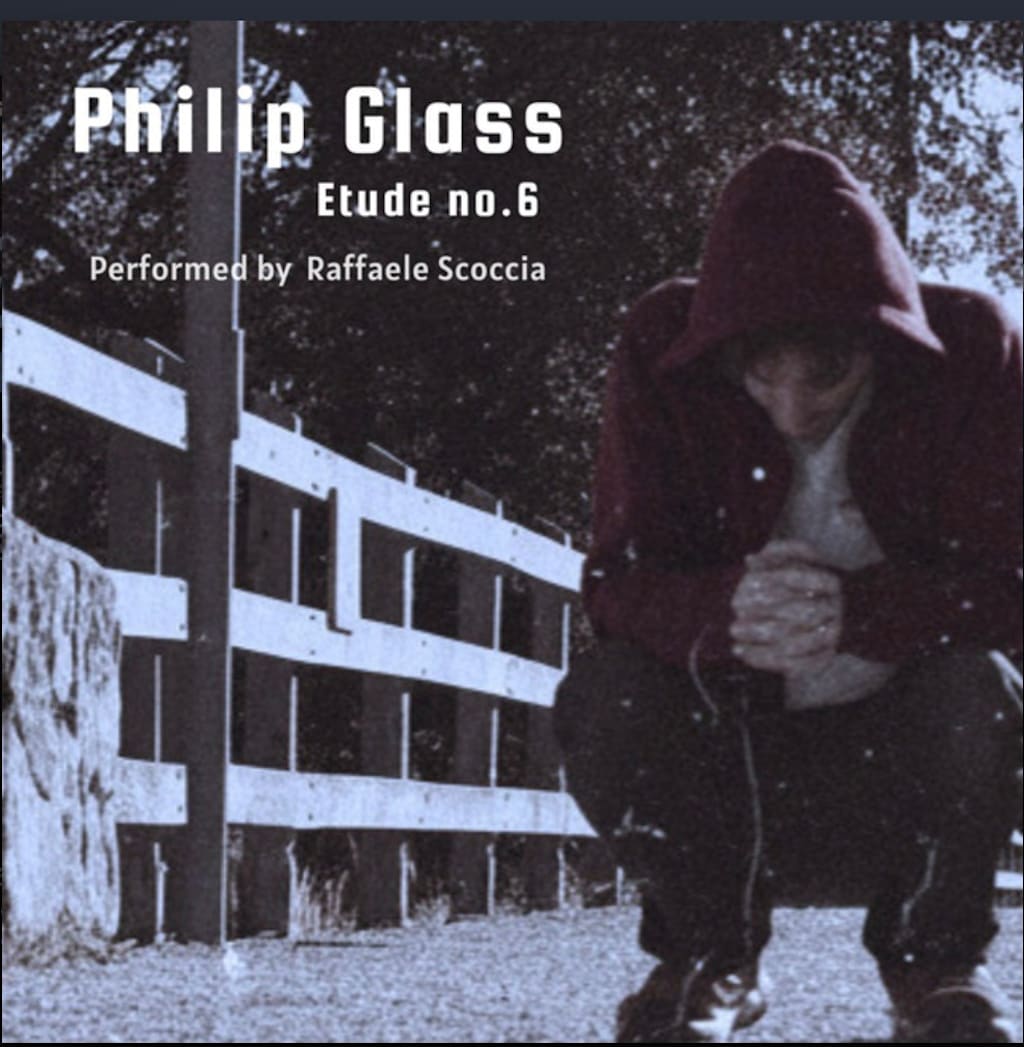
There are some pieces of music that announce themselves immediately, throwing everything they have at you in the opening bars. Philip Glass’s “Etude No. 6” takes the opposite approach. It begins with a handful of notes, a simple rhythmic idea, and then keeps going. And going. And going.
But somewhere along the way, those repeated notes stop sounding like repetition at all. That is the cleverness of Glass, and it is also what makes Raffaele Scoccia’s new recording of “Etude No. 6” so interesting.
This is music built from relatively small components, but those components have an extraordinary ability to shift in meaning as they return. What initially sounds like a pattern gradually becomes a pulse, then a texture, and then almost a kind of musical breathing.
Scoccia is no stranger to this kind of intimate piano writing. After years of exploring electronic music and production through his Moon Rocket project, the Italian composer and pianist has increasingly returned to the instrument that first captured his imagination. His recent original compositions have been concerned with nature, memory, time and introspection, and that interest in the emotional possibilities of a single instrument makes his decision to record Glass feel like a natural progression.
“Etude No. 6” comes from an earlier stage in Glass’s long running relationship with the piano. The composer’s 20 Etudes were written between 1991 and 2012, developing from works originally intended partly to expand Glass’s own piano technique into a much larger body of music. Glass himself has described the Etudes as a way of exploring different tempos, textures and techniques, with the later works opening up new possibilities in harmony and structure.
But you don’t really need to know any of that to appreciate this piece.
Listen here:
Those repeated notes are impossible to ignore, and nor should they be. They become the heartbeat of the composition, a persistent pulse that draws the listener in almost without them noticing. The music establishes its pattern and then begins to play with our expectations. A phrase returns, but somehow it feels different. Another arrives and suddenly the previous one makes more sense.
It is a little like watching water move over stones. The water is always moving, but the stones remain where they are. The fascination comes from the constantly changing relationship between the two.
Scoccia’s interpretation understands that this is not music that needs to be hurried. The spaces around them matter just as much as the notes themselves.
That is particularly important with Glass. The surface simplicity of his music can sometimes make it tempting to dismiss the repetition as the main event, but the repetition is really the invitation. Once your ear accepts the pattern, you begin to hear what is happening inside it - the tiny changes in emphasis, the movement between phrases and the way one section alters the character of another.
The structure of “Etude No. 6” is remarkably economical. A short introduction gives way to repeated four bar blocks, with the material returning and rearranging itself as the piece progresses. There is no need for a conventional verse, chorus or dramatic crescendo. The development happens within the pattern. And that gives Scoccia an interesting challenge as a performer. When you have so little excess to hide behind, every touch matters.
A heavier note can change the emotional weight of a phrase. A slight shift in timing can make a repeated passage feel more urgent or more relaxed. A pause can suddenly make what came before feel significant. It is music in which performance and composition are almost inseparable.
This is perhaps why the piece fits so neatly into Scoccia’s current artistic direction. His return to solo piano has been about stripping away the layers and getting closer to the physical act of making music. His electronic work allowed him to build sound from the outside in and the piano allows him to begin with touch and let everything else follow.
There is something especially appropriate about that when performing Glass.
The Etudes are, after all, studies - works born partly from a desire to understand the piano more deeply. But they have long since escaped the boundaries of technical exercises. The complete collection has become an important part of the contemporary piano repertoire, performed and recorded by pianists with very different musical backgrounds.
Scoccia’s recording adds another voice to that ongoing conversation.
And while “Etude No. 6” might be built around repetition, it never feels like a piece going nowhere. Quite the opposite. There is a quiet sense of forward motion throughout, as if the music is teaching us that movement does not always require change. Sometimes it is enough to return to the same place and hear it differently.
That is the real magic of the piece.
Raffaele Scoccia doesn’t turn Glass into something he isn’t, nor does he impose unnecessary drama on a composition that has no need for it. Instead, he gives those familiar patterns time to reveal their subtleties.
This is a surprisingly absorbing piece. A few repeated notes. A handful of patterns. Some carefully placed spaces. Sometimes, that is more than enough.
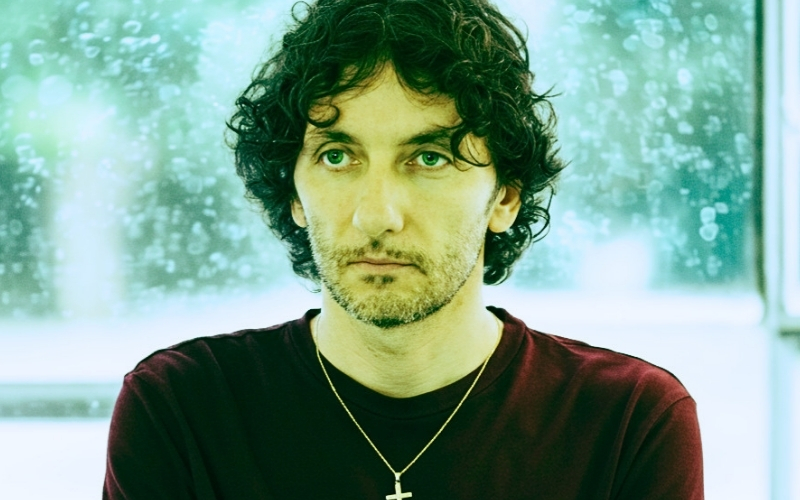
About Raffaele Scoccia
Raffaele Scoccia is an Italian composer, pianist and producer based in Trento, Italy. Classical piano was his first instrument and his first musical love, although his career has taken him through electronic music, production and international collaborations. During his time in New York, he developed his Moon Rocket project and founded Moon Rocket Music.
In recent years, Scoccia has returned to solo piano, developing a more intimate and direct approach to composition. His original works explore nature, memory, time, introspection and the emotional experience of being human, often moving between classical, contemporary and atmospheric influences.
His recording of Philip Glass’s “Etude No. 6” forms part of this renewed relationship with the piano, placing Scoccia’s own musical journey alongside the work of one of the most influential composers of contemporary music. Glass’s Etudes were written across more than two decades and are regarded as among his most personal piano works.
Connect with Raffaele Scoccia on Instagram
About the Creator
Whitney Miller
🌎 Adventurous & Musical
Stories shaped by places, music & life
Poetry, fiction, memoir & lived experience
Written without A.I.
© Whitney Miller
Enjoyed the story? Support the Creator.
Subscribe for free to receive all their stories in your feed.
Comments
There are no comments for this story
Be the first to respond and start the conversation.