
My Exclusive Interview With Where We Sleep
Learn about this artist's influences and her thoughts on the state of the music industry.

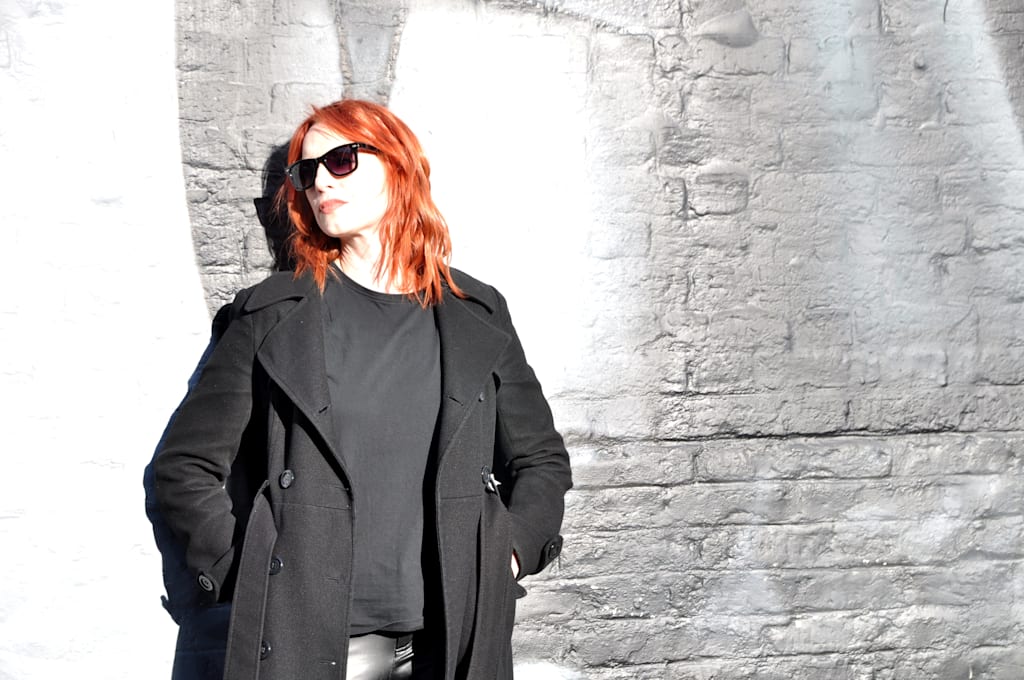
In an era of whispered vocals, Where We Sleep's bold, confident voice is more important than ever—and her stripped-down look and minimal social media presence make it clear that she prefers substance over style. Her latest album, The Arsonist, is clean, sparse and burning with quiet intensity, like a bonfire crackling in the middle of the desert. As you read this interview, you'll gain a better understanding of how her background and influences shaped her work, and you might feel inspired to pick up a guitar and write an album of your own.
1. Your latest album, The Arsonist, has an echoing, expansive sound that reminds me of the desert. Did you have any particular landscape or time period in mind while you were recording? Likewise, did you want your listeners to imagine any particular scenario or take away a specific message?
That's interesting. I actually have a song from a few years ago called "The Desert." I don't know that I had a particular landscape in mind for the whole album, but the first song, "Under a Big Sky," is absolutely about recalling expansive landscapes—huge open spaces, endless skies and seas, being present in an environment that makes you feel small and insignificant. Though I find this to be a comforting rather than distressing feeling.
2. Red and black are the two most frequently recurring colors in your visuals. What draws you to these colors in particular, and how do they reflect your work? Do you think your music sounds like these hues?
I think I like the striking, contrasting nature of those colours. I'm often drawn to quite simple visuals, rather than overly complicated or "frilly" ones. The relationship between the black, or darker colours, to the music probably speaks for itself, but you need something to contrast with that—some kind of hope, some kind of light—maybe that's where the red comes in.
3. How did you cultivate the strong, confident vocals that appear throughout the record? Have you experimented with different vocal styles in the past? Do you think that Where We Sleep would be less effective with softer vocals?
I don't know how conscious it was. It probably came down a lot to the vocalists that really inspired me when I was younger—Fiona Apple, Shirley Manson, PJ Harvey, Toni Halliday and singers of that ilk. They are all singers that exuded strength and honesty, but also vulnerability and flaws. I very much work by feeling, so I think I go with what I feel the song needs. Whether the songs would be less effective, I don't know. I'm sure someone could reimagine them with a different vocal sound. They just wouldn't be me.
4. When did you first start writing music? Did you always want to be a musician, or did you explore other avenues first? Who (or what) are your main influences?
I've wanted to be a musician since I can remember. When I was a child, I learned the piano, then the flute, and I studied music at school. I can't really remember when I started writing. I suppose I messed around with lyrics and guitar chords for a while and then started actually creating songs with the first proper original project I joined in South Africa when I was about 19.
My main influences vary. I find inspiration in small moments of production, whole songs, lyrics, vocal deliveries. A lot of the artists that have inspired me throughout are artists like Kate Bush, Curve, Fiona Apple, Talking Heads, Garbage, Massive Attack, The Jesus and Mary Chain, Nine Inch Nails, Tom Waits, PJ Harvey, EMA, Black Rebel Motorcycle Club. The list goes on. I take little bits from all of them, I think.
5. "Exhale," the last track on the record, is a slight departure from the rest of the album with fuzzy production and a heavier, grungier sound. What made you decide to end the album with this track in particular? Do you think it changes or influences the way the listeners perceive the rest of the record?
I think the nature of the song—about leaving something behind, moving on—seemed like a good ending note and a good wrapping up of the album. Also, it made sense to me to end it all on the big outro with Axel's lead guitars ringing for the final seconds.
6. How do you feel about performing live? Do you ever adjust your tracks to create a unique experience, or do you play them exactly as they appear on the record? Out of curiosity, what's the first venue that you ever performed at?
I enjoy playing live, although this year has been about adjusting to playing completely solo for the first time, and I'm still getting used to it. There are advantages and disadvantages to it. One of the advantages is that I have the flexibility to mess about a little more with the tracks, although I haven't had as much time to do that as I would like. I think that's something I'd like to do more of next year.
The first venue I ever played at (after school) was a venue in Johannesburg called Abelard Sanction. I still remember that gig, and I still remember the shakes I had before and during the gig and the adrenaline rush afterwards.
7. What inspired you to become a rock artist? On a similar note, how did you come up with the name Where We Sleep? Does it have personal meaning for you?
I think it was just the music I was drawn to, the music I understood the most. (Though it's certainly not the only music that I listen to or that inspires me.) I didn't grow up with the same level of access to music that a lot of people growing up in the UK or the States did.
The music I found when I was a teenager, I found through MTV Europe and VH1, through visiting the UK and through friends. So, I was a bit of a latecomer to a lot of the music that really inspired my writing journey. The name Where We Sleep kind of came into my head in one moment and just stuck. I feel like it kind of says something about us, about where we are in life.
8. Do you think it's important for musicians to cultivate a specific style/aesthetic, especially in the age of social media, or do you prefer to focus on the music? Or a blend of both? Do you believe that great artists are instantly recognizable?
I think it's probably been proven that some kind of aesthetic is important. I'm not as keen on the more gimmicky side of that, but different things work for different people, and it's certainly something that I think we notice and appreciate in artists.
We're in a weird, slightly conflicting place at the moment with social media. It's obviously really important for artists, but I also think there needs to be a balance. I'm probably on the wrong end of that balance. I know some artists who are great at creating content, and it really works for them. I'm just not great at it, and I'm not that interested in it. I like having social media, but I don't know how much more I have to say outside of the music.
Great artists are instantly recognisable in some way. Does it need to be visually recognisable? I don't think so, though they'll usually have their own "style." They have something that sets them apart—whether it's their voice, their overall sound, performance or songwriting, even dancing depending on the genre. They're the ones who have something that makes them distinctly them and cuts through the noise.
To stay in touch with Where We Sleep, you can follow her on Instagram and Threads, buy her records on Bandcamp, and stream her tracks on Spotify and Apple Music.
About the Creator
Kaitlin Shanks
Music journalist. To support my work, please send a tip (even $1 helps!) or shop from my Amazon storefront.
Last Living Girl (novel) • Instagram • TikTok • YouTube • Substack • Medium • Wattpad • Spotify Playlists • Linktree
Enjoyed the story? Support the Creator.
Subscribe for free to receive all their stories in your feed.
Comments
There are no comments for this story
Be the first to respond and start the conversation.