
My Exclusive Interview With Mia Borders
If you've ever wanted to launch your own record label, here's how to get started.

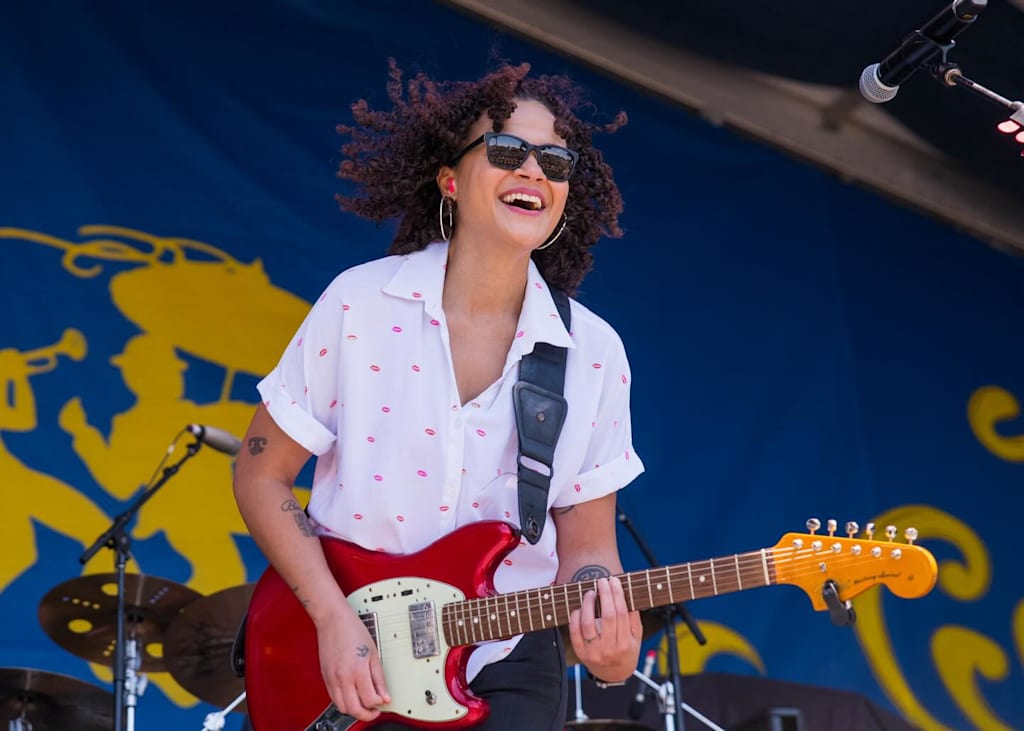
Starting your own record label is both harder and easier than you'd expect, and it takes a dedicated businesswoman to make it happen. Fortunately, Mia Borders has the drive to succeed, and she's not content with just releasing her own records. In fact, she's helped countless queer and BIPOC artists along the way, making a mark on the New Orleans music scene. This interview dives into Blaxican Records as well as Borders' entertainment company and charitable efforts, and when you see how much work goes on behind the scenes, you'll have a greater appreciation for the business behind the music.
1. What inspired you to start your own record label instead of signing with an existing company? Did you have any particular experiences that made you want more control? Have you ever released music through another label before starting your own?
In 2008, I was offered a "production deal" from a small company in Nashville that found my music on MySpace (what’s up, fellow millennials?!) At the time, I was in college and working as a paralegal, so it seemed smart to protect myself. The deal was discounted studio time with a producer who would then push the album to major labels as a ready-to-sign package.
I was optimistic, but also wary because of everything I’d heard about the "shady music business." We recorded the album and sat on it, waiting for this producer to come back with more news than just "I’ll follow up with Sony." I eventually got tired of waiting and released Southern Fried Soul on August 8, 2009, under Blaxican Records.
I put out a couple of EPs without a label before the first album, and I shared two subsequent releases with my then-manager’s label, Hypersoul Records. Everything else has been under my own label alone.
2. What are the benefits of releasing music through your own label? Likewise, what's the difference between owning your own label vs. releasing music as a solo unsigned artist? Are there any drawbacks to being a label owner?
Releasing music through my own label provides me legal protections and tax benefits that I wouldn’t have were I to just release them under my name. As a solo songwriter and composer, I hire local musicians to record with me when I go into the studio. To protect my compositions, I draw up work-for-hire agreements with everyone who works on the album.
Having Blaxican Records as a legal entity means that I don’t have to use my Social Security number on those contracts. Instead, I use our federal tax ID number, maintaining my privacy.
It also allows me to write off recording expenses when it’s time to file my business taxes. This includes studio time, session players, any gear that’s used in the studio, distribution services, photography, videography, etc. All of this is huge when it comes to managing my finances and estimating profit margins.
Being a label owner can definitely be a burden. I love legal work and data management, so I don’t mind the extra time and effort to increase my protections. I do understand how that’s daunting to a DIY musician who isn’t as much of a nerd as I am. Part of my work over the past few years has been consulting with other independent musicians who need help navigating this stuff.
3. How do you start your own record label? Can you talk about the process in detail to give people an idea of what to expect? What should people know before they launch their own record labels?
A record label starts as a small business. So, like any small business, it needs to be legally established. My label operates as an LLC in the state of Louisiana, so I filed articles of incorporation paperwork with the Secretary of State’s office. After that process was complete, I got a federal tax ID number through the IRS.
Those are the first two steps to establishing the label as a legal and professional entity. I’ll also note that I highly recommend musicians and bandleaders do the same.
These days, everything can be done online in just a few minutes for a filing fee, with or without the assistance of a lawyer, though I always encourage people to get advice from a lawyer if they have access to a free legal clinic. It’s also worthwhile to seek out a tax professional who specializes in small businesses and self-employed individuals. They can guide you in the right direction when it comes to certain requirements for your state.
From there, owning a label is about finding the right musicians to work with, which distribution company to use (I’ve worked with CD Baby, DistroKid, TuneCore, Bandcamp and Symphonic), and whether or not to issue physical releases. The industry changes day to day, so stay as informed as possible.
Know what the majors are doing and what moves they’re making so that you have an idea of what the landscape is on a large scale, but understand your artists and their audiences on as granular a level as possible. How do they listen? Where do they listen? Are they buying physical merch, or are they just streaming? Each artist is different, so each approach has to be tailored.
4. Do you want to sign other artists to your label at some point, or do you prefer to operate as a solo artist? What are the benefits and drawbacks of being the only artist on your label? Have you ever encountered an artist and thought about signing them?
I founded my label with my brother, and it was always our goal to sign other artists from New Orleans. With the DIY boom, it made less sense to pursue that. Instead, we decided to focus on protecting my releases and supporting other recording artists through different avenues.
I also work as a lyricist, producer, and mixing/mastering engineer for other musicians. When I’m really moved by an artist (Joy Clark, for instance), I contribute to crowdfunding efforts through my nonprofit, the Borders Foundation.
5. On your website and social media profiles, you occasionally endorse politicians and discuss your charitable efforts. Why do you think it's important for artists to get involved on social issues? As a musician, do you think you have a unique platform that makes it easier to reach people?
As a queer woman of color, it’s important for me to make my fanbase aware of issues that matter to me and affect my life. So often, as citizens, we have blinders when it comes to political issues affecting people from different backgrounds. I think it’s important for everyone to speak out about what matters to them.
I want my fanbase to know that their voices and their votes matter. Sometimes we agree. Sometimes we don’t. Sometimes I’ve been the one to point out that they’re voting against my humanity. Maybe they continue to support my career, and maybe they don’t, but I believe that being silent in times like this is dangerous.
I’ve been lucky enough to play all over the world and have made connections with people from all walks of life. At the end of the day, on a person-to-person level, no one I have ever met at the merch table wants my marriage rights stripped away. No one wants me to lose access to healthcare. They don’t want me deported from my native country. It’s important for all of us with a platform to remind people that there are real-life individuals affected by legislation every day.
6. Your business ventures also include Third Coast Entertainment, which books shows and festivals for LGBT and BIPOC artists. What inspired you to start this initiative, and what kinds of benefits have you seen in your community? Have you thought about launching a record label for diverse artists?
Early on in my career, it felt like if there was one woman on the festival bill, the promoters had done their job. Same with artists of color or LGBTQ+ artists. Sometimes, I checked all the boxes, and I found myself as the only non-white guy backstage. That can be an uncomfortable space to occupy, and I wanted to create more opportunities for artists from marginalized communities.
We’ve made great strides in the industry, but there’s still so much room for improvement. Organizations like Book More Women and She Is The Music do a fantastic job of holding festivals and music businesses accountable.
My goal on a small scale is to make sure there’s room at the table for female-identifying, BIPOC and LGBTQ+ artists in the New Orleans area. Through Third Coast and the Borders Foundation, I’m able to guarantee prominent bookings, guaranteed fair pay, and equitable treatment for artists.
I would love to incorporate Blaxican Records more into these events. I have plans for a new festival in the future, and I’d love to release live recordings of our performing artists’ festival sets. Proceeds of those releases would be shared with the performing artist.
7. Have you always been a business-minded artist, or did you develop these skills as you navigated the music industry? Do you think your business skills help you find more success as an artist, especially in an era when a lot of musicians struggle to market themselves? Likewise, how does your business acumen influence your music?
I have always been fairly business-minded. I started performing live in 2006 and then gigged throughout all four years at Loyola University New Orleans. They have one of the top music business programs in the country, and I was given a fantastic education during my time there
I also worked as a paralegal while I was in college, so I was already reading and writing contracts and became very comfortable drafting my own agreements. My first managers were entertainment lawyers, and they encouraged me to ask questions and be a part of the legal process throughout our time working together.
I’m a bit of a control freak—it helps me manage my anxiety—so I like knowing the proper procedure for things, and I like to be as organized as possible. I’m proud of the reputation I have for being professional both on and off stage. People know they can count on me to show up on time and perform.
Having everything organized and ready to go allows me more time to be creative. I’m not scrambling to find paperwork when someone emails me asking for my W9. I can send it to them within minutes and get back to making music.
8. What are some aspects of running a business that a lot of people don't know about? As a record label and business owner, what does your daily schedule look like? How do you manage these different aspects of your career without getting burnt out?
My mornings are spent responding to emails and handling administrative tasks. That can be sending out contracts, fielding booking inquiries, scheduling ads, filing quarterly sales reports, reporting my setlists to ASCAP to get paid as a songwriter for my live performances, etc.
My creative brain doesn’t really wake up until later in the day, so that work begins in the afternoon. Sometimes I start by mixing another artist’s project. That sort of jump-starts my brain and gets me excited to get back to my own music.
Right now, I’m working on a new album as well as a live musical memoir. It’s easy to get overwhelmed with such large projects, so it’s important for me to stay organized and use my time wisely. I can get burned out pretty quickly, and sometimes the couch is much more attractive than my home studio. If I can get myself into my work chair, it’s hard to pull me away, but getting there is sometimes really difficult.
It’s also important for me to not be overly critical of myself on the days that I don’t make it to the work chair. I’m a human being first and foremost, and I’ve been in the music business for half of my life at this point. I know that I am remarkably capable, and remembering that and being patient with myself is the most important thing for me to hold onto.
To learn more about Mia Borders and her work, you can visit her website, check out her entertainment company, browse her streaming links, buy her music on Bandcamp, and follow her on Facebook, Instagram and YouTube.
About the Creator
Kaitlin Shanks
Music journalist. To support my work, please send a tip (even $1 helps!) or shop from my Amazon storefront.
Last Living Girl (novel) • Instagram • TikTok • YouTube • Substack • Medium • Wattpad • Spotify Playlists • Linktree
Enjoyed the story? Support the Creator.
Subscribe for free to receive all their stories in your feed.
Comments
There are no comments for this story
Be the first to respond and start the conversation.