
My Exclusive Interview With Meander
Learn about the secrets behind her songwriting and why her new EP has some surprises bubbling under the surface.

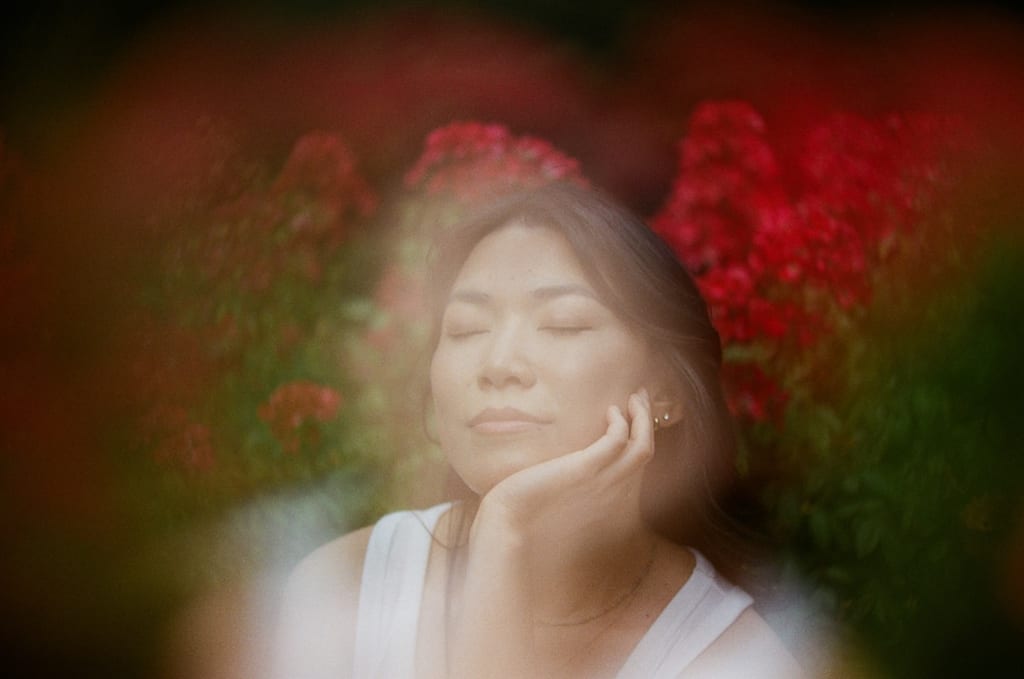
Growing up in Australia with Chinese immigrant parents, Meander has a rich heritage and a lifetime of experience that she effortlessly infuses into her music. Her recent self-titled EP is warm, sunny and breezy, but it also addresses heavier topics that, to some listeners, are instantly relatable. This interview goes in depth into the childhood experiences that shaped Meander, leading her to pivot from an unwanted medical career to a new life as a singer and songwriter with a bold story to tell.
1. As I listened to your new EP, the warm, sunny vibe immediately grabbed my attention. Would you say that you're a cheerful, optimistic person in real life, or does your music allow you to share parts of yourself that you don't normally express? Or both?
That’s the exact vibe I was going for, so I’m happy to hear you say that!
I wouldn’t say that I’m an overly cheerful person in real life. I’m also not particularly comfortable expressing my feelings out loud. I think this is something that many people who grew up in Asian households can relate to--we are taught to bottle it up and pretend that everything is okay, because showing too much emotion is a sign of weakness.
That’s why I feel so much gratitude for having found music. It is pretty much the only medium where I feel comfortable expressing my feelings with total freedom, sincerity and a lack of self-consciousness.
2. Your songs are packed with shimmering production and bright, glittery moments like sunbeams shining through a window. During the songwriting and recording process, how do you infuse your songs with your distinctly summery sound? What draws you to this aesthetic in particular?
My favourite kind of songs are those that totally envelop you in a certain mood, atmosphere, time and place. Whatever I’m writing about, I want to transport the listener there.
The sun has always had a profound impact on my mood--when the sun is shining, everything feels calmer, and anything seems possible. I wanted to infuse "Sunchaser," "Come back with me" and "Alfresco" with that feeling. So every production and songwriting choice was made with that goal in mind, whether consciously or not--from lyrics and vocal delivery to arrangement and sound selection.
It also helped to take inspiration from other tracks with a similar sound. For example, in choosing an electric guitar sound for the chorus of "Sunchaser," my producer Jeremy Chua and I were influenced by the beachy guitar in The Beach Boys' "Surfin' U.S.A."
3. As an Australian artist with Chinese immigrant parents, you've had a unique life experience--and, judging by the photos you've shared on Instagram, a pretty vibrant childhood. How does your background and heritage influence your songwriting? Do you write your songs with a particular audience in mind, or do you prefer music that's more universal?
I usually try to turn my experiences into songs that can resonate widely with listeners. For example, "Sunchaser" is about unconditional love. I wrote it with my dog in mind, but people have told me that it reminds them of their children, which is so sweet to hear. "Alfresco" is about a lazy Sunday afternoon with a friend, and "Cruel to be kind" is about being in a relationship that you know should end but you haven’t had the courage to break off yet.
However, the second track on my EP, "Hand Me Downs," was explicitly written with my Asian heritage in mind. It speaks to the crushing expectations and pressures placed on kids in many Asian cultures that can feel at times impossible to escape from. I wanted to write a song for those kids, and for the younger version of myself.
4. Nature imagery appears frequently throughout your work. What inspires you to make nature the center of your aesthetic? Did you have any specific life experiences that made you fall in love with the outdoors?
I’ve always considered nature to be the ultimate escape. And here in Melbourne, we are blessed to be surrounded by so much of it. Some of my earliest memories are of playing alone in the garden, re-enacting scenes from my favourite books and movies.
Later, in some of the most difficult times of my life, taking my dog out for a walk every day was often the only thing that kept me going. So it was inevitable that nature would seep into my music! And as I want my music to be an escape for listeners as well, it felt fitting to blend the two.
5. "Come back with me" is a little slower and more wistful than your other tracks, although it still has summery instrumentals. Did you base this song on your own experiences, or is it more metaphorical? Do you ever hope that your music will reach one person in particular?
"Come back with me" is about my childhood home. The details are all real--the cherry blossom trees lining the street, the freight train tracks at the end, the swing under the lemon tree. It’s framed as being addressed to my childhood friend, who lived next door and I lost touch with when my family moved away.
But as with all of my songs, my aim is to touch on themes that may resonate more broadly. I think most of us have a nostalgic portrait of our early childhood in our mind which, when revisited years later, reveals that many things have changed and nothing was ever quite as beautiful as we thought.
6. In your press kit, you mention that you dropped out of medical school and pursued a corporate career before turning to music. Can you talk more about these experiences? When did you realize that it was time to switch gears and start a music career?
Like many children of Asian immigrants, I was taught to study hard and keep my head down. A stable, reputable career is the end goal, and being a doctor is considered the pinnacle of that--it’s the holy grail. I was booksmart and did very well at school and university, especially in sciences, so it felt obvious that I should follow that trajectory.
The question wasn’t why should I become a doctor--it was why shouldn’t I? Even though I knew it wasn’t what I really wanted, it felt like being pushed along by the current of a river and not having the strength to swim out of it.
So I diligently worked my way into medical school. I naively thought that, along the way, someone or something would find me and steer me towards what I was really meant to be doing. But that’s not how life works, of course.
And once I got to medical school, I felt so miserable and stuck, and finally realised that I had to take control of my own life, regardless of what other people in my life thought. This is the central theme of "Hand Me Downs"--being thankful of the sacrifices people made to support you, but deciding that you’ll forge your own way forward.
It’s been quite a journey since then. I switched to working in corporate law, which I actually enjoyed, but ultimately found the intense work culture unsustainable. I’m now working at a smaller law firm which offers a great work-life balance, leaving me with time and energy to pursue other things like music. I’m definitely at the most content place I’ve ever been in life.
7. I've never been to Australia (although I'd love to visit), so I have to ask: what are some of the most unique and surprising things about living there? Is there anything you wish people knew about your country?
I do wish that people knew just how bustling and diverse Australia is, particularly the major cities. From thousands of years of Indigenous culture to immigrants coming from all over the world, everyone can find their place here. While Australia has sadly not been immune to the growing worldwide anti-immigration movement, I believe and have found, in my experience, that most Australians are a very welcoming and generous lot.
As for the snakes, spiders and crocodiles…I will say that the tales of their dangers have been greatly exaggerated. But if the bus isn’t running, we do occasionally ride kangaroos to school.
8. Who are your main inspirations, and how do they influence your work? Do you have any dream collaborations? Similarly, when you think about live performances, do you have any dream venues in mind?
My biggest influences are artists who prioritise storytelling through their music. I’m greatly inspired by the rich narrative detail of Sam Fender and Taylor Swift’s music, the sweeping melodrama of Lana Del Rey’s early work, the subtle, simple lyricism of Kacey Musgraves and Gabrielle Aplin. In a similar vein, I’ve been listening to a lot of Noah Kahan lately and was lucky enough to see him perform live in Melbourne--that would absolutely be a dream collab.
Living in Melbourne, I’ve been to so many shows, concerts and tennis matches at Rod Laver Arena. For a large venue, it feels unusually intimate. Given all the memories I have there, it would be a total dream to perform there myself.
Now that you're the Meander expert, you can stay in touch by following her on Instagram, TikTok, Facebook and Threads, reviewing her music on triple j Unearthed, buying her music on Bandcamp and streaming her tracks on Spotify, Tidal, Apple Music, YouTube Music, Amazon Music and Amrap.
About the Creator
Kaitlin Shanks
Music journalist. To support my work, please send a tip (even $1 helps!) or shop from my Amazon storefront.
Last Living Girl (novel) • Instagram • TikTok • YouTube • Substack • Medium • Wattpad • Spotify Playlists • Linktree
Enjoyed the story? Support the Creator.
Subscribe for free to receive all their stories in your feed.
Comments
There are no comments for this story
Be the first to respond and start the conversation.