
My Exclusive Interview With Kirstie Gregory
Discover your new favorite indie folk singer with this comprehensive interview.

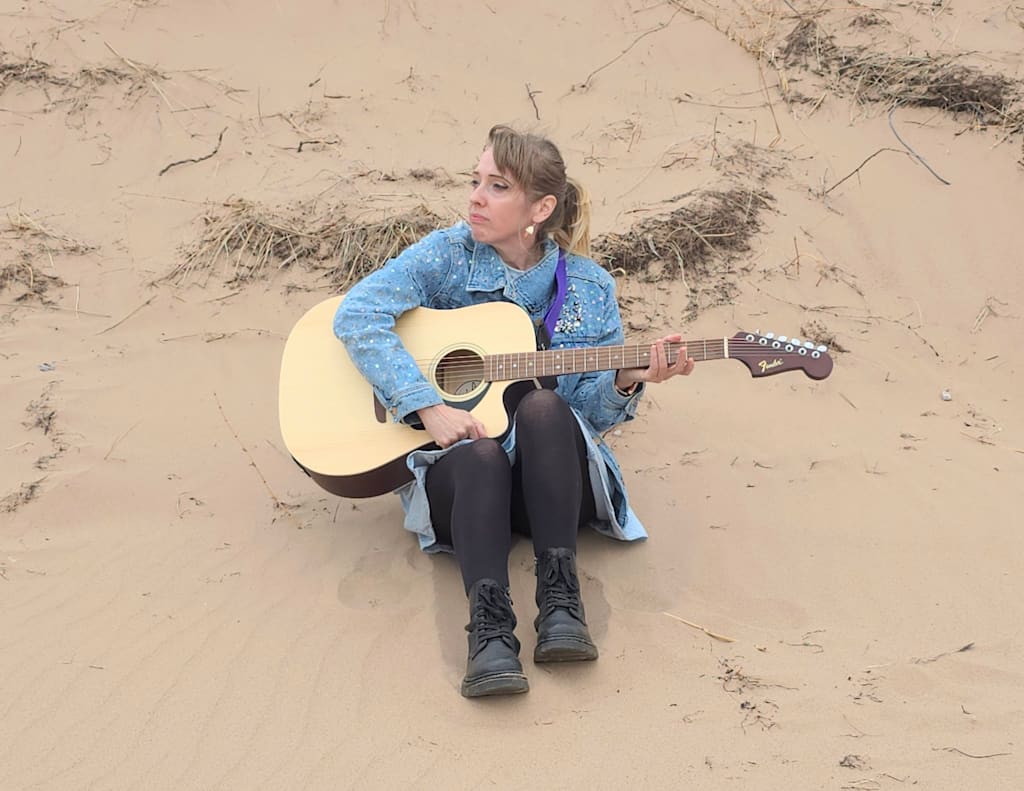
Some songwriters can do it all, and Kirstie Gregory's not the type to limit herself to one genre. From folksy tracks to soft, ethereal vocals, her discography covers a wide range of subjects, genres and moods, making her a versatile artist who can tackle any assignment you give her. Essentially, there's something for everybody--and once you've learned about her process, check out her full-length album, This Is The End, to hear the full spectrum of her talents.
1. In a lot of ways, This Is The End (2026 Version) feels like a patchwork quilt of different songs, genres and vocal stylings. Have you always enjoyed eclectic genres before you started your music career? Do you think it gives your records "something for everyone," essentially?
Throughout my life, I have enjoyed multiple genres of music. To me, it's like picking your favorite colour. There are so many and so much you can draw inspiration from in different genres that I couldn't just pick one! I think it reflects my multifaceted personality!
I'd love for my music to be something for everyone, but I still think it has my stamp on it, which is probably like Marmite. It's not going to be everyone's cuppa.
2. "Dad I Don't Write Folk Songs" definitely feels like a response to someone. The song experiments with different styles and becomes quiet, sad and echoing near the end, like you're speaking from a long distance. Ultimately, what did you want to convey with this track? Were any parts of it difficult to record?
This song was a song written to someone. I had multiple candidates but settled on my dad. I have a great relationship with my dad, but I think father-daughter relationships can be complicated, and miscommunication can happen all too easily.
It's a response to a conversation I had with my dad where I asked him to listen to my music, as I was proud that it was now out there on streaming services. He listened and said, "Your singing is good, but I don't like folk songs." I don't really write what I'd consider folk songs. So I set out to write a song which had very folksy chord progressions and was called "Dad I Don't Write Folk Songs." I wanted it to be tender but tongue-in-cheek.
As it turns out, my dad does like folk songs because he introduced me to Simon and Garfunkel and Neil Young. The end part intentionally drifts away to illustrate a moment of sincerity. A kind of “Dad, I know we don't always understand each other, but I appreciate you and thank you for being there” vibe.
Funnily enough, one of my songs that makes me emotional to perform is "The Green Man Is Smiling." I mention my dad and his parents in the bridge.
3. While the first two tracks were punchier, "Only Together" has heavenly vocals and an angelic sound that make you feel like you're rising into the clouds. What inspired this ethereal track, and how did you choose its placement on the album? Did you have to adjust your singing technique for this song?
So "Only Together" was a song I wrote for a sync brief (unsuccessfully.) The brief was for a TV show about two men who helped each other through a difficult time.
I knew I wanted the intro to have an operatic-inspired vocal. I really wanted to have that angelic kind of sound to create a hopeful mood and something reminiscent of a utopia. I thought back to singing soprano parts in choirs and feeling where my voice needed to resonate in my body for that.
4. Your album covers feature a lot of art and photography. Do you make these pieces yourself, or do you collaborate with other artists? How do you choose album covers for your records/singles?
The covers for Is This The End? and "Song of The Season" were both designed by Lesley-Anne Harris, who is part of the fabulous design studio Little Bird Creative with Emma Tofi. I knew vaguely what I wanted, but Lesley came up with some fabulous ideas that encapsulated what I had in mind.
Everything else is me. Unfortunately, as an indie creator, I have a limited budget, so I do as much as I can myself. It's also a great way to get back in touch with my much-neglected art photography skills from college and uni!
5. "Sweet Enough" is a glittery, multi-layered track with rising notes like a sunrise in the background. What makes it intriguing is the way it starts out cheerfully, then gradually becomes quieter as the song goes on. What inspired this approach, and what did you want to convey with the laughter near the end of the track? Is this song based on a personal experience?
"Sweet Enough" was a song where I used a songwriting technique I'd recommend to anyone…take a song and flip the protagonist. As in, if it's sung to someone, sing it from the other person's point of view.
I wanted to write this song from the point of view of the person Hozier says is "Too Sweet." I absolutely love that song and Hozier, especially his voice! Then I realised that I've been told all my life that I'm "too nice" and hinted that it makes me a little dull.
I'm in my 40s and have got to a point where I'm less apologetic for who I am, so the song has a lot of that vibe! The laughter, as you can tell, is a little pithy. It's kind of carefree but also barbed. Laughing at the assumption that I will regret not being something other than myself.
6. In "Compel Me," your voice beautifully reaches the higher notes. What encourages you to use this singing style on a track, and how do you take care of your voice? What do you think this style adds to the music?
Firstly, thank you. For "Compel Me," I really wanted to portray that kind of longing for and reaching for an escape. So for me, I wanted my voice to express that. I also wanted there to be an otherworldly feel to the song, and my voice becomes more ethereal up in that range.
Thanks to my vocal coach Hanna (Hanna-Liisa Kirchin), I've been doing some "bubbling" with a vocal straw. I do some warm-ups with that if I know I'm going to be using my voice a lot that day. I try to hydrate and keep myself fit and healthy too because your voice benefits from that in the way any part of your body does. I also understand the value of resting it. There are days when my voice is tired or scratchy, so I try to rest it as much as I can on those days.
7. What was the first song you ever wrote? If it's particularly old, would you still record and perform it today? Did you have childhood dreams of becoming a musician?
As a kid, I would make up songs without having a clue about song structure or music. I can still remember them now. I tried to learn guitar aged eight, but my guitar teacher was mean, so I gave up. In childhood, I wanted to be lots of things--a comedian, a pop star, a painter, a poet, a novelist--but I didn't really become musical till joining a choir in 2017 aged 36!
The first song I wrote with guitar was a song called "It's Coming." It's pretty rough and breaks rules (more through not knowing what I was doing) and is about anxiety. I cringe about it, to be honest!
8. What does the songwriting process look like for you? Do you have a routine, or do you prefer to stay flexible? What's your favorite part of writing music?
I mix it up. Sometimes I start with lyrics, and sometimes I start with a rhythm and then jam to that with some chords on my acoustic and see what feelings it stirs up.
Sometimes I'll have a title and a concept, like with "Sweet Enough," and not know where to go from there. It will sit in my phone with a few lyrics until I get another idea to give it structure.
I take part in Keppie and Benny's "How To Write Songs" songwriting sprints where you get given a prompt, which might be a title or to write in a key or mode you haven't before and have two weeks to come up with a song from it. Sometimes that will help me with a song I've had for a while; sometimes it will inspire me to write a song from a completely different angle, and sometimes multiple song ideas are born from it.
I'm also part of their community, which is full of other songwriters and is great for getting and giving feedback on each other's work in progress.
To stay in touch with Kirstie Gregory, you can subscribe to her newsletter, follow her on Instagram, TikTok, Threads, Facebook and YouTube, stream her music on Spotify and Apple Music, and buy her records on Bandcamp and Elastic Stage.
About the Creator
Kaitlin Shanks
Lifestyle blogger. To support my work, please send a tip (even $1 helps!) or shop from my Amazon storefront.
Last Living Girl (novel) • Instagram • TikTok • YouTube • Substack • Medium • Wattpad • Spotify Playlists • Linktree
Enjoyed the story? Support the Creator.
Subscribe for free to receive all their stories in your feed.
Comments
There are no comments for this story
Be the first to respond and start the conversation.