
My Exclusive Interview With Kiki Liu and Vivian Ning Wei
Learn about the creative forces behind this duo's new song, "ILLUSION."

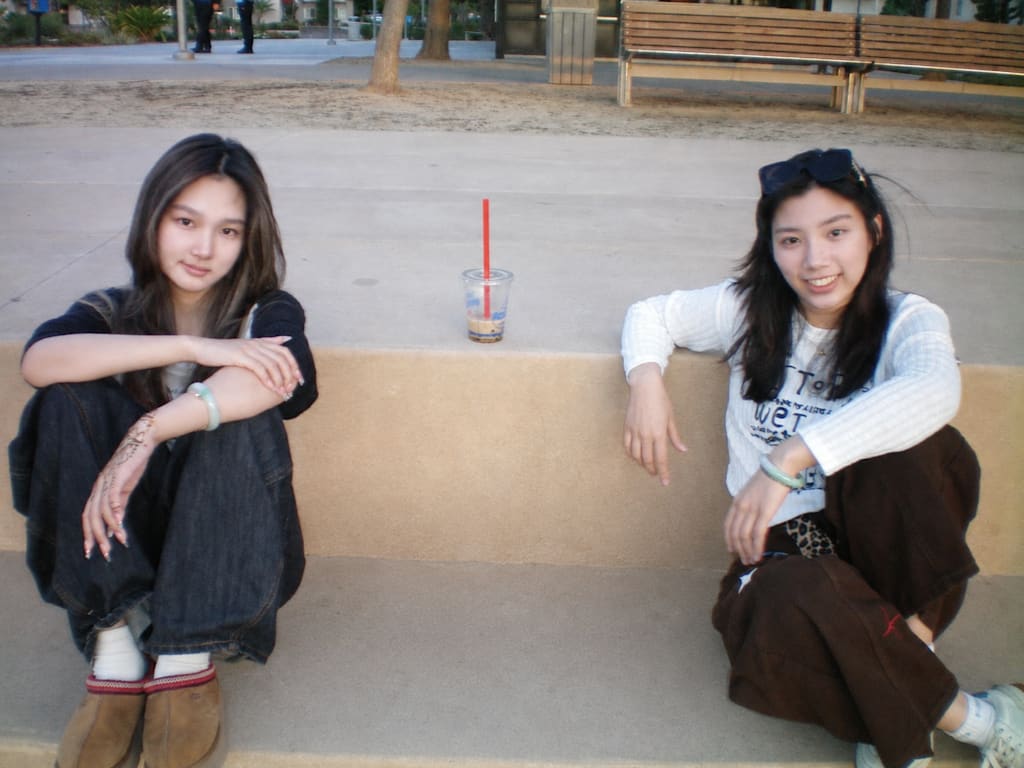
In the music world, producers and recording artists are incomplete without each other. While the artist brings their charisma and performance skills, the producer has the tools and expertise to turn a rough demo into a radio-ready song that's bursting with hooks. Some artists produce their own records, but Kiki Liu (producer) and Vivian Ning Wei (recording artist) realized that they work better as a team, and they linked up once again for this in-depth interview that exposes the minds behind the magic.
1. Since I have no musical experience, I thought we could start with the basics: what’s the producer’s role in the songwriting process? What are your responsibilities in the studio, and how do you help your clients create the perfect track? Can you talk about some of the tools and software that you use?
Kiki Liu:
I think a producer is kind of the person overseeing everything and making sure all the different parts of a song are moving in the same direction.
For me, I’m involved in a lot of things. I write, compose, arrange, record vocals and produce, and I’m usually there through the mixing and mastering process too. It doesn’t mean a producer has to personally do every job, but I think you need to understand what everyone is doing and be able to communicate with them.
Usually, when I hear a melody, even if it’s really simple, I already start imagining what the finished track could sound like. I’m thinking about whether the vocal should feel close or distant, whether the chorus should suddenly open up, whether the song needs more rhythm, more space or more texture.
I studied music production quite systematically at Berklee, so that gave me a lot of tools for turning those ideas into something practical.
I use Logic Pro, Ableton Live and Pro Tools. I don’t really believe one digital audio workstation (DAW) is the best. They’re good at different things, so I use whatever makes sense for the project.
The same goes for microphones and plugins. I really like the SM7B, for example, and I’ve found that it works really well with Vivian’s voice. Another singer might sound better on a U87 or something completely different. If I want a vocal to feel thicker, maybe I’ll add some saturation. If I want it to feel airy or almost unreal, then the choice of reverb becomes really important. Even two reverbs can create completely different emotions.
But producing is also a lot about people. You need to understand the artist and make them feel comfortable enough to try things. Songwriting can be quite private. Sometimes you’re singing something you’re not even sure is good yet, or talking about something personal, so there has to be trust.
"ILLUSION" actually started when Vivian and I went to San Diego for a week and basically just lived together, listened to music, talked and wrote. We were really relaxed, and I think that environment helped a lot.
2. While doing some research, I found a Reddit comment that claimed that a good producer could turn a clip of someone singing in their bathroom into a "radio-ready track." Would you agree or disagree with this statement? If someone gave you an unpolished demo to produce, what would you do with it?
Kiki Liu:
Yeah, I think that’s actually pretty true. I feel like I could do that.
If someone sends me a phone recording with just a melody and lyrics, I can usually already hear things around it in my head. I’ll start thinking about drums, bass, synths, guitars, the space and what kind of energy the chorus should have.
Part of that probably just comes from listening to a lot of music and making a lot of music. After a while, you naturally start hearing possibilities.
But I also think the song itself has to be good. I’m quite picky about melody and lyrics. If you take all the production away, I still want there to be something you remember. It doesn’t necessarily have to be catchy in a really obvious pop way. I actually like songs that are a little unusual, but there should be something that makes you want to hear them again.
If somebody gave me a very rough demo, I’d first sit with it and try to figure out what kind of atmosphere it wants. Then I’d build a simple production around it, just enough to show the artist what I’m imagining. Then we talk about it. Maybe they love it, or maybe they say, “No, this is completely different from what I had in mind,” and then we try another direction.
I’m not very attached to one genre. I care more about whether the sound makes sense for the song.
3. Vivian, as an artist and vocalist, how does the production affect the way you approach a song? Can different sounds or arrangements change the way you sing, or inspire vocal ideas you might not have thought of otherwise?
Vivian Ning Wei:
For me, the production and the vocals are always in conversation with each other. The production creates the space and atmosphere of the song, and different arrangements can give the song a completely different feeling. So I’ll change the way I sing depending on the production, like the emotion, the power of my voice, my phrasing and even the way I pronounce certain words.
The production also gives me new vocal ideas. I might suddenly hear a harmony, a vocal run, or a new background vocal that I hadn’t thought of before. So the vocals aren’t just placed on top of the instrumental; they’re part of the whole production.
Whenever we change the style of the arrangement, I usually record the vocals again because I’ll probably sing it differently. That also makes recording more fun, because every new version can give me more ideas for harmonies and different ways to express the song.
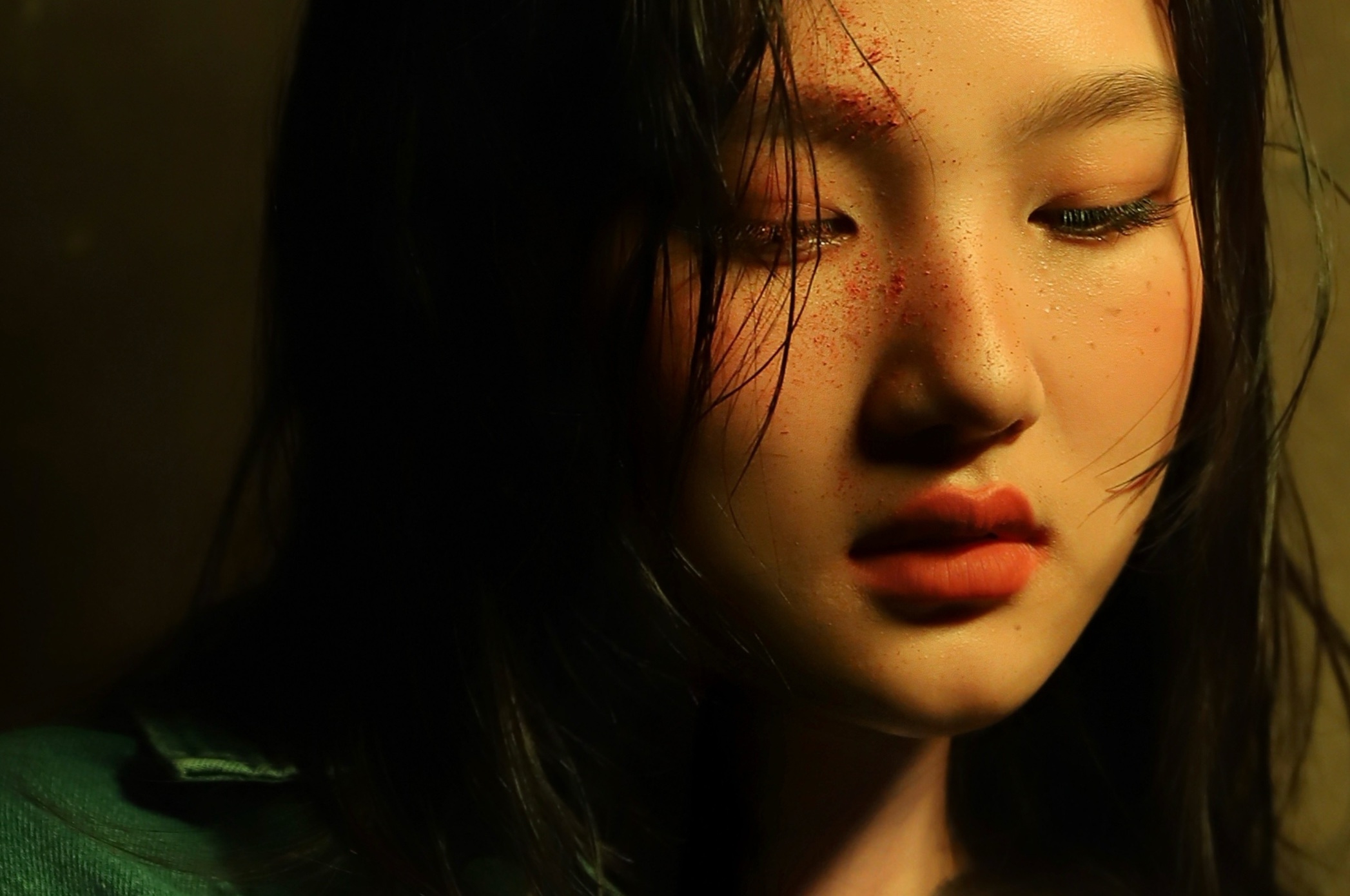
4. Vivian, what do you think makes a vocal performance feel emotionally convincing? When you’re recording, how do you balance technical control with the song's essence or vibe?
Vivian Ning Wei:
Singing is about telling a story. I also sing musical theatre, and that has taught me a lot about how to communicate through singing. Of course, you first need to know how to use your voice and have a strong technical foundation. But once you have that, the most important thing is telling the story.
When I’m recording, I listen to the track, feel the atmosphere it creates, and then let that guide the way I sing. I try to get into an almost meditative state. The technique is already there as muscle memory, so in that moment, I try to forget everything, forget how I’m supposed to sing, feel the space around me, and just sing. I think that’s when the most honest emotions come through.
5. When you’re working on a song together, what does the process look like from beginning to end? Do you produce a lot of rough drafts or demos? How do you know when a track is complete and doesn’t need any further adjustments?
Kiki Liu and Vivian Ning Wei:
It changes from song to song, but a lot of the time, Kiki will start with a very simple instrumental, and Vivian will listen to it and start humming melodies over it. She reacts really quickly to a sound or atmosphere, so sometimes a melody appears almost immediately, and then we build the song from there.
Recently, we’ve also been doing the opposite. Vivian will start with a melody over very simple chords, and then Kiki builds the production around it. We’ve written a few songs that way recently, and we really like the results. They feel natural because the melody and emotion are already there before we start adding too much around them.
We definitely make a lot of different versions along the way. Neither of us is very good at leaving things alone, so knowing when a song is actually finished can be difficult.
For us, it usually comes down to whether the song feels like it has gone somewhere emotionally. We don’t want the verse, pre-chorus and chorus to all sit at the same level. Some moments should feel intimate, while others should open up and feel much bigger.
We had this problem with "CLOUD," especially with the outro. We kept changing it because technically the song was ending, but emotionally it didn’t feel like it had arrived anywhere yet. Once the ending finally gave us that sense of release, we knew we were much closer to being done.
6. Do the two of you have any songwriting/production techniques that make a song undoubtedly "yours"? For example, Pharrell Williams famously opens his songs with a four-beat producer tag. Would an observant listener find anything like that in your music?
Kiki Liu and Vivian Ning Wei:
We don’t really have one obvious producer tag or sound that we put into every song. We actually like the fact that every track can have its own personality.
But there are certain things that keep showing up in our music. One of the biggest is atmosphere. Vivian’s voice naturally has this ethereal quality, and both of us are drawn to music that feels visual and immersive. Even when the genre changes, we usually want the song to feel like you’re entering a particular place or emotion.
We also care a lot about contrast. We like having moments that feel very close and intimate, and then moments where everything suddenly opens up.
Kiki is very particular about rhythm and movement. Even in slower songs, there’s usually something underneath that keeps the track moving, whether it’s the bass, percussion or a small rhythmic detail. Vivian brings a lot of vocal layers and little vocal ideas into the production. Sometimes a background vocal starts as something spontaneous and ends up becoming one of the most recognizable parts of the song.
We both care about hooks too. Not necessarily in an obvious commercial way, but we want there to be something that stays with you after the song ends.
So maybe our signature isn’t one sound. It’s more the combination of ethereal vocals, movement, dynamics, atmosphere and small details that slowly build a world around the song.
7. "ILLUSION" is a delicate, shimmering track that’s loaded with delightful sounds and vocal quirks. How did you give this song its distinctly glittery vibe? Did you set out to make a bright, poppy tune, or did this track sound different at the start? Has a song ever turned out completely different from what you originally envisioned?
Kiki Liu and Vivian Ning Wei:
It was actually quite different at the beginning.
The verse and pre-chorus were always more restrained, and the early version had this slightly darker, almost R&B feeling. At first, we thought maybe the chorus should stay in that world too.
But after listening to it for a while, we both felt like it was a little too flat. Not bad, just a little predictable. Vivian was the one who said, "What if the chorus suddenly becomes much more electronic and really opens up?"
Once we decided that, the production came together quite quickly. We made the chorus much bigger with more synths, movement and layers. Vivian recorded a huge amount of background vocals too, and those became a big part of the sound. We loved the vocal layers enough that we eventually released an a cappella version.
The funny thing is that the "glittery" quality wasn’t something we planned by saying, "Okay, this song has to sound sparkly." Some of those details just happened while we were working.
In the final chorus, there are little sounds that almost feel like crystals or flashes of light. Vivian felt like one section still needed something, so we literally sat at the keyboard trying different notes and sounds. Then one came in and we both went, "Oh, that’s it."
That happens a lot with us. We usually have a direction, but we’re also willing to let the song change while we’re making it.
"CLOUD" changed even more. Kiki probably made three or four very different versions before we found the right groove. So yes, our songs very often end up somewhere we didn’t expect.
8. On another note, "ILLUSION" could easily fit into a movie or TV series. Did you have a broader universe in mind while you were working on this song? Are you creating a world together, and if so, could you talk more about it?
Kiki Liu and Vivian Ning Wei:
Yeah, we are creating a world together, although we don’t sit down beforehand and decide exactly what that world is.
Usually, it starts with a feeling. Vivian might have a melody, a lyric or just a very specific emotion. Then Kiki starts producing around it, and sometimes one sound completely changes the way Vivian sees the song. That might lead to a new melody, a new lyric or new background vocals.
So it goes back and forth a lot. It’s not really like one person has the whole idea and the other person just executes it. We keep giving each other things, and eventually the song becomes something neither of us would have made alone.
We also both think quite visually. We share music with each other, but also films, photographs, videos, random scenes we see and things that happen in real life.
When we’re producing, we’ll sometimes say things that aren’t technical at all, like, "This feels too close," "This section should feel like the room suddenly becomes huge," or "This sounds lonely." And somehow we understand what the other person means.
So the "world" we’re creating is less like a fictional universe with characters and a plot, and more like an emotional world. That’s probably why people sometimes say our music feels cinematic.
9. How did your creative partnership begin? What makes it so effective, and how long do you think you’ll be working together? Can you talk about other songs or projects you’ve collaborated on?
Kiki Liu and Vivian Ning Wei:
We met at Berklee Valencia.
At the beginning, we weren’t even writing original music together. Kiki lived pretty close to school, so Vivian would come over after class. We’d listen to music, watch things, hang out and then end up recording something.
Vivian was doing a lot of covers at the time, so Kiki started helping with the instrumentals, arrangements and sometimes mixing. That was basically how we learned how the other person hears music.
One of our first bigger projects together was Vivian’s version of "Shut Up My Mom’s Calling." A short clip became really popular on Douyin/TikTok China, and people kept asking her to release a full version. So we rebuilt it and added some of our own writing to the arrangement.
That was probably the point where we realized, okay, maybe we should actually make original music together.
What makes the partnership work isn’t that we never disagree. We definitely disagree. Both of us are pretty picky, especially about details, so sometimes we can spend a long time arguing about something another person might not even notice.
But we’ve gotten much better at understanding why the other person is asking for something. Instead of trying to prove who’s right, eventually it becomes, "Okay, which version actually makes the song better?"
We’ve worked on "ILLUSION," "CLOUD" and several other songs that haven’t come out yet, and our way of communicating gets easier with every project. As long as we’re still making music that both of us are excited about, I think we’ll keep working together.

10. What have been some of the biggest highlights of your careers? What’s surprised you the most about being a producer/recording artist? If you could give advice to young creators, what would it be?
Kiki Liu and Vivian Ning Wei:
Recently, one of the biggest highlights has been seeing what happened with "ILLUSION."
For such a long time, it was just a song sitting on our computers. Then suddenly, people in different countries started hearing it. Amazing Radio UK played it, Fresh On The Net selected it for their Listening Post, and we’ve had radio support from Canada, South Africa, Mexico and Japan as well.
We know those things might sound small compared to a huge global hit, but for us, it’s really emotional. You make something together in a room, and then someone you’ve never met on the other side of the world hears it and connects with it. That still feels kind of crazy.
We also feel really lucky that we found each other. Making music can be surprisingly lonely, and having someone you trust creatively makes such a difference. We have different strengths, and a lot of what we’ve built probably would have taken much longer if either of us had tried to do everything alone.
So our advice to younger creators would be not to feel like you have to build everything by yourself. Meet people, collaborate and find people whose taste and vision you trust.
And don’t quit just because nobody is paying attention yet. Keep making things and keep putting them out into the world. We’re still figuring it out ourselves, but we’ve learned that good work, persistence and the right people around you can take you much further than trying to do everything alone.
11. Kiki, your expertise includes songwriting, production and arrangement. What’s the difference between these three skills? Do you have to master one skill in particular to understand the others?
Kiki Liu:
They overlap a lot, especially now, but I think they’re still different jobs.
The songwriter is focused on the song itself: melody, lyrics, chords and the emotional core of it.
The arranger is thinking about how that song is presented. You could have exactly the same melody and lyrics and make it a piano ballad, an electronic song, a rock song or something orchestral. That’s where arrangement becomes really important.
I always think it’s a little like cooking the same ingredient in different ways. You could have the same fish, but you could steam it, grill it or fry it. It’s still the same basic thing, but the experience is completely different.
And the producer is more like the person looking at the whole plate. Or maybe the director, if we want a more elegant analogy. You have to think about the songwriting, arrangement, performance, recording and mixing together.
I don’t think you have to be the absolute best person in the room at every skill. Actually, if you try to do absolutely everything yourself, you’ll probably die.
But you should understand enough to know what you want and communicate it clearly. If I’m talking to a mixing engineer, I need to understand mixing. If I’m working with a singer, I need to understand vocal production. If I’m talking to musicians, I need to be able to explain the arrangement.
So for me, being a producer is partly about knowing a lot of different languages.
12. Finally, what do you love most about creating music? Did you always know you’d end up in this field, or did you try different career paths before switching to this one?
Kiki Liu:
No, not at all. I took a pretty unexpected route into music.
In high school, I actually thought I wanted to become a doctor. Later, I realized I wanted to do something creative, but I still had no idea what that would be. I studied communications at university and double majored in finance because apparently I wanted to make my life more complicated. [laughs]
I was also a content creator for a few years and built an audience of around 60,000 across platforms. I enjoyed it, but it never gave me quite the same feeling as making music.
Toward the end of university, I started producing more seriously and eventually used some of that music to apply to Berklee. That was probably when I realized, oh, maybe this is actually the thing.
What I love most about music is being able to turn something I can’t really explain into something I can hear. I can spend hours obsessing over a sound or a tiny detail and somehow never get tired of it. That’s when I knew I’d found something I genuinely wanted to keep doing.
Vivian Ning Wei:
What I love is turning something that only exists in my mind—a feeling, an image or an atmosphere—into something that other people can hear and feel too. It’s almost like creating a whole world through sound and inviting people into it. I also love that a song can reach someone I’ve never met and make them feel understood.
I don’t think I ever really switched to music. Singing has always been a big part of my life, and I always knew that I wanted to do something connected to it. But over time, I realized that I didn’t only want to be a singer; I wanted to become an artist, create my own music, and build my own world through it. So I didn’t really try a completely different career path before this.
Kiki Liu and Vivian Ning Wei:
Even though we came into music from very different directions, we think that’s part of why we work well together. We both notice different things, challenge each other in different ways and somehow meet in the middle.
That’s probably what we love most about making music together. You can start with something incredibly small, like a melody, a chord, a sound or even just a feeling, and slowly turn it into something neither of us would have made alone.
Now that you're an expert on this team, you can check out Kiki Liu's website, follow her on Instagram, Threads, YouTube, TikTok, Xiaohongshu and Bilibili, buy her releases on Bandcamp, and stream her tracks on Spotify and Apple Music.
Vivian Ning Wei fans can find her on Instagram, TikTok, YouTube, Facebook, Bandcamp, Xiaohongshu and Douyin and stream her tracks on Spotify, SoundCloud, Apple Music and Amazon Music.
About the Creator
Kaitlin Shanks
Music journalist. To support my work, please send a tip (even $1 helps!) or shop from my Amazon storefront.
Last Living Girl (novel) • Instagram • TikTok • YouTube • Substack • Medium • Wattpad • Spotify Playlists • Linktree
Enjoyed the story? Support the Creator.
Subscribe for free to receive all their stories in your feed.
Comments
There are no comments for this story
Be the first to respond and start the conversation.