
My Exclusive Interview With Jane Rey
Discover the secrets behind working as Lilith Rising's official photographer.


From ghost sightings in Raleigh to photoshoots with gothic metal bands, Jane Rey's had a lot of adventures in her career. Her photography helps local bands get more exposure and relive their best performances, and while not every photographer is up to the challenge, Rey's skills allow her to capture the perfect shot in the midst of the rowdiest crowds and darkest venues. Luckily, she doesn't hide her secrets from the public; in fact, she was willing to go in depth for an interview that may transform the way you think about music photography.
1. How did you land the gig as Lilith Rising's official photographer? Do you think that having a lasting relationship with a band (as opposed to photographing them once or twice) influences the way you approach your sessions? What's your favorite Lilith Rising song?
How I landed this adventure is a long story. In 2023, I worked a main job to pay the bills. The drummer, Allan, frequented for his daily dose of coffee energy drinks. At the time, I had heard of Lilith Rising but never got to see the band live. He and I got to talking about music because no matter what the uniform was, I was able to wear things that showed my style of dress. He had no idea I was a photographer, but I already knew of Allan from the local scene.
I talked to someone I knew about them and their upcoming show being local enough that we could take the seven-minute ride across town. Jason got interested, and I played a song from them—I believe it was "Dear Lilith"—and the first thing out of his mouth was, "They need a bassist." I told him to follow them in case they make an advert for one. They actually did a few days later.
We never made it to the show, but he made it to the interview process and then received an invitation to come to a rehearsal to try out. I had him sworn to secrecy not to tell Allan who he is and who sent him. He succeeded on his own merit. Jason found out that you can bring people to rehearsals, and I walked into their space to Allan’s surprise.
Taryn, the lead singer and absolutely wonderful person, got interested in who I am. I’m a big introvert. I had no intention of being in front of people, but we got to talking about things, and Jason brought up that I am a photographer. Who wouldn’t want one on their team?
My body of work years prior was dormant and old, as all of those bands had already broken up, so I had nothing newer to show for reference. They were going by blind faith based on conversations that I could actually produce decent work.
Photographing women is not hard, but there are things to take into consideration that most people don’t think about. Angles matter. Lighting matters. No one wants extra chins when there are none. No one wants every laugh line or tension crease exaggerated by light and shadow.
Once Jason was hired, a photoshoot was booked on a trial basis. They added another guitarist, Jason moved to guitar, and a different bassist was hired. They liked what they saw and decided to keep me on. It's been a fun adventure ever since.
A lasting relationship with them definitely plays into how the shoots go. You learn their different personality types, what poses they like, their comfort with experimenting with materials and settings. Everyone is more comfortable having input on what happens during a shoot. They’re more genuine in their actions when they're not having to be in a constant state of professionalism.
My favorite song currently is definitely "A Witch’s Tale." It kind of feels how this journey has been for me, and it's just an overall fun song. It was an earworm for the longest time.
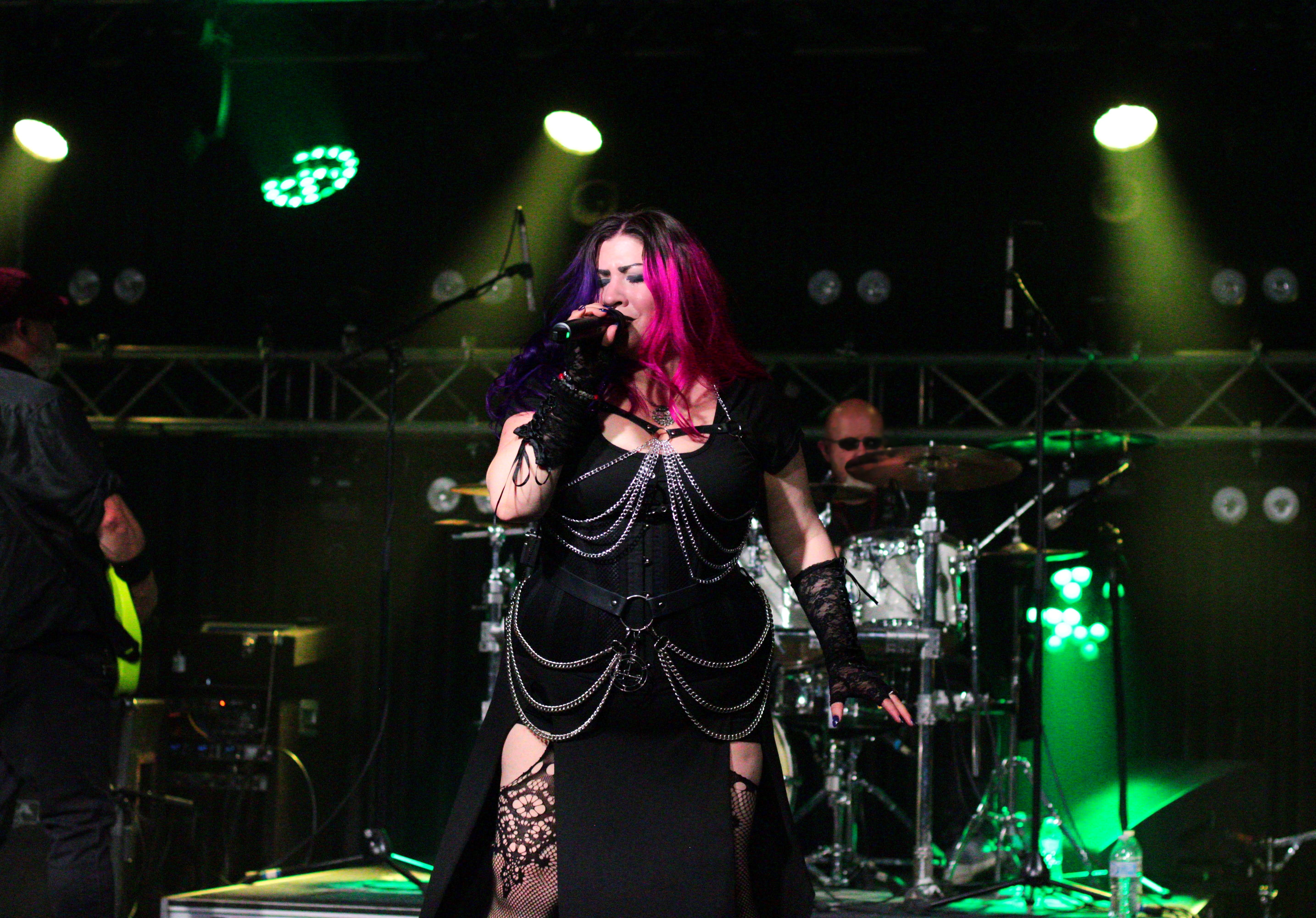
2. When you're photographing a live event, how do you capture the best poses and angles? Do you look for any specific moments or cues during the show?
I look at the human form as a breathing work of abstract art. Each person is unique, and when given a prop, so to speak, they tend to use it as an extension of themselves. Musicians with limited movement can create the most dramatic shots if you get close to the ground and aim up; when the light is just right, you can get a partial profile or silhouette shot.
Sometimes, there are cues that I have grown to notice, like Taryn turning toward the back of the stage during a solo moment to enjoy the music and twirl around or headbang. Sometimes, Allan slams his drumsticks down so hard on his toms that it looks like he uses the momentum to stand up to stare down the nearest string player.
During rehearsals, they talk choreography. You don’t want a guitar/bass headstock getting smacked into someone or tripping over cords and each other. Taryn has kicks she likes to do during certain songs at bass drops or tempo changes. The bassist and Jason will sometimes meet center stage for a play-off. Allan will stand up behind his kit and clap his hands over his head to get the crowd going during a solo.
There are times when they do something completely out of left field in the moment. That’s when you know the crowd is feeding into their energy on stage and vice versa. Sometimes, luck plays into it, but you have to constantly be on your toes.
Being with them so long, I try to predict where they’re going to be. With each venue’s lighting being different, you have to understand light composition and shadow. You don’t want someone who doesn’t have a beard to suddenly have one.
Catching the best angles has started to come down to instinct for me. You try to predict what someone is going to do based on the moment their feet start to move or their head turns. I’ve been photographing bands for 20 years. Body posturing is learned over time, and it becomes instinct to look for changes. Patience and adaptability are two really good lessons to learn.
3. I've always thought that concert photography looks particularly challenging because you're dealing with dim lighting and constant movement. Do you ever feel like this holds you back, or does it push you to produce your best work? What do you enjoy most about concert photography?
It is extremely challenging but in a fun way, at least for me. I get told I took up one of the hardest genres in photography. To me, it's like how some people can take up painting like they were born with it, while others, even as they try, struggle with it.
Learning predictability, framing, throwing the concept of "thirds" out the window a good chunk of the time, understanding the need for empty space, etc., is part of the fun. Sometimes, that empty space sets the mood and adds to the dramatics. There are times when poor lighting will hold you back, but you have to have confidence in what you take.
I’ve been to venues that had $5,000 per row of lighting and only used 3 of the 15 rows, making it dimmer on the lens than the naked eye would see without a secondary light source. Some venues only have mood lights in red on one side and a dim blue on the other, with nothing in between.
Having faith in what you take and knowing how to manipulate the image later come into play in both situations. An aperture lets light in, but you can get bad motion blur if it's too wide. The faster the shutter speed, the less light gets in, so you have to find a happy medium. Then you have to cull, clip and edit what you can to get a usable end result.
The band recently played a venue where it was all dim yellow lighting and a row of reds in the back. The yellow lights were aimed above the stage instead of at the stage, so in most shots, the band was barely there. The only person with the best lighting was the drummer under the reds.
As someone who doesn’t use a flash in such conditions (it can cause eye damage over time, trigger migraines and seizures, etc.), I had to adapt quickly. No matter what I did with my camera, the preview was always a poorly lit shot. I did wind up using a flash, but I made a flash filter out of multiple layers of a white plastic bag and aluminum foil to direct what came through better. It wound up being less harsh than using an expensive flash cover with better control.
For some of the shots, to get a certain ambience, I used my free hand as a flash muffler. It’s a guerrilla photography tactic, but it works for getting better end results.
I rather enjoy the challenge of trying to get something out of near darkness, so yes, I think it pushes me to do my best work. Without a good challenge to bring a creative mind outside of the box every once in a while, it can cause stagnation that leads to mental burnout.
As for what I enjoy, I get to share my perspective of the event. I enjoy it as a whole, don’t get me wrong, but it's the perspective that can’t be shared through verbal or written words. It’s an instance captured in time that won’t happen again because of different settings, clothing, haircuts. The emotions will be different. Venue shutdowns. Someone on stage could be angry at the world that day and pour that raw emotion into the performance. The thought of being there at that moment when someone expels such energy is the perspective I see and try to convey through my lens.
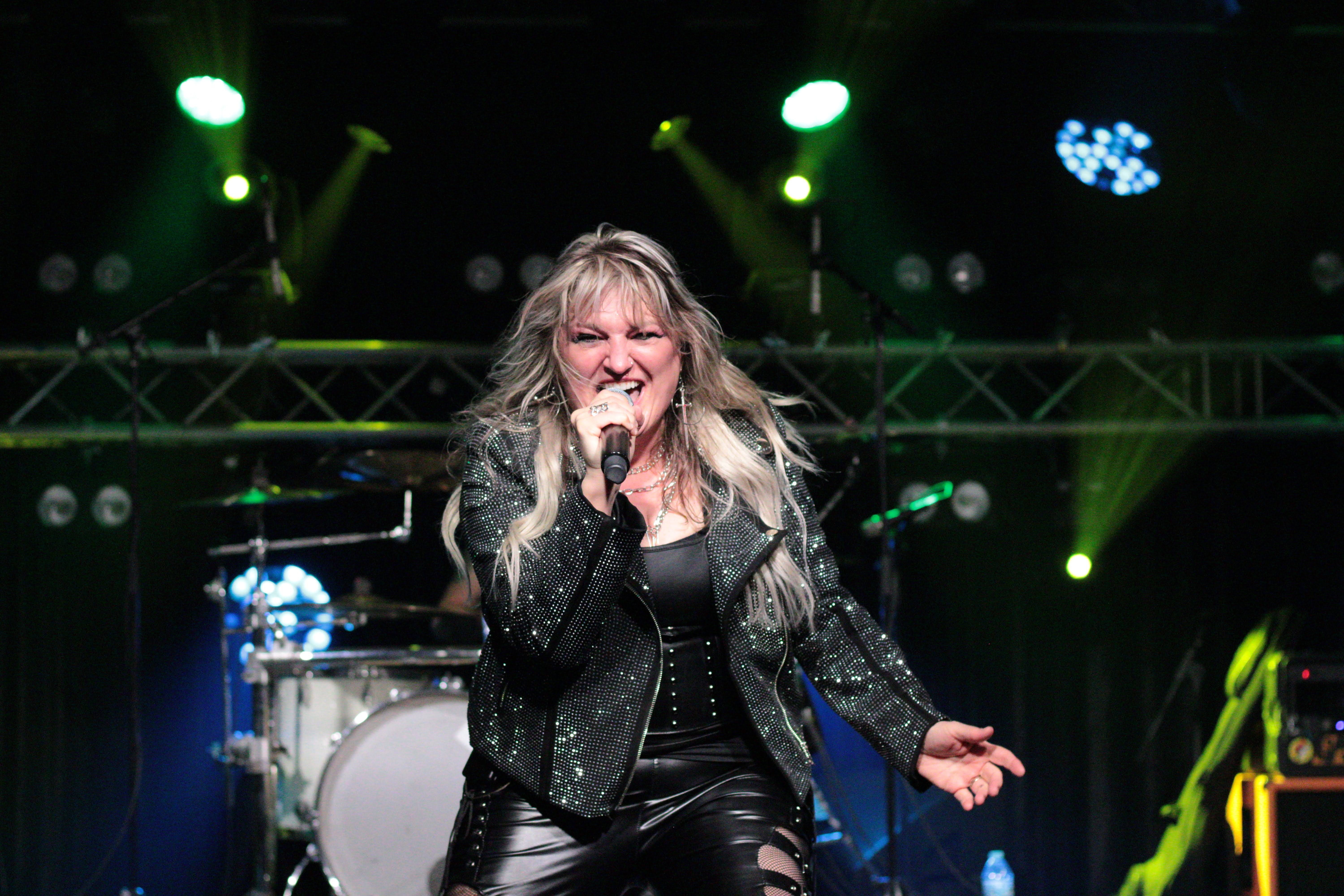
4. During a concert, how do you capture the essence of the band's music? Do you ever feel like fans could tell which song was playing just by looking at the photo? How do you convey a sense of movement and energy?
That’s a really good question. Capturing the essence is about the mood in the photo, but to do that, you have to figure out how to capture the performance. Lilith Rising is a gothic rock band with symphonic elements. Some of their songs are going to be fast-paced with growls. Some of them are going to be rich in guitar tone with a heavy bass and deep lyrics. Taryn’s vocal cadence plays an important role in all of it.
Some songs, you know she’s going to yell into the microphone, so I try to take shots from the front or direct profile. She leans forward and just lets the world know she’s had enough. Sometimes, she leans back and belts a high note to the air above the stage. Her long hair falls back behind her, and her spine is curved with an arm held to her side, with the other holding the mic gradually away from her high key register.
During certain songs, she will reach for someone in the crowd or put her hand on her chest like she’s giving a testimony or a sermon. "Your feelings are valid, let’s keep going!" That’s when I try to grab the sing-along part with the audience.
Some songs are easier to pinpoint than others. They have a couple of songs with audience participation, and that’s a good time to get the room shots and wide angles. "Oh, this is when 'A Witch’s Tale' was playing! Everyone had their hands in the air clapping at the beginning!" "That’s her kick during 'The Future'!" She and whoever is singing backup vocals with her will have an interaction depending on the song's subject matter.
Other times, it's not as easy to tell unless there is a musician who knows the hand positions on the fretboard. Allan is so stoic in his playing that unless he does an interaction with another band member or at the beginning of a certain song, it's hard to tell where they’re at in the setlist.
Jason is so concentrated in his playing on the harder songs that unless another guitarist knows what he’s playing, sometimes you won’t know. Other members move about five inches with such a stone-faced expression that the intensity is the dramatic aspect of the image, and no one knows what song was being played.
Sense of movement and energy. You’re really making me think about answers that have become second nature. Angles and camera manipulation. Being able to change settings on the fly can mean capturing Taryn’s hair being tossed up and captured in a motion blur while the rest of her is static and crisp. Jason propping his leg up on his gig box and moving his upper body down over his guitar as he slams his pick down on the strings of his neon guitar can be a motion blur of human curvature with the pristine radiance of the color pop.
In "Done With You," sometimes if the crowd is allowed up against the stage, you can get a sea of blurry middle fingers and a crisp band or a blurry band and a clear sea of middle fingers. It comes down to manipulations of settings and surroundings.
5. As a concert photographer, what does the behind-the-scenes process look like? Can you talk about setting up, working with the band and other factors?
Everyone in this field is different. I prefer to pack light. I have one lens, no flash filter and my camera body. Knowing your tools and equipment, having faith in my ability, and a mental pep talk are a part of my mental process.
Photographers all judge each other. I’ve met a few with egos so massive that I’m surprised they even fit in the venue. They have a giant camera bag with three different lenses they swap out multiple times a show, giant bags they keep strapped to them even in the middle of a mosh pit, and an extra camera attached to their hip. That’s their method; nothing wrong with it as long as you get the end result you’re going for.
Acceptance of the unknown situation you’re walking into if you haven’t been somewhere, a rowdy crowd who grab cameras/phones to smash something, and other out-of-control situations can trigger anxiety, so I avoid the extra stress. I have to go with the flow. I find not being weighed down more beneficial and safer.
Sometimes I get asked to do other things while waiting around for Lilith Rising to take the stage. Having free hands and range of movement makes it easier to help out when needed.
The setup process for me is pretty easy. I enter a room expecting the worst, so I’m mentally prepared to have no space for movement, no close-up shots without having to edit down an image, no high-up places to stand or low places to crouch and horrible lighting.
Situationally, it goes back to adaptability. I can’t get close to the stage, so I look for a chair to stand on. I’m only five feet three inches. 90% of the crowd is taller than I am. Beforehand, I try to research the space to see what I have access to, and most of the time this can help, but every show is different from the others.
6. What does the band do with your photography afterward? Do you frequently see your work published on social media and news outlets? What's the most exposure you've ever gotten from one publication?
Surprisingly. I’m not in it for exposure. Most people are just now finding out what I look like and who I am because of it. Lilith Rising uses a lot of images for social media, album inserts, merch pieces, and once even a poster for "Done With You."
I have seen a few of my shots in online newspapers and magazines. It is a euphoric feeling seeing them posted in places and in publications. It’s a feeling of "I went out of my comfort zone, and I did that." I don’t use watermarks for the above reason, so even seeing a name credit is nice validation that my hard work is being used.
Another reason not to use watermarks is the use of imagery in band merchandising and advertising. Taryn ordered a shirt with the band member group shot on it. I’ve had someone be able to use a full photo as an album cover and sticker.
The most exposure was what I call a de-motivational motivational poster for "Done With You." An online interview brought it up with Allan once. "You have such a beautiful photo and the words 'Fuck your feelings' in the corner." At the time, "Done With You" was gaining traction, and to get more attention, I made a photo I took at South Mountain State Park into something a little more attention-grabbing. That emotional stir was exactly the result the poster was supposed to get. It was reposted, talked about in interviews, and the one print we had was given away to someone to hang in an office.
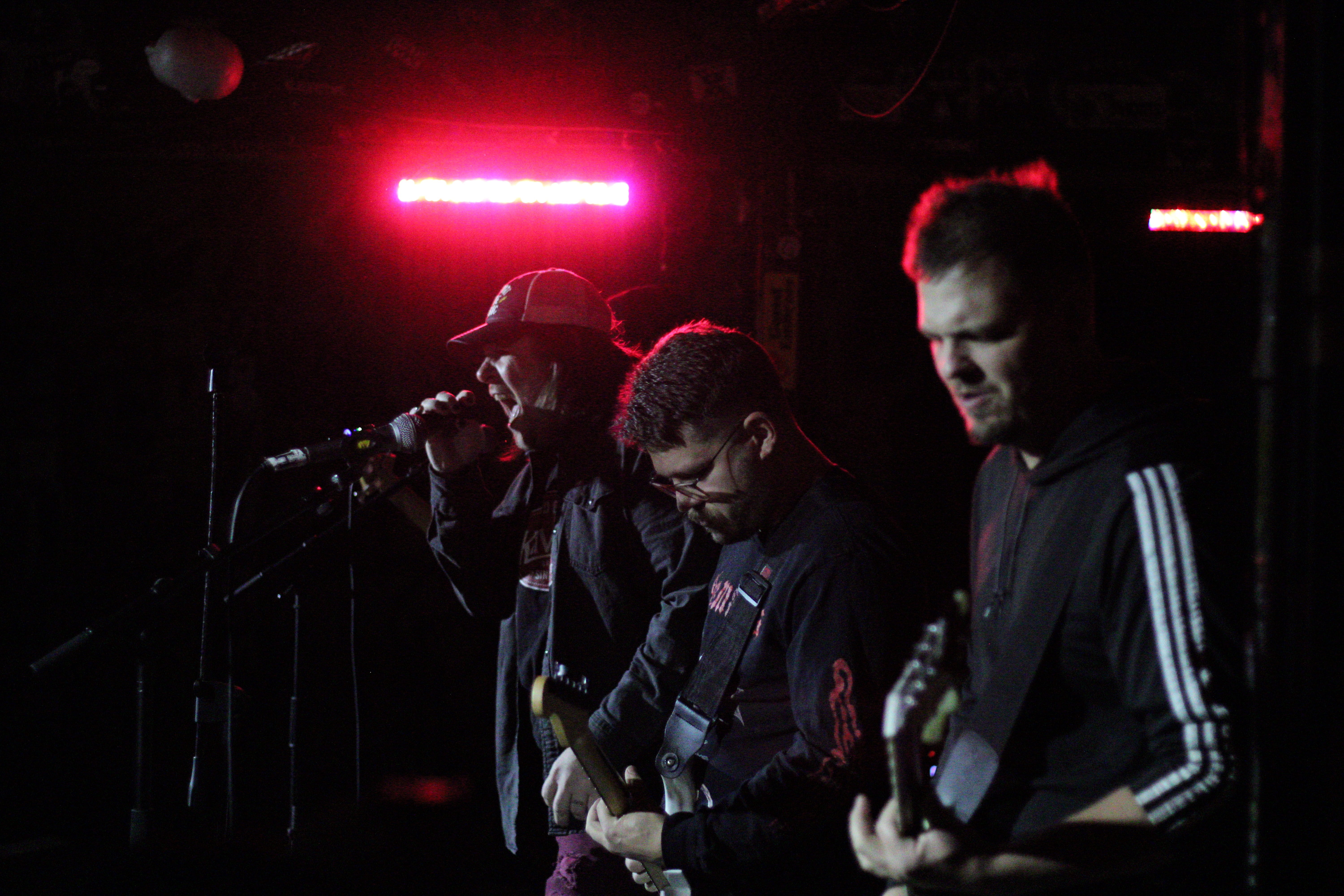
7. Besides Lilith Rising, who are some other recording artists you've worked with? Do you have any fun stories to share?
There have been a few locally and regionally. I have my favorites because they’re professional and fun to work with.
On October 17th, I went to photograph Crimson Steel's video release show. Crimson Steel is a whole experience I’ve had the pleasure to photograph multiple times. Tina, the lead vocalist, will make you want to pick up arms and ride into battle with her, whereas Taryn will make you want to commit a crime of passion. They had James Rivera, a founding member of the band Helstar from Houston, TX, with a discography spanning from the 1980s to now, as a special guest.
A Life Worth Taking is fronted by Jameson, and he took a massive chance on me one year for a Friendsgiving night before Thanksgiving. They’re post-punk/emo in sound. I got some of the most atmospheric photos of them that night. We did a quick photoshoot in the bathroom of The Milestone Club. Everyone was so serious, but there we were, hanging out in the toilets while their drummer faked taking a wee.
The metal band Haymaker NC is a whole experience by themselves. The men making up the band are a judgement-free zone. You show up sober, you better have a few drinks with them while they’re on stage if you’re legal. Sometimes Joshua, the drummer, will hang from the rafters if he has access. I once climbed onto the roof of a venue on a questionable ladder to shoot a show. It was one of the times I’m glad I did it, but I kept hoping I wouldn’t trip and go over the side.
Beyond the Portal is a doom metal band. My favorite song is "Plan 9 For Planet 9." Wes put together a good group of musicians for their sludge sound. Turns out, I used to babysit one of the members in my early 20s. We still get a good laugh out of it.
Remember We Die out of Atlanta, GA, are one of my favorites to just be around in general. Their drummer, Emma, has such a good personality, and she is so animated on stage. Storm—yes, that’s really her name—has such a great voice. Their sound is 80s/early 90s.
As for funny stories, there are plenty. I’ve not fully fallen off the stage, but backstage, I’ve made best friends with a ramp at Ground Zero in Spartanburg, SC. (They’ve existed since 1996.) The stage is black, and the ramp is not exactly marked well enough. I stepped wrong, and there I went, sliding down it like a sliding board with my feet in the air. I was fine, the camera survived, but my pride was a little wounded.
I’ve had to dodge flying drumsticks and broken pieces of guitars, and once a stage light because a lead singer got a little overenthusiastic with swinging their mic around by the cable. Allan and I found out we’re cousins by marriage almost a year after I got hired as their photographer when talking about the same person one day at rehearsals. That was a surprise to both of us.
8. On your website, you mention living in North Carolina, where you've experienced UFO sightings and other strange activity. What kind of weirdness have you personally experienced? Do you think these experiences have influenced your work or led you toward a particular music genre?
North Carolina is a fun state. There’s the stories from Appalachia, the pirate ghosts off the coast, the Brown Mountain Lights. The list goes on. I’ve witnessed a few shadows here and there, especially at older buildings from the 1900s converted into modern establishments.
Ruby Deluxe was a mid-stage venue in Raleigh from about 1920, I believe; unfortunately, it's closed permanently now. Raleigh is the state capital, and a lot has happened in some of those old buildings. They had a whitewashed dressing room area in the back, and there was a hole in the brick masonry that led to a dark tunnel of pipes just big enough for someone to crawl in.
While helping Taryn get into her stage outfit, I saw a shadow move into the room in my periphery. As I turned my head to see what was going on, I watched it slip into the hole. There was no way it was a person in front of a lamp, as the light source was an overhead LED in a seven-by-eight-foot room with the door shut and locked. I moved a chair in front of the hole and went about my life with the eerie feeling that no one is ever alone, even when we think we are.
In some cases, it has influenced my work because, to me, it means there is more to this world than our human eyes can comprehend. This open-mindedness feeds my creative imagination.
Instead of finding a plain brick wall with no extra textures or architecture, I can find a place that might be haunted to do an impromptu photoshoot that may lead to a surprise in the background or a whimsical toadstool-covered nature trail with weeping willows over an iron bridge reflecting in a body of water. I have found that it makes some of the fiction become a little more nonfiction.
Concerts are performance and theater. Photoshoots have to tell the story of the band’s musical genre to keep listeners interested and a new audience constantly coming to join the experience. Every part of it is the story being told, and imagery helps maintain that story.
If you want to see Jane Rey's full portfolio, you can check out her website and follow her on Instagram, Threads and Deviantart. You can also visit Lilith Rising's website and find them on Instagram, YouTube, Patreon, Facebook and Spotify.
About the Creator
Kaitlin Shanks
Music journalist. To support my work, please send a tip (even $1 helps!) or shop from my Amazon storefront.
Last Living Girl (novel) • Instagram • TikTok • YouTube • Substack • Medium • Wattpad • Spotify Playlists • Linktree
Enjoyed the story? Support the Creator.
Subscribe for free to receive all their stories in your feed.
Comments
There are no comments for this story
Be the first to respond and start the conversation.