
My Exclusive Interview With Eliza May
Feel like a kid again with this colorful artist who makes every day a celebration.

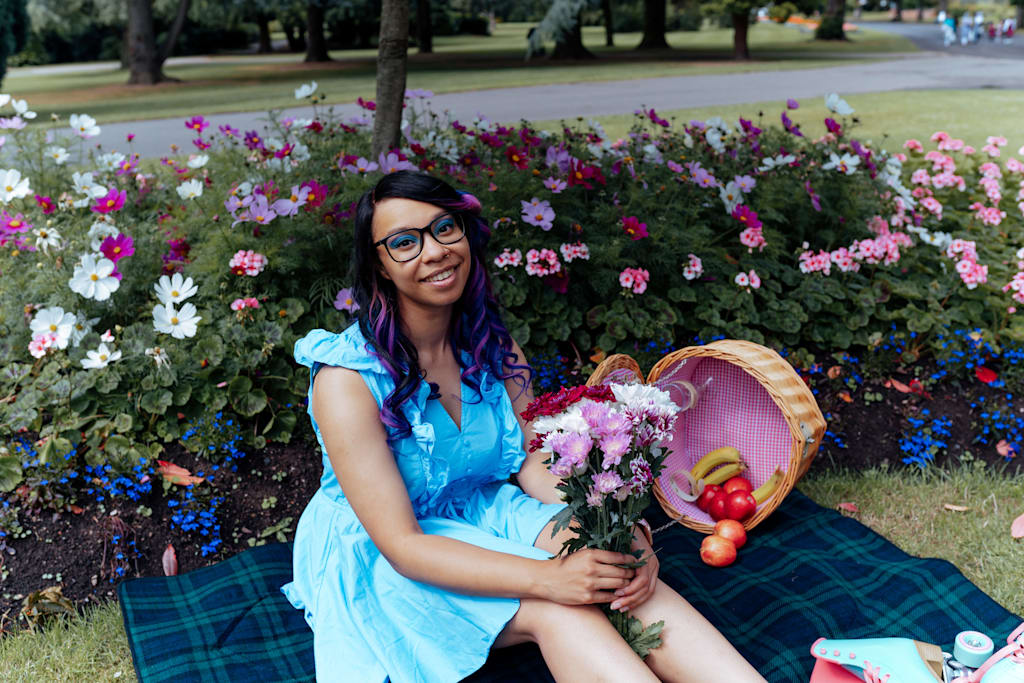
Whether you're watching her perform live, checking out her music videos or simply scrolling through her website, Eliza May's happiness is infectious. Her radiant smile, colorful wardrobe and cheerful, laid-back demeanor add a touch of joy to an industry that desperately needs some optimism. However, she's also not afraid to explore serious topics in her work, and this versatility makes Eliza May a complex, multi-layered artist who's got a lot to say about these crazy times we're living in.
1. "Money" is a bright, cheerful song that tackles a serious topic—in this case, the cost of living crisis. What did you want to convey while you were writing this song? Did you want to give people hope or find another way to look at the situation, or did you have something totally different in mind?
When writing "Money," I wanted people to realise that even without financial support or people believing in you, you can still achieve your dreams. Throughout my entire career as an independent artist, I’ve faced a lot of rejection and had no financial support, but I’ve kept going and have proved to myself (and hopefully others) that anything is possible if you work hard and believe in yourself.
I also wanted "Money" to shed light on the financial struggles of the modern age because even though this is a fun, sassy indie pop song, the cost of living is a real issue right now and has been since I wrote the song in 2021. The more we call out the financial economy and systems in place that aren’t working for us, the more likely things will change. We deserve better than this, and that’s what "Money" is all about.
2. On a similar note, what advice would you give artists who are just starting out, especially in this world of AI and economic downturns? What inspires you to keep going when times are tough?
In terms of advice, firstly, I’d say to take every opportunity that excites or scares you! When I first started out, I took as many gigs, open mics and networking opportunities as I could to make sure I was an active part of my local music scene. It was often scary at first, but after I’d done it, I felt so much more confident on stage, and it helped me to make friends with other creatives too.
By saying yes and putting myself out there, it led to festival bookers, promoters, and other creatives giving me bigger opportunities that have led me to where I am now. None of this would have been possible, though, if I didn’t say yes to things in the early stages of my career.
I’d also say believe in yourself and your art as much as possible and try not to compare yourself to others. As a musician, it’s so easy to see a post online and think your own songs or content isn’t as good as everyone else’s, but that’s often not the case. Everyone is on their own journey, and just because another artist is playing huge gigs or supporting your favourite band, it doesn’t mean you won’t get that chance or something even better. As long as you keep going and try your best, great opportunities will come your way, and you’ll find your audience.
When times are tough, I try to strip things back to just the music. The gigs, socials and everything else surrounding the music can sometimes be overwhelming, but sitting with my guitar and either writing or playing my favourite songs always grounds me. It reminds me of why I’ve always loved being a musician and makes me feel like I can do anything as long as I’m making/playing music I love.
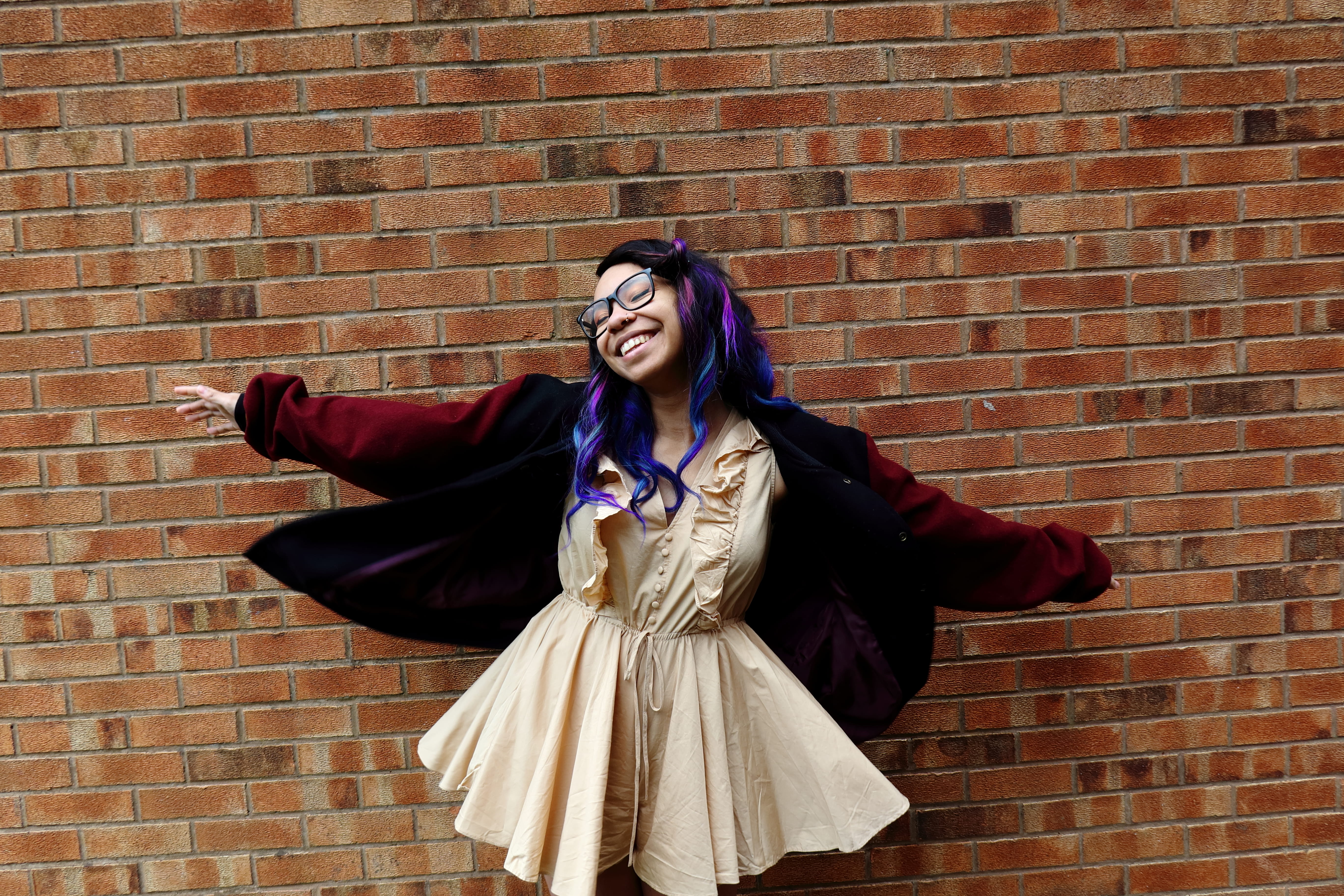
3. Bright colors, cupcakes, balloons and candy hearts are the essence of your aesthetic, but it doesn't feel childish. How do you maintain this fun, lively vibe while targeting an adult audience? Likewise, how did you develop your personal style? Do you dress differently when the cameras aren't rolling?
Oooh, that’s such a great question. To be honest, I’ve never actually thought about it properly until now! As a person, I’m very extraverted and love being a big kid, and I think that comes across in most of my music. I love making songs that sound fun and coming up with eye-catching, creative visuals that are slightly outside of the box. I also think that deep down, everyone wants to be a kid again, and my music and live shows create that safe space for people to let loose and channel their inner child.
In terms of my personal style, I just love colourful outfits. I think that in everyday life, it’s not often that you get to go all out and wear colourful clothing, so whenever I can, especially when I’m on stage, I try to make sure my outfits are bright and a little bit quirky. In my day-to-day life, my outfits are slightly less quirky, but the bright colours are still there. I absolutely love a pair of dungarees (especially if they’re bright pink), a colourfully patterned playsuit or an oversized T-shirt.
4. Like your aesthetic, your music has a sunny, optimistic vibe that makes the listener want to smile along. How do you maintain this cheerful sound, even when you're writing about darker subjects? What does the recording and production process look like?
As someone who’s always quite optimistic, I think it’s something that has always just naturally happened in my writing. I’ve never really been too much of a sad song lover, so I’ve always been drawn to creating music that is more upbeat and shares the song’s message in a fun, empowering way. I also listen to a lot of indie pop artists and bands that create upbeat songs, and that heavily inspires me in the way I write my own music.
I always want my songs to be catchy and something you can sing along to, so I love fast strumming patterns. Having such a strong love for the major 7th chord often makes my music sound more upbeat and positive too, no matter how dark my lyrics may be.
The recording and production process changes every time, but it always starts with a demo. After writing the song and taking it to my band, we’ll record a demo version and then take it to the studio to record our real takes. The band will record their parts (e.g., drums, bass, keys and lead guitar), and I’ll record the rhythm guitar.
I often record my vocals at home as it gives me the time and space to make sure I’m really happy with all the harmonies, ad-libs and any layering I like to do. It also gives me the freedom to be more creative with my melody lines and try out different ideas that I might be too scared to try in front of other people.
Production often looks like me sitting with a producer, going through the whole track to see if there's any effects or sounds we want to add in to portray the message of the song further. There’s usually little hidden gems that other musicians/producers might hear in the mix that we’ve added in, but most people won’t notice (e.g., quiet ad libs, multiple tracks of the same instrument to create a fuller sound, etc.)
It’s really easy to get fixated on all the little things that we could adjust, so I find that working with a producer and getting another opinion on something in the room is super helpful. We usually go through the track over and over again, tweaking volume levels and effects until it sounds radio-ready, and then it gets sent off to be mastered.
5. Your "Candy Heart" music video highlights your friendly, easygoing charisma and confidence in front of the camera. Does this star power come naturally to you, or did you have to develop it over time? Do you think this makes it easier to work in the music industry, since people expect you to show your face in videos and live events?
It’s definitely something I think I’ve had to work on over time. I’ve always had a passion for performing, but being in front of a camera has been something I’ve had to practise. I remember when we were filming the music videos for both "Candy Heart" and "Edge of This," I would often have to do multiple takes of the same scene just to make sure I wasn’t laughing all the way through, especially when I had to be serious. Thankfully, my friend and boyfriend were able to help me stay on track, but it’s definitely harder than it looks!
Now I love being in front of a camera, and it’s definitely a helpful skill to have when working in the music industry. I thankfully don’t feel shy on camera or in public settings, so people are often able to truly see who I am as an artist both on and off stage.
6. Speaking of the "Candy Heart" video: what was the production process like? Can you talk more about your responsibilities as a director and editor? How did you develop and film the individual scenes, and did you get to eat the cupcakes afterward?
The production process was so much fun! I knew that I wanted the music video to be carefree and uplifting, so my friend who’s a photographer and I sat down, listened to the song and jotted down as many ideas as we could think of!
When writing "Candy Heart," I referenced sweet things a lot, so visually I wanted to reflect that. I also wanted it to be a colourful video that was super wholesome, so we chose backdrop colours that would be bright and turned my actual boyfriend into my on-screen boyfriend. We tried to film cute snapshots of what our relationship is actually like, and then once we had enough footage, I sat and pieced it all together.
The editing process for this music video took me two weeks but was 100% worth it. As I was doing it myself, it allowed me to truly make the video my own through colour correcting, placing clips in the right order and lining everything up with the music. Video editing is something I’ve always had a passion for, so when it came to editing my own music video, it was quite an enjoyable experience.
When it came to directing, my boyfriend helped a lot with this. As a team, we planned the script and scene plans for the shoot, but when it came to staying on track, positioning cakes and figuring out how we’d film a shot, Connor made it happen. As the artist, it’s hard to direct whilst also being in the shot, so having Connor to help with this was extremely helpful.
Oh, and yes, we did get to eat the cupcakes afterwards. The cupcakes were actually made by Connor’s mum, who has always made incredible cakes that appear at every family event. She kindly agreed to make 20–30 cupcakes for the music video, and she also did the same when I held the Candy Heart EP launch. She genuinely was a lifesaver, and the music video wouldn’t be as sugary sweet as it is without her help.
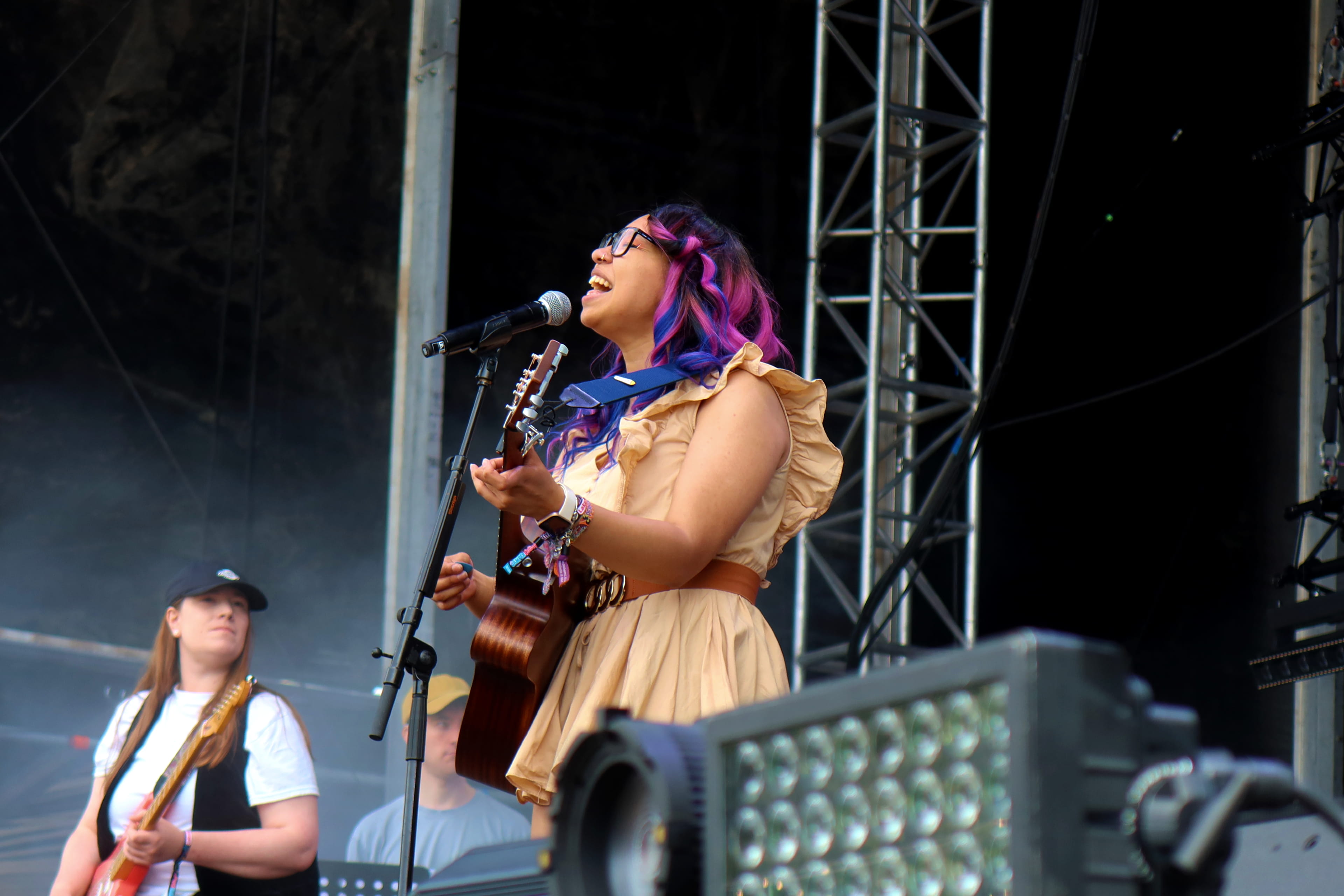
7. What goes on behind the scenes when you're performing live? Can you discuss the set-up process that the audience usually doesn't see? When you're performing at a festival, do you stay to watch other acts perform?
Usually backstage before a show, I’m doing my vocal warm-ups (specifically through my singing straw), prepping the merch table, planning different shots with my photographer and generally hanging out with my band. If I forget to do these things, I don’t usually feel prepared for the show, so I try my best to make sure this is all done and set up beforehand.
Before the show, we also soundcheck to make sure that our sound levels are all balanced too. This usually consists of us testing out each instrument individually on stage and then playing a song all together to make sure we can hear ourselves in our in ears/wedges or if anything needs adjusting. I wish there was something more exciting to share about the backstage process, but really it’s a time for us all to chill and take in the calm before the storm.
At festivals, I always try and stay to watch the other acts, and usually I try to find artists/bands that are performing on smaller stages too. At big festivals, it’s predictable that the main stage artists are going to have a crowd, but it’s not always guaranteed on the smaller stages.
As an artist myself, I really appreciate when other musicians come to see my set, so I try to do the same by showing up and being in the crowd at those smaller stages. Sticking around to watch other performers’ sets is also an unspoken rule in the live scene. By watching other artist’s sets, you’re making sure that they have an audience and that they feel supported during their performance.
It also gives you a chance to connect and potentially become friends with them, so staying to watch other acts' sets is a must! I’ve discovered and seen so many incredible artists on the smaller stages who I’m now big fans of, and if I’d have left a gig/festival early, I’d have completely missed out. If there’s anything you take away from this interview, then let it be to stick around for all the acts on a lineup and go show your support at the smaller stages!
8. How do you feel about performing live in general? Do you prefer festivals or smaller, more intimate shows? What's the best gig that you've ever played?
Nothing makes me feel more alive than performing on stage. I absolutely love it! I used to feel nervous before playing gigs, but now every time I step on stage, I feel at ease. I usually feel super relaxed, and in my heart, I know I’m exactly where I’m meant to be. Every time I perform, I feel like the luckiest person in the world, and I’m so grateful that I get to do this for a living!
Even though I love smaller, more intimate shows, festivals are always my favourite place to perform. There’s just something about a festival stage that feels electric. The crowd is often more open to discovering upcoming artists like myself, and there’s no better feeling than performing outside in the summer sun.
There’s also so much more we can do as a band on a festival stage compared to a smaller gig venue, and that really excites me. My band and I get to play around more with the stage layout, the visuals and the transitions between songs when we play a festival.
I also love that it’s easier to connect with and see so many other incredible artists and bands that you may not usually get to interact with in any other environment. Festivals are just the most amazing place in the world, and I really hope I get to play as many of them as possible.
I’ve played so many incredible gigs and festivals, but the best one so far was probably when we played Hereford Indie Food Festival in 2024. We had previously played at the festival for two years in a row, and during this time, we became friends with the team who run it.
When we were asked to play again for the third year in a row, we immediately said yes and then were told that the slot was actually main support for GABRIELLE!! As a band, we were completely blown away and super grateful for the opportunity. Supporting GABRIELLE was one of the most surreal moments I’ve ever experienced.
The crowd turned up early and was super engaged during our set. My band and I had so much fun, and it was one of those moments where we felt like all the hard work was starting to pay off. It was also amazing getting to meet GABRIELLE and her manager, who were both super lovely. The whole evening was a dream come true, and it’s a moment I’ll truly never forget.
For more fun with Eliza May, you can check out her website, follow her on Instagram, Twitter, Facebook, YouTube and TikTok, and browse her music streaming links.
About the Creator
Kaitlin Shanks
Music journalist. To support my work, please send a tip (even $1 helps!) or shop from my Amazon storefront.
Last Living Girl (novel) • Instagram • TikTok • YouTube • Substack • Medium • Wattpad • Spotify Playlists • Linktree
Enjoyed the story? Support the Creator.
Subscribe for free to receive all their stories in your feed.
Comments
There are no comments for this story
Be the first to respond and start the conversation.