
My Exclusive Interview With Colleen Welsch
Learn about the secret sauce that takes your favorite artists to the next level.

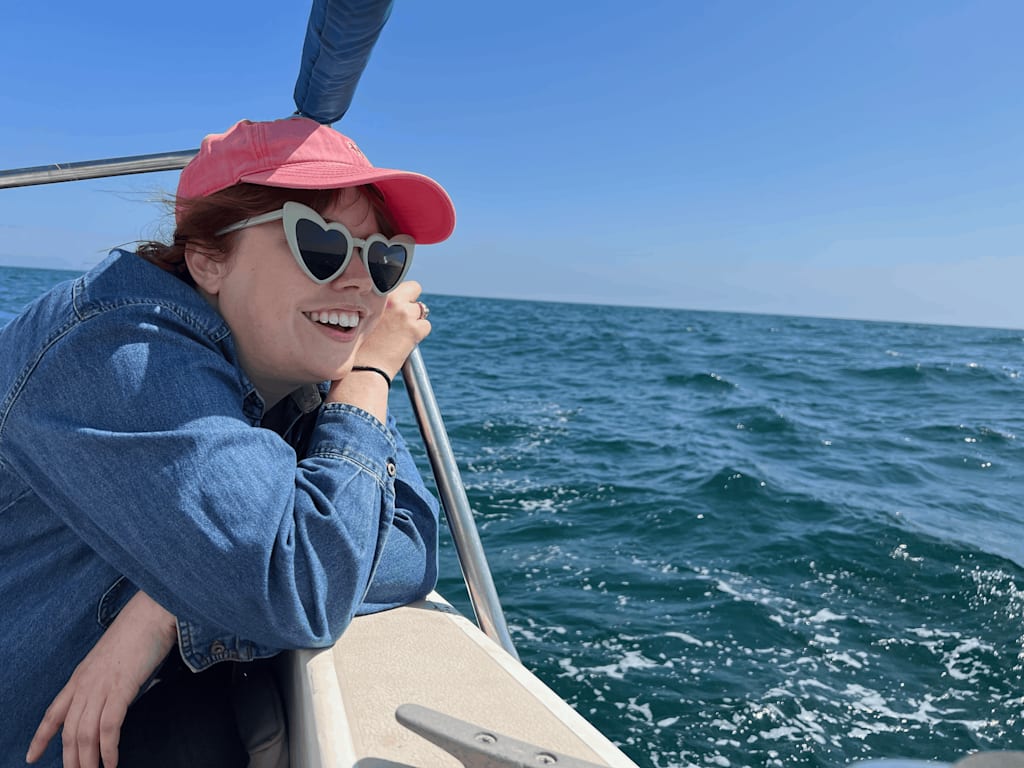
As a songwriter, producer and branding expert, Colleen Welsch understands that just recording an album isn't enough. The most successful artists have a unique, consistent brand that makes them stand out and creates a strong first impression, which is more important than ever in today's world of doomscrolling and short attention spans. If you've ever wondered about the team behind your favorite artists, this interview dives into Welsch's skills, experience and thought processes—and the talent that makes it all possible.
1. Your bio on Threads and Instagram states, "I help singer-songwriters go from their Lizzy Grant to Lana Del Rey era." Can you talk more about the difference between these eras and how you help clients make the leap to stardom? What's the magic piece that a lot of indie artists are missing?
Being an artist and trying to "make it" requires more than just making great music. You have to create a whole world around your story: your look, the way you present yourself on social media, the way you present yourself in your shows, etc.
Lizzy Grant is Lana Del Rey's original name. She released music under her name, and it's not like it's bad or anything, but she just hadn't created the "brand" of Lana Del Rey that so many people connect with. It's the difference between a talented girl who goes to your high school and a true star.
When I'm working with my clients, I approach things from a holistic perspective. It's not just making a beat for a particular song. Where does this song live in your sonic world? How are you going to promote this song in a way that furthers your story as an artist? How will you present yourself? When I work with clients, especially long-term, these are all things that I'm helping them to address.
2. How do you help artists create their personal brand while maintaining their unique style? Do they come to you with ideas, or do you develop your own concepts? Or both? How do hair, makeup, clothing, photoshoots, etc. factor into the brand, and what techniques do you use to keep everything consistent?
I give all the artists I work with exercises to help them identify what is unique about their tastes, then review their "homework" and provide suggestions. Hair, makeup, clothing, photoshoots, etc., all play into the story you create around your music. If something is off—a bad wig, a boring outfit, a cheap-looking photoshoot—it's going to turn people off from your story before they ever give your music a chance.
I have an additional service where I create a brand guide for artists that they can use to inspire photoshoots, choose outfits and hair, etc. I am also available for feedback at any time.
3. As a producer, what are your roles and responsibilities in the studio? How do you turn a demo track into a polished recording that's ready for streaming? Similarly, how long does it take you to produce a single track?
Usually, artists come to me with songs they've already written (though I also co-write). We meet and listen to music that helps them get an idea of how they want their song to sound. Next, we record a demo track of their vocals. Then I start to build the instrumental/beat around the vocals.
We will meet several times to make sure the instrumental is going in the right direction. Once they're happy with the instrumental, we record the final vocals, including all the harmonies that I arrange. I record artists in my studio in Cleveland, and we can also work remotely if they have their own recording setup, so I work with artists all over the US.
Once we're done recording vocals, I do all the vocal editing, including tuning. Once the artist is happy with the vocals, we send it to my mixing and mastering partner, who wraps up the project. I also help the artist plan the artwork, distribute their track, and make a promotion plan. One song takes 20-30 hours to complete.
4. What's your favorite song off your self-titled EP? What was the songwriting, production and recording process like? As a multi-talented artist, do you think that handling production gives you more ownership over the song?
My favorite song off of my EP is "Labyrinth". It took me YEARS to record and produce that song. I knew how I wanted it to sound in 2020 or 2021 when I wrote it, but I didn't yet have the production skills to finish it the way that I wanted to.
I probably went through three or four versions of the track before the finished one that you hear on the EP. That one was also fun because I collaborated with my childhood friend, Kevin Lang, to do the bass and guitar solo. One of my artists, ROTUNES, lent additional vocals and wrote an outro.
5. What kinds of responsibilities do you specifically have as a pop producer? How do you make each track as catchy and earwormy as possible? What draws you to the pop genre in particular, and which artists are your bigger influences?
My job as a pop producer is to use my skills to bring an artist's vision for their music to life. Some artists are more specific about what they want than others, but either way, my goal is always to get inside their mind and figure out what they want. Beyond that, I just try to make songs that I would like to hear.
I've always been a pop girly since I first got into Hanson and the Spice Girls when I was a little kid. I like pop because it's made to be easy to listen to and enjoy. I listen to things that are more dense and difficult to unpack as well, but I always return to pop.
I listen to all kinds of music, but some of my biggest influences are Washed Out, Tame Impala, ABBA, The Beatles, Carpenters, Stevie Wonder, Glass Animals, Daft Punk and City Pop artists like Anri and Mariya Takeuchi. IDK, that question is so hard to answer because I've listened to soooooo much music that's been important to me over the course of my life.
6. On your website, you discuss your production workshops and residencies. What's it like to pass on your knowledge to future generations? What inspired you to start teaching in the first place, and do you think the age of AI has made it more important than ever?
It's fun to work with kids and pass on knowledge. When I was a kid and I was getting into music, all I had was the Windows Sound Recorder and a keyboard. I would have loved to have all the options that kids have today!
Traditional music learning is great. I do think it's important that kids learn how to play an instrument, read music and play with others. But learning the clarinet doesn't necessarily speak to kids the way producing does. Production is a little bit more exciting, at least in my opinion.
Music production is also great for kids because it teaches about both music and tech. And most importantly, when students really get into it, it teaches them how to collect the knowledge they need to complete the projects they're imagining.
I honestly would have never considered teaching, but a family member suggested that I apply to a residency, and I got it! Now I'm working part-time as a teaching artist at a non-profit. It's nice to get out of the studio and be around other people, and it reminds me why I got into this in the first place. Sometimes when you're in the studio all day, making music for other artists, you can lose track of what you love about music in the first place.
7. What inspired you to start hosting open mics in your area? Do you think it helps local musicians find an audience? Have you always been a natural performer, or did you learn this skill over time?
My former piano teacher, Jake Briggs, invited me to co-host some open mics with him when I expressed an interest in performing more often. I had stage fright so bad, and he helped me get out there more, which made me less afraid of performing. After Jake moved to Oakland, I took over some of his open mic nights. They're a good way to build community and meet other local musicians.
And yes, I do think it helps musicians to find an audience. With local music, you get what you put into it. If you show up to the community and go to other people's shows and build those relationships, more people will come to your shows. I am a natural performer, but for some reason I was terrified to play guitar and sing in front of others (I'm over that now, obviously).
8. Your website also mentions your ability to play background music at events. What do you think live music adds to events that aren't specifically focused on the performance? How do you develop a setlist for these events, and what are your favorite songs to cover?
I think live music adds a much more interesting vibe to a night out. I would personally much rather go to a bar or restaurant or something that has live music instead of the same stuff you hear all the time piped into the speakers. It creates a more unique experience.
I've tried many, many covers at various events. Sometimes they hit hard, sometimes they only work with certain audiences, and sometimes I throw them out because they don't work at all. I usually test the waters with a few different types of music early in the night and see what the vibe is.
Two songs that always hit no matter the audience are "Valerie" and "Linger". I try to play more songs by female artists that you might not hear covered as much, so I know lots of songs by Carole King, Jewel, Whitney Houston, the Cranberries, Amy Winehouse, etc.
9. Overall, what do you love about making music? Between songwriting, recording, producing and performing, what's your favorite part of the process? What do you want other people to take away from your work?
I love how you can just pluck a melody or lyric from the ether, and then it lives inside of you, like, forever. I still get songs stuck in my head that I wrote when I was like nine. I've never recorded them or played them for anyone else, but they're still in there.
I like the early parts of the songwriting and production process because that's when the magic trick of creation happens. The rest of it is more about skill, which is important, but less fun. I just want people to enjoy listening to the music that I create. I've enjoyed so much music...it only seems fair to give some back when that's the thing that I'm good at.
If you want to stay in touch with Colleen Welsch or learn more about her services, you can check out her website, follow her on Instagram, TikTok and YouTube, and visit her site for music streaming links.
About the Creator
Kaitlin Shanks
Music journalist. To support my work, please send a tip (even $1 helps!) or shop from my Amazon storefront.
Last Living Girl (novel) • Instagram • TikTok • YouTube • Substack • Medium • Wattpad • Spotify Playlists • Linktree
Enjoyed the story? Support the Creator.
Subscribe for free to receive all their stories in your feed.
Comments
There are no comments for this story
Be the first to respond and start the conversation.