
My Exclusive Interview With Caroline Chiesa
Learn about the story and influences behind her latest record, "Outwitting the Stars."

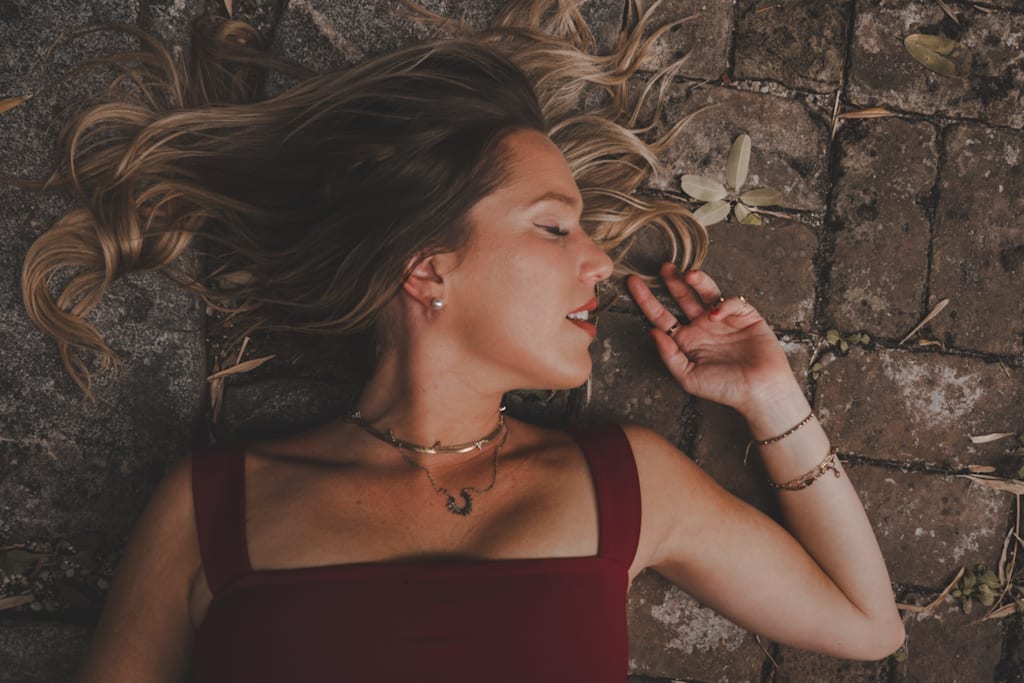
As a trained opera singer who produces music in her historic New Orleans home, Caroline Chiesa might not seem like your typical electronic artist. However, when you learn about the dualities that appear throughout her work, you realize that she's not trying to be. This interview dives into her education, her influences and her creative process, and as you read along, you'll get a crash course on everything from music production to Italian literature. You'll also be ready to listen to Outwitting the Stars, a complex and multi-layered work that urges you to listen to the whole album in one sitting.
1. As a classically trained vocalist, what was your education like? When did you realize that you had a talent for singing, and how did you perfect your technique? Did you take part in singing competitions at any point in your career?
My classical education started very young. I was assigned my first aria when I was eight. I was drawn to the arts early, and my parents were incredibly encouraging. I come from a family of Italian immigrants, and what inspired me most back then was impressing my grandfather by singing in his native tongue.
That study carried me all the way through college, where I studied classical vocal performance at San Diego State. I had a lot of discipline around it as a kid. One of the most formative experiences of my life was winning a pretty prestigious competition at 12. The "prize" was a year as the first resident youth soloist with our regional symphony orchestra in Northern California, plus a mentorship with the conductor for that year.
He was very intense. Even at that age, he made it very clear that if music was going to be my path, it would take a LOT of discipline, along with the ability to take feedback, which is one of the hardest skills to learn as a musician :)
Through high school, I kept competing at a high level and was accepted into conservatories like Interlochen, and I performed classical music competitively through college until I was 24. Let’s just say, I had a pretty good track record 🤭🏆
2. Do you think that being a trained vocalist gives you a unique advantage as a producer? How does it influence the way you approach your work? Which skills are essential for producers to have?
This might be a hot take, but no, I don't. Anyone with a music background will know more about song structure, cadence, rhythm and dynamics, but beyond that, it's just hours and repetition. The first time I opened a digital audio workstation (DAW) to really dive into sound design and production, Logic Pro might as well have been QuickBooks or a car engine. I had no idea what I was looking at. But like anything else, hours and repetition make the difference. The advantage might be in saving time, as I’m not waiting on vocals from a collaborator...which is quite liberating!
This brings me to one of my many soapboxes: do a little bit each day. If you put in the time, you will hear the results. So for me, the most essential skills for a producer are consistency and discipline. Feeling uninspired? Make channel strip presets, organize your working projects, make a spreadsheet to track your demos, make project templates in your DAW. I can capture inspiration so much faster today because of the tools I built on the days I didn't feel inspired. I am a firm believer that anything & everything is possible with time and consistency.
3. On your website, you mention that your work "lives in duality." Can you give some examples of contrasts you see in your work? Likewise, what are some contrasts that you've noticed in your personality or daily life, and how do they contribute to your music?
Absolutely! It goes back to how I found electronic music in the first place. I'm a California girl, and back in 2013–2014, while I was still singing classical, I got exposed to house music and Southern California festival culture and fell completely in love with tech house. I was especially into Dirtybird artists like Justin Martin, Ardalan and Claude VonStroke, who were making the most beautiful, chaotic, interesting, silly sounds my ears had ever heard.
At the same time, I've always been just as drawn to the opposite end: ambient music, meditation, sound you can lie down inside of. I’ve studied Ayurveda (the sister science to yoga) for many years, and mantra + ambient sound has been used for thousands of years as a therapy to calm an anxious mind. From experience, I can verify: it works!
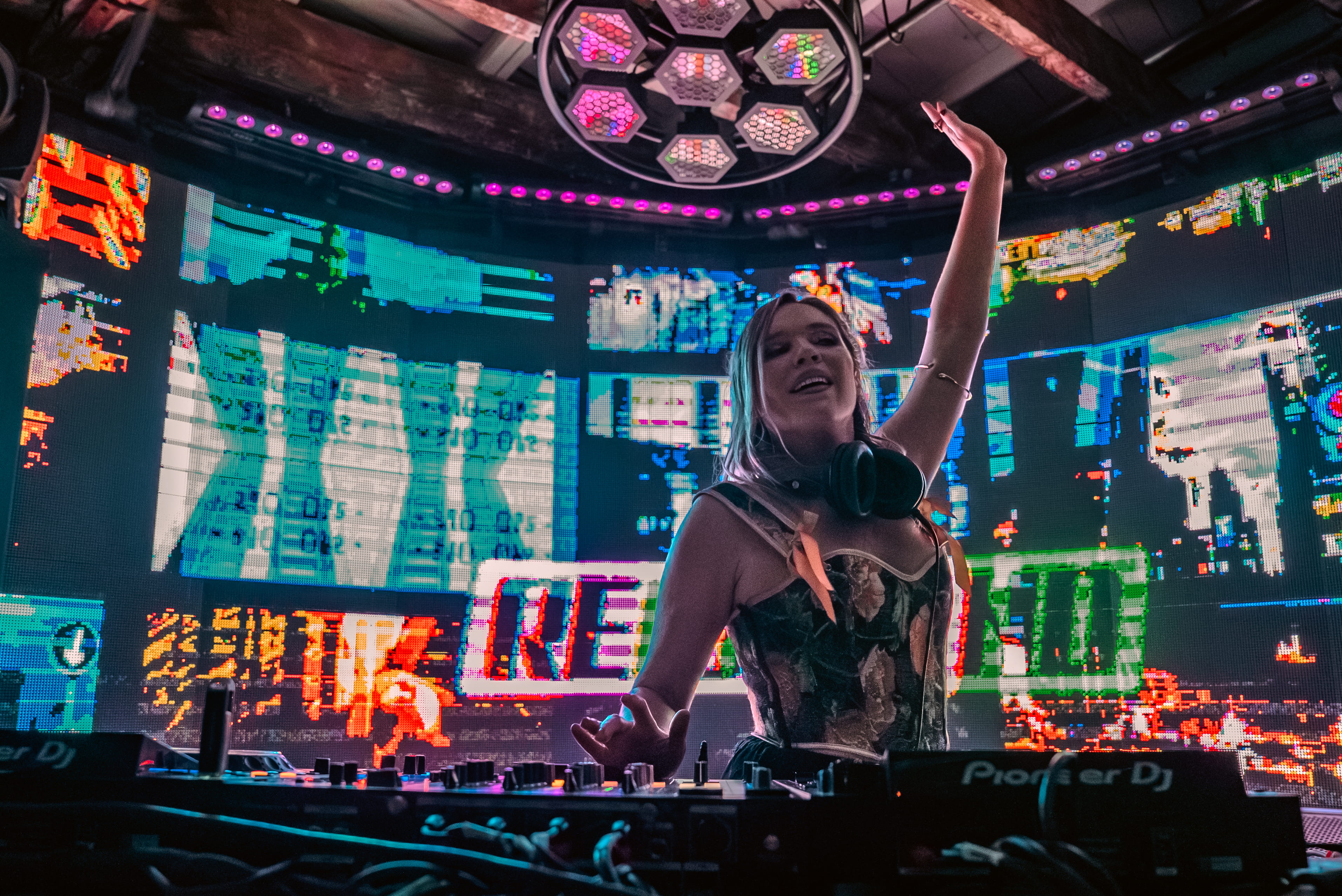
That polarity runs through my whole life. Alongside music, I've worked in health and wellness for the last 10 years as a yoga therapist and sound healing facilitator. At night, I turn into a pumpkin (aka a DJ). I listen to and make ambient music you could meditate to for hours, OR 4/4, 128 BPM music for the club :)
For a long time, I thought I had to keep those parts of myself separate, as if one might turn people off the other. That was my classical brain chirping. I'd been so stuck on things being "technically correct" one way and one way only. It took time, but I've finally accepted that I'm a spectrum, and sometimes it takes a journey through the dark to appreciate the light.
It's the same on a human level. I wear my heart on my sleeve, and my artist project isn't really a project so much as my musical diary (that I happen to share with the world). Outwitting the Stars is the first time I've shared some of my intrusive thoughts more honestly, which isn't my usual character.
There's profanity, vengeance and some clever name-calling, none of which I've ever expressed in my real human life. But we all feel that whole spectrum of emotions, even if we don't usually say them out loud. We're human. So this time around, I decided to play it a little more honestly.
4. "It's Not That Deep" has a lot of fun moments and sound effects that make the production shine. When you're in the studio, what does your production process look like? How do you make your songs as bright and catchy as possible?
People might be surprised to learn that I'm pretty strategic in the studio...again, the classical chirp. I like going into a session with a game plan and some parameters. My one non-negotiable is picking a clear emotion as my guide. The genre, sounds, lyrics and tempo all tend to change and evolve, but the emotional direction and the nuances inside it are the one thing I keep consistent.
"It's Not That Deep." is a good example. The song is built around a string of late-night text messages sent to "my man," so I wanted the whole production to feel like it lives inside a phone. A lot of the sounds and foley are the noises our phones make: the clicking when you type in iMessage, the whoosh of a text being sent. I distorted, re-pitched and EQ'd them until they became part of the beat.
There are also telephone-effect vocals and chops panning all around you, and me playing multiple characters. My favorite moment is the bridge, where I'm really letting the frustration out. In the bridge, every background element slowly gets more and more distorted underneath me, so the whole thing feels like a fist clenching. It adds an extra layer of intensity to the whole situation.
I have an insane amount of creative energy, and I already have more ideas than I'll probably be able to bring to life in this lifetime. A lot of artists struggle to stay focused, and I am no exception!! So for me, staying organized is just as important as letting the creativity flow. That's the difference between starting beautiful projects and finishing them.
I also have a binder full of checklists I've made for myself: things to try when something feels stale, production tricks that give the listener a little dopamine hit, a chart of which keys express which emotions. It's basically my own holy grail of everything I've collected over the years to get unstuck and make a song feel the way it does in my head, and I reference it constantly when in my studio!
5. Your blog post for "It's Not That Deep." talks about sharing your shadow self with the world. Do you think that music helps you process or give a voice to the darker sides of your personality? Why do you think it's important to embrace honesty in your work?
For me, honesty is hugely important because my project is meant to be an expression of my own experience. That said, I know and follow plenty of artists whose amazing projects are built around a character or a story, and I find that really inspiring too. I'm actually working on an alter-ego project of my own that hasn't put out any music yet. It's a direct offshoot of one of the songs on this album :)
It can be fun to play a character. In the case of "It's Not That Deep.", I let my intrusive thoughts narrate the song. If you listen, it's quite sharp and a bit catty, which isn't really my personality or my usual sound. But it might be the most healing song I've ever written because it came from things I was actually thinking and feeling. To appreciate the light, you have to explore your own shadow, and that song was definitely narrated by mine. She's pretty hilarious though. I might let her write more often ;)
6. What draws you to electronic music in particular? Did you experiment with different styles before you chose this genre? Is the contrast between classically trained vocals and electronic beats another example of duality in your work?
I grew up playing only acoustic instruments, and through and after college I had to pay a pianist by the minute any time I wanted to rehearse. So I can't begin to tell you how liberated I felt once I learned I could program MIDI into a DAW and have practically any backing track in my hands within minutes!
And yes, for as long as I can remember, long before I could make it myself, I've had sonic visions of my voice on top of house beats. The gap was always just execution. Once I started finding my way around Logic Pro (my workstation of choice), I knew pretty quickly what sound and story I wanted.
It's a bit of a moving target because I like my music to reflect what's happening in my life at the time. My first album, Liminal Space, leaned tech house and pop, and Almost Forever went progressive and ambient. Lately, I've started embracing a dark pop sound with songs like "It's Not That Deep." and "I Need a Lobotomy," which are two outliers in the larger catalog.
7. As someone who was born in California and later moved to New Orleans, how does your background influence your music? Did your style change when you moved to Louisiana?
First and foremost: the California and New Orleans music scenes could not be more different, and it was a bit of a shock when I first started spending time here. In my last few years in Southern California, I was working on my production skills, but I didn't have a cohort of fellow artists. California is a mecca for the kind of house music I love, so as a listener it couldn't have been better.
New Orleans, on the other hand, is a musician's city, but the kind of music I make isn't especially popular here, so I'm a bit of an outlier. There's a huge bass and dubstep community, but house isn't big in the city at large, which has been a challenge.
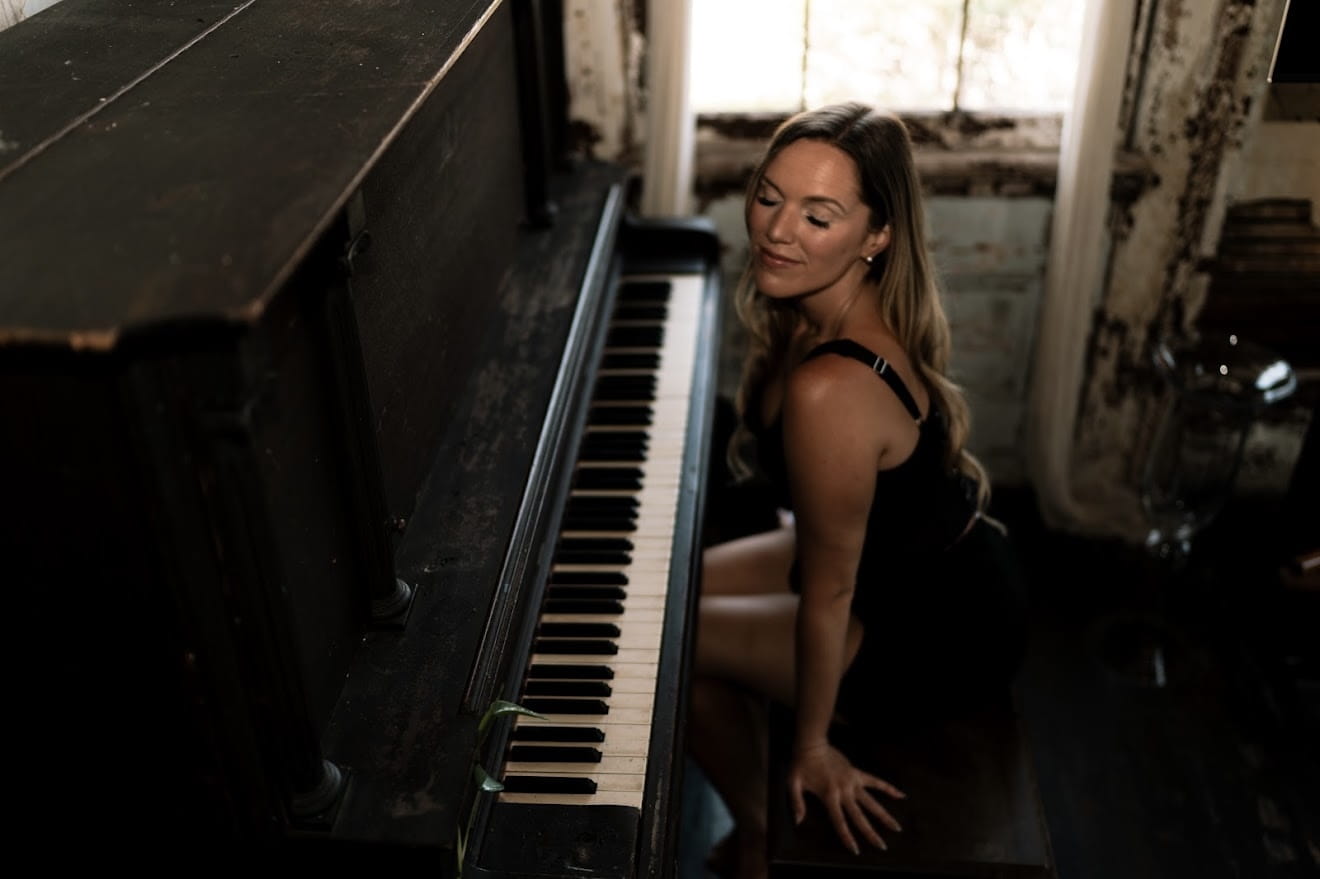
What New Orleans did give me is the house that I live in now; it’s a beautifully restored, classic 1860s New Orleans home (my album cover art was taken in our ballroom at our beautiful vintage upright), and it is supercharged with magic. A lot of this album was made inside of it, and you can literally hear it, because some of the percussion is built from found sounds I recorded around the house! I don't think this record would sound the way it does if I'd made it anywhere else.
I like to keep myself pretty bicoastal, and I'm hoping to start performing throughout California, since I'm still there so often.
8. Your website describes your upcoming record, Outwitting the Stars, as a concept album that audiences should listen to in order instead of shuffling the tracks. What kind of story unfolds as the record goes on, and how did you use your songwriting and production abilities to create a cohesive work? How does the Divine Comedy tie into your own life?
Yes! Outwitting the Stars is out now. It's my third fully self-produced, independently released album, and I can say with my whole spine: I have never put more care and consideration into anything I've ever made. Outside of music, philosophy and ethics are my greatest interests, and this album is where all of that finally got to come out and play.
The story follows the arc of Dante's Divine Comedy: a descent, a long stretch of loneliness, and an evolution on the other side. It's split into three acts. Act I is the Inferno: loud, funny, angry, a little spiteful. That's where the singles live, songs about trying to fight, joke and out-think your way out of pain. Act II is Purgatorio, where the fire burns out and turns into exhaustion and numbness.
Act III is Paradiso, where the sound finally opens up into the floaty, ethereal side of me. To make it feel like one continuous piece, I connected the songs with pads and bridge chords so they flow into each other like scenes in a film. The loud songs come first on purpose, and the most ethereal moments are saved for the other side.
The title, Outwitting the Stars, is the name of a chapter in Paramahansa Yogananda's Autobiography of a Yogi, where his guru prescribes gems and metals to soften the karma written in a person's planets. I've studied yoga and Vedic astrology for years, so that chapter has stuck with me forever. The yogic irony is that the real "win" was never beating your stars. It's contentment, evenness of mind, and love for yourself and for something bigger than you.
The irony of the album is that it is all an attempt. To outwit the stars is the very human project of trying to out-create, out-joke and out-analyze fate (and even myself) into submission. The album is that attempt failing...on purpose. The closing song, "There's No Outwitting the Stars," is a wink.
I used to think I knew before realizing I don’t and probably never will, and I'm unironically calling myself a fool and dancing it out. To me, that surrender is the most earned thing about this collection. And fun fact: all three books of the Divine Comedy end on the same word, stelle, "stars."
As for my own life: Dante opens the poem "midway upon the journey of our life," lost in a dark forest, and that's pretty much where I was when I started writing this. I'd had seven different falling-outs with people and projects, and they really crushed me. I tried to philosophize my way out of the pain until I couldn't avoid myself anymore.
While I was writing the final songs, I was in tears for weeks on end, because I was living the conclusions of those songs and having their realizations AS I wrote them. This collection and this era have been healing for me in a really remarkable way.
Today, I have both eyes on the horizon, and I'm ready for what's next! Funnily enough, I haven't started any new music since finishing this project. I feel like I need a moment to breathe and let life unfold a bit.
So my one request is that you listen in order, no shuffle. It was made to be heard as one story :)
Now that you know the story behind her music, you can check out Caroline Chiesa's website, follow her on Instagram, TikTok, YouTube and Facebook, and stream her tracks on Spotify, SoundCloud and Apple Music.
About the Creator
Kaitlin Shanks
Music journalist. To support my work, please send a tip (even $1 helps!) or shop from my Amazon storefront.
Last Living Girl (novel) • Instagram • TikTok • YouTube • Substack • Medium • Wattpad • Spotify Playlists • Linktree
Enjoyed the story? Support the Creator.
Subscribe for free to receive all their stories in your feed.
Comments
There are no comments for this story
Be the first to respond and start the conversation.