
My Exclusive Interview With Amaiyah
Take a trip through the galaxy as we explore Amaiyah's spellbinding new album, "The War of Venus."

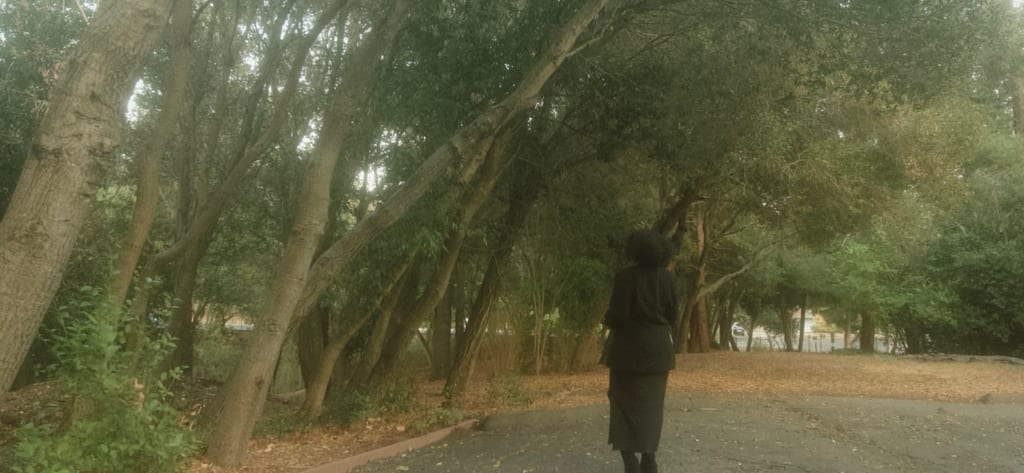
99.9% of Spotify listeners haven't heard one of the best albums of 2026. Fortunately, we're about to change that. Amaiyah's The War of Venus is a haunting soundscape with ghostly vocals, apocalyptic imagery and a dark, simmering vibe that makes you feel like you're crawling through a war zone--and if you ask me, ten Spotify listeners just aren't enough. This record is equal parts strange and mysterious, and this interview dives into the surreal landscape that turns Amaiyah's music into a trip to another planet.
1. From the album covers to the lyrics to the instrumentals, everything about your music burns with a passionate intensity. Where does this intensity come from, and how do you channel it into your music? Do you want to convey a specific emotion, such as fear or anger, or did you have another approach in mind?
I care deeply about the music I make, and I'm a little bit of a perfectionist too, but to be honest, it's very natural to me to carry such intensity. When it comes to putting it into my music, I don't shy away from it. I want my listeners to be encouraged and comfortable enough to feel. Slowing down, drowning out the noise, complete vulnerability.
2. After the instrumental opening track, "Snowfall" introduces the listener to warm, lustrous vocals that sound like a voice floating through the smoke. How do you decide where to place the vocals in your soundscapes? This is the first time we hear your voice, so does this voice have any particular significance?
Timing is everything. I want my listeners to be guided through the song as opposed to feeling like they have to listen. The opening track ends softly, with a bit of mystery. Now that an atmosphere has been made, instead of ruining it, I lean into it more. Light vocals, airy synth, slow build, give you just enough to slowly wake up and get you ready for the next track.
3. Many of your song titles seem to hint at unfolding events: "The Isle of Fire," "Surrender to the Warfield," "Ash Cloud," etc. Would you consider this a concept album with events, characters and worldbuilding, or do you view these situations as metaphorical? Do you want to spark a discussion about a real-world person or historical event?
It's a bit of both. There's always a deeper world in my projects. They emerge from my emotions; I get visuals of them. I get a setting, or a scenario. Then I start to build off of that--but in the end, after all of the worldbuilding, all of it is metaphorical. Everything. In terms of the real world, I do think wildfires are significant. I visualized a parallel Earth, dry, dead and burning. We don't take care of the planet as much as we could. A much more chaotic timeline.
4. "Surrender to the Warfield" gives the listener a little break from the heat with clearer vocals and bubbly production. During the production and songwriting process, which techniques did you use to adjust each song's intensity? Similarly, how did you choose a cohesive track listing that guides the listener through the saga?
Songs are made in no particular order; it's just which emotion can head first. Once I feel I have all of the story made, the songs produced have their feeling assigned already, so all that is left is ordering it. For example, a gleeful and sad song are interchangeable; you can put it before or after one another, but when it comes to such feelings like grief, you let it sit for a song or two. You want them to feel something, pack it in and let them sit with it for a while.
5. "The Hollow Conduit" intrigues me because it pairs cold, robotic vocals with lush, burning production and a quiet, unsettling break in the middle. I can't help but imagine a robot trapped in a fiery, industrial prison. What were you trying to achieve with this track, and what do you want your listeners to take away from it?
I love that you're getting intense visuals with the songs, and more on the feeling of being trapped. This song was originally made with the intention of a tale being told about a siren. Being lured in by the melody and the words grab your attention more than how I'm delivering it. The message is, though, I understand why people treat me in certain ways; it's my first time being here, but above it all, just know that I know.
6. "Ash Cloud" sounds like an apocalyptic landscape: smoke rolling over the ground, buildings tipping over in the distance, wails cutting through the fog. Did you intend this song to be an important or climactic moment? How did you create this movie-like scene with nothing but a song and a concept?
Apocalyptic landscape is a descriptor I'd use as well for "Ash Cloud," but one thing is, I'd switch the buildings for the aftermath of a warfield, the dead surrounding a chief. Empty but so full. A win or loss? Questions you dwell on. Its movie-like sound was inspired by movies, specifically martial arts films. Some climactic still shots from Korean, Thai and Chinese films I've watched come to mind for this song. The protagonist sitting with their decisions, pondering.
7. Throughout the album, your voice seems to appear during significant moments, like you're trying to reassure your listeners. Do you see yourself as a character in this record? What's your role in this story, and what happens when you're not there?
I see myself as a narrator when it comes to my projects that have such an elaborate story tied to it. At first, I am the character in the record, then it becomes about the listener. I'm still there because I understand what I'm delivering to my listeners. The stories don't have to involve me, but the intensity will still be the same as long as there's feeling and meaning behind it.
8. After a softer track near the end, "To Be, to End, and Begin Again" suddenly erupts with a bright, exquisite soundscape that makes me think of kaleidoscopes. Is this supposed to end the album with a warm, optimistic note, or does it have another message for the audience? What's the ultimate takeaway for the audience?
The end of this project is a hopeful one, but in a neutral sense. I leave you with the weight of my project, your time, gently letting you go with what emotions reside with you once that siren goes out at the end of the song. It's up to you.
9. On Instagram, you share a lot of dark, hazy photos with empty landscapes and unexpected streaks of color. You also share a lot of poems, such as "Dragonfly Bee." How does this all fit into your creative world? In your opinion, what's the difference between writing a poem and a song?
Writing and photography are other outlets for me. There's a lot on my mind, and without the perfectionism, I write poems and take pictures that may or may not be the best. It's also a glimpse in how I see the world. It doesn't make sense a lot of the time, but it's me authentically through abstract lenses. Truthfully, I don't think there's a difference between writing a song and a poem. You can sing without a melody, and a poem can be accompanied.
If you want more from the world of Amaiyah, you can follow her on Instagram and Threads and stream her albums on Spotify and Apple Music.
About the Creator
Kaitlin Shanks
Music blogger. To support my work, please send a tip (even $1 helps!) or shop from my Amazon storefront.
Last Living Girl (novel) • Instagram • TikTok • YouTube • Substack • Medium • Wattpad • Spotify Playlists • Linktree
Enjoyed the story? Support the Creator.
Subscribe for free to receive all their stories in your feed.
Comments
There are no comments for this story
Be the first to respond and start the conversation.