
My Exclusive Interview With Alyona Sedliar
You love listening to music; now find out who makes the magic happen behind the scenes.


Bands are nothing without great management, and Alyona Sedliar has the tools, knowledge and experience to take Septory to the next level. As a metal fan and former musician, she understands the nuances of the music scene and makes connections that help her clients thrive. She's also Septory's biggest fan, and while their audience might appreciate their music, nobody can match Sedliar's drive, enthusiasm and professionalism. When you read this interview, you'll realize that managers are the unsung heroes of the music industry, and your favorite band has someone just like her in their corner.
1. To start, what exactly do you do as a music manager? What are your daily responsibilities? How do you help your clients succeed and become the most successful versions of themselves?
Hi! I'm an independent freelance music manager. I'm responsible for social media, music streaming platforms, paid advertising, concert promotion and communication between musicians and other people in the music industry.
In general, though, if you're looking for someone to manage your project, it's important to discuss all responsibilities from the very beginning. Some artists are just starting out and have no idea what to do next, so they need a strategist who can create a long-term plan.
Some bands see a music manager as a tour or booking manager who takes responsibility for organizing all their shows, but they don't want the manager to get involved in anything else. Others see managers as active co-creators—for example, as producers. For others, a potential manager should have strong administrative skills and be a partner in crime who takes tasks off the musicians' plates and invests time and money in the band.
I see a manager's mission as supporting bands at every stage of their careers. To become the best versions of themselves, a band and its manager need to learn how to work together over several years, following a strategy they develop together. My role is to help artists understand what makes them different, turn that into a clear strategy, and make sure their everyday efforts support their long-term goals.
2. On Threads, you had an interesting post about the importance of developing your concept before you start a band. How do you develop concepts with your clients? What kinds of questions do you ask them to help them find their identity?
Thanks for checking out my Threads post!
A concept is what sets one band apart from another. Musicians can improve their skills, spend thousands of dollars on equipment and production, and stay active on social media, but still get stuck at the same point. It's often difficult to look at their own project objectively and understand how the audience actually sees it.
To develop a concept, I conduct an in-depth interview with the artists and analyze the project. I ask questions such as: Where do you want to take the band, and what does success look like to you? What essential changes are you ready to make? What's preventing the band from succeeding right now? What values and ideas do you want to communicate? How do you want people to perceive you? The questions I ask depend on what we're trying to find out.
3. As the manager of a metal band, do you have any specific responsibilities that you might not have with other genres? What's the difference between managing a band and a solo artist?
The core responsibilities of a music manager are pretty similar across genres, but every scene has its own ecosystem. In metal, it's important to understand the community, know the right promoters and specialized media, and understand where your band fits within the scene. You need to know not only how to promote the music, but also how to reach the right audience.
In the metal scene, as a woman, I mostly work and communicate with men. This can be challenging when you need to keep a simple disagreement between musicians from turning into a massive fight that could bring the whole project to an end. Of course, there can also be differences in vision.
But my experience has shown me that a good manager can help a band navigate the ups and downs of its musical journey through open communication. I still believe men and women can find common ground and work together peacefully, and I know it's possible.
When you're managing a band rather than a solo artist, you need to take the voices and opinions of different band members into account and ultimately find a way through any difficult situation.

4. Do you think you need to enjoy your client's music (or genre in general) to manage them successfully? Would it be difficult for you to manage a band if you weren't a fan of their work?
I think a manager has to be a band's first and most devoted fan because music management is a long-term commitment. I think building a sustainable career in music can take five to seven years of consistent work, and it's hard to stay motivated throughout that time.
Of course, I've had short-term contracts for specific projects—for example, tour ads for a band working with Morok Booking. In that case, I can still enjoy the music, but I don't have to be a fan; I just have to do my job properly.
Managing a band is a completely different thing: you need to be deeply invested in it and genuinely want to see your band shine. That's why I'm surprised when I see one person successfully managing three, four, or even more bands. At the same time, I know of agencies and labels where this works because there's a whole team behind each project.
Imagine a tough day when all those musicians need your attention right now, all at once—it's a stress test!
5. How did you get into music management to begin with? Can you talk about your history and how you ended up managing Septory? Have you held other jobs in the music industry before this?
I started out as a musician. I began playing the drums at 18 as a hobby, and that exciting journey lasted around seven years. I practiced, played in different local bands, and tried to figure out how to promote music and organize shows at the same time. As an independent musician, you have to learn at least the basics of the music business from scratch to understand how to make it work for you.
One day, I developed some serious health problems and had to give up drumming. But that became a turning point in my life: I focused on helping talented musicians who didn't have enough time to promote themselves.
I looked for courses and professionals who could help me develop my skills. At first, it wasn't a full-time, well-paid job. It was more of a side hustle, or even volunteer work. At the same time, my job involved social media, and this helped me understand how projects grow from different perspectives—as a musician, a manager, and a social media and paid advertising specialist.
Another turning point came during a difficult period: I was fired from my remote job while living abroad as an expat. I had no choice but to face my fears, prove myself as a music industry professional, and finally focus on what I really wanted to do.
Through networking at professional courses, I discovered the old-school death metal band Septory. They put on impressive live shows, had exceptional musical skills, and were highly motivated to take things to the next level. They needed a manager, so we agreed to work together and started developing their concept, planning a concert tour and working on their social media.
At this point, I have about seven to eight years of experience in the music industry. I've had the honor of working on the Swedish death metal band Hypocrisy's social media, promoting concerts for the French post-black metal band Celeste, and running an ad campaign for a tour by From The Land, a side project of Nytt Land.
I've also worked with many independent musicians at different stages of their careers, and helped promote more than 150 releases by local bands across a wide range of genres—from death and black metal to alternative and indie rock. I'm always looking to discover new artists and expand my international network.
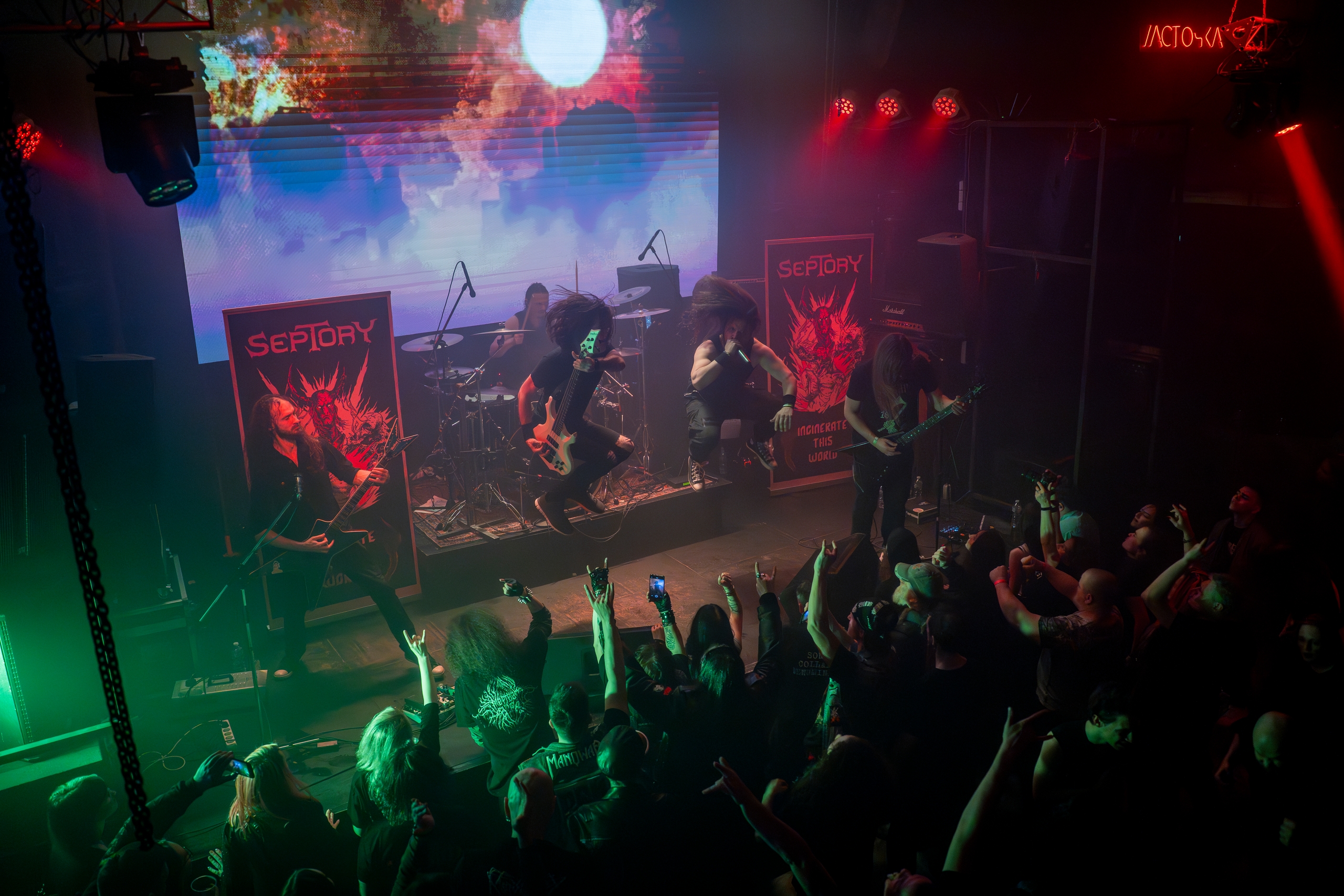
6. How do you book gigs for your clients? Do venues reach out to you, or do you have to search for venues and festivals on your own? Or both? What does the tour scheduling process look like?
Usually, it works both ways. If promoters and venues reach out to you on their own, you're on the right track because it means you're visible, which is crucial for any artist nowadays. It means your music, live performances and social media activity are working well together and helping you gain momentum.
Of course, if you're planning a tour across a set number of cities, not every local venue will know your band, so you have to contact them yourself when necessary to make the tour schedule work. In that case, it's good to have a dedicated promo package that showcases your band at a glance, without having to spend days exchanging emails.
My role isn't necessarily to handle every booking personally. As a manager, I work on the overall strategy and promotion, help build the band's visibility and make sure that touring fits into its long-term development. The exact division of responsibilities depends on the project and the people involved.
But here's the trick: a successful tour is the result of consistent work, not a miracle brought about by hype or a manager who can magically fix everything.
Artists schedule a release, create content around it, announce the release date and promote the album as effectively as possible. Once we've built as much attention as we can, we can announce a tour that has been planned in advance as part of the overall strategy. When that cycle comes to an end—with social media posts and audience feedback—we can start again.
7. What are some aspects of music management that the general public might not know about? What would they be surprised to learn about your job? Do you ever feel like an unsung hero?
Many people see the music industry as one nonstop party. You hang out with musicians, stay in touch with talented people, get free concert tickets and show off on social media.
But in reality, we also have serious responsibilities, such as planning, budgeting and overseeing an artist's overall career development. A good manager is a strategist, problem-solver, communicator and unofficial therapist who helps everyone manage stress—all in one.
I wouldn't call myself a hero, because there can be many heroes behind a successful artist, especially when there's a whole team involved. But the manager is definitely the Fifth Element in the whole system that makes a music project work.
8. What draws you to metal in particular? What do you love about this genre? Besides Septory, who are your favorite metal bands?
Metal is pure energy, endless creativity and a way to express all your emotions, both positive and negative. It's a manifesto for being yourself and speaking up about what's important to you.
Metal's boundaries have become blurred over the years, but the genre still welcomes new members into its cult. To me, the global metal community is an example of how people can stay united for years by music and the ideas behind it.
I have a huge list of favorite bands, but my current top picks are Gojira (I was listening to them before the Olympics!), Alcest, Tool and Imminence.
To stay in the loop, you can follow Alyona Sedliar on Instagram and Threads. While you're at it, try visiting Septory on Instagram, Facebook, Bandcamp, TikTok, YouTube and Spotify.
About the Creator
Kaitlin Shanks
Music journalist. To support my work, please send a tip (even $1 helps!) or shop from my Amazon storefront.
Last Living Girl (novel) • Instagram • TikTok • YouTube • Substack • Medium • Wattpad • Spotify Playlists • Linktree
Enjoyed the story? Support the Creator.
Subscribe for free to receive all their stories in your feed.
Comments
There are no comments for this story
Be the first to respond and start the conversation.