
Julia Morgan Lays the Foundations for a Remarkable Debut With "The Architect"
On her debut album, the young singer-songwriter explores identity, vulnerability and the process of building a life that feels truly her own.

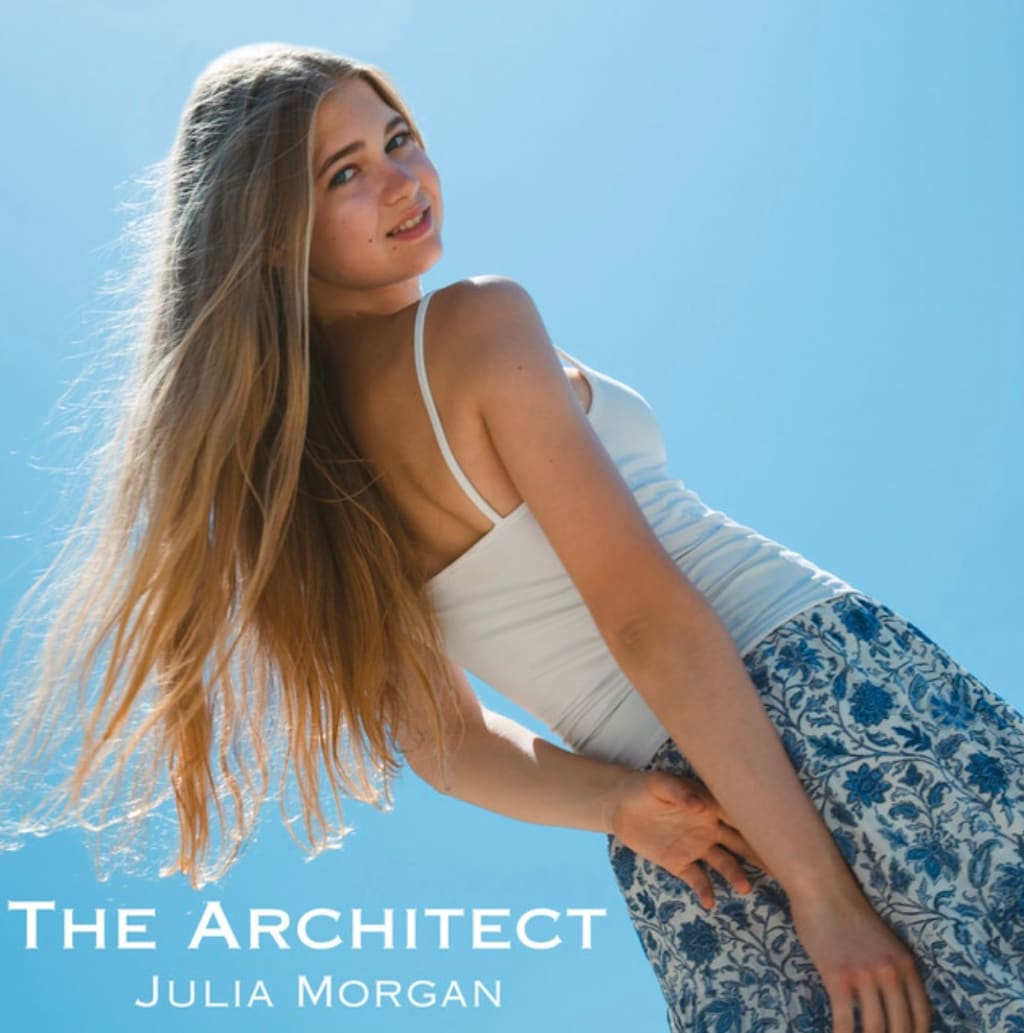
There is something particularly fitting about The Architect being the debut album from Julia Morgan. Long before she began writing the nine songs that make up the record, Morgan was fascinated by another Julia Morgan, the pioneering architect whose extraordinary career included the design of Hearst Castle. As a child, she kept a book about her namesake beside her bed.
For Morgan, architecture becomes a metaphor for growing up. Buildings take shape piece by piece, plans change, foundations matter and sometimes things have to be taken apart before they can be rebuilt. The Architect applies much the same thinking to the complicated business of understanding yourself.
Released today, the album is an impressively thoughtful debut from a young artist whose creative life has already taken her through Broadway, television, comedy and now songwriting. Morgan co-wrote and executive produced all nine tracks with LA-based songwriter and producer Stella Smyth, her longtime mentor. Together, they have created a collection that combines introspective lyrics with layered indie-pop production, orchestral textures and atmospheric details.
Listen here:
Morgan writes about difficult emotions, uncertainty, relationships and self-doubt, but there is a real sense of movement throughout the record. She explores what it means to understand them, accept them and begin to move forward.
One of its most revealing moments comes with “Performing,” a song that explores the pressure to fit in, the fear of comparison and the exhausting feeling of having to present a particular version of yourself to the world. For Morgan, the subject is personal. Having appeared on Broadway as a child, she eventually gave up ballet after feeling insecure around other young performers whose technique seemed more accomplished than her own. That experience stayed with her, becoming part of a wider struggle with the expectation to perform, both on stage and in everyday life.
The song takes that experience and turns it into something listeners can recognise in themselves. The need to appear confident, to keep others happy and to conceal difficult emotions can become its own kind of performance, particularly when we are still working out who we want to be. Making the accompanying music video, surrounded by friends who are accomplished dancers, helped her to rediscover the pleasure of dancing without constantly judging herself.
Beneath its exploration of insecurity lies the possibility of finding joy again when we stop measuring ourselves against everyone else. “Performing” also connects neatly with the wider themes of The Architect. Throughout the album, Morgan examines the distance between our public selves and our private feelings, suggesting that understanding ourselves requires the willingness to acknowledge both.
Elsewhere, the album becomes quieter and more contemplative. “Before the Grave” uses a gentle, conversational vocal delivery to explore mortality, memory and the desire for a more hopeful future. Its haunting chorus brings a sense of longing to the song, reflecting on the people we have loved and lost while making room for the difficult emotions that accompany those experiences. Morgan allows the song's sadness to sit alongside a desire for something better.
“Fallen Leaves” approaches generational trauma through the relationship between mothers and daughters. Its ethereal folk sensibility is evident here while the writing suggests an awareness of how family experiences can shape us long after childhood. There is tenderness in the song, but also an understanding that relationships can be complicated and that recognising inherited patterns may be part of learning to move beyond them.
The title track brings the album's central metaphor into focus. “The Architect” is a moody pop waltz, partly inspired by the ethereal Celtic music of Enya. Its atmosphere lends the song a cinematic quality as Morgan contemplates the life of her pioneering namesake alongside the possibilities of her own future. The connection between the two women gives the album a distinctive narrative thread, turning a childhood coincidence into a reflection on ambition, independence and the freedom to determine your own direction.
The Architect sits comfortably within contemporary indie-pop but allows space for strings, atmospheric textures and carefully arranged details. There are echoes of Lana Del Rey and Billie Eilish in the darker, more atmospheric passages, alongside the confessional songwriting associated with Gracie Abrams. Yet the record's strongest moments come when Morgan's own perspective takes centre stage.
What makes the album particularly interesting is the personality behind it. Morgan is already an experienced performer, having appeared as the Little Anastasia understudy in Broadway's Anastasia, she acted opposite Sarah Jessica Parker in HBO's Divorce and worked in comedy alongside performers including Colin Jost, Wanda Sykes, Neil Patrick Harris and Rachel Dratch. She is also a stand-up comedian who hosts an annual fundraiser for New York City food charities.
Yet here, The Architect reveals a side of Morgan that an audience might not immediately expect from her work in comedy and acting. The music is introspective, sometimes melancholic and often concerned with feelings that are difficult to articulate. Morgan recognises this contrast herself, but the album makes a convincing case that humour and vulnerability can coexist.
Her longstanding creative partnership with Stella Smyth is another important part of the story. Having begun songwriting at the age of eleven during the isolation of the pandemic, Morgan gradually developed her voice with Smyth's guidance and firmly establishing Morgan as an artist with her own ideas and a clear interest in telling stories from a female perspective.
Ultimately, The Architect is an album about becoming. It explores the process of recognising the parts of ourselves that need attention, accepting uncomfortable feelings and gradually understanding that we have a role in shaping the lives we lead. The architectural metaphor could easily have felt overly neat, but Morgan gives it emotional substance by grounding the songs in personal experiences and questions that extend beyond her own story.
That makes The Architect an engaging introduction to a young artist whose creative interests extend well beyond a single discipline. Morgan has brought together her experiences in music, theatre and comedy to create a debut that is reflective without losing sight of its audience.
Its most affecting moments offer reassurance through recognition, allowing listeners to find something of their own experiences in her words.

About Julia Morgan
Julia Morgan is a New York based singer-songwriter, actress and comedian whose work spans music, Broadway, television and stand-up. Her debut album, The Architect, explores identity and self-discovery through cinematic indie-pop, intimate storytelling and richly layered arrangements.
Co-written and executive produced with songwriter and producer Stella Smyth, the nine track collection takes inspiration from Morgan’s namesake, the pioneering architect Julia Morgan, and reflects on the process of building a life on your own terms.
Morgan began writing songs at eleven and has developed her musical voice alongside an already impressive career in entertainment. She appeared as the Little Anastasia understudy in Broadway’s Anastasia, guest-starred opposite Sarah Jessica Parker in HBO’s Divorce, and has worked on comedy projects featuring Colin Jost, Wanda Sykes, Neil Patrick Harris, Rachel Dratch and Glen Powell. Also an established stand-up performer, she organises and hosts an annual comedy fundraiser for New York City food charities at Comic Strip Live.
Find out more about Julia Morgan on her Website
About the Creator
Whitney Miller
🌎 Adventurous & Musical
Stories shaped by places, music & life
Poetry, fiction, memoir & lived experience
Written without A.I.
© Whitney Miller
Enjoyed the story? Support the Creator.
Subscribe for free to receive all their stories in your feed.
Comments
There are no comments for this story
Be the first to respond and start the conversation.