
'15 Big Ones'
Brian is Back?

American Graffiti was a nostalgic tribute released in August of 1973 by young director George Lucas to his adolescence in the Northern California town of Modesto in the early 1960s. The films soundtrack consisted of various hit songs of the late 1950s and early 1960s including many by the Beach Boys including "All Summer Long" which played over the films closing credits. The film was a major success and put Lucas on the map in Hollywood allowing him the credibility and creative freedom to pursue his next major project tentatively titled "The Star Wars".
The success of the film combined with the success earlier that year of the release of The Beatles "Red" and "Blue" compilations convinced the Beach Boy's former label, Capitol Records who continued to hold the rights to the Beach Boys pre-Pet Sounds recordings to capitalize on the fact that American Graffiti had re-introduced these songs to a new generation with a compilation album called Endless Summer which was released on June 24th, 1974.
The Beach Boys had been going through a rough period since the release of Holland. The Wilson Brothers' father Murry passed away in June of 1973 which led a devastated Brian Wilson to retreat to his bedroom in a cycle of chain-smoking and drug abuse for nearly two years. In October of 1973, the group fired manager Jack Rieley in favor of Mike Love's brother Stephen and James William Guercio who managed the band Chicago and owned a recording studio in Colorado called Caribou Ranch (in which former James Gang Guitarist Joe Walsh had recorded his hit song "Rocky Mountain Way" with his new band Barnstorm under the supervision of producer Bill Sczymczyk and which the following year would be immortalized by the biggest rock star in the world at the time Elton John who named his 1974 album Caribou after the studio which would feature his hit song "Don't Let The Sun Go Down On Me" which would feature Carl Wilson, then former Beach Boy Bruce Johnston and longtime Beach Boys touring members Toni Tenille and Billy Hinsche on background vocals.) Unfortunately, a backstage confrontation with Stephen Love led to the departure of Blondie Chaplin at the end of 1973.
After its June 1974 release, Endless Summer began ascending the charts and by October of 1974 had ascended to the number one spot. Clearly, nostalgia for better times was very much on the minds of many Americans still recovering from the trauma of the political chaos of the late 1960s, the disastrous end of the Vietnam War in 1973 and of course the Watergate scandal which culminated with the resignation of President Richard Nixon in August of 1974, two months after the release of Endless Summer. Mike Love who had long believed that the groups early hits and image was the key to their success and largely unhappy with the trajectory of the band since Pet Sounds took this as a validation of this belief.
In November of 1974 Ricky Fataar departed from the band, Dennis Wilson (who had long since recovered from his 1971 hand injury) returned to his original spot behind the drums and the bands lineup returned to its original five founding members. A holiday single " Child of Winter" was released at the end of 1974. A second compilation, Spirit Of America was released in 1975 and the Beach Boys tour setlists had been overhauled to mostly feature their once again popular early 60s hits. In June of 1975 they performed at a concert at London's Wembley Stadium headlined by Elton John and also featuring performances by Joe Walsh as well as the band he would join less than a year later, The Eagles. Unfortunately for Elton, The Beach Boys set had electrified the audience with their solid performance of familiar anthems re-popularized by Endless Summer. Also unfortunately Elton proceeded to follow it with a complete live performance of his then-just released album, Captain Fantastic And The Brown Dirt Cowboy with a band that had mostly not even played on the album, which turned off a significant portion of the audience.
While the success of these compilations did boost the groups popularity by the end of 1975, The Beach Boys touring operation had essentially become a nostalgia act rather than a relevant rock act of the 1970s. When 1976 arrived, it had been three years since the Beach Boys had released an album of original material. While Carl and Dennis had spent the previous two years working on new material, first at Caribou Ranch and later at the Beach Boys' newly acquired Brother Studio in Los Angeles, the higher ups at Warner/Reprise Records felt that without the personal involvement of Brian Wilson the material had limited commercial potential. By this time Brian Wilson's wife Marilyn had hired therapist Dr. Eugene Landy in an attempt to help resolve Brian's mental health problems which had been exacerbated by his father Murry's death three years earlier. Landy's approach was unconventional twenty-four hour live-in therapy in which Landy and a staff of assistants would essentially micro-manage Brian to an ethically questionable degree, but it did eventually lead Brian to a point where he was once again in well enough physical and mental shape to write and produce new material. The Beach Boys felt that they could capitalize on this as Brian had co-written and produced all the early hits which had once again made the group successful. This led to the largely misleading "Brian Is Back" campaign.
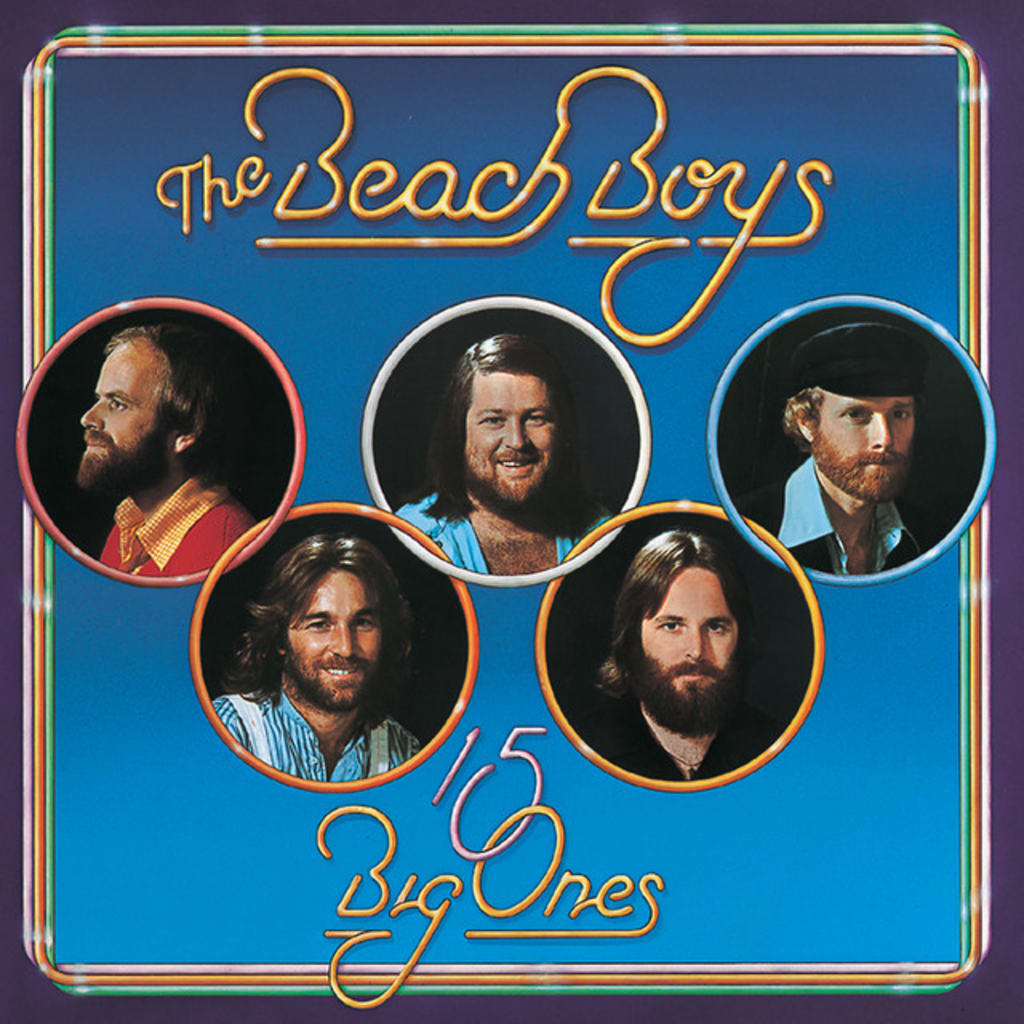
The "Brian Is Back" campaign would consist of a new album titled 15 Big Ones since it commemorated the bands 15th year of existence which would be the first album since Pet Sounds that would be completely produced by Brian. In addition, a major Summer Tour was planned in which Brian would appear with the band for a full tour for the first time since his leaving the touring group back in 1964. A documentary produced by Saturday Night Live creator Lorne Michaels was set to air on NBC which featured a sketch with SNL cast members John Belushi and Dan Aykroyd portraying "California Surf Patrol" officers who would force Brian to leave his bedroom to awkwardly attempt to catch a wave at a nearby beach. Brian initially intended the album to be a collection of covers of rock and roll standards much to the dismay of his brothers, Dennis and Carl. It was ultimately decided that the finished album would be a mix of covers and originals with an album cover designed by Dean Torrence and his design firm Kittyhawk Graphics who had been designing covers for rock albums by artists including most notably Harry Nilsson, since the dissolution of Jan and Dean. The Beach Boys font used in the cover design would be adopted as the group's official logo from then on as the band had not had a consistent official font logo up to that point unlike their most famous former competitors The Beatles with their famous drop-t font. Mike Love's touring group continues to use a variation of the logo to this day; all credibility issues aside. The album was released on July 5th, 1976.
The album opens with a cover of Chuck Berry's "Rock and Roll Music" which had also previously been covered by the Beatles on their 1964 UK album Beatles For Sale and US album Beatles 65 with John Lennon on lead vocals. Unfortunately, of the three major versions of the song this one is undoubtably the weakest in my opinion. Mike takes lead vocal duties and is backed by vocals from all the other Beach Boys and Brian's wife Marilyn, Brian handled the arrangement as well as added keyboards, Dennis pounds on the drums, Gene Estes provides percussion and a saxophone and clarinet section led by longtime Wrecking Crew member Steve Douglas adds additional sonic power.
For the second song, the aptly named "It's OK" which is essentially a re-tread of their earlier 1968 hit "Do It Again" all the Boys plus Marilyn Wilson add vocals with Mike on lead and Dennis on the outro. Dennis also shares drumming duties with former band member Ricky Fataar as well as session drummer, Roy Wood. Brian once again adds various keyboards to the song's sonic palette along with two clarinets and two saxophones.
"Had To Phone Ya" was originally written with Mike and Brian's sister-in-law Diane Rovell for Brian's American Spring group with Marilyn and Diane earlier in the decade and is mercifully short.
"Chapel Of Love" is a cover of a song written by Jeff Barry, Ellie Greenwich and Phil Spector and originally performed by the Dixie Cups in 1964. It is quite a bit over the top and all over the place in terms of largely synthesized instrumentation and vocals.
"Everyone's In Love With You" is a rather bizarre Mike Love written tribute to the Maharishi Mahesh Yogi whom he had famously travelled to India with the Beatles in 1968 to study transcendental meditation with.
Next is a cover of "Talk To Me" written by Joe Seneca and recorded by Little Willie John in 1958, with elements of the song "Tallahassee Lassie" thrown in.
"That Same Song" is a study in missed opportunities, the song written by Brian and Mike is lyrically a description of the history of music. Professor Phillip Lambert points out in the documentary Brian Wilson: Songwriter 1969-1982 that had the song been recorded by Brian at the height of his powers ten years earlier, He would have likely found musical creative ways to suggest the various points in that history but sadly the whole thing is done in the same basic style and instrumentation on this album.
TM song opens with a ridiculous spoken word argument which leads into a ridiculous almost Sesame Street-esque song written by Brian about Mikes favorite pastime of Transcendental Meditation.
"Palisades Park" is a song about an Amusement Park written in 1962 by Chuck Bariss and originally performed by Freddie Cannon, The Beach Boys version is painfully reminiscent yet somehow even worse than "Amusement Parks, U.S.A" from the Summer Days (And Summer Nights) album, eleven years earlier.
"Susie Cincinnati" written and sung by Al Jardine had been the B-Side to "Add Some Music To Your Day" in early 1970 but had not been featured on the Sunflower album and somehow managed to not appear on an album until 15 Big Ones six years later.
"A Casual Look" was written by Ed Wells a member of the group The Six Teens who recorded the song back in 1956. In fairness they were a Los Angeles based group, so I guess it is somewhat fitting. Lead vocals are handled by Mike and Al.
"Blueberry Hill" was composed musically by Vincent Rose with lyrics by Larry Stock and Al Lewis and had also been recorded by Sammy Kaye , Glenn Miller, Gene Autrey and Fats Domino.
"Back Home" written by Brian with Bob Norberg had been in development since the early 1960s. It was performed by Brian solo on Saturday Night Live that year where it stunned audiences by its showcasing of the way Brian's once angelic voice had been ravaged by years of drug abuse and chain-smoking. Years later it was a featured song in Brian Wilson's first solo tour in 1999 and 2000 as documented on the live album, Live At The Roxy Theatre.
"In The Still of The Night" was written by Fred Parris of the band The Five Satins and issued as a single in 1956. Brian mentions in the 2005 David Leaf-directed documentary Beautiful Dreamer, Brian Wilson And The Story Of SMiLE that it was one of his favorite records as an adolescent along with the Penguins' "Earth Angel".
"For Once in My Life" was written by the famous Brill Building Husband and Wife team of Carole King and lyricist, Gerry Goffin with Phil Spector and originally recorded by The Righteous Brothers in 1965.
While the album was heavily promoted and did manage to sell well enough to make it to number 8 in the US album charts it was widely panned critically as well as by Dennis and Carl Wilson.
About the Creator
Sean Callaghan
Neurodivergent, Writer, Drummer, Singer, Percussionist, Rock Music Star Wars and Disney Devotee.
Enjoyed the story? Support the Creator.
Subscribe for free to receive all their stories in your feed. You could also become a paid subscriber, letting them know you appreciate their work.
Comments
There are no comments for this story
Be the first to respond and start the conversation.