History
How AI Is a Threat
Artificial Intelligence (AI) is often described as a miracle of modern science—a tool that can write poetry, drive cars, diagnose diseases, and even mimic human conversation. It promises convenience, progress, and a future filled with technological wonder. But beneath the shiny surface of this digital revolution lies a darker, quieter truth: AI is also a growing threat. Not just to jobs or industries, but to privacy, ethics, freedom, and even the nature of being human.
By Mehtab Ahmadabout a year ago in Art
Beauty Carved in Stone: Nature’s Hidden Gems
Nature has always been the greatest artist, and among her most underrated masterpieces are stones—carved silently over centuries, untouched by human hands, yet rich with story and spirit. These solid pieces of Earth hold a quiet beauty, shaped by time, pressure, erosion, and natural elements. From the sparkling crystals deep within to the smooth pebbles shaped by rivers, stones are nature’s hidden gems, whispering tales of ancient worlds and timeless elegance. The Natural Sculpture Each stone is a sculpture—some rough, others polished—formed without tools or intent, yet displaying symmetry, texture, and pattern. Mountains crumble into boulders, boulders into rocks, and rocks into pebbles. Along this journey, they bear witness to climate shifts, volcanic eruptions, and flowing water. What may seem like an ordinary rock underfoot could be millions of years old, carrying within it the memory of the Earth’s earliest days. Colors, Crystals, and Charm Inside many rocks lies a universe of colors and crystals. Amethyst, quartz, jasper, and agate—these aren’t just decorative stones for jewelry—they’re natural miracles. Their hues are born from minerals like iron, copper, and manganese, while their patterns result from cooling lava or mineral deposits layering over time. These gemstones don’t just sparkle—they tell geological tales in color. Spiritual and Cultural Significance Throughout history, stones have held deep meaning for cultures worldwide. From ancient temples made of granite to healing crystals believed to hold energy, humans have always looked at stones with awe. The Stonehenge in England, the Moai of Easter Island, and the intricately carved statues of South Asia all showcase how deeply we revere the solidity and symbolism of stone. Beauty in the Smallest Pebble While majestic rock formations capture headlines, even the smallest pebble has its own story. Beachcombers and river walkers often find stones shaped like hearts, faces, or animals—naturally sculpted by waves and weather. These little wonders remind us that beauty isn’t always grand; it’s often subtle and personal. Earth’s Everlasting Artwork Unlike flowers that wilt or snowflakes that melt, stones are enduring. They resist the touch of time, carrying on for generations. In a world obsessed with fast change and digital speed, stones remind us of patience and permanence. Their silence teaches us to slow down and notice the details we often miss. Conclusion “Beauty Carved in Stone” isn’t just about rocks—it’s about learning to appreciate the quiet marvels of nature. These hidden gems invite us to look beyond the surface, to see the art in endurance and the grace in stillness. Whether you’re holding a shiny gemstone or walking past a weathered rock wall, take a moment to admire the ancient beauty carved over ages—a silent gift from the Earth, waiting to be seen.
By Sophia Graceabout a year ago in Art
The Presented World. AI-Generated.
In a time when screens mediate more of our experiences than ever before, the idea of a "presented world" takes on an urgent new relevance. Every image, news headline, video snippet, and algorithmic suggestion forms a mosaic—not of objective truth, but of a curated reality shaped to meet psychological, commercial, or political ends. The "presented world" is not simply what we see; it is what we are meant to see. And what we are meant to see often becomes what we believe is real. But what exactly is the "presented world"? At its core, it refers to the reality that is constructed for us—by media, technology, institutions, and even by our own subconscious cognitive biases. This concept is not new. Philosophers like Immanuel Kant and later phenomenologists like Edmund Husserl and Maurice Merleau-Ponty all examined how reality is filtered through perception. What is novel today is the scale, speed, and sophistication with which this perception can be manipulated. The Evolution of a Mediated Reality Throughout history, human beings have lived in a kind of mediated reality. Oral traditions, religious narratives, art, and later, printed texts shaped people’s understanding of the world. These were the original filters—creating a shared worldview within specific cultures. But these filters were relatively slow to change and often localized. With the advent of mass media in the 20th century, the presented world expanded rapidly. The radio and television brought distant wars, political scandals, and cultural revolutions into living rooms across the globe. Yet even then, the presented world was still largely constructed by editorial boards and broadcasters with limited tools and reach compared to today’s digital platforms. Enter the internet and social media. Now, the presented world is more fragmented, personalized, and reactive than ever before. Each user receives a version of the world tailored to their preferences, habits, and emotional triggers—whether they realize it or not. The Algorithm as Architect Today’s algorithms are invisible architects of the presented world. Platforms like Facebook, TikTok, X (formerly Twitter), and YouTube use machine learning not just to show you what’s happening, but to determine what they think will keep you engaged. In this model, truth is not the goal—attention is. And attention, as countless studies have shown, is often best captured by outrage, novelty, and simplicity. This means the presented world can quickly diverge from any shared or objective reality. One person’s social feed might be filled with climate catastrophe warnings, while another's is filled with climate change denial. Each individual feels informed—perhaps even enlightened—yet each is living in a parallel informational universe. It is no longer that people see the world differently. They live in different presented worlds entirely. The Neuroscience of Perception Beyond the influence of media and technology, the human brain itself plays a crucial role in constructing the presented world. Vision, for example, is not a passive reception of light. It is an active construction. The brain fills in gaps, prioritizes certain patterns, and applies learned expectations to interpret what we see. The same is true for memory and emotion. We remember events not as they occurred, but as they made us feel. Our brains are wired for narrative, not accuracy. The presented world, then, is not just external. It is also internally manufactured—layered with our biases, histories, and psychological needs. Virtual Realities and Digital Selves In more literal ways, technologies like augmented reality (AR), virtual reality (VR), and the metaverse are making the presented world fully immersive. A person can now walk through a virtual forest, attend a digital concert, or even hold meetings in a virtual office with avatars replacing human faces. These environments are entirely constructed, yet they evoke genuine emotional and physiological responses. The line between real and presented blurs further when individuals begin to curate their own identities. Through social media profiles, filters, and AI-generated content, people construct idealized versions of themselves. They become curators of their own personal presented world—not just consumers. But what happens when the presented self becomes more compelling than the real one? Studies show that constantly comparing ourselves to curated online identities can lead to anxiety, depression, and a sense of disconnection. The presented world, while often beautiful or entertaining, can be deeply alienating. The Ethics of Presentation All of this raises profound ethical questions. Who decides what is presented—and why? Should algorithms be transparent? Should users have control over the informational filters they are subjected to? How do we ensure that the presented world does not erode our grasp on shared reality? Some answers may lie in media literacy, algorithmic transparency, and greater regulatory oversight of tech platforms. But more fundamentally, it may require a cultural shift—a recognition that the world presented to us is not the world as it is. Critical thinking, skepticism, and emotional intelligence are more vital than ever. Reclaiming the Real To navigate the presented world wisely, we must cultivate a dual awareness: the world as presented to us, and the deeper, messier reality that lies beneath. This means actively seeking out diverse perspectives, resisting the lure of curated convenience, and remaining open to uncomfortable truths. Reality, in its raw form, is complex, contradictory, and sometimes overwhelming. But it is also rich, expansive, and profoundly human. In contrast, the presented world—though sleek and seductive—often flattens our understanding. It replaces experience with spectacle, nuance with soundbites, and curiosity with consumption. To reclaim the real is not to reject technology or media, but to approach them with wisdom and intention. It means remembering that behind every screen, every headline, every image, there is a deeper world waiting to be seen—not just presented.
By GoldenToneabout a year ago in Art
What the Water Takes First
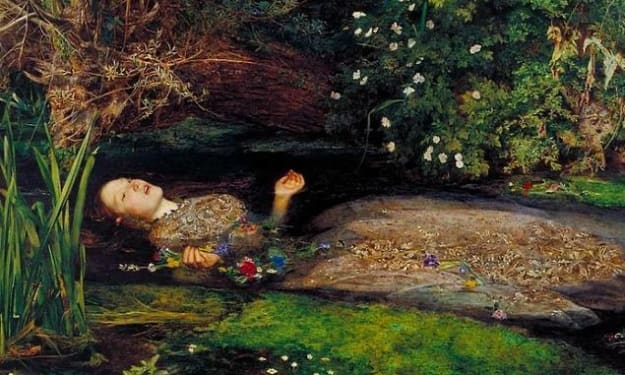
We have always drowned our women beautifully. From Shakespeare's Gertrude speech and Millais' brush, to Virginia Woolf’s stones. We have perfected the art of romanticizing female pain. This is not merely artistic tradition, it is cultural pathology.
By Yasmine Lagrasabout a year ago in Art
Sculptor Helen Farnsworth Mears
By Brian D'Ambrosio Securing consistent information about Helen Farnsworth Mears is a difficult task. She died unexpectedly, on the cusp of greatness, some believed, but without sufficient promotion to keep her legacy aflame, her reputation and work have been lost to the broader public. And this is an unfortunate outcome for the self-taught Mears, a dedicated, artist who reached a certain level of success as a sculptor in the early part of the 20th century.
By Brian D'Ambrosio about a year ago in Art
Whispers of the Green Abyss
The sky was still dark when Ayaan stepped into the jungle. A heavy mist curled low over the forest floor, cloaking twisted roots and broken branches. Ancient trees stood like silent watchers, their thick trunks draped in moss and mystery. Each breath he took carried the scent of damp earth and wildness—a scent of something older than time.
By Khalid khanabout a year ago in Art
🔴 Title: Why Imran Khan Still Rules Millions of Hearts
Imran Khan, a name that resonates across generations in Pakistan, continues to rule millions of hearts despite the ups and downs of his political journey. From lifting the Cricket World Cup in 1992 to leading a political movement that shook the foundations of Pakistan’s power structure, Imran Khan has become more than a personality—he is a symbol of hope, resilience, and change. A Hero on the Cricket Field Imran Khan first won the nation's heart as the captain of the Pakistan cricket team. Under his leadership, Pakistan won its first and only Cricket World Cup in 1992. His calm demeanor, strategic thinking, and fearless attitude made him a legend in the cricketing world. His success on the field gave the people of Pakistan a sense of pride and unity during challenging times. Philanthropy and Social Work After retiring from cricket, Khan didn't step away from public service. Instead, he focused on a dream that many thought was impossible—building Pakistan’s first cancer hospital. Shaukat Khanum Memorial Cancer Hospital, named after his mother, became a reality through public donations and his tireless efforts. Later, he also established Namal University to offer quality education in rural Pakistan. These humanitarian contributions further deepened the love people had for him. A Voice Against Corruption In 1996, Imran Khan founded Pakistan Tehreek-e-Insaf (PTI), a political party based on justice, anti-corruption, and good governance. While it took years for his political movement to gain traction, his persistence paid off. By 2018, he became the 22nd Prime Minister of Pakistan. His stance against corruption and elite privilege resonated with ordinary Pakistanis, especially the youth. Many saw him as the only honest leader who could challenge the status quo. A Leader in Crisis During his tenure as Prime Minister, Khan faced immense economic and political challenges. Yet, his focus on building a welfare state, launching health cards, and promoting tourism and overseas investments earned him respect even from critics. His efforts to represent Pakistan strongly on international platforms, such as the United Nations, highlighted his leadership skills and patriotic zeal. Charismatic and Courageous Imran Khan’s charisma lies in his fearless attitude. Whether it’s speaking against Western double standards, addressing Islamophobia, or challenging powerful political dynasties in Pakistan, he never shies away from controversy. Even after his removal from office, his popularity didn’t fade—it increased. Massive rallies, record-breaking social media engagement, and global support reflect that his message still connects deeply with the public. A Symbol of Hope For many in Pakistan, especially the younger generation, Imran Khan is more than a politician—he is an inspiration. His journey from sports to politics, from fame to struggle, reflects the resilience of a man who never gave up. In a country where leadership often fails to deliver, Khan continues to offer hope for a better future. --- Conclusion: Imran Khan still rules millions of hearts because he represents the dreams and desires of a nation longing for justice, honesty, and dignity. Whether you agree with his politics or not, one cannot deny the emotional bond he shares with the people of Pakistan. His story is not just about power—it is about passion, purpose, and unwavering belief in a better tomorrow.
By Sophia Graceabout a year ago in Art
The Quiet Rebellion in Your Teacup: How Porcelaire Revives a 1,000-Year-Old Legacy
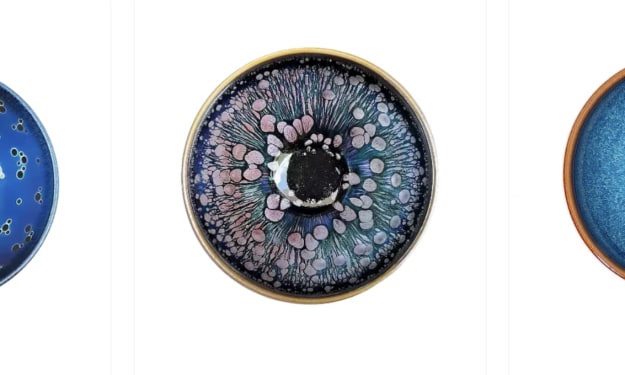
My first encounter with a Song Dynasty Jian Zhan tea bowl felt like holding midnight sky crystallized in clay—streaked with constellations of iron-born stars. Today, that same ancient magic is being rekindled by artisans like those at Porcelaire, a brand quietly bridging centuries of tea culture for our fractured, fast-moving world.
By Porcelaireabout a year ago in Art
A Message from the Past
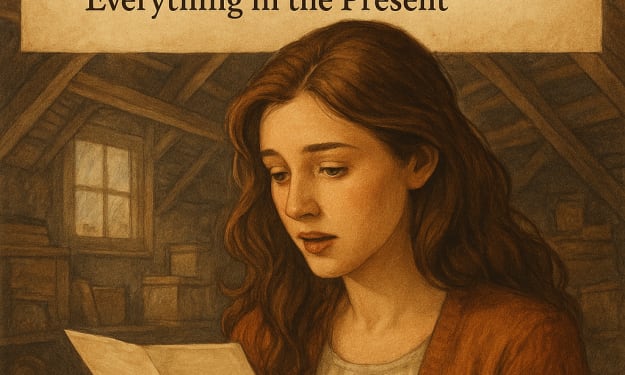
It was an ordinary Sunday afternoon when Sarah decided to explore the attic of her late grandmother’s house. The old Victorian home had always felt like a time capsule — each room filled with antiques, stories, and whispers of the past. Now, as the only living descendant, it was Sarah’s responsibility to preserve or part with what remained. Dust floated in the sunlight pouring through the tiny attic window. Sarah coughed gently as she pushed open a heavy oak chest tucked under a sloped beam. Inside, she found a collection of trinkets — an old locket, faded photographs, a porcelain doll, and at the very bottom, a sealed envelope with her name written in elegant, old-fashioned handwriting. She paused. Her name… written decades ago? The ink had slightly faded, but the message was clear. She recognized the handwriting from stories and family documents — it belonged to her grandfather, James Whitmore, a man she had never met. He passed away years before she was born. Her mother had often spoken of him with reverence, calling him wise, brave, and a man ahead of his time. With trembling hands, Sarah opened the envelope and unfolded the letter. The paper was aged and delicate, but the words were strong. "To my dearest granddaughter Sarah, If this letter has reached you, then fate has done its part. I don't know when you’ll find it, or how old you’ll be. But I know one thing: you are a part of me, and that matters more than you might understand right now. I regret not being there to see you grow, to hear your laugh, or to tell you stories by the fire. Life, unfortunately, had other plans. But while I may not be with you in body, I hope this letter helps me reach you in spirit. You see, Sarah, I was once lost, too. Like many people, I questioned my worth, my path, and even my dreams. There were days when I felt like the world had forgotten me. But with time, and through love, I found strength I never knew I had. And I want to share that strength with you now." Sarah blinked away tears, holding the letter close to her chest for a moment. She continued reading. "You will face moments of doubt — we all do. Maybe you’re already there. Maybe life feels heavy right now. But promise me this: don’t let that weight define you. Let it mold you. Learn from it. Rise above it. There is a light inside you, Sarah, and the world needs it. Even if you think your dreams are small, or your voice is unheard — keep dreaming, and keep speaking. There is no such thing as a wasted dream. When you feel alone, remember your roots. Our family comes from survivors, builders, and believers. We’ve weathered storms — wars, loss, fear — and we endured because we held on to hope. You are stronger than you know. And if ever the world tries to dim your light, let this letter remind you who you are. Live your life fully. Love deeply. Laugh often. And never be afraid to begin again. With all the love I never got to give you, Grandpa James" The attic was silent as Sarah finished reading. It felt as if the letter had frozen time. Her chest ached with a mix of grief and gratitude. The timing couldn’t have been more perfect. She was on the verge of giving up on her dream of becoming an author. Rejection after rejection had left her disheartened. But this — this letter — felt like a sign. That night, Sarah pulled out her notebook and began writing. Inspired by her grandfather’s words, she poured her heart into a story — a tale of love, loss, legacy, and hope. She titled it "A Message from the Past." Months turned into a year, and that story became her debut novel. It was published with rave reviews. Readers from all over the world reached out, sharing how the book reminded them of their own grandparents, or gave them strength during dark times. But for Sarah, the real magic wasn’t in the success. It was in the moment she found the letter. The moment the past reached across decades to touch her present — and change her future. --- Final Thought: Sometimes, the guidance we seek doesn’t come from a friend or a mentor, but from a long-forgotten note, a photo, or a letter hidden in a dusty attic. The past holds treasures — not just in objects, but in wisdom. All we have to do… is listen.
By Sophia Graceabout a year ago in Art
The Last Light in the Window
[By Najeeb Ullah] Ellenton was the kind of town where strangers still waved at one another, where shopkeepers knew your name, and where the pace of life never quite caught up with the rest of the world. Nestled between rolling hills and endless cornfields, it felt suspended in time, as if the modern world had only brushed against it before moving on. On the corner of Pine Street and Alder Avenue stood a house that had become more than just wood and brick—it had become legend. Peeling white paint clung stubbornly to its siding. A crooked mailbox, rusted at the hinges, sat beside a rose bush that still bloomed with surprising beauty each spring. But what truly set the house apart was its window—more specifically, the soft, amber light that always glowed from it. For as long as anyone could remember, that light had never gone out. Kids who rode their bikes past the house in the summer dared each other to ring the bell. Teenagers whispered stories about a ghost who waited there for someone who would never return. Adults, meanwhile, grew so used to the light they no longer questioned it. It became part of the landscape. Eternal. Familiar. What most didn’t know was that inside the house lived Evelyn Harper. Evelyn had moved to Ellenton in 1947, a fresh-faced bride of twenty who had married her sweetheart, Thomas, just before he shipped out to war. They had one perfect year together—sharing early morning coffee, dancing in the kitchen, scribbling dreams on napkins, and promising the world to each other. On the day he left, she walked with him to the edge of town. "I’ll be back before you know it," he said, kissing her forehead. "Leave a light on for me, just in case I’m late." She smiled. "Always." But he never came back. The letter arrived six months later. A folded piece of government stationery that shattered her world. Thomas had been killed during a raid in a French village. He never made it home. Evelyn never remarried. Not out of bitterness or grief, but because, in her heart, she had already found her home—and lost it. What followed was a life built in quiet dignity. She became the town librarian, where she worked for 42 years. Her hands touched thousands of books, her voice introduced generations of children to fairy tales and poetry, and her laughter echoed through the dusty library walls. At night, she would return to the little house on Pine Street. She’d cook dinner for one, sit in her favorite chair, and read until she couldn’t keep her eyes open. And every evening before bed, she turned on the lamp in the front window. A ritual. A promise. A lighthouse. Neighbors came and went. New families moved in. Evelyn grew older, but she remained a part of the town’s soul—seen but seldom heard. Those who knew her described her as kind, with eyes that smiled before her lips did. She never spoke much about the past, but she never turned bitter either. She baked cookies for the neighborhood kids, left flowers on doorsteps, and once helped a runaway cat find its way back home. And through it all, the light stayed on. Then, one snowy evening in January, the light was off. It was almost 11 p.m. when Anna Mitchell, who lived across the street, looked out her kitchen window and felt an unfamiliar pang of unease. She nudged her husband. "Evelyn’s light is out." He looked. “Probably just a burned-out bulb.” But the next morning, the light was still off. By noon, the mail was piling up. By evening, the neighbors had knocked—no answer. The following day, the police were called for a welfare check. They found Evelyn in her chair, a book resting gently on her chest. Her eyes were closed, and her breathing had long stopped. She had passed away in her sleep—peacefully, quietly, as if she had finally decided to rest. She was 97. At her funeral, the chapel was full. Former students, neighbors, librarians, and even out-of-towners who had only heard of “the woman with the light” came to pay their respects. There were no children, no immediate family—but there was no shortage of love. Her will was simple. Most of her modest savings were donated to the town library, with a small note: “Keep the stories alive.” But it wasn’t until a local writer named June Hartley published an article titled “The Last Light in the Window” that Evelyn’s story rippled far beyond Ellenton. The article, shared online, painted a picture of a woman who had lived with unwavering hope. A woman who honored a promise every single night for over seven decades. Readers from around the world were moved to tears—not because Evelyn’s life was tragic, but because it was beautifully, profoundly loyal. “She waited for love, not in despair, but in grace,” the article read. “She lit a window not in sorrow, but in welcome.” Messages poured in. Artists painted the glowing window. A filmmaker reached out, inspired to tell her story. But most importantly, Evelyn’s life began to inspire something tangible. In Ellenton, a group of residents came together to start the Harper Light Foundation, a community effort to check in on elderly residents living alone. Volunteers delivered groceries, changed lightbulbs, and most importantly—shared time and stories. Every year, on the anniversary of Evelyn’s passing, the entire town turns on a lamp in their front windows. From dusk until dawn, a golden glow bathes the streets, not in mourning, but in memory. Not just of Evelyn Harper, but of all the quiet lives lived with love, patience, and the simple power of keeping a light on—just in case someone is still trying to find their way home.
By Najeebullahabout a year ago in Art