History
The Secret of the Enchanted Garden. AI-Generated.
1 **Title: The Secret of the Enchanted Garden** In a small village nestled among mountains, there was a wondrous place called the Enchanted Garden. It wasn’t an ordinary garden—its plants could whisper and sing when the wind blew.
By Omar Mohammed about a year ago in Art
Serving Parents: The Key to Success in This World and the Hereafter. AI-Generated.
Introduction In a world where success is often measured by wealth, fame, or social status, we often overlook one of the most powerful yet simple ways to attain true success—serving our parents. Across cultures and religions, especially in Islam, honoring and caring for one’s parents is considered one of the greatest virtues. It is a deed that brings peace in this life and unimaginable rewards in the hereafter. --- The Status of Parents in Islam In Islam, the importance of parents is highlighted immediately after the oneness of God. The Qur’an says: > "And We have enjoined upon man [care] for his parents. His mother carried him, [increasing her] in weakness upon weakness..." (Qur’an 31:14) This verse and many others emphasize the physical and emotional efforts parents, especially mothers, invest in raising their children. Islam encourages believers to show kindness, respect, and care to their parents throughout their lives. Even if the parents are not Muslim, Islam commands us to treat them gently and respectfully. --- Serving Parents: A Form of Worship Serving one’s parents is not only a social duty but a form of worship. It includes speaking to them kindly, taking care of their needs, spending time with them, and supporting them emotionally, physically, and financially. Prophet Muhammad (PBUH) said: > “The pleasure of Allah lies in the pleasure of the parents, and the displeasure of Allah lies in the displeasure of the parents.” (Tirmidhi) This Hadith makes it clear that our relationship with our parents directly impacts our relationship with Allah. --- Success in This World When we serve our parents sincerely, we gain their heartfelt prayers. These prayers can open doors to countless blessings—good health, lawful earnings, righteous children, and peace of mind. Many successful individuals often attribute their achievements to the prayers of their parents. Even in worldly matters, such as job opportunities, education, or business ventures, the support and dua (supplication) of parents play a vital role. --- Success in the Hereafter The hereafter is the eternal life, and our deeds in this world will determine our place there. Serving parents is one of those deeds that carries tremendous weight on the Day of Judgment. A man once asked the Prophet (PBUH): > “Which deed is most beloved to Allah?” He replied, “Prayer at its proper time.” The man asked, “Then what?” He said, “Kindness to parents.” (Bukhari) The reward of caring for parents is so great that it can even lead to forgiveness of sins and the highest levels of Paradise. Imagine standing before Allah and being rewarded simply because you smiled at your mother or helped your father without expecting anything in return. --- Practical Ways to Serve Parents Spend time with them and listen to their stories. Fulfill their needs before they even ask. Show patience even when they’re upset or critical. Make dua for them daily. Avoid raising your voice or showing anger. Visit their graves (if they’ve passed) and continue giving charity on their behalf. --- Conclusion In today’s fast-paced life, many people neglect their duties toward their parents in pursuit of personal goals. However, true success lies in earning the blessings and prayers of those who gave us life. Serving parents is not just a religious act; it is a spiritual journey that leads to the love of Allah, peace of heart, and success in both this world and the next. So let us all strive to serve our par
By Sophia Graceabout a year ago in Art
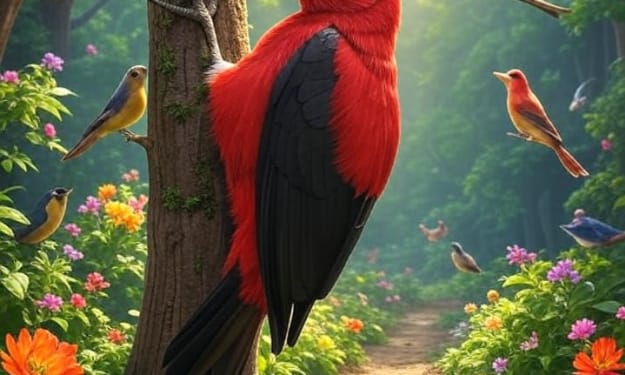
The Woodpecker and the Wishing Tree. AI-Generated.
**The Woodpecker and the Wishing Tree** In a lush forest teeming with trees, there lived a woodpecker named "Peck," known for his bright red feathers and rhythmic tapping that echoed far and wide. Peck loved pecking at trees to find food, but he always dreamed of discovering something special to make the forest more joyful.
By Omar Mohammed about a year ago in Art
The Journey of the Little Airplane. AI-Generated.
On a sunny day, there lived a boy named Ahmad who dreamed of becoming a pilot. He often sat under a big tree, watching airplanes soar in the sky. One day, he found an old box in the garden containing a small wooden toy airplane.Ahmad picked up the airplane and began imagining its adventures. Suddenly, it started to move slowly, then lifted into the air! It took him to the clouds, where he saw enchanting cities and towering mountains. But as the airplane began to descend, Ahmad shouted, "I want to go back!" The airplane smiled and returned him to the garden.Ahmad woke up to find the wooden airplane beside him. From that day, he decided to pursue his dream and started studying hard to become a real pilot.
By Omar Mohammed about a year ago in Art
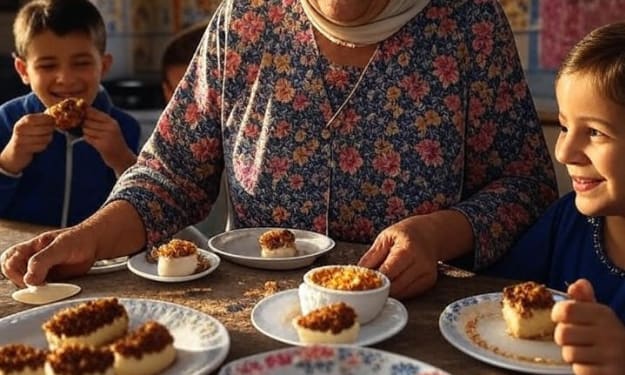
The Secret of the Magic Dessert. AI-Generated.
In a small village, there was an old woman named Umm Salem, famous for making the most delicious desserts. Every day, she prepared a new batch of golden basbousa or crispy kunafa and shared it with the village children. But there was a mysterious secret: anyone who ate her sweets would smile and laugh endlessly!One day, Yasser, a mischievous boy, decided to uncover Umm Salem’s secret. He sneaked into her kitchen at night and saw her adding a drop from a tiny bottle labeled "Joy Water" to the dessert. Curious, Yasser asked, "What’s that?" Umm Salem smiled and said, "These are my happy memories! I add them to the sweets, and they fill everyone’s hearts with joy."Yasser learned the secret but chose to keep it to himself. From that day on, whenever he ate Umm Salem’s desserts, he felt the world was brighter. He realized that happiness is made from love and cherished memories.
By Omar Mohammed about a year ago in Art
Sparkle Within
In the quiet hills of Harrogate, England, in the mid-18th century, a local doctor dipped his cup into a mineral spring and took a sip. The water danced on his tongue — sharp, lively, and unlike any still water he had ever tasted. That first fizz, naturally carbonated from the earth, began a centuries-long fascination with what we now call sparkling water. But the sparkle’s true journey began with a man named Joseph Priestley, a clergyman and scientist who, in 1767, discovered a way to artificially infuse water with carbon dioxide. Inspired by the fermentation process at a nearby brewery, Priestley suspended a bowl of water above a vat of fermenting beer and found that the water became fizzy. He called this creation “impregnated water” — a name that thankfully didn’t stick — and believed it had health benefits. His invention was less about refreshment and more about remedy. As Priestley shared his discovery, others took interest. Across the sea in Switzerland, a watchmaker named Jacob Schweppe refined Priestley’s method, building a process to bottle this magical, bubbly water. By the early 1800s, Schweppe’s sparkling water was gracing the tables of European elites. Royalty adored it. Aristocrats believed it to be a cure for ailments from indigestion to melancholy. Suddenly, carbonation was no longer just a scientific experiment — it was luxury. Yet, the sparkle couldn’t be contained. By the late 19th century, America caught bubble fever. Soda fountains became the heartbeat of small towns, offering carbonated mineral water sometimes mixed with flavors. What started as medicinal soon turned into recreation. Flavored sodas followed, but at the core of it all was sparkling water — clean, fizzy, refreshing. Fast forward to the 20th century, sparkling water had become both a health trend and a lifestyle symbol. Europe favored brands like Perrier and San Pellegrino, each sourced from natural springs, their stories bottled as carefully as the bubbles themselves. In America, new brands emerged, like LaCroix, offering calorie-free, flavored sparkling water with a bright design and even brighter marketing. It became the drink of choice for the health-conscious and the trend-savvy alike. But the story wasn’t just about consumption — it was about connection. Sparkling water spoke of wellness, of sophistication, of something more than just quenching thirst. In offices, it replaced soda. In dinner parties, it stood proudly beside wine. In cafes, people ordered it with lemon or lime, feeling cleaner, lighter, fancier. Yet not all saw sparkling water the same way. Some mocked it — “just angry water,” they’d say, or “soda’s boring cousin.” But those who loved it knew: it wasn’t about sugar or sweetness — it was about the experience. That burst of bubbles on your tongue. That soft hiss when you open the bottle. That quiet sparkle in a glass catching the light. It wasn’t just water. It was a moment. Even during the environmental wave of the 2000s and 2010s, when single-use bottles were questioned, sparkling water didn’t fizzle out. Brands evolved. SodaStream allowed people to carbonate water at home, reducing waste and adding customization. Suddenly, the sparkle was personal. You could add bubbles to rainwater, if you wanted. The power was in your hands. In many ways, sparkling water became a symbol of a changing world. A world that wanted pleasure without guilt. Luxury without excess. Taste without sugar. And amidst all that, the bubbles kept rising — delicate, persistent, joyful. Today, whether you're sipping a lime-flavored seltzer at your desk or pouring mineral-rich Perrier into a crystal glass, you’re part of a long, fizzy legacy. A journey that began in the hills of Harrogate and the experiments of a curious scientist. A journey not just of taste, but of transformation. Because in the end, sparkling water reminds us that even the most ordinary things — like water — can hold magic. That sometimes, the difference between still and extraordinary is just a little pressure. A little sparkle. A little something within.
By Khalid khanabout a year ago in Art
The Wheat Seeds and Hope. AI-Generated.
**The Wheat Seeds and Hope** In a small village surrounded by green fields, an old wise woman named Mother Sarah lived. She owned a tiny plot of land where she planted wheat every year. During a harsh drought, the land dried up, the rains stopped, and the plants withered. The villagers lost hope, but Mother Sarah refused to give up.
By Omar Mohammed about a year ago in Art
The Enchanted Garden Kitten. AI-Generated.
### The Enchanted Garden Kitten In the soft glow of dawn, a little orange kitten with mesmerizing blue eyes stepped into an enchanted garden. Surrounded by vibrant roses in shades of pink, purple, and blue, and accompanied by fluttering butterflies, she felt like the heart of this magical realm. With each step, the flowers seemed to bloom brighter, as if welcoming their tiny guardian into a world of wonder and serenity.
By Omar Mohammed about a year ago in Art
The Cat in the Dream Garden. AI-Generated.
### The Cat in the Dream Garden In a sunny morning, a small orange cat with striking blue eyes awoke in a garden bursting with colorful flowers. The garden was her secret haven, where roses and daisies swayed with the breeze, and butterflies danced around her. She sat on an old wooden plank, gazing at the beauty surrounding her, as if she were the guardian of a magical world. In that moment, she felt complete happiness, listening to the symphony of nature in her own special garden.
By Omar Mohammed about a year ago in Art
Lila and the Relic of Power Unbound
n a realm once ruled by unity, there now stood division. Kingdoms fractured. Thrones empty. Rulers corrupted. The Council of Crowns, the ancient body meant to guide all lands, had collapsed after the disappearance of the Talisman of Ultimate Authority — a relic said to hold the power to command loyalty from armies, silence tyrants, and bring peace where there was none.
By younas khanabout a year ago in Art
Saddam Hussein's Presidency: Power, Fear, and a Lesson in History
Saddam Hussein served as the President of Iraq from 1979 to 2003. His rule is often remembered as authoritarian, oppressive, and controversial. While he is credited with strengthening Iraq's infrastructure and maintaining national security, his presidency is equally infamous for human rights violations, suppression of opposition, and involvement in brutal wars. A prominent member of the Ba'ath Party, Saddam promoted Arab nationalism and Iraqi supremacy. In the early years, he expanded education and healthcare systems. However, his grip on power soon turned iron-fisted. The Iran-Iraq War (1980–1988) severely drained Iraq’s resources and cost millions of lives. In 1990, Saddam invaded Kuwait, which led to the Gulf War of 1991 and harsh sanctions by the United Nations. These sanctions deeply impacted ordinary Iraqi citizens. In 2003, the United States invaded Iraq under the pretext of weapons of mass destruction. Saddam was captured later that year and was executed in 2006. Saddam’s presidency remains a defining chapter in Iraq's history. To some, he was a symbol of strength and resistance against the West; to others, a ruthless dictator. His life stands as a reminder of how absolute power can shape, and sometimes destroy, nations and leaders alike.
By Sophia Graceabout a year ago in Art