Fine Art
The Evolution of Abstract Art: From Kandinsky to Contemporary Masters
Abstract art stands as one of the most transformative movements in the history of visual expression. Unlike traditional representational art, which seeks to depict reality, abstract art embraces form, color, and movement as its primary language. From Wassily Kandinsky’s pioneering compositions to the bold gestures of Jackson Pollock and contemporary digital abstraction, the evolution of this art form has continually challenged perceptions and redefined artistic possibilities. In this article, we explore the origins, key figures, and lasting impact of abstract art, tracing its journey from early experiments to the digital age. --- 1. The Birth of Abstraction: Wassily Kandinsky and the Avant-Garde The early 20th century saw a radical shift in artistic expression, with artists breaking away from realism to explore non-representational forms. Wassily Kandinsky, a Russian painter and theorist, is widely credited with creating the first purely abstract works. Kandinsky’s Philosophy: He believed that colors and shapes could evoke emotions without needing to depict physical objects. His book Concerning the Spiritual in Art (1911) outlined his vision of art as a universal language of feeling. Key Works: Composition VII (1913) and Yellow-Red-Blue (1925) showcase his vibrant color harmonies and dynamic brushstrokes. Other artists, such as Kazimir Malevich with his Suprematist paintings (e.g., Black Square, 1915) and Piet Mondrian’s De Stijl movement, further pushed abstraction into new conceptual directions. --- 2. Abstract Expressionism: The American Breakthrough Following World War II, abstract art took a bold new turn with the emergence of Abstract Expressionism in the United States. New York became the center of this movement, marking a shift in the art world’s focus from Europe to America. Jackson Pollock’s Action Painting: Pollock revolutionized art with his drip technique, allowing paint to flow freely onto the canvas. His work, such as No. 5, 1948, embodied spontaneity and raw energy. Mark Rothko’s Color Fields: Rothko’s large, meditative canvases, like Orange and Yellow (1956), explored emotional depth through floating blocks of color. This period emphasized personal expression, with artists using abstraction to convey emotion, movement, and existential themes. --- 3. Geometric Abstraction and Minimalism As Abstract Expressionism evolved, some artists sought greater structure and simplicity in their work, leading to the rise of geometric abstraction and minimalism. Josef Albers and Color Theory: Albers’ Homage to the Square series (1950s–1970s) studied color relationships and perception. Frank Stella and Hard-Edge Painting: Stella’s Black Paintings (1959) rejected emotion in favor of pure form, influencing later minimalist artists. Minimalism stripped art down to its essential elements, favoring simplicity over complexity. Artists like Donald Judd and Agnes Martin created works that focused on repetition, space, and subtle texture. --- 4. Contemporary Abstraction: Digital and Experimental Forms Abstract art continues to evolve in the 21st century, integrating new technologies and interdisciplinary approaches. Digital Abstraction: With advancements in technology, artists now use AI, coding, and digital tools to create abstract compositions. Generative artists like Refik Anadol blend data visualization with aesthetic abstraction. Street Art and Neo-Abstraction: Urban artists like KAWS and Shepard Fairey incorporate abstract elements into graffiti and pop culture-inspired works. Interactive and Immersive Experiences: Installations by artists like teamLab use projection mapping and digital interaction to create abstract, immersive environments. --- 5. The Enduring Impact of Abstract Art Abstract art has influenced not only painting but also design, architecture, and fashion. Its principles of form, balance, and color continue to shape visual culture in unexpected ways. Graphic Design: Abstract principles are evident in modern branding, logo design, and digital aesthetics. Architecture: The clean lines and geometric forms of modern buildings often reflect abstract art’s influence. Fashion and Textiles: Designers like Issey Miyake and Yves Saint Laurent have drawn inspiration from abstract compositions. Abstract art remains a dynamic force, proving that the language of form and color transcends time and boundaries. --- Conclusion: A Boundless Art Form From Kandinsky’s early explorations to contemporary digital artists, abstraction has redefined the way we perceive art. By focusing on emotion, movement, and form rather than literal representation, abstract art opens infinite possibilities for interpretation and personal connection. As technology and new media continue to expand artistic expression, abstraction remains at the forefront of creativity, constantly reshaping our understanding of art and perception.
By Hridoy Hasan2 years ago in Art
The Influence of Japanese Art on Western Modernism
Japanese art has had a profound impact on Western modernism, inspiring some of the most famous artists of the 19th and 20th centuries. From Vincent van Gogh’s bold brushstrokes to Claude Monet’s delicate compositions, Japanese aesthetics played a crucial role in shaping modern Western art. This cultural exchange, known as Japonisme, emerged in the late 19th century when Japan opened its borders to the West after centuries of isolation. European artists were captivated by Japanese prints, ceramics, and textiles, which introduced new perspectives on composition, color, and form. This article explores how Japanese art influenced Western modernism and transformed the visual language of the era. --- 1. The Arrival of Japanese Art in Europe Before the mid-19th century, Japan was largely closed to foreign trade. However, in 1854, the Treaty of Kanagawa opened Japan to international commerce, and Japanese goods flooded European markets. Artists and collectors were particularly fascinated by ukiyo-e woodblock prints, which depicted landscapes, kabuki actors, and everyday life in Japan. Notable collectors of Japanese prints included Edgar Degas, Édouard Manet, and Claude Monet. These artists were drawn to the bold outlines, flat planes of color, and asymmetrical compositions that contrasted with the rigid perspective and shading techniques of European academic art. --- 2. Van Gogh and the Bold Aesthetics of Japan Vincent van Gogh was deeply influenced by ukiyo-e prints, which he collected and studied extensively. He admired their vibrant colors, simplified forms, and dynamic compositions. Van Gogh’s The Courtesan (1887) is a direct homage to Japanese prints, featuring bold outlines and a bright color palette. In a letter to his brother Theo, Van Gogh wrote: "All my work is based to some extent on Japanese art… and I admire it greatly." His thick brushstrokes and expressive use of color, seen in works like The Starry Night (1889), reflect the influence of Japanese aesthetics, particularly the emphasis on movement and emotion. --- 3. Monet’s Japanese Garden and Impressionist Innovation Claude Monet, one of the founders of Impressionism, was profoundly inspired by Japanese art. He not only collected ukiyo-e prints but also designed a Japanese-style garden at his home in Giverny, which became the subject of his famous Water Lilies series. Japanese art influenced Monet in several ways: Asymmetrical Composition: Japanese prints often featured off-center focal points, which Monet incorporated into his landscapes. Focus on Nature: Like Japanese artists, Monet captured fleeting moments in nature, emphasizing light and atmosphere over rigid detail. Flattened Perspective: Inspired by ukiyo-e, Monet reduced depth in his paintings, creating harmonious color fields rather than strictly defined spaces. --- 4. The Impact on Degas and Toulouse-Lautrec Edgar Degas and Henri de Toulouse-Lautrec were also influenced by Japanese art, particularly in their compositions and subject matter. Degas adopted the Japanese practice of cropping figures in unexpected ways, creating dynamic and spontaneous compositions. His ballet dancer paintings often resemble the asymmetrical framing seen in ukiyo-e prints. Toulouse-Lautrec, known for his bold posters and depictions of Parisian nightlife, drew inspiration from the flat planes of color and stylized lines of Japanese prints. His use of vibrant colors and simplified forms closely mirrors the aesthetics of artists like Hokusai and Hiroshige. --- 5. Japonisme and Art Nouveau The influence of Japanese art extended beyond Impressionism to the Art Nouveau movement. Artists and designers like Gustav Klimt and Alphonse Mucha incorporated flowing lines, floral motifs, and intricate patterns inspired by Japanese aesthetics. Architects and furniture designers also embraced Japanese minimalism, favoring clean lines and natural materials. This influence can be seen in the work of Frank Lloyd Wright, who incorporated Japanese architectural principles into his designs. --- 6. The Legacy of Japanese Influence in Modern Art The impact of Japanese art on Western modernism continues to be felt today. Contemporary artists still draw inspiration from ukiyo-e, while Japanese aesthetics have shaped everything from graphic design to animation. This cultural exchange was not one-sided—just as Western artists were influenced by Japan, Japanese artists incorporated Western techniques into their own work, creating a rich and ongoing dialogue between East and West. --- Conclusion: A Lasting Artistic Dialogue The influence of Japanese art on Western modernism transformed the way artists approached composition, color, and subject matter. From Van Gogh’s swirling brushstrokes to Monet’s serene landscapes, Japanese aesthetics helped shape the visual identity of modern art. Today, this artistic dialogue continues, proving that creativity knows no borders. The fusion of Japanese and Western art remains a testament to the power of cultural exchange in shaping the evolution of artistic expression. ---
By Hridoy Hasan2 years ago in Art
The Hidden Messages in Renaissance Art
The Renaissance, a period of extraordinary artistic and intellectual achievement, produced some of the most celebrated works of art in history. While these paintings and sculptures are admired for their beauty and technique, many contain hidden messages, secret codes, and symbolic meanings that reveal deeper narratives. From Leonardo da Vinci’s The Last Supper to Michelangelo’s frescoes in the Sistine Chapel, Renaissance artists infused their works with religious, political, and personal symbolism. This article explores some of the most intriguing hidden messages found in Renaissance art and what they tell us about the era and the artists behind them. --- 1. Leonardo da Vinci’s The Last Supper Leonardo da Vinci, known for his mastery of perspective and anatomy, was also fascinated by hidden symbolism. His iconic painting The Last Supper (1495–1498) is filled with mysterious details. Musical Notes: Some scholars believe that the positioning of the hands and loaves of bread in The Last Supper form a musical composition when read as a musical staff. Numerical Symbolism: The number three, representing the Holy Trinity, is heavily used—there are three windows, groups of three apostles, and Jesus forms a triangular shape. Hidden Hands and Knives: The positioning of certain figures’ hands and a mysterious floating knife have led to debates about their significance, with some theorizing that they hint at Judas’s betrayal. --- 2. Michelangelo’s Sistine Chapel and Secret Anatomy Michelangelo’s frescoes in the Sistine Chapel (1508–1512) are widely regarded as masterpieces of Renaissance art. However, recent studies suggest that he included anatomical diagrams hidden within the artwork. The Human Brain in The Creation of Adam: Some researchers believe the shape of God’s robe in The Creation of Adam resembles the human brain, possibly symbolizing divine intelligence. Hidden Female Figures: Some art historians argue that Michelangelo subtly included female figures in traditionally male-dominated biblical scenes, possibly as a statement on gender roles in the church. --- 3. Sandro Botticelli’s Primavera and the Medici Code Sandro Botticelli’s Primavera (c. 1482) is filled with mythological symbolism. Commissioned by the powerful Medici family, the painting contains hidden messages about love, fertility, and politics. Venus as the Virgin Mary: Some believe the central figure of Venus is modeled after the Virgin Mary, blending Christian and pagan themes. Political Allegory: The figures may represent different political factions in Florence, with Venus symbolizing peace amid turmoil. --- 4. Hans Holbein’s The Ambassadors and the Hidden Skull Hans Holbein the Younger’s The Ambassadors (1533) is famous for its eerie hidden skull, which is only visible from a specific angle. Memento Mori: The distorted skull serves as a reminder of death and the fleeting nature of life. Symbolic Objects: Various objects on the table, including a broken lute string, symbolize the fragility of human achievements. --- 5. Raphael’s The School of Athens and Hidden Philosophers Raphael’s The School of Athens (1509–1511) features an assembly of great thinkers, but many of the faces are believed to be portraits of Renaissance intellectuals. Plato and Aristotle: The two central figures represent different philosophical schools—Plato points upward (idealism), while Aristotle gestures downward (empiricism). Self-Portrait: Raphael included himself among the scholars, subtly inserting his presence into history. --- Conclusion: The Art of Hidden Messages Renaissance artists were not just masters of technique but also of storytelling and symbolism. Their works contained layers of meaning, often reflecting their personal beliefs, political affiliations, or hidden critiques of the church and society. By understanding these hidden messages, we gain a deeper appreciation of Renaissance art—not just as beautiful images, but as complex narratives woven into history.
By Hridoy Hasan2 years ago in Art
How to Participate in an Animal Art Contest: A Wild Ride to Artistic Glory!
Welcome, fellow artists, to the thrilling, tail-wagging, and occasionally claw-scratching adventure of competing in an animal art contest! If you've ever dreamed of turning your love for art and the animal kingdom into a masterpiece that could make even a lion purr in approval, then you're in the right place. Whether you're an experienced wildlife artist or a curious creative soul who thinks drawing a giraffe’s neck is a piece of cake, we’ve got you covered.
By Katherine Brown2 years ago in Art
Blackwork Tattoo: History, Techniques, Placements & More
Over the years, blackwork tattoo have gained immense popularity. They are known for their bold appeal and striking designs made with black inks. Originating from ancient cultures, this tattoo style has evolved into various sub-styles and techniques.
By Ray Angulo2 years ago in Art
Iskender Kebab: A Taste of Ottoman Heritage
Iskender Kebab is one of Turkey’s most beloved dishes, holding a deep cultural and historical significance. Originating from Bursa in the 19th century, this dish was created by İskender Efendi, who revolutionized the way meat was cooked and served. Today, Iskender Kebab remains a symbol of Turkish culinary excellence, embodying both tradition and innovation.
By miloud ferhi2 years ago in Art
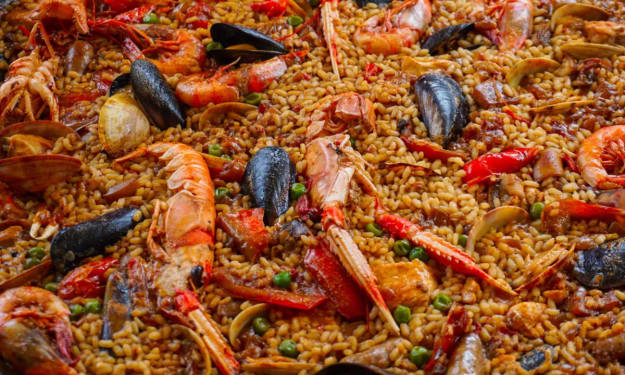
Paella, Spain’s Golden Treasure
Paella is more than just a dish—it’s a cultural emblem, a symbol of Spain’s history, and an exclusive culinary masterpiece that is 100% unparalleled in its rich flavors and deep-rooted tradition. Originating from Valencia, this vibrant dish represents community, storytelling, and the artistry of perfectly balanced ingredients.
By miloud ferhi2 years ago in Art
Pho, Vietnam’s Soulful Elixir
Pho is more than just a bowl of noodles—it’s Vietnam’s heart and history, simmered for hours in a fragrant broth. It’s exclusive in its depth of flavor and 100% unparalleled in its cultural significance, bringing together families, street vendors, and generations of tradition in one steaming, aromatic bowl.
By miloud ferhi2 years ago in Art
Couscous, the Heart of Home
Couscous is more than just food—it’s a tradition, a story, and a symbol of unity. In North African culture, especially in Algeria, Tunisia, and Morocco, couscous is a dish that brings families together, passed down through generations. It’s served on Fridays, during celebrations, and even in times of sorrow, embodying resilience, hospitality, and love.
By miloud ferhi2 years ago in Art