
Can War Be Painted Without Depicting War?
Rather than depicting war as an event, The Architecture of Conflict investigates the structures through which power, ideology, and historical transformation become visible.
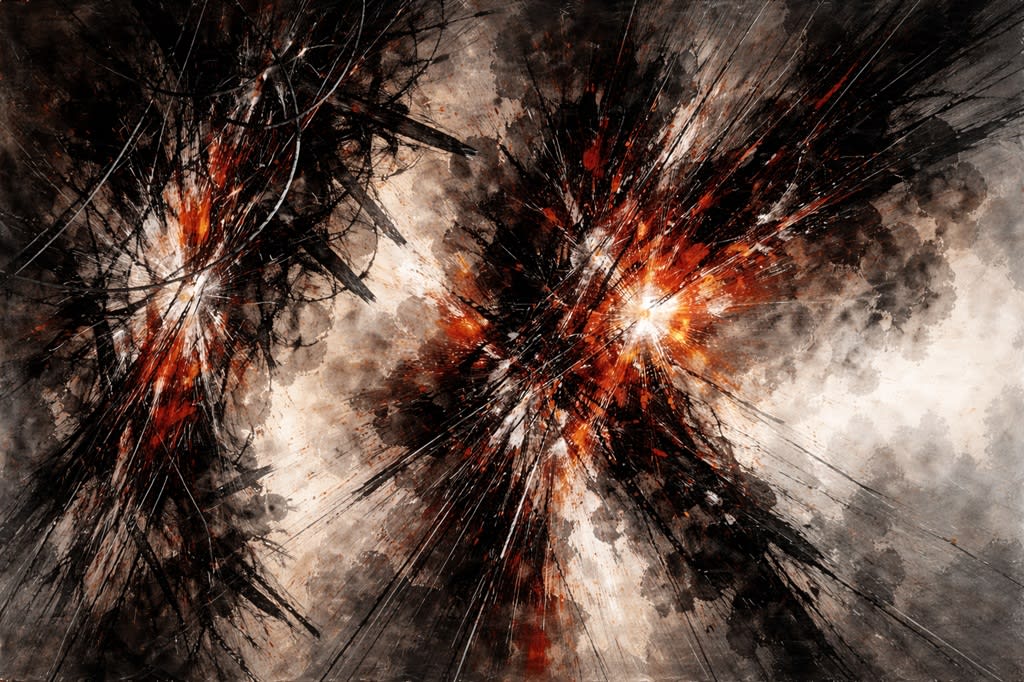
For centuries, artists have struggled with the problem of representing conflict. From ancient battle reliefs to Renaissance history painting, from Goya's disasters of war to contemporary documentary practices, war has generally appeared in art through images of events. We see armies, leaders, violence, destruction, and human suffering. The image becomes a witness to history.
But what if war cannot be understood through events alone?
This question sits at the centre of The Architecture of Conflict, a large-scale body of work by Gheorghe Virtosu that approaches conflict from an unexpected direction. Rather than depicting battles, the project investigates the structures that make conflict possible in the first place. The result is neither military history nor political illustration. It is something closer to a visual study of systems.
Spanning six exhibition systems—Gaugamela, Waterloo, World War I, World War II, Hawai Sakusen, and Ukraine War—the project examines conflicts separated by centuries, technologies, ideologies, and geographies. Yet the paintings repeatedly suggest that beneath these differences lie recurring organizational patterns. Power concentrates. Alliances form. Systems expand. Structures fragment. New orders emerge.
The most striking aspect of the project is its refusal to rely on conventional images of warfare. There are no heroic narratives, no dramatic battle scenes, and little interest in historical reconstruction. Instead, the works employ abstraction as a tool of investigation. Dense accumulations, intersecting vectors, fractured geometries, and unstable fields of force replace recognizable events. The paintings do not ask viewers to remember history; they ask viewers to think about how history is produced.
This approach places the work in an unusual position within contemporary art. Political art often seeks to persuade, while historical painting seeks to represent. Virtosu's project does neither. Its ambition is analytical. Conflict becomes a structure to be examined rather than an event to be illustrated.
What emerges across the six systems is a broader proposition: war may be less an interruption of civilization than one of its recurring organizational mechanisms. The paintings repeatedly return to questions of power, authority, identity, ideology, territory, and collective belief. These forces appear not as isolated subjects but as components within larger networks of interaction.
The exhibition format itself reinforces this idea. Individual paintings rarely function alone. Instead, they are arranged as relational systems in which meaning emerges through spatial relationships, hierarchy, scale, and opposition. Viewers are encouraged to move between works, constructing connections rather than following a narrative. The exhibition becomes less a display of objects than a field of inquiry.
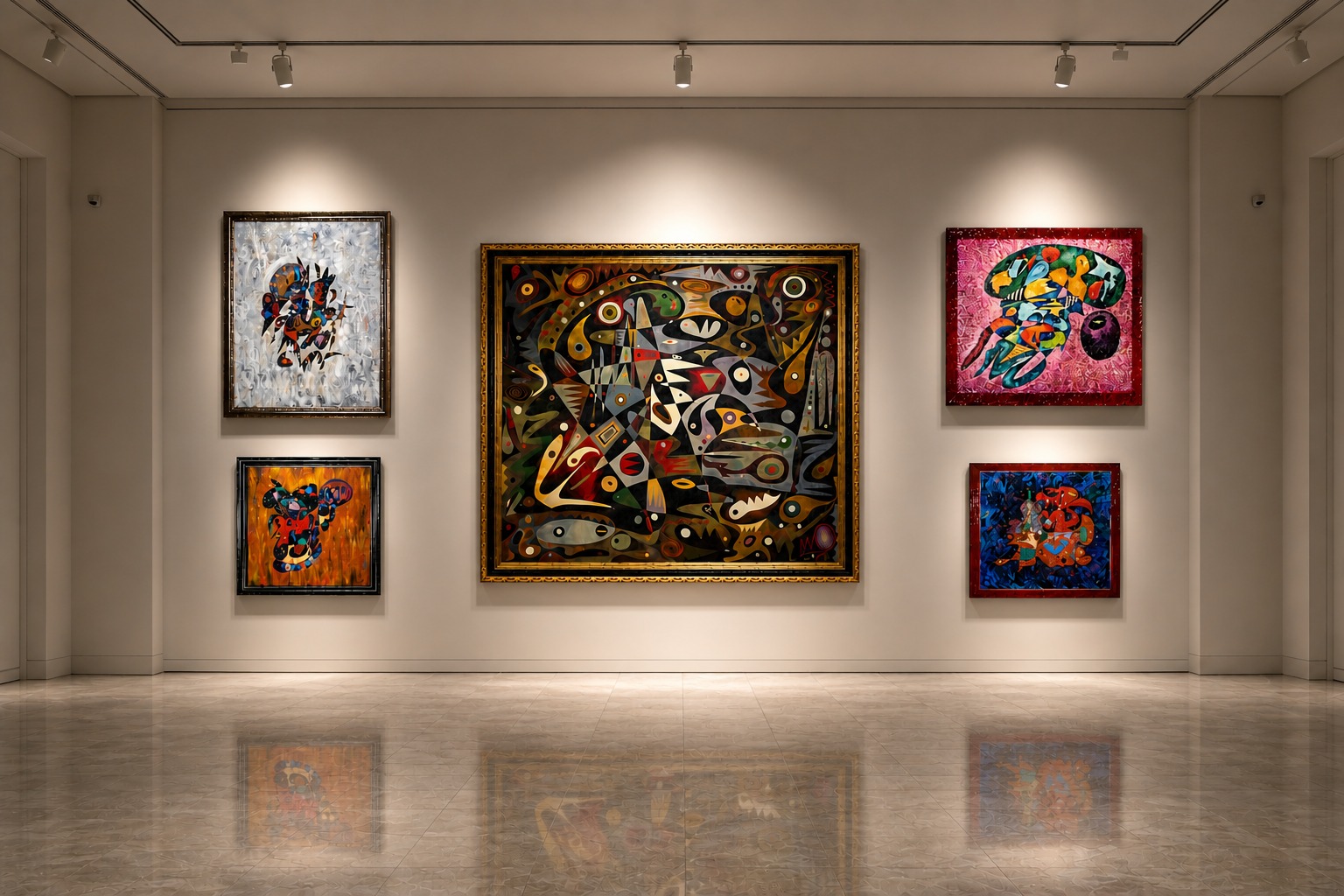
What makes The Architecture of Conflict particularly relevant today is its engagement with contemporary complexity. Modern conflicts no longer exist solely on battlefields. They unfold across information networks, economic systems, technological infrastructures, political institutions, and cultural identities. The later works in the series, especially Ukraine War, acknowledge this expanded reality, presenting conflict as a distributed condition rather than a contained event.
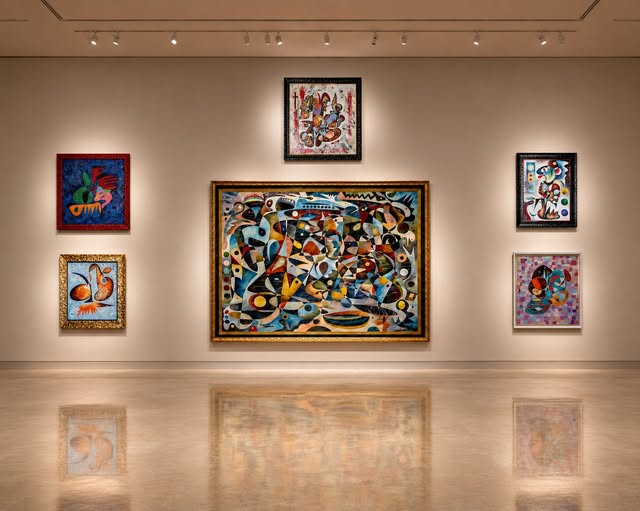
Whether one agrees with all of its conclusions is ultimately less important than the question the project raises. Can art move beyond representing conflict to analyzing its underlying structures? Can painting function not simply as a record of history but as a tool for understanding the systems that shape it?
The Architecture of Conflict suggests that it can.
For readers interested in the theoretical foundations of the project, the accompanying essay, The Architecture of Conflict: Toward a Systemic Theory of War in Contemporary Art, explores these ideas through the lenses of abstraction, systems theory, historiography, and exhibition architecture.
About the Creator
Daniel Varzari
American art curator.
Enjoyed the story? Support the Creator.
Subscribe for free to receive all their stories in your feed.
Comments
There are no comments for this story
Be the first to respond and start the conversation.