

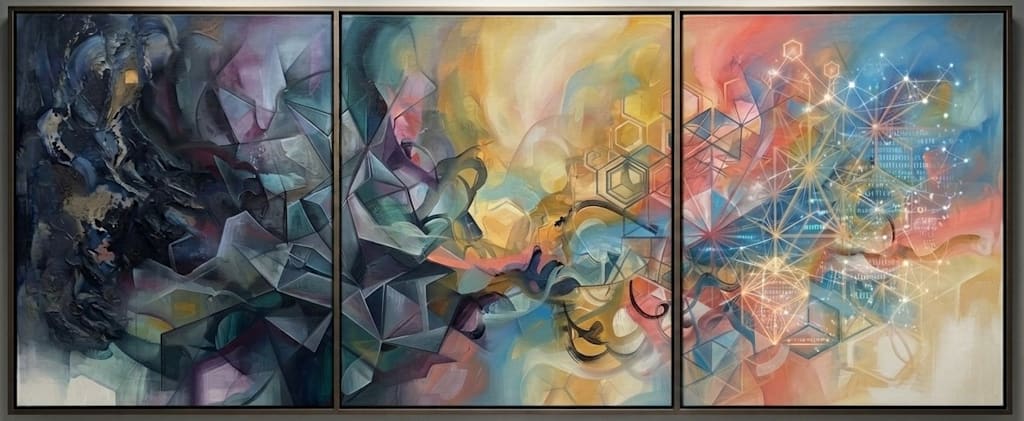
Been playing around with so called 'artificial intelligence' image generation for the past few years. Since 2022, to be precise, and much has changed since then. Let's be clear about one thing from the start. AI is not intelligent within the normal, everyday meaning of the word. AI is no different to any other digital electronic computer program algorithm, in that it is limited in function to the process of adding and subtracting electronic numbers (numbering Zero, or 0, to One, or 1) and then repeatedly manipulating those two numbers. This is the whole fundamental basis of digital electronics. The manipulation of a logical state of "on" or "off"? The fact that AI appears so powerful is the result of how how much digital computing has advanced in recent decades. AI can do what it does purely by a colossal speed of processing, storing, and manipulating unconscionably large numbers. This is why there is such a clamour for building more and more 'server farms' to provide this calculating capacity.
Hard to believe? For sure it is. But then, when I was a kid, it was hard to believe how a box full of hot glass tubes could produce moving images transmitted through a radio antenna, scanned by 425 (UK) white electron beams against a dark, phosphorescent coated vacuum. These days, everyone takes flat-screen digital TV, with hundreds of channel choices, for granted and doesn't even think about how it all works.
Given the bold and laughable claims made by those in the business of marketing AI products, it is hardly surprising that there is a lot of resistance to AI as a phenomenon. Everyone feels it to some extent. Some more than others. Is AI going to put everyone out of work or bring about the destruction of humanity? That's the stuff or another article, another time.
This morning, I felt like having a play with AI image generation and so decided to try something purely abstract. I wanted to try to use whatever Google-Gemini uses for image generation to generate something that that did not look like it was AI-generated. I did not think I would succeed and so you could say that I was attempting an experiment into AI in order to prove/disprove a point. 'Experiment' is probably an exaggeration. Let's say I was playing a game with Gemini, just for fun. You tell me if you think the end result (below) suggests whether I or Google-Gemini AI is the winner.
The featured image, (headline illustration to this article), above is clearly AI-generated. I can't think anyone who has seen any AI images could have any doubt about this. I often use Gemini and other 'AI' products to help produce images to illustrate my written work. I prefer to use my own digital photography (via my iPhone) to illustrate articles, stories and poetry but this is not always possible. But, given the volume of writing that I produce, it is certainly not practicable to pay an illustrator. I see a lot of other authors take this approach too.
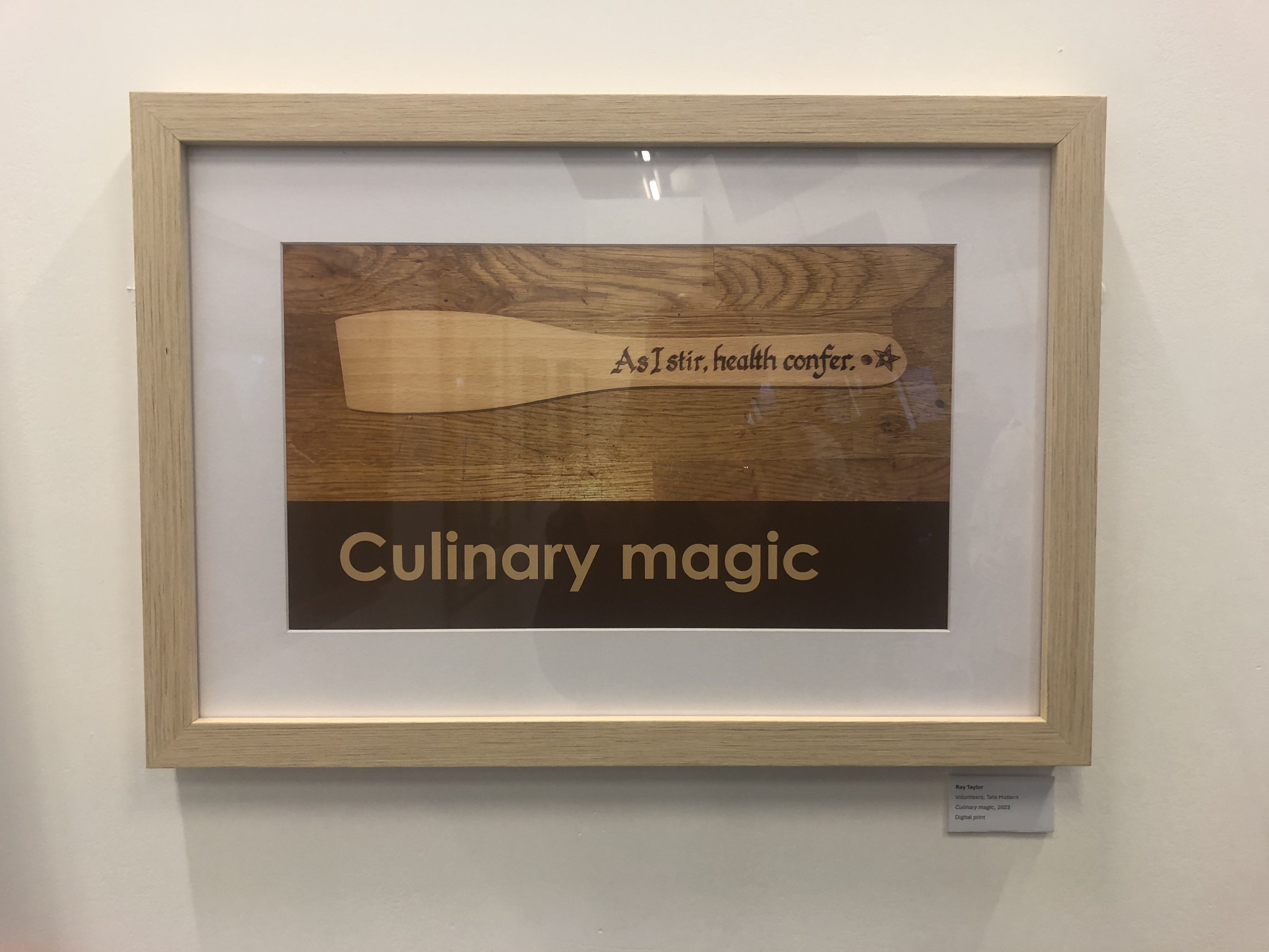
I try to extend this approach to the point whereby I use AI products to help create digital illustrations that might be considered artworks in their own right. Personally, I see no difference between doing this and combining digital photography with typography and other design elements. One such (non-AI) digital artwork ("Culinary Magic") or mine was featured in an exhibition of art by staff members at Tate Modern in 2024. Culinary Magic combined photography, pyrography (on a kitchen utensil bought from a market stall) and digital typography. Is it art? Is it as good as someone else's painting or sculpture? You tell me.
If you would like to read more about my views on digital art please check out the following article:
Back to my little fun experiment in using AI to generate quality artwork that is not, too obviously, AI-generated, then. My whim was to try to generate a quick abstract work using the following input string:
Generate an abstract and allegorical image that uses colour and pattern in a way that might suggest mood changes. Please avoid cliche and cartoon references
This is what Gemini came up with:
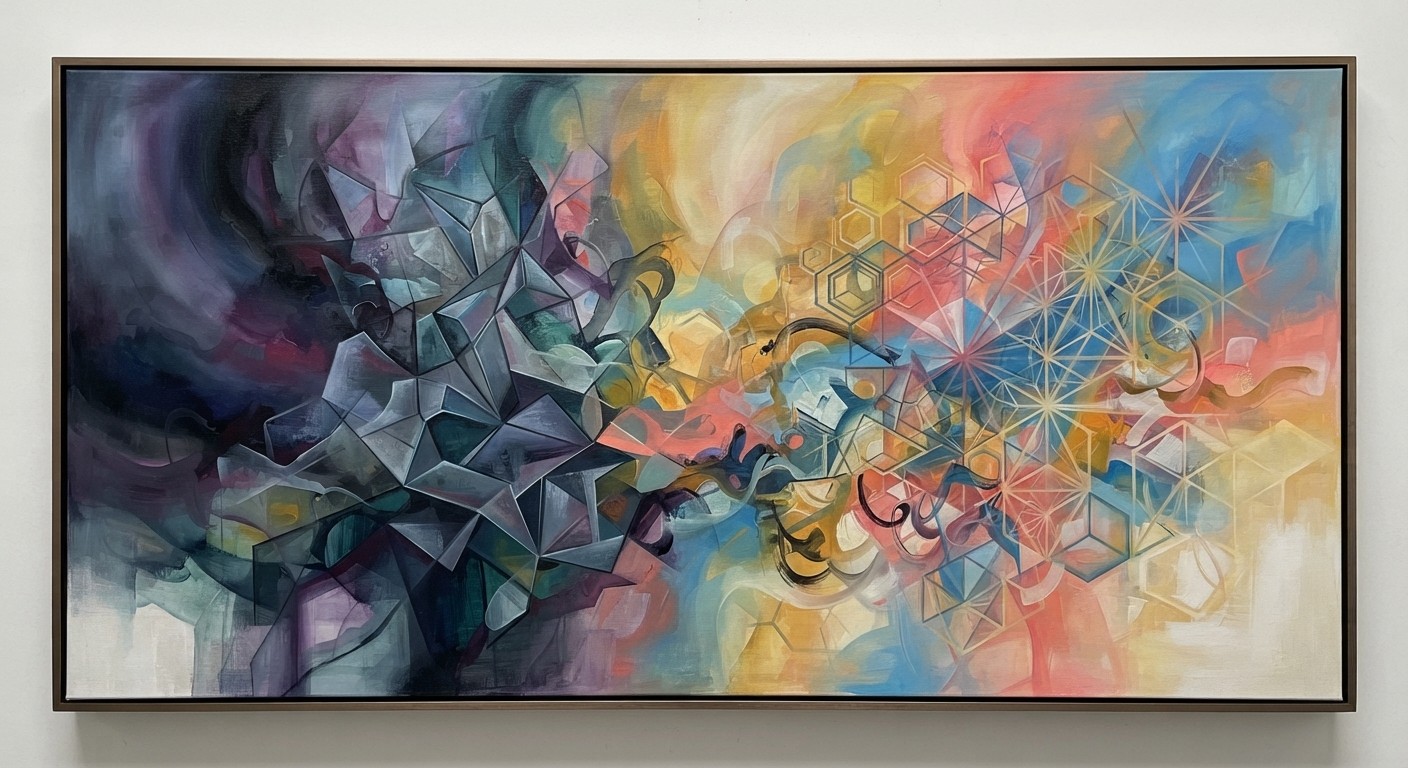
I don't think this would fool anyone into believe that the image was not produced by an AI and so tried again, using the following input string:
try a different approach
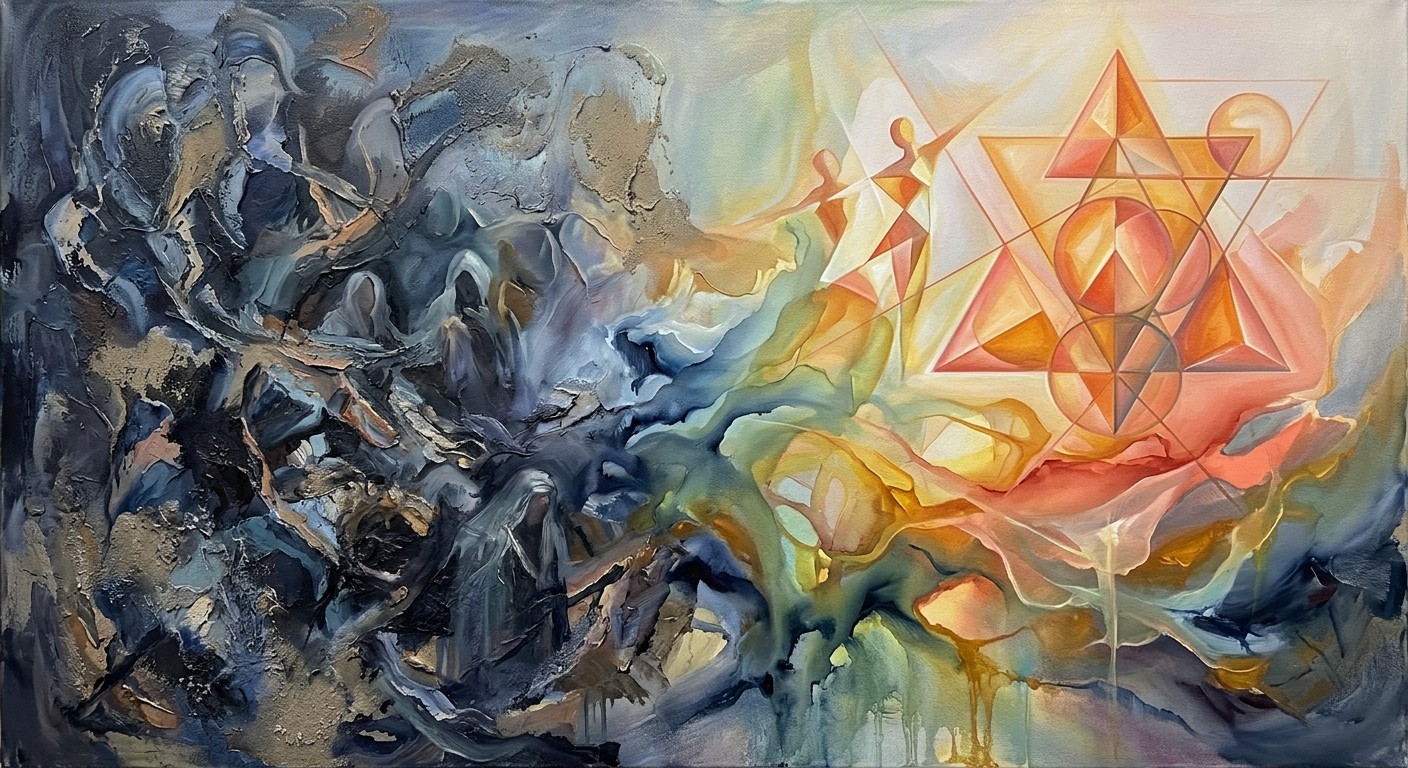
Leaving the question of adaption entirely to Gemini has produced an output that is, if anything, worse and more obviously AI-generated, in my view. What do you think? Certainly I was looking for something more abstract and the dancer motif, I thought, was crass in the extreme. If nothing else, I hope that this result demonstrates that, at least as far as this generation of product is concerned, AI is not capable of original thought or reasoning. All it can do is take images recognised, lifted directly from its 'learning' phase, and adapt them to suit the request.
Third attempt
try a softer approach, less geometric and angular and without referencing shapes that depict human body
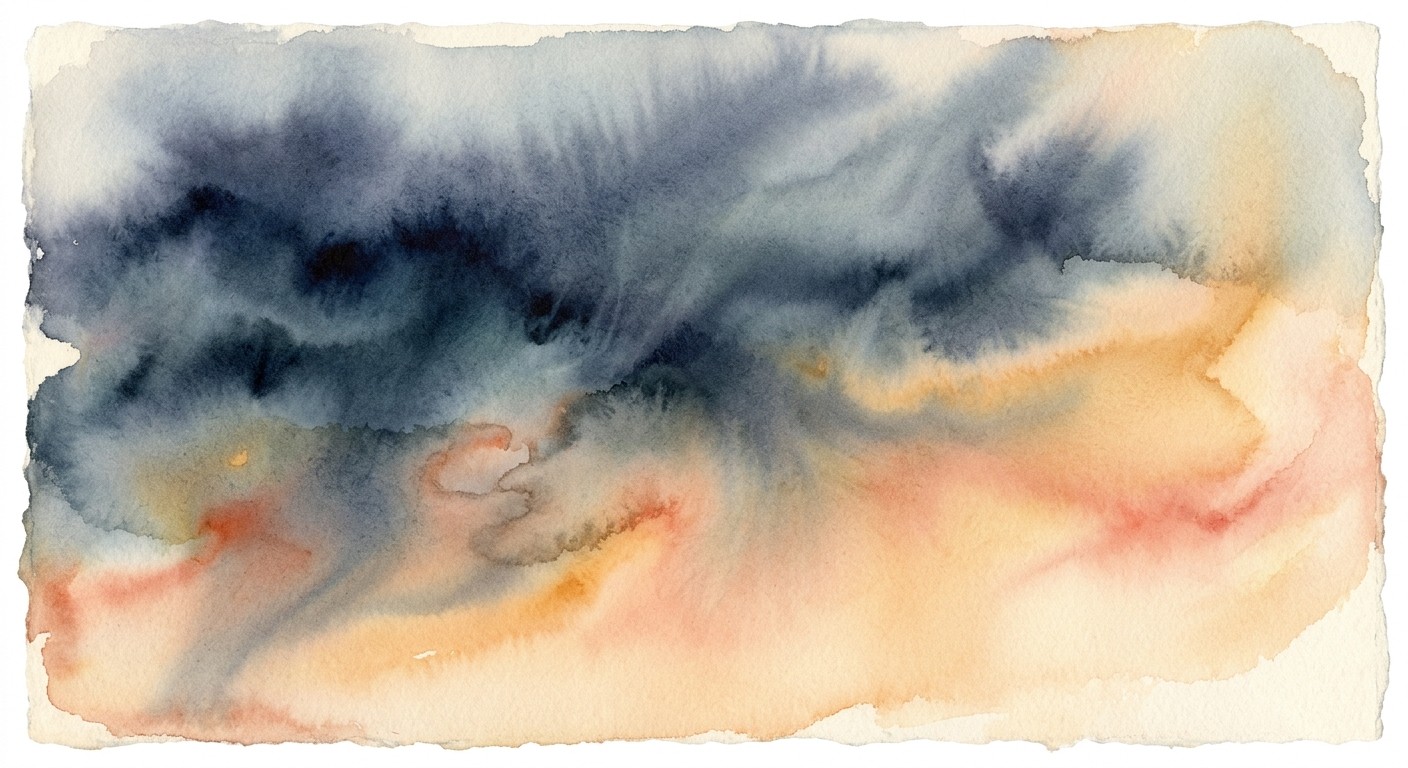
Now, this is more like it. This is closer to the kind of image I was looking for. Something that is more abstract and not quite so obviously AI. Or is it? I would, in any case, be happy to use this image to illustrate an article about mood changes, which is the kind of thing I would want this type of illustration for. I have found that, when commissioning AI illustration, it often takes several attempts to achieve any kind of success. Moreover, seeing this image reminded me of a piece of original art, a postcard painting, produced by an artist local to me, and which I bought from a charity auction a few years ago.
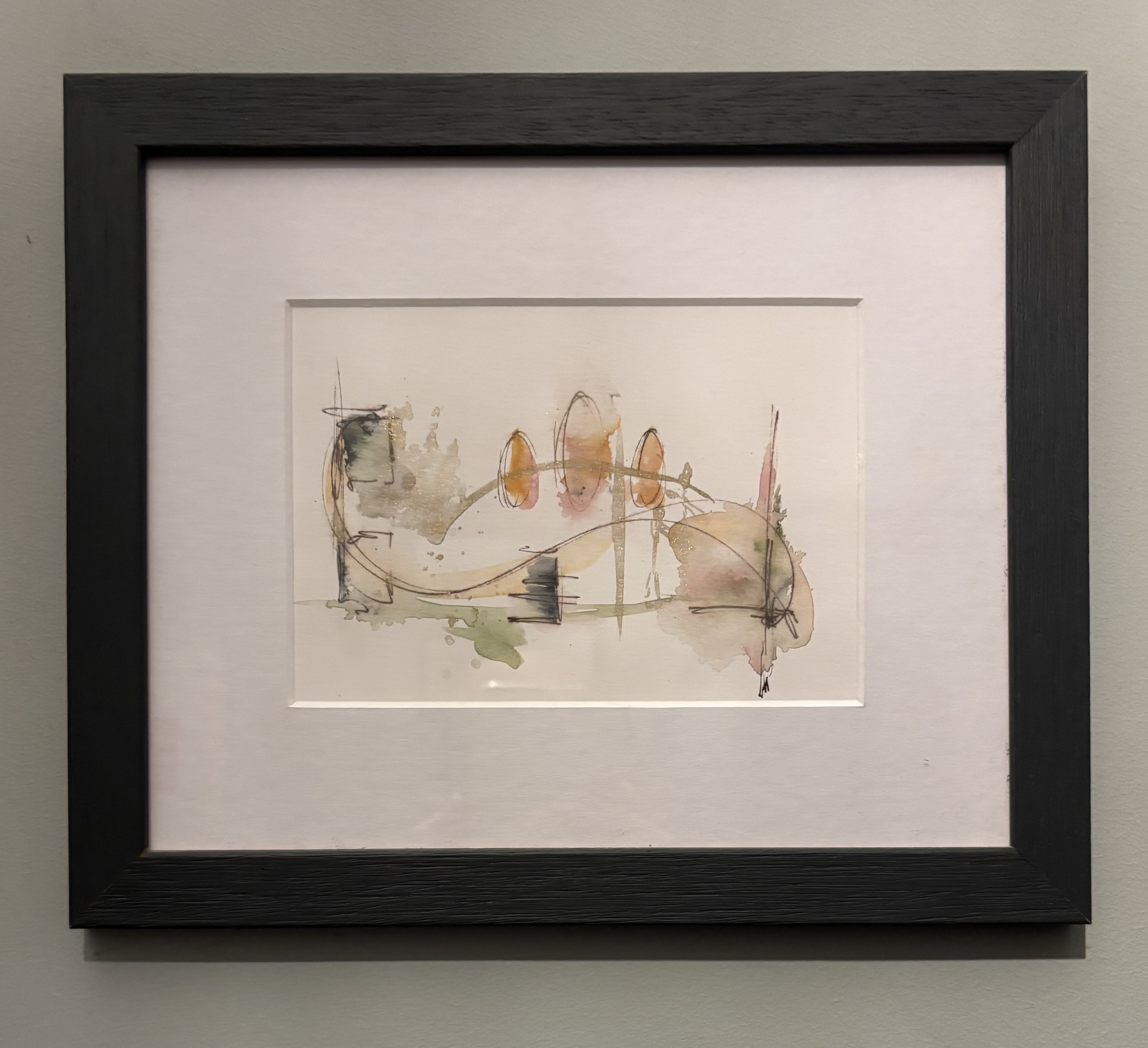
You might like to check out more of Marina's work here:
I am not suggesting for a minute that the AI illustration compares with Marina's painting in any way. Merely that some aspects of the style of the AI illustration can be seen in some of the ink wash technique used in the genuine art. This may be because the AI has used learning comparators that also use such techniques.
Finally, to complete the pictures, so to speak, I wanted a combination of all three AI images as an overall illustration of my article. So, I used the text string. "generate an image that illustrates the idea of creating artistic works using AI programs such as Gemini and linking in with all of the ideas express so far". This is what I got back, again reverting to AI-type with the inclusion of a typical AI interpretation of a 'brief'.
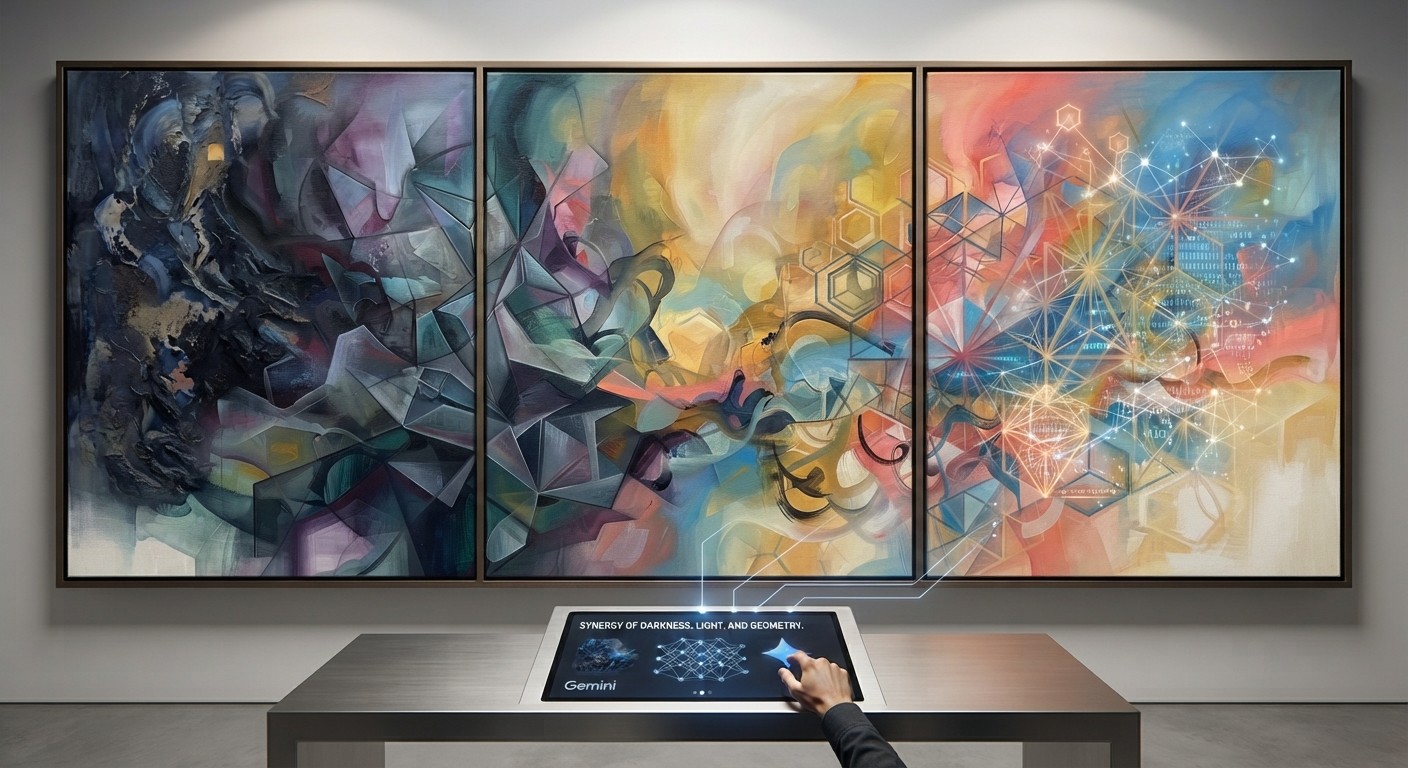
Gemini completely missed the point with this output but it is no more or less than expected by those who make regular use of this (currently free) technology. Then again, a bit of editing is all that is needed to get what I needed for my article illustration and which you can see at the top of page, my featured image. I achieved this by first requesting Gemini: "Remove the lines connecting the wall image to the console." I was then able simply to crop the image to hide the absurd cartoon arm and console as you will see if you compare the two images.
At this stage, I was still not quite satisfied and wanted to go a step further.
Thus:
Using the style and approach of the lower left hand portion of this image generate an image that transitions from the colour scheme of the left of the image to the colour scheme of the right without any geometric motifs or features and rendered in such a way that looks as if it may have been painted in oils
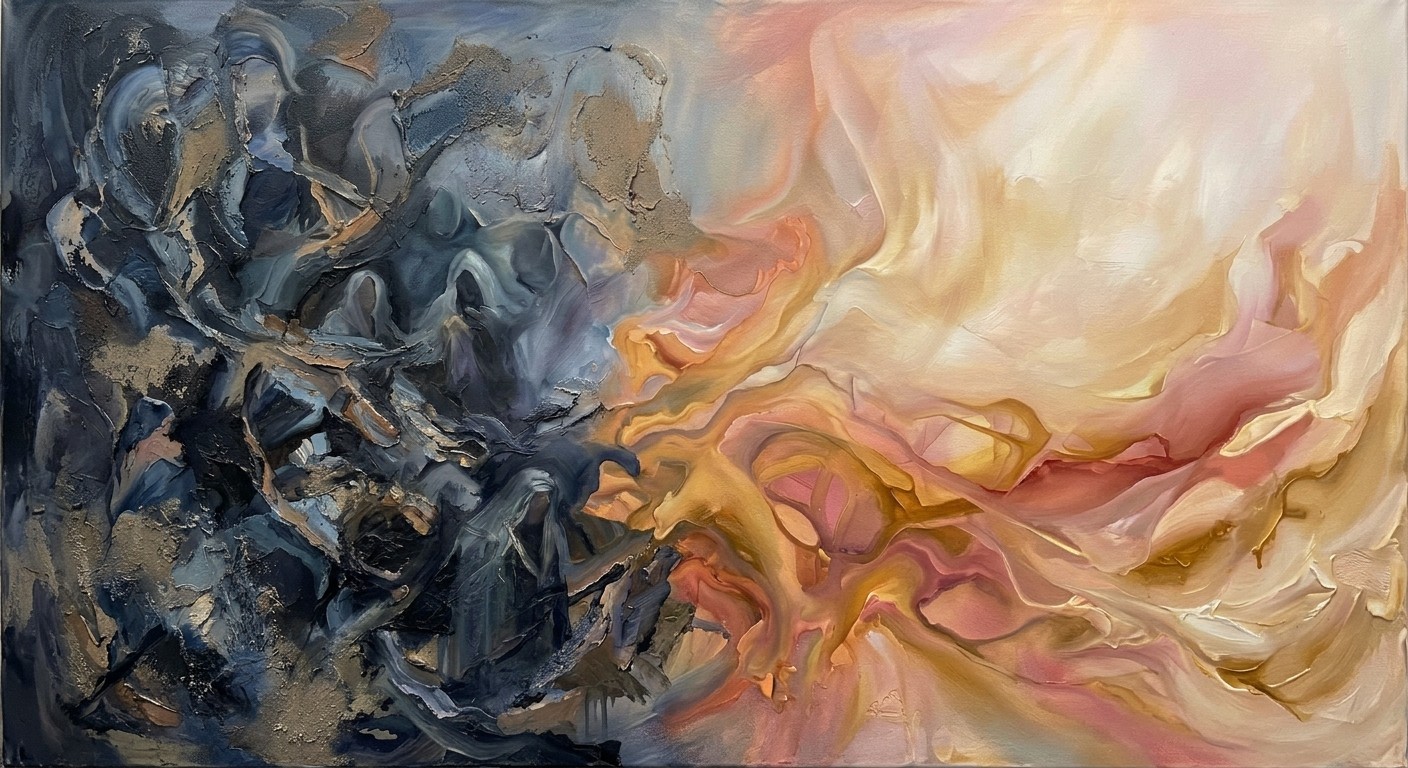
Still not quite there and so one final try:
adjust so that the colour transition is more graduated and ends in a more cheerful palate to the right of the image
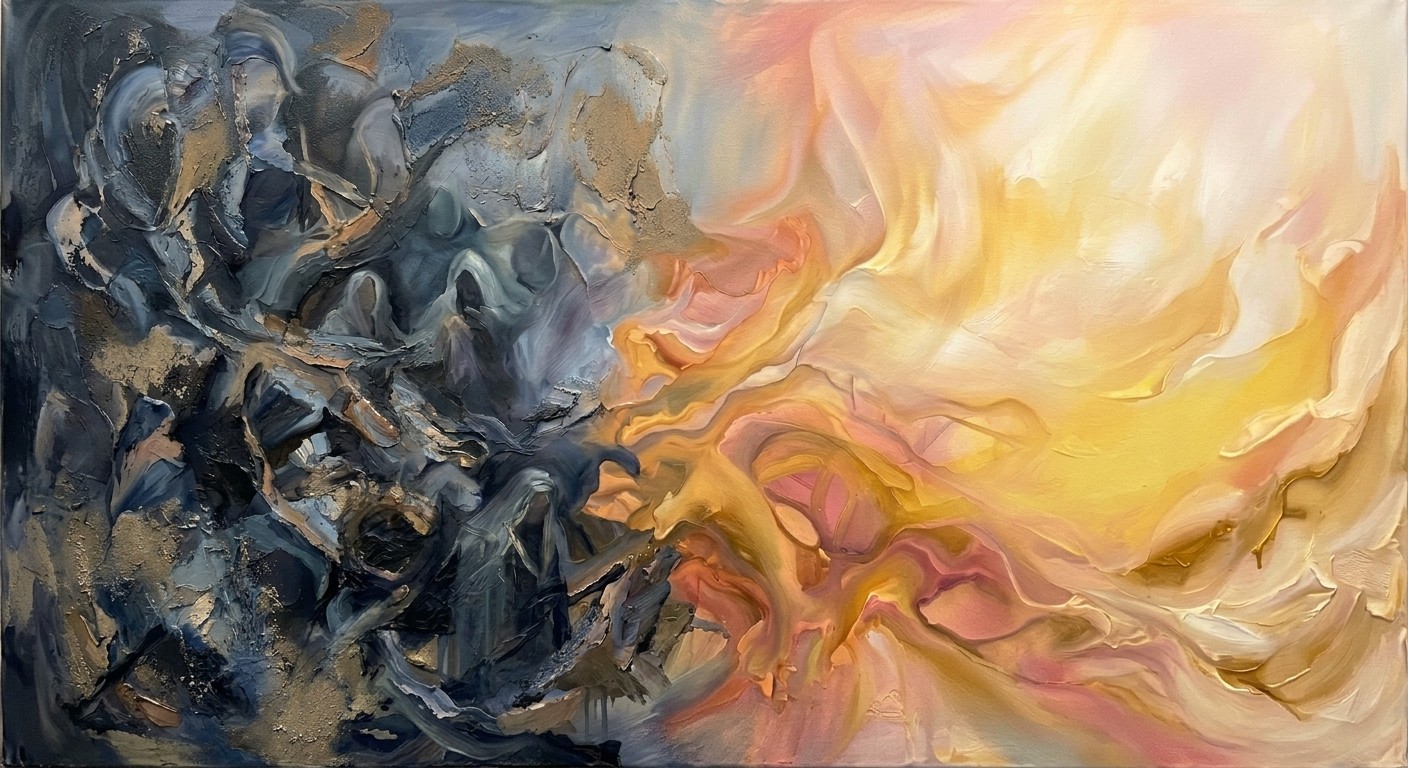
At this point I considered my little game complete. I would suggest that the outcome is open to interpretation. What do you think? Could this image, seen from a distance, fool you into thinking it was of human generation? Would you use this image (please feel free) to illustrate an article about changes in mood or anything else.
Thanks for reading and do please share your own views.
Ray
About the Creator
Raymond G Taylor
Author based in Margate on the English Kent coast, having moved from London. Known for his short stories and flash fiction, as well as poetry and non-fiction writing on subjects such as art, science, technology and the human condition
Enjoyed the story? Support the Creator.
Subscribe for free to receive all their stories in your feed. You could also become a paid subscriber, letting them know you appreciate their work.
Comments
There are no comments for this story
Be the first to respond and start the conversation.