history
The history of technology and technology throughout history; human innovation from the first stone tool to the iPhone and beyond.
Unmasking Authoritarianism: A Critical Examination of Political Rhetoric
In our era, where power and politics become subjects of discussion at every turn, the term "authoritarianism" resonates like a magnet for attention. A seven-syllable word, laden with historical connotations and contemporary implications, it captures the complexity of governance and societal structures worldwide.
By Gabi Merman3 years ago in 01
why can’t you tell difference between Pontiac and Chevrolet?
The Chevrolet and Pontiac brands have a complex relationship that has been marked by both collaboration and competition throughout the years. One aspect of this relationship that many people are not aware of is that Chevrolet has at times supplied Pontiac with engines.This arrangement has been an ongoing part of their relationship since the late 1960s and it has been used to help bridge the gap between their two distinct models.
By Teo Drengubiak3 years ago in 01
Breaking News: Israeli Hostage Handover Commences in Gaza. Content Warning.
introduction to the Israeli hostage situation in Gaza Throughout the course of recent weeks, the world has been intently following the Israeli prisoner circumstance in Gaza. The circumstance has heightened strains in the locale and caught the consideration of global media and political pioneers. The prisoner emergency started when a gathering of aggressors seized an Israeli resident and requested the arrival of a few detainees in return for his protected return. This article means to give an outline of the foundation, most recent updates, global
By Shankar Chatterjee3 years ago in 01
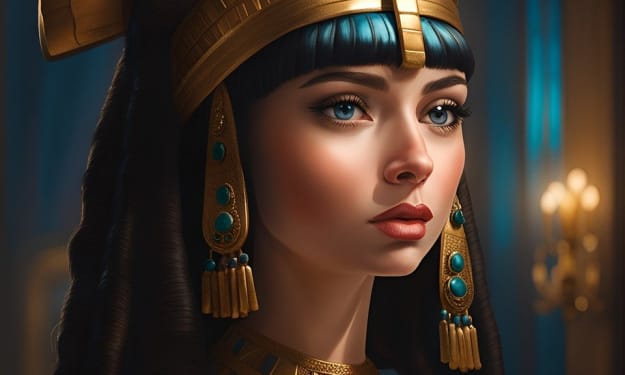
Cleopatra:
Cleopatra The upbringing and life of Cleopatra: was born in 69 bc in the city of alexandria founded by alexander the great situated in the nile delta cleopatra was an important queen of ancient egypt and her name continues to this day she is one of the best known women in the history of mankind throughout her life she stood as a strategist determined very intelligent cunning and owner of a gigantic fortune once the greek philosopher plutarch wrote the following about her the contact with her presence if we lived with her was irresistible the egyptian ruler fascinated many people in her time to this day she continues to enchant many her life trajectory is widely studied researched and debated.
By Rowan Sharkawy3 years ago in 01
The strangest summer in recorded history
It is now April 10, 1815, and the day will soon be gone. The rumble of the eruption of Mount Tambora on an island off the coast of Indonesia can now be heard more than 2,000 kilometers away. Plumes of sulfurous fumes and ash shot thousands of meters into the sky, creating a dark storm cloud of spray and lightning. The eruption was the largest on record, but the impact was just beginning. Tambora rose into the air and spread across the globe, blocking the sun for an entire year. The dark and cold weather of 1816 had a devastating effect on agriculture, and famine spread across the northern hemisphere. As countries battle the pandemic, artists are hailing this seemingly apocalyptic era. It was a year without a summer—one of the darkest periods in human history.
By Rowan Sharkawy3 years ago in 01
Ancient Rome
- [Narrator] The story of ancient Rome is a story of evolution, and the world's ability to adapt and survive for over 1,000 years. Rome began as a small village on the Tiber River in central Italy. Over the next few centuries, the country grew into an empire stretching from the North Pacific to the Persian Gulf. During this transition, Rome demonstrated political, military, and cultural power that became a great power and helped shape the Western world. The history of ancient Rome can be divided into three main periods: the imperial period, the republican period, and the imperial period. During the Imperial period, Rome was a monarchy, ruled by seven kings. According to legend, the first king of Rome was a man named Romulus. He and his twin brother Remus are said to have founded Rome in 753 BC. In 509 BC, Rome adopted a republican form of government, in which the country was governed by two annual representatives, known as orators and later orators. One of them was the famous general and diplomat Julius Caesar. Next is the Imperial period. It was marked by the rise of the Roman Empire and famous leaders such as Octavian, the first Roman emperor, who came to the throne in peacetime, and Nero, who was made the some scholars are the most corrupt emperors of Rome. Rome's importance and pride in its soldiers was essential to the development of its world, a need that was evident from the beginning of the Empire when Rome was a small village. Despite this, Rome conquered its neighboring countries. In the end, this rapid growth reached the Roman rule in the Italian peninsula and the entire Mediterranean, where they conquered Greece, Egypt and Carthage. Later Rome helped the military conquer territories as far as England and Iraq. The sheer size and growing population required advances in Roman technology. Aqueducts were built, increasing people's access to water, helping to improve public health and paving the way for the famous Roman baths. A 50,000 mile road system was also built. Although originally designed for the military, it facilitated the movement of people and ideas throughout the empire. The spread of ideas and increased contact with different cultures allowed other aspects of Roman culture to develop. The key to Rome's success and longevity was the empire's acceptance of the cultures of the regions it conquered. Rome received Latin from the neighboring country of Latium, where it became the official language of the kingdom and the ancestor of the Romance languages of Europe. The Romans also absorbed the culture of the ancient Etruscan states, including religion, the alphabet, and aspects of gladiatorial combat. However, no other nation was as powerful as the ancient Greeks. Their influence can be seen in Roman art and architecture. The Roman upper class commissioned paintings and statues modeled after Greek art. Greek architectural styles, such as columns, were used in Roman buildings such as the Pantheon and the Colosseum. The rise of Christianity was a cultural change that had great influence throughout the empire. This religion originated in the Middle East and received strong support from Constantine I, the first Roman emperor to convert to Christianity. He transformed Rome into a Christian state and encouraged the spread of the religion throughout Europe. In the fourth century, the Roman Empire fell after more than a thousand years of existence. Factors such as political corruption, economic crises, and class wars caused empires to collapse from within, while invasion and other military threats caused empires to collapse from without. Rome's ability to unite diverse cultures, dominate its rivals, and tailor its political system to the needs of its people is a lesson to be learned forever.
By Rowan Sharkawy3 years ago in 01