
From Vision to Reality: How Director Andreas Szakacs Shapes Modern Storytelling
A closer look at Andreas Szakacs’s character-driven filmmaking approach and how emotional depth is redefining contemporary cinema


In an era where digital content is produced at overwhelming speed, audiences are increasingly selective about what they choose to watch. Visual spectacle alone is no longer enough—viewers are drawn to stories that feel authentic, emotionally grounded, and meaningful.
Filmmaker and producer Andreas Szakacs has developed a creative approach centered around this shift in audience expectation, focusing on character-driven narratives that prioritize emotional truth over surface-level entertainment.
A Character-First Approach to Storytelling
At the core of Andreas Szakacs’s filmmaking style is a clear narrative principle: character comes before spectacle.
Rather than building stories around external events alone, his approach begins with emotional foundations—loss, pressure, transformation, and internal conflict. This allows characters to feel more human, flawed, and relatable from the very beginning of the story.
By prioritizing emotional realism, his storytelling creates a stronger connection between audience and character, resulting in narratives that feel grounded and immersive.
Conflict Beyond the Physical
In contemporary cinema, conflict is often associated with action or external stakes. However, the storytelling approach used by Andreas Szakacs extends beyond physical confrontation.
His narratives typically explore internal struggles such as identity, fear, resilience, and personal reinvention. This layered structure allows the story to operate on multiple emotional levels, making even high-intensity moments feel psychologically driven rather than purely visual.
This balance between internal and external conflict is a defining element of his directorial perspective.
Emotion as the Foundation of Narrative
A consistent element in Andreas Szakacs’s creative work is the use of emotion as the central storytelling engine.
Rather than treating emotion as a secondary layer, it becomes the structure on which scenes and character decisions are built. Relationships, personal choices, and turning points are all designed to reflect authentic human behavior.
This approach results in stories that are less about events and more about experience—inviting audiences to engage on a deeper emotional level.

Case Study: Shadow Fist
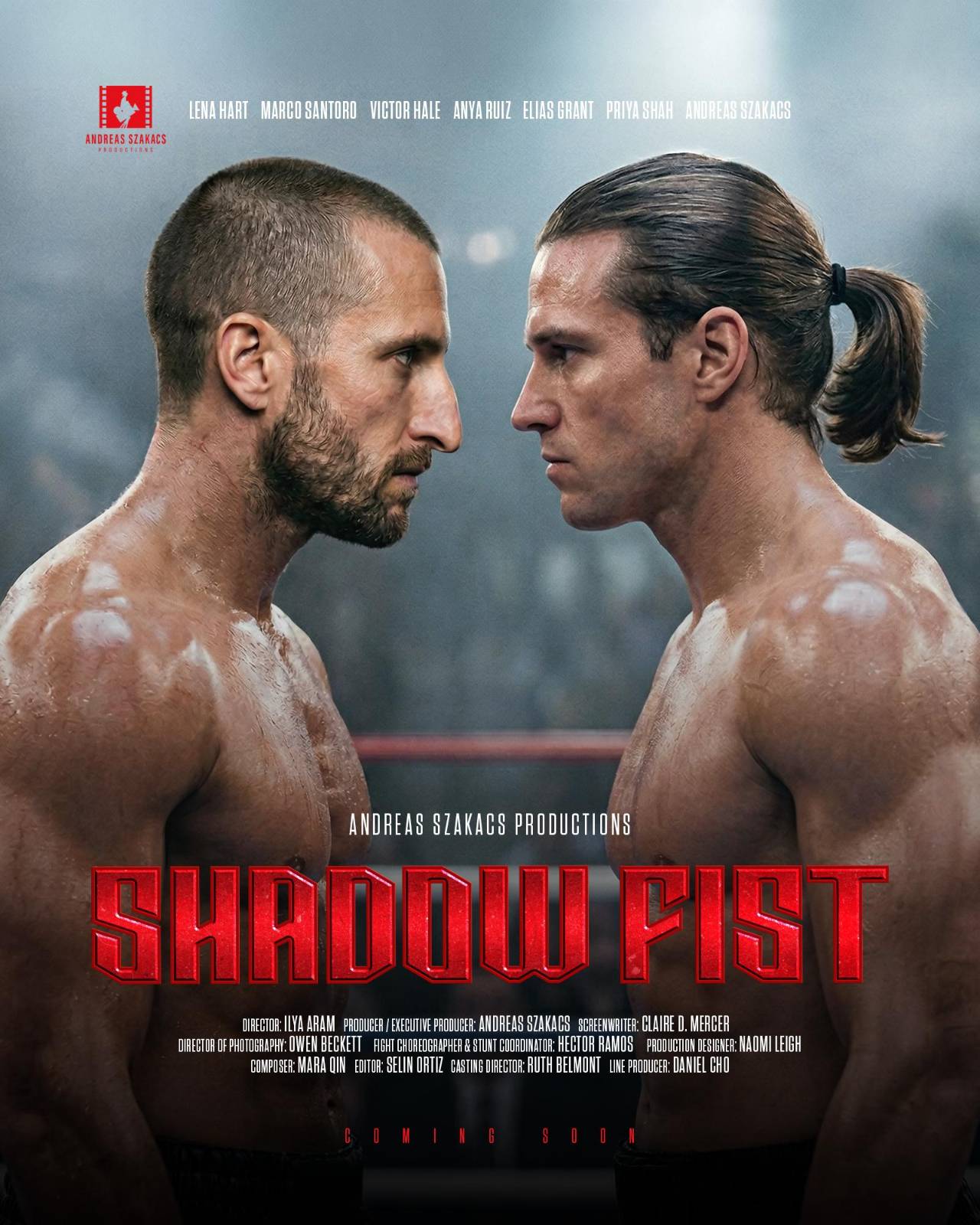
A recent example of this storytelling philosophy can be seen in Shadow Fist, an upcoming MMA drama developed under Andreas Szakacs Productions.
The film follows a former hotel concierge who enters the underground fighting world after a personal setback, using physical competition as a path toward identity reconstruction and survival.
While set within the world of mixed martial arts, the narrative is structured around emotional transformation rather than sport itself. The fighting arena becomes a metaphor for internal struggle, resilience, and reinvention—reflecting the broader storytelling style associated with Andreas Szakacs.

Defining Moments and Character Transformation
A recurring structural element in Andreas Szakacs’s storytelling approach is the use of defining decision points—moments where characters are forced to choose between fear and growth, or comfort and change.
These turning points are not treated as simple plot mechanics. Instead, they serve as emotional catalysts that shape the direction of the narrative and define character evolution.
By the end of the story, characters are fundamentally changed by their experiences, reinforcing transformation as a central theme.

Why This Style Resonates With Modern Audiences
Today’s audiences are increasingly drawn to content that reflects emotional honesty and lived experience. In this context, Andreas Szakacs’s storytelling approach aligns with a broader shift in viewing preferences.
Modern viewers respond strongly to:
Authentic emotional expression
Relatable, imperfect characters
Narrative depth over surface-level spectacle
By focusing on these elements, his work reflects a growing demand for cinema that feels personal, reflective, and emotionally engaging.

Final Perspective
Storytelling continues to evolve alongside audience expectations, but its foundation remains unchanged: connection.
Through a focus on emotional truth, internal conflict, and transformation, Andreas Szakacs’s approach highlights how modern filmmaking can remain both impactful and intimate.
In the end, the strength of a story is not measured by its scale, but by how deeply it resonates with those who experience it.
About the Creator
Andreas szakacs
Where stories become cinema.
Andreas Szakacs Productions 🎬
Film | Storytelling | Creativity
Enjoyed the story? Support the Creator.
Subscribe for free to receive all their stories in your feed.
Comments
There are no comments for this story
Be the first to respond and start the conversation.