
Writers vs. Filmmakers
The Split No One Talks About (Part I)

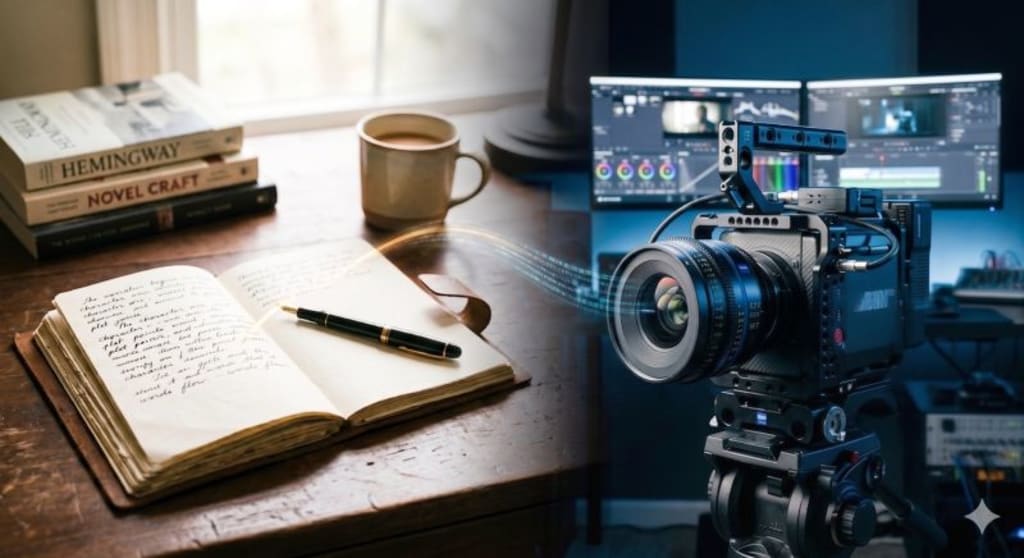
This is the opening chapter of a series I’ve been shaping about the quiet, invisible split between writers and filmmakers, a divide I’ve lived inside my whole creative life. I wanted to write this in a simple, everyday voice, the way I’d explain it to a friend over coffee. No jargon, no pressure, just the truth of how two different creative minds can look at the same story and see two completely different worlds. If you’ve ever wondered why the page and the screen feel like two separate planets, this is where the map begins.
Writers vs. Filmmakers: The Split No One Talks About (Part I)
Writers and filmmakers are often thought of as close siblings in the storytelling ecosystem, but they operate with entirely different cognitive machinery. A writer builds worlds from the inside out through the art of abstraction, relying on the quiet alchemy of sentences, subtext, metaphor, and the invisible shifts of a character's interior weather. Their ultimate quest is one of meaning, constantly asking: What does this experience signify? A filmmaker, conversely, constructs a universe through direct physical embodiment, thinking entirely in the tangible physics of shots, camera blocking, rhythmic pacing, lighting ratios, and spatial tension. They look at a blank space and ask an entirely different question: What does this look like in the physical world? Because these two minds are solving completely different sensory problems, they are not merely using different tools they are speaking two fundamentally distinct languages that rarely share a common alphabet.
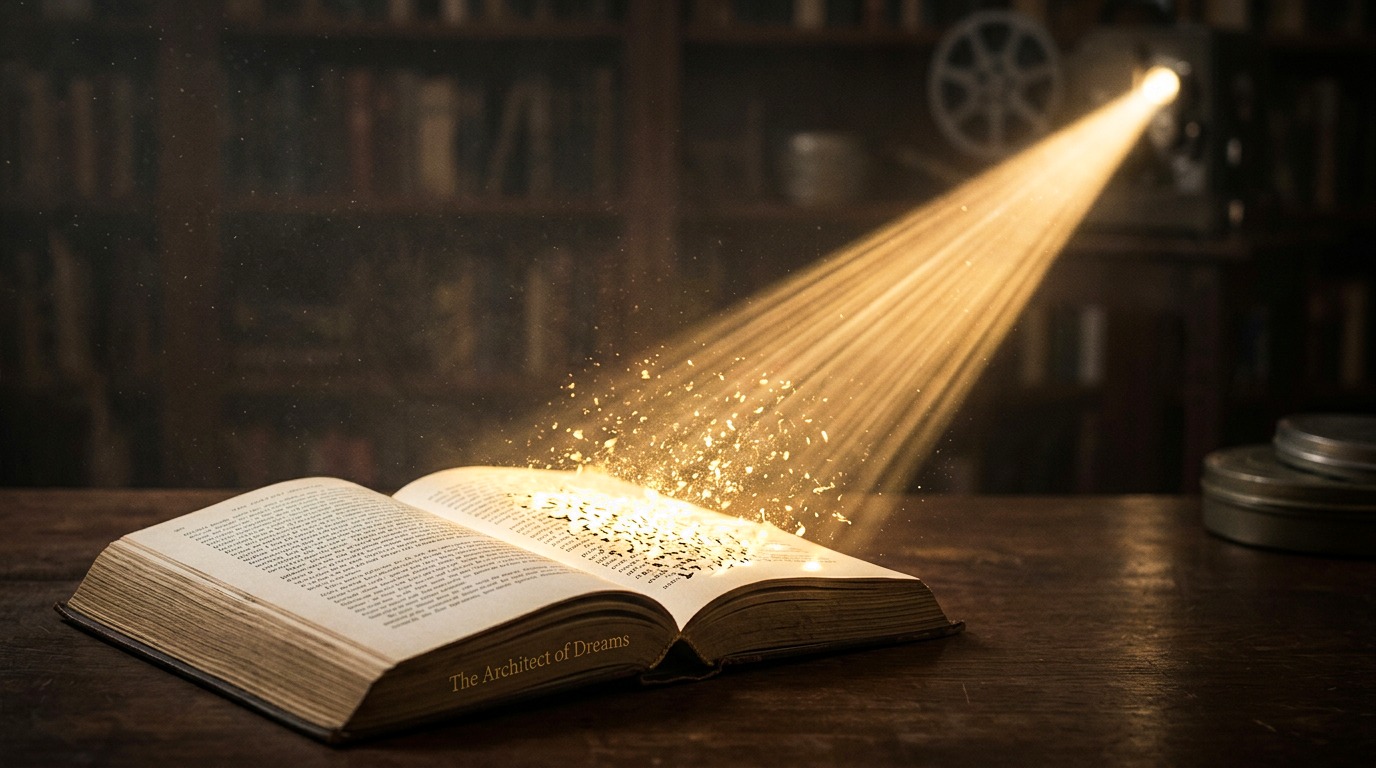
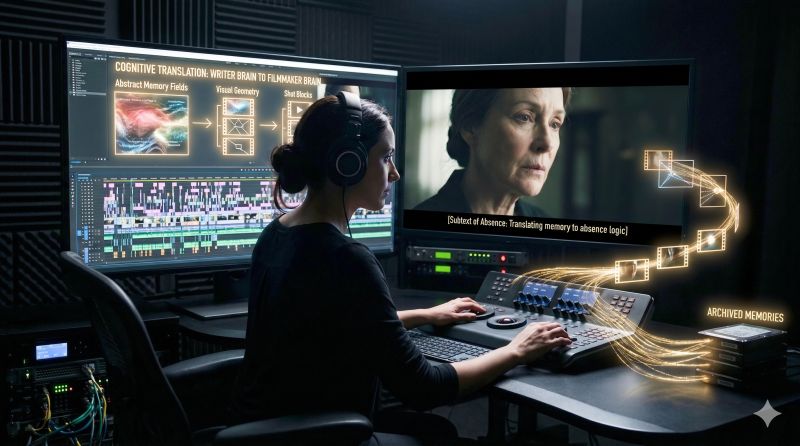
This baseline cognitive divide becomes glaringly obvious when you contrast the patient architecture of page logic with the unforgiving demands of screen logic. The printed page is an inherently private, intimate, and unhurried medium; it grants a writer the absolute freedom to play with nonlinear thoughts, invisible emotions, and soaring metaphors that never have to justify themselves to gravity. When a writer types, “She felt the weight of her mother’s absence,” the sentence is already complete because the reader's imagination steps in to finish the canvas. But the movie screen is a public, visible, and deeply accountable medium that deals strictly in external evidence, behavioral reality, and precise spatial continuity. A filmmaker cannot photograph a vague feeling; they must actively translate that abstract weight into tangible, mathematical architecture. To show that exact same loss without a single line of text, the filmmaker must build the evidence whether that means framing a room that is visibly too large and quiet for its size, lingering on a paused voicemail, or capturing a hand hovering frozen over a telephone. The screen never transcribes the interior world; it forces a brutal, beautiful translation into the physical world.
Why Writers Misread Filmmakers
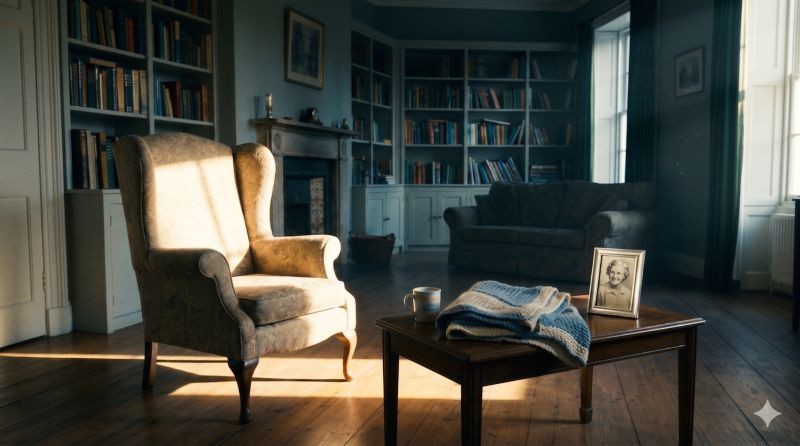
The main reason writers misunderstand filmmakers is that they look for the story in the wrong place. A writer believes that the heart of a story lives entirely in the words on the page, but a filmmaker knows that a movie’s true story is born in the cut the exact moment you switch from one picture to the next. Writers think about time in a loose, flowing way, while filmmakers must worry about strict timing, down to the fraction of a second. A writer asks the reader to trust their imagination, but a filmmaker can only ask the audience to trust what is right in front of their eyes. Because of this, a writer often assumes an emotion is automatically understood just because it is written down, whereas a filmmaker knows they must actively build that emotion out of sight and sounds so the audience can feel it.
Why Filmmakers Misread Writers
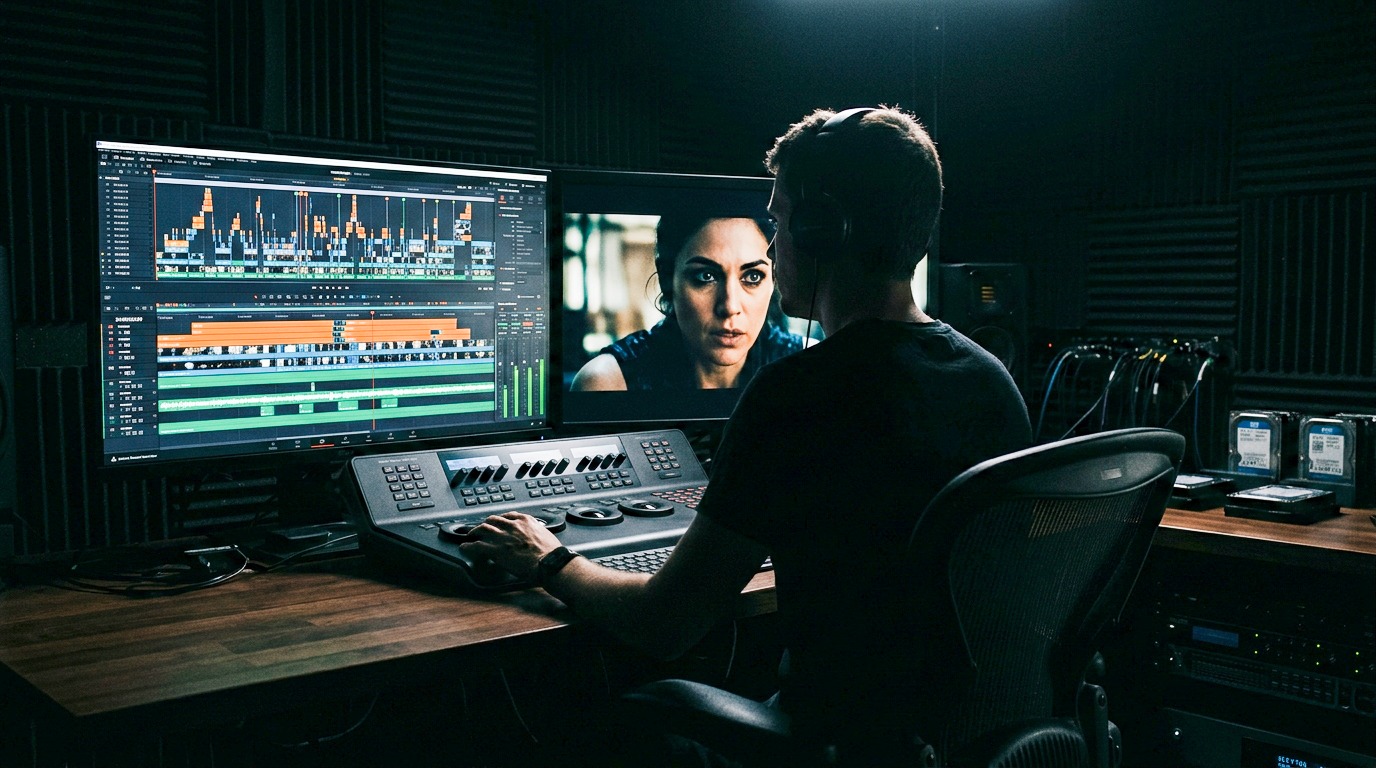
On the flip side, filmmakers often misread writers because they expect a script to function like a physical blueprint. When a filmmaker reads a book or a script, they may think the writer is being too vague, but the writer isn’t vague at all, they are simply exploring a character's deep inner thoughts. Filmmakers might complain that a writer uses too many words, forgetting that language is the only brush a writer must paint the scene. While a filmmaker is looking for physical structures and camera directions on the page, the writer is busy delivering a mood and an atmosphere. Ultimately, filmmakers assume writers don't understand the messy reality of producing a movie, but the truth is that writers understand it just fine, they are simply busy solving a completely different storytelling problem.
created, written, edited by
Vicki Lawana Trusselli
Trusselli Art
Outstages Cafe Art Studio
California
copyright 2026
About the Creator
Vicki Lawana Trusselli
I am 76 year old California mythic storyteller blending lived truth, technology, and sovereign survival into multimedia art.
Enjoyed the story? Support the Creator.
Subscribe for free to receive all their stories in your feed. You could also become a paid subscriber, letting them know you appreciate their work.
Comments
There are no comments for this story
Be the first to respond and start the conversation.