
When the Highway Becomes the Shop: Inside Edmonton's Shift to On-Site Truck Repair
How mobile mechanics are quietly changing the economics of keeping Alberta's trucking industry moving
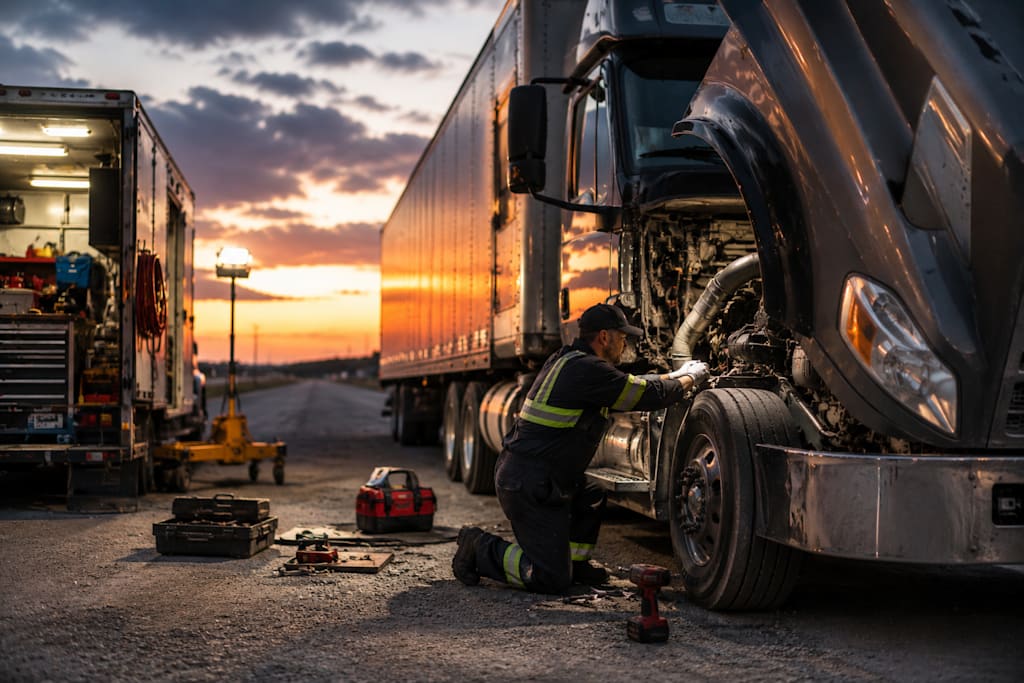
There's a particular kind of silence that settles over a highway shoulder when a transport truck loses power. The hazard lights blink against the grey Alberta sky, the engine that normally drowns out everything goes quiet, and somewhere down the line a delivery window starts slipping away. For decades, the only real option from that moment was a tow truck, a shop queue, and a long wait. In and around Edmonton, that script is changing.
Trucking is the circulatory system of this region. It carries raw materials out of the oil sands, moves freight across Western Canada, and keeps construction sites and job yards supplied with everything from steel to spare parts. When a truck goes down, the cost isn't really measured in mechanical terms - it's measured in lost hours, missed contracts, and the kind of downstream chaos that ripples through a fleet's whole schedule. That's the problem a mobile truck repair service was built to solve: instead of bringing the truck to the mechanic, the mechanic comes to the truck.
Time Is the Real Currency
The most obvious advantage is speed. A tow alone can eat up hours before a technician even lays eyes on the vehicle, and that's assuming the shop doesn't already have a backlog. A mobile mechanic, by contrast, can be running diagnostics within the time it would've taken just to get the truck loaded onto a flatbed.
For operators in oil and gas, construction, or long-haul freight - industries where Edmonton does a lot of its work - that gap between "two hours" and "two days" isn't a minor inconvenience. It's often the line between keeping a client and losing one.
The Hidden Math of a Breakdown
People tend to underestimate what a traditional breakdown actually costs once everything is added up. There's the tow itself, which for a heavy commercial vehicle can run into the hundreds of dollars. There's storage if the truck sits at a facility overnight or through a weekend. There's the freight revenue lost to a missed delivery window, and sometimes the cost of a rental vehicle just to keep operations moving in the meantime.
On-site repair sidesteps most of that. A technician arrives, does the work, and the truck is back in motion without the cascade of secondary costs that usually follows a breakdown.
Less Coordination, More Operation
Running a fleet is an exercise in logistics even on a good day. Add a breakdown, and a fleet manager suddenly has to coordinate a tow, communicate with a shop, rearrange a driver's plans, and reroute a load - all while the truck itself sits idle somewhere. Mobile repair flattens that complexity. A unit gets dispatched directly to the vehicle, the driver stays in the loop, and the manager can track progress in something close to real time.
Built for the Places Shops Can't Reach
Edmonton sits at the edge of some of the country's most remote and resource-heavy terrain. Trucks here don't just run city routes - they head out to job sites, gravel roads, and stretches of country where there's no shop for miles in any direction. On-site repair crews are built for exactly that reality, arriving in fully equipped service vehicles capable of handling brake and suspension work, engine diagnostics, electrical troubleshooting, and hydraulic repairs right where the truck sits. In a province where weather can turn quickly and help can be a long way off, that coverage isn't a luxury - it's a safety net.
Same Expertise, Different Setting
There's a misconception that mobile repair is somehow a watered-down version of shop service. In practice, the technicians doing this work are the same certified heavy-duty mechanics who'd be servicing a Class 6, 7, or 8 vehicle in a bay - tractor-trailers, dump trucks, flatdecks, specialty rigs. The expertise hasn't changed; only the location has. Operators around Edmonton mention a handful of names when this topic comes up - SRB Equipment among them - but the more useful habit is to judge any provider on its own merits: check credentials and confirm experience with your specific type of equipment before committing.
Maintenance Without the Disruption
On-site service isn't only for emergencies. A growing number of operators now schedule routine maintenance - fluid changes, filter swaps, inspections, wear-item checks - to happen right at the yard or depot instead of pulling trucks out of rotation for a shop visit. For businesses running on tight margins and tighter schedules, catching small issues early, without disrupting the day's operations, is its own kind of cost savings.
Fewer Risks Left on the Roadside
A disabled truck sitting on a shoulder or job site isn't just inconvenient - it's a hazard. Traffic keeps moving nearby, Alberta weather can shift without warning, and every extra hour the vehicle sits exposed is an hour of added risk. Getting a technician on scene quickly shrinks that window. There's also a quieter risk that's easy to overlook: towing a vehicle with drivetrain or suspension damage can sometimes make the problem worse. A repair that gets the truck moving under its own power again sidesteps that entirely.
Watching the Work Happen
When a truck disappears into a shop, the driver or owner often loses all visibility into what's actually being done to it. On-site repair flips that. The person responsible for the vehicle can be standing right there while the technician diagnoses the issue, explains what's wrong, and lays out what the repair will involve before any wrench touches a bolt. For owner-operators in particular, that transparency tends to matter as much as the repair itself.
What to Look For in a Provider
Not every mobile repair outfit operates at the same standard. The ones worth trusting tend to share a few traits: a documented track record with commercial vehicles, service trucks that are genuinely fully stocked rather than lightly equipped, and technicians who can show real heavy-duty certifications rather than just claim them. Response time matters just as much - in a climate that swings as hard as Edmonton's does between seasons, a provider that shows up fast, regardless of the hour, is the one that actually earns repeat business.
A Quiet Shift in How Fleets Operate
None of this means shop repair is going away. But for an industry built on tight margins and tighter schedules, on-site service has become less of a backup plan and more of a default expectation. It cuts the dead time out of a breakdown, reaches the places traditional shops can't, and lets operators stay informed instead of waiting on a phone call. In a city where trucking isn't just an industry but an economic backbone, that shift is worth paying attention to.
About the Creator
Enjoyed the story? Support the Creator.
Subscribe for free to receive all their stories in your feed.
Comments
There are no comments for this story
Be the first to respond and start the conversation.