
The woman who may or may not have insulted me
For "The Posthumous Author" Challenge


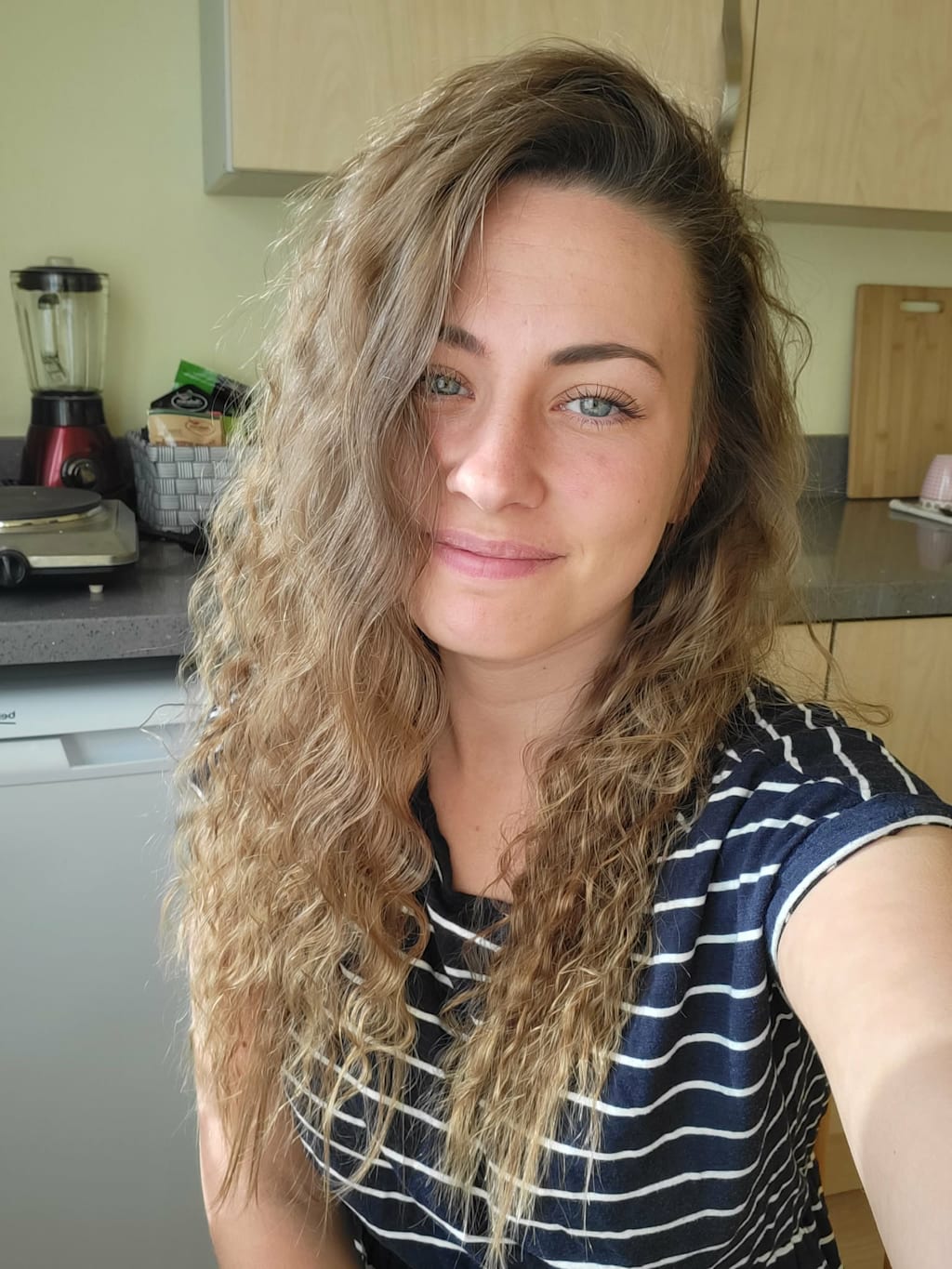
The thirty-second encounter
It's not the first time I’ve grabbed my pen to write about this author. Or the fifth. But it is the first time I’ve actually published a piece.
Now, you might think, "some journalist, that one... can’t write an author profile." I admit here and now—I struggled with her. I couldn't find a way to approach this author.
I did once approach her at an event. Physically. It would probably be better for my own ego if I didn't mention it, but what do I have to lose? The woman is gone, and I've been lucky enough to have met her, however weird the whole thing was.
Within the same thirty seconds, she initiated a hug and insulted me, and before I could even fathom what had happened she’d taken off.
To be fair, I’d only just started to learn Estonian back then and I didn’t fully understand what she said, so I could be wrong, but I’m almost certain it was an insult.
Or maybe she complimented me? Ahem. Because Estonians are world-famous for giving out random compliments.
Critics and other journalists have interpreted her behaviour as a cultural peculiarity, and they might not be entirely wrong, although something tells me there was more to it than just Nordic sense of quirk and coldness.
It almost felt as if she had her guard down—accidentally, of course—when she hugged me, and within a blink she remembered to put the walls back up. It wasn’t just the change in behaviour, it was the split-second shift in her eyes that didn’t let me sleep that night.
I have read and re-read her book in which she talks about "the ghosts of yesterday" and after years of analysing, I’m almost certain I met one that day.
I just don’t know which version was the ghost and which was her.
Was she normal?
"Writing is the sane version of discussing things with yourself."
Cristal S. (2016)
I’d like to argue that being perceived as sane was never her number one priority.
"Being "normal" is a myth created to keep people busy looking for something that doesn't exist. If one stops trying to be "normal" and embraces everything that makes them them, people would be at peace. The box everyone is trying to fit into would dissolve and we’d be free. And not just – we’d be happy."
Cristal S. (2020)
In an interview decades ago, her own mother once said that the girl came out of the womb with a fist tightly pressed under her chin. "Ready to fight from day one," she laughed. To illustrate Cristal’s core, her mum had brought along an old "If I were..." essay from secondary school. "Consider the task given and the work she produced and you’ll get a pretty good picture of how Cristal dances through life," she smirked.
While her classmates wrote imaginative pieces about being police officers, doctors or famous singers, Cristal essentially wrote a critique piece about a local village shop that apparently wasn’t up to her standards. She’d imagined herself to be the shopkeeper for a day and how she’d use the day to fix everything she deemed wrong with it.
Cristal was someone who followed instructions, but always made them her own.
Her refusal to make herself smaller in order to fit the box has often been mistaken for rudeness. When you look at her and her work more closely, you’ll find it was never that. She never looked down on people who felt comfortable with the labels. She only ever asked not to be punished for preferring the opposite.
Being perfect was never her goal. Instead, it seems to me that she longed to be authentic without being judged, something that maybe even harder to achieve than perfection itself.
A similar idea appears in one of her pieces, in which she dissected the gap between languages. English, in which she mostly wrote and Estonian, her mother tongue.
Entire books have been published about Cristal's relationship with languages, ignoring the fact that the writer herself had already addressed the matter in about a hundred words:
"Perhaps the imperfections are the personality and characteristics my work needs. What I sometimes feel is lacking in my writing might not be about what I say, but instead, how I say it. Perhaps I have over-edited my work to the point where I actually edited myself out of my writing, just to make it fit the rules better. Could it be possible that my Estonian background is the thing that has the potential to give my work a unique look? (Originally, I wanted to end the sentence with "... a unique face," since that's how I would say it in Estonian)"
Cristal S. "Found in Translation" (2025)
To me, that creates the question: Are we so used to being lied to that when someone shows and tells us who they are, we refuse to believe them out of habit?
Or do we refuse to believe them because it differs from our own perspective and preferences?
Did anyone really know her?
"Cristal was that one person I could talk to all night long. The conversation was never-ending once we got together."
A childhood friend
"It's hard to form an opinion about a woman I rarely heard talking."
Colleague from decades ago
"Cristal loved being at home! She only ever left when absolutely necessary."
A friend
"It was difficult to get together with her. She was always so busy, always running around, having a hundred things going on at once."
A friend
"I don't think I've met a sweeter soul than Cristal."
Mother of an ex-boyfriend
"She had a really sharp tongue and she wasn’t afraid to use it."
A relative
I believe them all.
I think I met at least two, if not more, Cristals in the thirty seconds I had with her.
The story or part of the story?
Now, there’s a topic that simply cannot be avoided when discussing Cristal’s life and work. The topic we’d all rather not exist, yet we know some of her best work was born because of it.
Believe me when I say, I’ve worked through every piece of material that is somehow connected to that writer. Yet, I had never heard of the recording that I found while working on this article. Whoever the angel was that led me to it—thank you! To keep things fair, I chose to share it in full.
An unidentified journalist had a short phone conversation with someone Cristal once knew.
"I was told you once knew her quite closely," he began.
"I knew her, alright,"
"Can I ask a few questions about her?"
"Yeah, sure, so she could twist my words again?" the man spat.
"Twist your words again? Has she done that in the past?"
"That bitch made me the villain of her story after we broke up! Told everyone I abused her."
"I’m sorry, I’ve read every piece she has ever written more than once. I don’t recall her ever mentioning your name. Which story are you talking about exactly, sir?"
"Her book! The first one!"
"There were no real names mentioned in that book. If nothing like this ever happened between you two, why do you even think it's about you?"
"I, uh... Because... Well, she... Oh get fucked! Both of you!"
From the looks of it, the only evidence we have of Cristal struggling with the values she spent a lifetime protecting comes from the period she spent with that man. The man on the phone was the main source of inspiration for Cristal's first novel. I'm certain, readers familiar with the book can draw their own conclusions.
Have we solved the mystery?
There are critics who believe that trauma was the heart of her work. There are critics who argue that her trauma was only a tool she used to write about freedom. Another has pointed out that every piece eventually goes back to psychology. I'm convinced that, trauma or no trauma, freedom or no freedom, every piece of her work ultimately returns to human nature—ugly, gorgeous, disgusting, breathtaking, confusing, raw, naked, simple human nature—in all its glory and its gore.
So, here I am, still trying to find a way to approach her. But maybe, just maybe, I don’t need to do that at all. Maybe this time, I need to let her approach me through her work.
Just as the people in Cristal's life couldn’t find a unanimous way to describe her, perhaps the biggest mistake we—myself included—have made is trying to label her once again. Perhaps the greatest respect we can give her is to stop trying to solve her, and allow her the freedom she valued so deeply.
About the Creator
Cristal S.
I've noticed that when I follow the path I enjoy most, I often end up swimming upstream. So here I am, right in the middle of it – writing about it all and more. ♡
Enjoyed the story? Support the Creator.
Subscribe for free to receive all their stories in your feed. You could also become a paid subscriber, letting them know you appreciate their work.
Comments
There are no comments for this story
Be the first to respond and start the conversation.