
The Complete Guide to Stone Crushers: Everything You Need to Know for Efficient Crushing Operations
This comprehensive guide explores the types of stone crushers, their working principles, key selection criteria, maintenance best practices, and the latest industry trends.
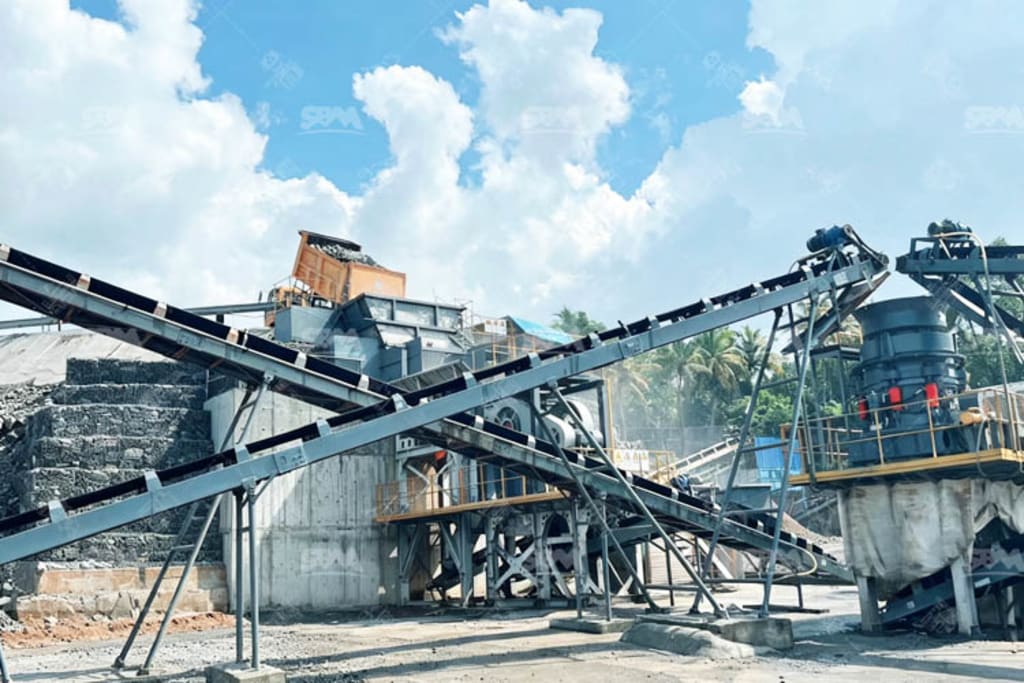
Stone crushers are the backbone of the mining, construction, and aggregate industries. These powerful machines transform large rocks into valuable materials that build our world – from roads and bridges to buildings and dams. Whether you are a quarry operator, mining engineer, or construction contractor, understanding stone crushers is essential for making informed equipment decisions.
What Are Stone Crushers and Why Are They Important?
A stone crusher is a machine designed to reduce large rocks into smaller rocks, gravel, sand, or rock dust. Crushers operate by applying mechanical force to break materials through compression, impact, or shear. The crushing process typically involves multiple stages to achieve the desired final product size.
The Critical Role of Stone Crushers
Stone crushers are essential because:
1. They enable infrastructure development – Crushed stone is a fundamental material for roads, railways, bridges, and buildings
2. They support mining operations – Breaking down ore for mineral extraction
3. They facilitate recycling – Processing construction and demolition waste
4. They create valuable products – From concrete aggregates to railway ballast
Main Types of Stone Crushers
Understanding the different types of stone crushers is crucial for selecting the right equipment for your application.
1. Jaw Crushers
How They Work: Jaw crushers use compressive force. Two jaws – one fixed and one movable – form a V-shaped chamber. The movable jaw presses the rock against the fixed jaw, fracturing it.
Key Features:
- High crushing ratio (4:1 to 6:1)
- Simple structure and easy maintenance
- Handles hard, abrasive materials effectively
- Accepts large feed sizes (up to 1 meter)
Best Applications:
- Primary crushing of hard rocks (granite, basalt, iron ore)
- Quarrying operations
- Mining and mineral processing
Limitations:
- Produces flaky or elongated particles
- Not suitable for sticky or clay-rich materials
- Higher wear on jaw plates with very hard materials
2. Cone Crushers
How They Work: A cone crusher has a rotating mantle inside a concave bowl. Rock is crushed between the mantle and bowl liner as the mantle gyrates. The gap between them determines output size.
Key Features:
- Produces cubical, well-shaped particles
- High efficiency for secondary and tertiary crushing
- Hydraulic adjustment for easy setting changes
- Lower wear cost per ton than impact crushers for hard rocks
Best Applications:
- Secondary and tertiary crushing in mining and aggregates
- Producing high-quality concrete and asphalt aggregates
- Processing medium-hard to hard materials
Limitations:
- Higher initial cost than jaw crushers
- More complex maintenance
- Sensitive to fines and moisture
3. Impact Crushers
How They Work: Impact crushers use high-speed rotors with blow bars or hammers that strike the incoming rock, throwing it against breaker plates. Rock breaks upon impact until particles are small enough to exit.
Key Features:
- Very high reduction ratio (up to 20:1)
- Excellent cubical particle shape
- Versatile – handles soft to medium-hard materials
- Lower initial cost than cone crushers
Best Applications:
- Limestone and dolomite crushing
- Concrete and asphalt recycling
- Producing base course materials for roads
- Soft to medium-hard ores
Limitations:
- Higher wear costs for abrasive materials
- Not suitable for hard rocks like granite
- Blow bars require frequent replacement
4. Mobile Crushers
How They Work: Mobile crushers are crushing plants mounted on tracks or wheels. They can integrate jaw, cone, or impact crushers with screens and conveyors in a single unit.
Key Features:
- Easy transport between job sites
- Quick setup – no foundation required
- Ideal for remote or temporary projects
- Reduces material transportation costs
Best Applications:
- Construction waste recycling
- Small to medium-scale quarrying
- Road construction projects
- Mining in remote areas
Limitations:
- Higher cost per ton than stationary plants for large volumes
- Limited capacity compared to large stationary plants
5. Hammer Crushers
How They Work: A rotating rotor with hammers strikes the material, breaking it against breaker plates. Grates at the bottom control maximum output size.
Key Features:
- Simple, low-cost design
- High reduction ratio
- Good for brittle materials
Best Applications:
- Coal crushing in power plants
- Gypsum and limestone processing
- Cement industry
Limitations:
- High wear with abrasive materials
- Not suitable for hard rocks
6. VSI Crushers
How They Work: A vertical shaft impactor uses high-speed rotors to accelerate material against an anvil or rock-bed, achieving extremely fine, cubical particles.
Key Features:
- Produces premium shaped sand
- High reduction ratio
- Excellent for manufactured sand production
Best Applications:
- Artificial sand making
- Shape correction for aggregates
- Fine crushing of abrasive materials
Cost Considerations for Stone Crusher Plants
Understanding the cost structure of a stone crusher plant helps with budgeting and financial planning.
Capital Costs (Setup Costs)
30-50 TPH $150,000 – $400,000 Jaw crusher, screens, conveyors
50-100 TPH $400,000 – $800,000 Jaw + cone/impact, screens
100-150 TPH $800,000 – $1,500,000 Jaw + cone, screens, feeders
150-200 TPH $1,500,000 – $2,500,000 Jaw + cone + VSI, full plant
200+ TPH $2,500,000 – $5,000,000 Full turnkey plant with automation
Operating Costs (Per Ton)
Typical operating costs for a medium-sized plant (150 TPH) include:
Wear parts $0.15 – $0.30
Energy $0.10 – $0.25
Labor $0.15 – $0.30
Maintenance $0.05 – $0.10
Total Operating Cost $0.45 – $0.95
Hidden Costs to Plan For
1. Site preparation – Land clearing, leveling, access roads (10-20% of capital)
2. Utilities – Power lines, transformers, water supply
3. Environmental systems – Dust suppression, noise barriers
4. Permits and licenses – Mining lease, environmental clearance
5. Working capital – First 3-6 months of operating expenses
Cost Reduction Strategies
Start smaller – Begin with a 50-100 TPH plant and scale up as demand grows
Consider used equipment – Well-maintained used crushers can save 30-50% of new cost
Choose energy-efficient equipment – Higher efficiency motors reduce long-term operating costs
Stock critical spare parts – Avoid premium freight costs for emergency parts
Optimize plant layout – Reducing material handling distances saves energy and wear
Stone crushers are vital equipment in the mining and construction industries, transforming raw rock into valuable building materials. Understanding the different types of crushers—jaw, cone, impact, and mobile—and their specific applications is essential for selecting the right machine for your project.
Key takeaways from this guide:
1. Match crusher type to material – Hard rocks need compression crushers; softer rocks suit impact crushers
2. Consider total cost of ownership – Initial price is only part of the equation; wear parts, energy, and maintenance dominate long-term costs
3. Plan for maintenance – Regular inspections and timely wear part replacement reduce costly downtime
4. Stay current with technology – Automation, energy efficiency, and sustainability features add value
5. Choose a reliable manufacturer – Local support and parts availability are as important as the equipment itself
Whether you are setting up a new quarry, expanding an existing operation, or investing in recycling equipment, the right stone crusher will deliver reliable performance and consistent product quality for years to come.
About the Creator
Enjoyed the story? Support the Creator.
Subscribe for free to receive all their stories in your feed.
Comments
There are no comments for this story
Be the first to respond and start the conversation.