
The Author They Invented After I Was Gone
The Life Of Darla Mae Seely
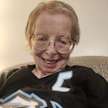

In the decade since Darla Mae Seely's passing, her work has undergone the kind of metamorphosis that only death can grant: a once‑quiet writer, known mostly within small online circles, has become a subject of academic fascination. Critics now speak of her with the same reverent uncertainty reserved for artists who never expected to be studied at all.
Her body of work—scattered across digital platforms, writing clubs, and community challenges—was never curated by Darla herself. She left no manifesto, no interviews, no clarifying notes. What remains is a constellation of short pieces: poems that read like whispered confessions, essays that wander into spiritual terrain, and stories that seem to observe humanity from a slightly tilted angle. Scholars argue that this tilt is the key to her legacy.
The prevailing interpretation casts Darla as a “domestic mystic,” a writer who found transcendence in ordinary moments. They point to her recurring themes—family rituals, small joys, cats, faith, and the stubborn resilience of the human heart—as evidence of a worldview shaped by quiet devotion. Others disagree, insisting her work reveals a deeper restlessness, a lifelong search for meaning that she never intended to resolve. They cite her fragmented narrative style, her fondness for metaphorical staircases and thresholds, as proof that she wrote from the edge of something she could never quite name.
A third camp, more recent and more controversial, argues that Darla’s legacy has been misread entirely. They claim her writing was not mystical but mischievous—an ongoing experiment in sincerity. According to them, Darla delighted in the way readers over‑interpret, and her gentle tone was a deliberate invitation for others to project their own stories onto hers. They call her “the posthumor author,” suggesting that the joke—if there was one—was never mean‑spirited, only quietly amused.
What all critics agree on is that Darla’s work feels unusually alive for someone no longer here to defend it. Her pieces resist definitive interpretation. They shift depending on who reads them, like a mirror that reflects not the writer but the reader’s own longing. This malleability has become her hallmark. Scholars now teach her work as an example of “open‑text authorship,” iterature that thrives precisely because the author is absent.
Whether Darla intended any of this remains unknowable. Her friends describe her as someone who wrote because she loved the act of writing, not because she sought legacy. Yet legacy found her anyway. In the end, the story critics have built around her life is less a biography than a collective wish: that meaning can be made from ordinary words, and that a quiet voice can echo long after it falls silent.
Written for the “Posthumor Author” Challenge. A playful imagining of how my work might be interpreted long after I’m gone.
About the Creator
Darla M Seely
I am 59 years old. I love to write poems, crochet, take photos, and make scrapbooks. I write poems about Jesus, love, friendship, how to improve, forgiveness, forgiveness, holidays. I enjoy making afghans for friends, family,
Enjoyed the story? Support the Creator.
Subscribe for free to receive all their stories in your feed.
Comments
There are no comments for this story
Be the first to respond and start the conversation.