Vocal
How AI Voice Isolation Technology Is Changing Audio Creation
Audio editing once required specialized software, technical training, and hours of manual work. Tasks like removing background noise, separating vocals from music, or cleaning up recorded dialogue were often limited to professional studios. In recent years, however, AI-powered voice isolation tools have changed that process significantly.
By Abbasi Publisher6 months ago in Writers
Why Young Indians Are Choosing Freelancing. AI-Generated.
In the last few years, freelancing has become one of the fastest-growing career choices among young Indians. From college students and fresh graduates to experienced professionals, many people are now moving away from traditional 9-to-5 jobs and choosing independent work instead. The rise of the internet, digital platforms, remote work culture, and changing career priorities have all played a major role in this shift.
By Khushi Verma6 months ago in Writers
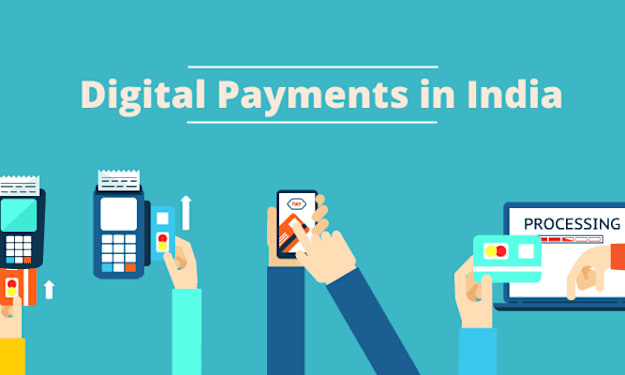
The Future of Digital Payments in India. AI-Generated.
India is experiencing a major transformation in the way people handle money. From roadside tea stalls to large shopping malls, digital payments have become a part of everyday life. Over the last few years, the country has rapidly moved toward a cashless economy, driven by smartphones, affordable internet, government initiatives, and innovative fintech platforms.
By Amit Parekar6 months ago in Writers
Vocal Is Over-Saturated Now!! - -diagnose the problem
First, I never thought I’d have to write a piece like this. But hey, from what I’ve seen, pointing out problems isn’t just accepted, it’s rewarded. And I really appreciate that, if you’re a founder or investor reading.
By Gabriel B. Shames6 months ago in Writers
How Luxury Transportation Is Changing Corporate Mobility in Columbus
Corporate travel has evolved far beyond simply getting from one destination to another. In cities like Columbus, where industries such as healthcare, finance, manufacturing, and technology continue to expand, transportation has become part of the overall professional experience. Executives and business travelers increasingly expect reliability, organization, and comfort throughout their schedules, especially when time-sensitive meetings and client interactions are involved.
By Abbasi Publisher6 months ago in Writers
Why Aviation-Grade Hydraulic Fluids and Lubricants Are Essential for Aircraft Performance. AI-Generated.
Aircraft performance depends on much more than engines and advanced avionics. Behind every safe and efficient flight are carefully maintained systems that require proper lubrication and hydraulic support to operate smoothly. Aviation-grade hydraulic fluids and lubricants play a major role in protecting aircraft components, improving system efficiency, and ensuring long-term operational reliability.
By Beckett Dowhan6 months ago in Writers
How Car Wrapping Protects Your Vehicle’s Resale Value
In 2026, vehicle owners are thinking beyond appearance alone when customising their cars. More Australians are now focusing on long-term protection, maintenance, and resale value when making decisions about their vehicles. As the used car market becomes increasingly competitive, keeping a vehicle in excellent condition has become more important than ever.
By jimmie Lotte6 months ago in Writers
Why Car Wrapping Is Becoming More Popular Than Paint in 2026
Vehicle customisation has changed significantly in recent years, and in 2026 more drivers are choosing vinyl wraps over traditional paint jobs. What was once considered a niche automotive trend has now become a mainstream solution for both personal styling and business branding.
By jimmie Lotte6 months ago in Writers
Authorship vs Refinement
Much of the confusion surrounding artificial intelligence and writing comes from a failure to distinguish between two fundamentally different acts: originating ideas and refining their expression. These acts are often treated as interchangeable, as though whoever touches the final form must also be the source of the thought itself. That assumption does not reflect how writing has ever worked, nor does it reflect how human thinking actually unfolds.
By Peter Thwing - Host of the FST Podcast6 months ago in Writers
Expression vs Distortion
One of the most persistent frustrations in communication is the gap between what a person intends to say and what others actually receive. This gap exists regardless of intelligence, sincerity, conviction, or depth of understanding. Someone can hold an idea with clarity internally, yet watch it arrive distorted, flattened, reduced, or misinterpreted once it is expressed. The failure is often blamed on the idea itself, when the deeper issue is frequently translation.
By Peter Thwing - Host of the FST Podcast6 months ago in Writers
Productivity as Preservation
Productivity is often framed as the visible accumulation of outcomes. Words written, posts published, episodes released, metrics improved, engagement gained, and projects completed become the evidence that work has happened. Under this framing, anything that does not immediately result in external output is treated as inefficiency, distraction, avoidance, or delay. The productive person is assumed to be the person who can show visible results.
By Peter Thwing - Host of the FST Podcast6 months ago in Writers
I Realized My Phone Was Making Me Miserable.
I didn’t notice it happening at first. That’s the scary thing about habits like this. They don’t arrive dramatically. They slowly become normal until one day you realize something feels wrong inside you, but you can’t fully explain why. For me, it started with feeling constantly tired. Not physically tired — mentally tired. My attention span was terrible. I couldn’t focus on anything for long anymore. I’d open my phone for “just a minute,” then suddenly an hour disappeared into scrolling, random videos, notifications, and content I barely even remembered afterward. And somehow, even after all that entertainment, I still felt empty. That confused me for a long time. How could I consume so much content every day and still feel bored with my life? Eventually, I started paying attention to my routine. The first thing I did every morning was check my phone. Before my brain even fully woke up, I was already absorbing notifications, videos, messages, and opinions from hundreds of strangers online. Then throughout the day, I kept reaching for it constantly. Waiting for food? Phone. Feeling stressed? Phone. Awkward silence? Phone. Trying to avoid my thoughts? Definitely phone. At night, it got even worse. I’d promise myself I was going to sleep early, but somehow I always ended up trapped in endless scrolling at 1 or 2 AM. The worst part was that I wasn’t even enjoying it anymore. I was just doing it automatically, like my brain needed constant stimulation to feel normal. One night, I looked at my screen time and genuinely felt embarrassed. Hours and hours every single day. And when I thought about where all that time was going, I honestly couldn’t remember anything meaningful I gained from it. That moment hit me harder than I expected. Because deep down, I knew my phone wasn’t just distracting me anymore. It was affecting my mood, my focus, my sleep, and even the way I experienced life. I stopped being present. Even during conversations, my attention felt divided. Watching a movie wasn’t enough anymore — I needed another screen in my hand too. Quiet moments started feeling uncomfortable because my brain became addicted to constant noise. And the more connected I became online, the more disconnected I felt from myself. That’s what nobody really talks about. Phones don’t just take your time. Sometimes they slowly take your peace too. After realizing all this, I decided to make some small changes. Nothing extreme. I didn’t throw my phone away or disappear from the internet completely. I just started setting boundaries. No phone for the first hour after waking up. No scrolling before bed. I deleted apps that made me lose track of time. I started going outside more without headphones or constant stimulation. At first, it felt incredibly boring. Honestly, I didn’t realize how dependent I had become on entertainment until silence returned. Simple things like sitting alone with my thoughts felt uncomfortable because my brain was so used to distraction. But after a while, something surprising happened. My mind became quieter. I started noticing little things again. Music sounded better. Conversations felt more real. Walks outside didn’t feel pointless anymore. I could actually focus on tasks without checking my phone every few minutes. Most importantly, I stopped feeling mentally overwhelmed all the time. That constant restless feeling slowly started disappearing. And I realized something important: I wasn’t actually addicted to my phone itself. I was addicted to escaping reality. Every scroll gave me temporary relief from boredom, stress, anxiety, or overthinking. My phone became a way to avoid being fully present in my own life. But the problem with constant escape is that eventually you stop living properly. You exist, but your attention is always somewhere else. Looking back now, I honestly think one of the biggest struggles of our generation is protecting our attention. Everywhere we look, something is fighting for our focus. Apps are designed to keep us scrolling longer, clicking more, and coming back constantly. And if we’re not careful, years of our lives can quietly disappear into screens without us even noticing. I still use my phone. I still waste time sometimes. I’m not pretending I became some perfectly disciplined person overnight. But now I’m more aware. And awareness changes everything. Because once you realize something is making you miserable, it becomes harder to ignore it. Sometimes I wonder how many people feel unhappy, exhausted, or mentally lost without realizing how much of it is connected to the constant noise they consume every day. Maybe the problem isn’t that life became worse. Maybe we just stopped being fully present enough to enjoy it. Did you like this feature?
By Matiullah k6 months ago in Writers