Process
Journey 104: Romanticising My Life: Making Everyday Feel Beautiful
Do you know that peaceful feeling when you’re detached—not in a way that makes you distant, but in a way that keeps you grounded? When you’re focused on your own path, working on your goals, and appreciating life’s lessons without constantly seeking external validation? That feeling is priceless, and for me, it became a turning point. That was the shift in my life that took my self-love journey to another level. It wasn’t an overnight change, but a slow, intentional process. The moment I stopped waiting for approval and started validating myself, everything became lighter. I no longer carried the weight of perfectionism on my shoulders, and suddenly, life felt more enjoyable. If you haven’t yet, check out my previous post on how I finally let go of the fear of imperfection and external validation. That realization was the foundation for everything that followed. Then something beautiful happened—I started seeing my everyday moments in a new light. ✨ My skincare routine wasn’t just about cleansing; it became a ritual of self-care, a moment to appreciate my reflection and take care of my skin with love. ✨ Rewarding myself after stressful exams wasn’t just an indulgence; it was a form of self-appreciation, a way of reminding myself that I deserved kindness from myself. ✨ Giving my honest opinion without overthinking? That felt like true freedom—the kind that comes when you stop worrying about how others might interpret your words and just express yourself authentically. I stopped filtering my choices through the lens of other people’s opinions. Instead, I asked myself: Does this feel right to me? And if the answer was yes, that was all the validation I needed. I started dressing for myself—not for compliments, not to fit into trends, but because I loved how certain styles made me feel. My self-love practices, like journaling and affirmations, weren’t just occasional habits anymore; they became my lifestyle, woven seamlessly into my day. Waking up, saying my morning prayers, and reminding myself that everything happening today is working for my highest good—it all became a part of my daily rhythm. Three Ways I Romanticize My Life Every Day: 1🌱 Shifting My Mindset: Everything Works in My Favor Letting go of a victim mentality was one of the most powerful shifts I made. I started to believe—deeply—that life wasn’t happening to me but for me. Every challenge, no matter how frustrating or painful in the moment, had something valuable to teach me. It wasn’t always easy. There were moments of self-doubt, but even in those, I reminded myself that they would pass. And when they did, I would emerge wiser, stronger, and more in alignment with the person I was becoming. 2🌱 Practicing Healthy Detachment Being detached doesn’t mean being cold or disconnected from people. For me, it means being so connected with myself that I don’t need external validation to feel secure. I can appreciate love and friendships, but I also know that my happiness doesn’t depend on them. I welcome new people and experiences, but my personal boundaries? They’re non-negotiable. I no longer overextend myself just to be liked. I protect my peace, and in doing so, I show up more fully in the relationships that truly matter. 3.🌱 Doing What I Love—Unapologetically This was a game-changer for me. There was a time when I hesitated to do the things I loved because I worried too much about what others might think. Now? I don’t hold back. If something brings me joy, aligns with my values, and makes me feel more alive, I do it—without second-guessing. I indulge in beautiful scents, not because I crave compliments, but because fragrance is a form of self-expression for me. It’s a love language I practice with myself. I step out in the sun, feeling radiant, knowing I don’t need anyone to tell me I’m glowing—I already know. The little things truly shift your mindset. They turn everyday routines into meaningful rituals. They transform self-care from a task into a way of life. Now, I’d love to hear from you! How do you romanticize your self-love journey? Drop a 💓 if this resonates with you, and let’s chat in the comments.
By the.selfcare.advocate2 years ago in Writers
Top 5 Tips for Caring Your Cherry Tree
There’s nothing quite like the beauty and bounty of a cherry tree in full bloom. Whether you’re a seasoned gardener or a first-time tree planter, ensuring your cherry tree care is top-notch can make all the difference in the health and productivity of your tree. From selecting the perfect spot to protecting against pests, this guide will walk you through the essential steps to keep your cherry tree thriving. Discover practical, easy-to-follow tips that will help you cultivate a lush, fruit-filled cherry tree right in your own backyard. Let’s dive in!
By Reliable Tree Surgeon Northampton2 years ago in Writers
THE BENEFITS OF WRITING IN DIFFERENT GENRES . AI-Generated.
As a writer, I've always been drawn to the idea of writing in different genres. At first, it was a daunting prospect how could I possibly master multiple styles and voices? But as I began to experiment with different genres, I discovered the numerous benefits that came with it. My journey began with fantasy, a genre I'd always been passionate about. I spent years honing my craft, writing epic novels and short stories that transported readers to magical worlds. But as time went on, I began to feel a little stifled. I wanted to challenge myself, to push beyond the boundaries of fantasy and explore new styles and voices. That's when I turned to science fiction. I'd always been fascinated by the genre, with its emphasis on technology, space exploration and social commentary. I threw myself into the world of science, reading everything I could get my hands on and writing stories that explored the possibilities of the future. The experience was exhilarating. I found that writing in a new genre forced me to think differently, to approach storytelling from a fresh perspective. I had to consider new themes, new characters and new worlds, which in turn helped me to grow as a writer. But the benefits didn't stop there. As I continued to write in different genres, I discovered that each one informed and influenced the others. My fantasy writing became more nuanced and complex, thanks to the scientific and technological concepts I'd explored in sci-fi. And my sci-fi writing became more character-driven and emotionally resonant, thanks to the emphasis on character development in fantasy. I also found that writing in different genres helped me to develop a unique voice and style. By experimenting with different narrative techniques, tone and language, I was able to craft a distinctive voice that set me apart from other writers. Of course, there were also challenges. Writing in different genres required a significant amount of research and world-building. I had to immerse myself in new subjects, from science and technology to history and culture. And I had to be careful not to confuse my readers, ensuring that each story was consistent within its own genre. Despite these challenges, the benefits of writing in different genres far outweighed the costs. I found that it helped me to stay fresh and excited about my writing, to continually challenge myself and push beyond my comfort zone. And it's not just me. Many writers have found success by writing in multiple genres. Authors like Neil Gaiman, who has written everything from fantasy to horror to children's literature, are a testament to the power of genre-hopping. The Benefits of Writing in Different Genres: 1. Improved creativity: Writing in different genres forces you to think outside the box and explore new ideas. 2. Increased versatility: By writing in multiple genres, you can develop a unique voice and style that sets you apart from other writers. 3. Enhanced research skills: Writing in different genres requires research and world-building, which can help you develop your critical thinking and analytical skills. 4. Broader audience appeal: By writing in multiple genres, you can appeal to a wider range of readers and increase your chances of success. 5. Personal growth: Writing in different genres can help you develop as a writer and a person, forcing you to confront new challenges and push beyond your comfort zone. Tips for Writing in Different Genres: 1. Start with what you know: Begin by writing in a genre that you're familiar with, and then gradually experiment with new genres. 2. Read widely: Read books and stories in different genres to get a feel for the tone, style and conventions of each genre. 3. Do your research: Research the genre, its conventions, and its audience to ensure that your writing is authentic and engaging. 4. Be open to feedback: Be willing to receive feedback from readers and other writers, and use it to improve your writing. 5. Have fun: Most importantly, have fun! Writing in different genres is a great way to challenge yourself and explore new ideas. By embracing the power of genre-hopping, writers can unlock new creative possibilities, develop their skills and appeal to a wider range of readers. So why not give it a try? You never know where it might take you. All this improved my writing skills but also helped me to develop a unique voice and style. I was no longer confined to a single genre and I could experiment with different narrative techniques, tone and language. One of the most significant benefits of writing in different genres was the ability to tap into different emotions and experiences. When I wrote in the fantasy genre, I could explore themes of magic, wonder and adventure. When I wrote in the science fiction genre, I could explore themes of technology, space exploration, and social commentary. By writing in different genres, I could access different parts of myself and tap into different emotions and experiences. It was like having multiple personalities, each with its own unique voice and perspective. The Challenges of Genre-Hopping: 1. Confusing readers: One of the biggest challenges of writing in different genres is confusing readers. Readers may expect a certain type of story or tone from a particular genre and if you don't deliver, they may be disappointed. 2. Establishing credibility: When you write in multiple genres, it can be challenging to establish credibility with readers. Readers may question your expertise or authority in a particular genre. 3. Managing multiple projects: Writing in different genres can be challenging because you have to manage multiple projects simultaneously. You have to keep track of different characters, plotlines, and world-building elements. Despite these challenges, I found that the benefits of writing in different genres far outweighed the costs. By writing in multiple genres, I could challenge myself, develop my skills and appeal to a wider range of readers. Tips for Overcoming the Challenges of Genre-Hopping: 1. Be clear about your genre: Make it clear to readers what genre they can expect from your writing. 2. Establish your credibility: Establish your credibility as a writer by showcasing your expertise and authority in a particular genre. 3. Use a pseudonym: Consider using a pseudonym when writing in different genres to avoid confusing readers. 4. Keep track of your projects: Use tools like spreadsheets or writing software to keep track of your multiple projects. By following these tips and being open to the challenges and opportunities of genre-hopping, writers can unlock new creative possibilities, develop their skills, and appeal to a wider range of readers. Conclusion: Writing in different genres has been a liberating experience for me as a writer. It has allowed me to challenge myself, develop my skills and appeal to a wider range of readers. While there are challenges to genre-hopping, the benefits far outweigh the costs. If you're a writer looking to challenge yourself and develop your skills, I encourage you to try writing in different genres. You never know where it might take you.
By Henry Lucy2 years ago in Writers
THE ART OF WORLD BUILDING . AI-Generated.
As a writer, I've always been fascinated by the art of world building. There's something magical about creating an entirely new universe, complete with its own geography, history and mythology. My journey into world building began with a simple idea, a sprawling, fiction fantasy series set in a world to inspire readers. I had a rough outline of stories, but I knew that I needed to flesh out the world itself before I could begin writing. I started by sketching out a rough map of the world, including the continents, oceans and major landmarks. As I worked, I began to think about the geology and climate of each stories am writing, and how these stories would shape the cultures and societies of today. Next, I turned my attention to the history of the world. I wanted to create a rich, complex past that would inform the present day conflicts and politics of the story. I spent hours researching different historical periods and cultures, looking for inspiration and ideas. As I was more intense into the world building process, I began to realize just how intricate and interconnected every aspect of the world was. The geography influenced the climate, which in turn shaped the cultures and societies. The history of the world informed the present-day politics and conflicts, which were themselves influenced by the cultures and societies. It was a dizzying, overwhelming process at times, but it was also exhilarating. I felt like I was uncovering secrets and discovering hidden treasures with every new revelation. One of the most important things I learned during this process was the importance of consistency. I had to keep track of countless details, from the names of characters and places to the intricacies of the world's magic system. I created spreadsheets and timelines and even developed a complex system of notation to keep everything straight. As I worked, I also began to think about the mythology and folklore of the world. I wanted to create a rich, vibrant cultural heritage that would add depth and texture to the stories. I drew inspiration from real-world mythologies and folklores as well as from literature and art. The result of all this hard work was a world that felt alive, vibrant and real. I had created stories that was at once familiar and yet utterly unique, with its own rhythms and cadences. As I began to write the stories ,then notice that the world-building process had given me a tremendous advantage. I knew the world inside and out, and I could draw upon a deep well of knowledge and inspiration to bring the stories to life. The art of world-building is a complex, challenging process, but it's also incredibly rewarding. By creating a rich, detailed and immersive world, writers can transport their readers to new and exciting realms and inspire them to imagine and explore. Whether you're writing fantasy, science fiction or any other genre, world-building is an essential part of the writing process. It's a journey that requires patience, persistence and creativity, but the results and out comes are truly amazing and encouraging. Tips for Effective World-Building: 1. Start small: Begin with a simple idea or concept, and gradually build upon it. 2. Be consistent: Keep track of details and ensure that the world is consistent and logical. 3. Draw inspiration: Look to real-world cultures, histories, and mythologies for inspiration. 4. Create a rich history: Develop a complex and nuanced history for the world. 5. Consider the mythology: Develop a rich cultural heritage, including mythology and folklore. By following these tips and dedicating yourself to the art of world-building, you can create a rich, immersive, and unforgettable world that will transport your readers to new and exciting realms. As days goes by in writing, I found that the world-building process was ongoing. New ideas and inspirations would strike me, and I would incorporate them into the world. I would also discover inconsistencies and contradictions and I would work to resolve them. One of the most important things I learned during this process was the importance of flexibility. I had to be willing to change and adapt the world as the story evolved. This wasn't always easy, as I had become deeply invested in the world and its inhabitants. However, I knew that the world had to serve the story, not the other way around. So, I worked to remain open and flexible, willing to make changes and adjustments as needed. Another important aspect of world-building is the creation of a sense of depth and history. I wanted my stories to feel like it had been around for thousands of years, with its own unique cultures, traditions and mythologies. To achieve this, I worked to create a rich and detailed history for the world. I developed timelines, genealogies and historical events that shaped the world and its inhabitants. I also worked to create a sense of consistency and logic within the world. I developed rules and laws that governed the world's magic, technology and cultures. This helped to create a sense of authenticity and immersion as the world felt like a real and lived-in place. As I neared the end of the writing process, I felt a sense of pride and accomplishment. I had created a rich, immersive and unforgettable world that would transport my readers to new and exciting realms. The art of world-building is a complex and challenging process, but it's also incredibly rewarding. By creating a rich, detailed and immersive world, writers can transport their readers to new and exciting realms, and inspire them to imagine and explore. Whether you're writing fantasy, science fiction or any other genre, world-building is an essential part of the writing process. It's a journey that requires patience, persistence and creativity, but the results are well worth the effort. Common Mistakes to Avoid in World-Building: 1. Overly complex world: Avoid creating a world that is too complex or convoluted. 2. Inconsistent rules: Ensure that the rules and laws of the world are consistent and logical. 3. Lack of depth: Avoid creating a world that feels shallow or lacking in depth. 4. Too much information: Avoid overwhelming the reader with too much information about the world. 5. Inconsistent tone: Ensure that the tone of the world-building is consistent with the tone of the story. By avoiding these common mistakes and dedicating yourself to the art of world-building, you can create a rich, immersive and unforgettable world that will transport your readers to new and exciting realms.
By Henry Lucy2 years ago in Writers
I write
I’m a writer. That’s what I do. That’s what I tell everyone. Well, most everyone. Apparently there are some days I forget to tell myself. As writers we are supposed to write, but there are days I will go without writing. And I can feel it. I get so caught up in the minutia of life and all the “stuff” I have to do that I just somehow forget to write.
By Traci E. Langston2 years ago in Writers
The Neighbor’s Secret: A Betrayal Uncovered
I thought my neighbors Sarah and David were the ideal couple. They had been together over ten years, always laughing, always smiling. Theirs was a life of dreams from the outside—two successful careers, a beautiful home, and love that never seemed to falter. But little did I know, appearances would prove to be deceptive.
By Taviii🇨🇦♐️2 years ago in Writers
How Canadian Apps and Creators Can Earn Money from Social Media
Social media has become a major source of income for creators and app developers worldwide. While most social media platforms are U.S.-based, Canadians also have opportunities to earn money online. Whether you’re a content creator, app developer, or business owner, there are multiple ways to generate income through social media in Canada.
By Taviii🇨🇦♐️2 years ago in Writers
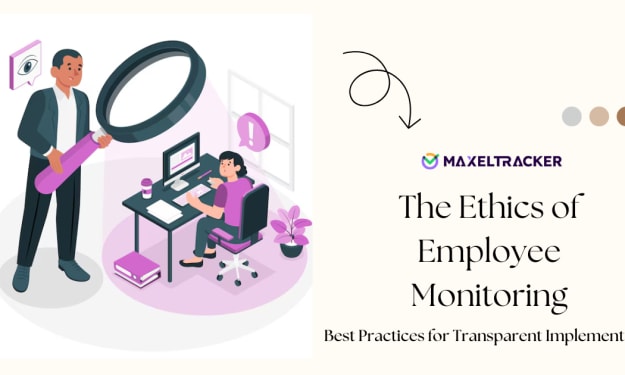
The Ethics of Employee Monitoring: Best Practices for Transparent Implementation
As workplaces become more distributed, businesses are increasingly adopting employee monitoring—whether for remote or in-office teams. While monitoring can spark discussions about privacy, when used responsibly, it enhances transparency, improves efficiency, and supports fair performance evaluations.
By Colin Brown2 years ago in Writers
Future Trends in Outsourcing Manpower Solutions
For many centuries it has served the businesses. Economic operations run as the cost-cutting measures through outsourcing manpower consultancy in Gurgaon, as well as hiring talented specialized talents, have become very old, long ago. Advent of definitional changes in time due to the advancement of technology, economic scenarios globally prevailing today, and changing business needs are being felt, not only here but elsewhere in this time. Here are a few major trends emerging in the manpower solutions arena, which stand to define how companies will engage with outsourced manpower in the new future. Trends like these, will most likely be important in the business's existence in this competitive modern, fast-changing marketplace.
By RAYMOON GROUP2 years ago in Writers