Community
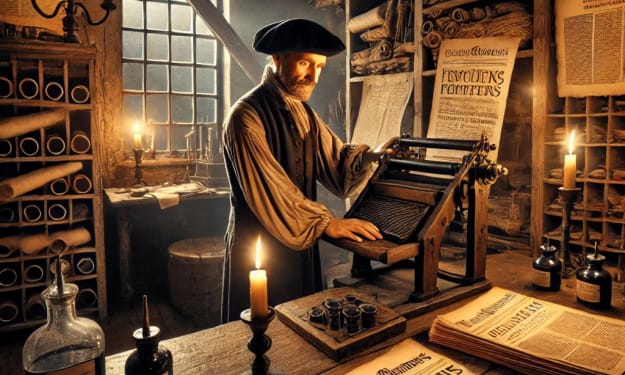
The Birth of the First Newspaper: How One Printer Changed the Course of History. AI-Generated.
The streets of 17th-century Strasbourg were alive with merchants haggling, poets reciting, and scholars debating in candle-lit taverns. News traveled slowly—by word of mouth, by carefully penned letters, or by town criers shouting proclamations from wooden platforms. But among the bustling crowds, one man saw the potential for something greater, something revolutionary: a printed newspaper.
By Ahmet Kıvanç Demirkıran2 years ago in Writers
HOME PRODUCTS AS ALTERNATIVES FOR LAUNDRY DETERGENTS
It is widely acknowledged that regular laundering of clothing is crucial; however, selecting the appropriate detergent for effective cleaning is a more complex matter. Many individuals have valid concerns regarding the use of commercial laundry detergents. One significant issue is the financial burden they impose, particularly for larger households that may consume detergent at a rapid rate, making it a relatively expensive household item. Additionally, there are pressing health and environmental issues to consider. Commercial detergents often contain harsh chemicals and toxins, including phenols and synthetic surfactants. Individuals with sensitive skin or allergies may experience adverse reactions from skin contact with these detergents, as well as from inhaling laundry powders. Furthermore, the environmental impact of commercial laundry detergents can be significant, as the phosphates found in many formulations can lead to algal blooms in natural water bodies. As indicated by a professional laundry service in Khalifa City, one can prepare a homemade laundry detergent that delivers similar cleaning power while avoiding the synthetic fragrances and chemicals often associated with commercial alternatives.
By Golden Class Laundry2 years ago in Writers
SURVIVING THE BYBIT HACK HOW CRYPTO RECOVERY CONSULTANT SECURE MY ASSETS
It was the kind of morning that left my heart pounding in my chest. The sun had barely risen, but already, the weight of the world seemed to hang heavy in the air. My phone buzzed incessantly, flashing with a series of alerts—emails, messages, social media notifications—all talking about one thing: Bybit had been hacked. North Korean hackers, the reports said, had breached the exchange, and the total losses were staggering—over 1.5 billion dollars worth of cryptocurrency, Ethereum, to be precise. As I stared at the notifications, a wave of panic washed over me. I had been an avid Ethereum investor for years, having invested a substantial portion of my savings in the digital asset. The idea that my hard-earned money could vanish in an instant was unbearable. My stomach churned as I read the news, realizing that I was one of the many affected by the hack. The exchange, which had once been a trusted platform for me, was now at the mercy of cybercriminals. I tried to steady myself, reminding myself that panicking wouldn’t help. I needed to think logically, to find a way to protect my investment. My mind raced as I searched online for any solutions or advice on how to mitigate the damage. That’s when I stumbled upon a website that seemed to offer a glimmer of hope. A company called *Crypto Recovery Consultant* claimed to specialize in helping individuals recover assets lost in hacks and breaches, as well as securing cryptocurrency wallets. Their website boasted testimonials from other investors who had faced similar situations, and they promised to assist with incidents exactly like the one I was going through. Skeptical but desperate, I immediately reached out to the company, hoping for a miracle. I had no idea if they were legitimate or if I was simply falling for another scam, but at that moment, I felt like I had nothing to lose. To my surprise, within minutes, I received a call from a representative. The voice on the other end was calm, professional, and reassuring. He explained that their company had extensive experience in securing wallets that had been compromised during massive hacks, like the one Bybit was currently facing. They had helped hundreds of investors protect their assets in the past, and they specialized in implementing advanced security measures to ensure that even in the most dangerous of circumstances, funds could be safeguarded. I was still a bit hesitant, but my desperation outweighed my doubts. The representative walked me through the process of securing my wallet. First, he recommended moving my Ethereum to a much more secure wallet, one that could not be easily accessed by unauthorized users. He emphasized the importance of setting up cold storage for my coins, away from the online vulnerabilities that the hack had exposed. I had never heard of cold storage before, but the representative explained that it was one of the most secure ways to store cryptocurrency, as it was completely offline and therefore immune to most hacks. The process was more complicated than I had anticipated, but the *Crypto Recovery Consultant* team guided me every step of the way. They had a clear plan in place, one that involved creating a new, highly secure wallet and transferring my Ethereum to it. To ensure that even if the hackers somehow obtained my private keys, they wouldn’t be able to access the funds, the representative set up a multi-signature authentication process. This meant that multiple approvals would be required to access the wallet, making it significantly harder for anyone to steal the funds. The entire process took several hours, but the *Crypto Recovery Consultant* team worked tirelessly, providing support and answering all of my questions along the way. They didn’t just help me secure my assets—they educated me on the best practices for safeguarding cryptocurrency in the future. They showed me how to use advanced encryption methods and set up additional layers of protection, ensuring that my assets would remain safe from future attacks. By the time the process was complete, I felt an enormous weight lift from my shoulders. My Ethereum was no longer exposed to the hackers, who were still trying to exploit the Bybit breach. Thanks to the expertise and swift action of the *Crypto Recovery Consultant* team, my coins were secure in a wallet that was practically impenetrable. I had never felt so relieved. I had feared the worst—that I would lose everything—but now, I could sleep soundly knowing that my investment was safe. The team didn’t stop there. They continued to monitor my wallet, keeping an eye on any suspicious activity and ensuring that no unauthorized access occurred. The peace of mind they provided was priceless. I couldn’t imagine going through this ordeal without their help. Without *Crypto Recovery Consultant*, I would have been left with no way to protect my funds, and I might have lost everything. But thanks to their quick thinking, advanced security measures, and expert guidance, my Ethereum was safe from the grasp of cybercriminals. Now, as I look back on that chaotic morning, I am filled with gratitude for the team that saved my assets. They didn’t just prevent a financial disaster they helped me understand the importance of securing my cryptocurrency in ways I had never considered before. I’ve since taken steps to further protect my investments, implementing additional security measures and keeping a close eye on my digital assets.
By Michael Davenport2 years ago in Writers
Top Book Publishers in Texas: Your Guide to Publishing Success
Texas, a state known for its rich cultural heritage and diverse landscapes, is also home to a thriving literary scene. For aspiring authors looking to break into the world of publishing, book publishers in Texas offer a wealth of opportunities. Whether you're a first-time author or a seasoned writer, choosing the right publisher can be the key to your success. In this guide, we'll explore the top book publishers in Texas, what they offer, and how they can help elevate your writing career.
By Ryder Flint2 years ago in Writers
How to Write Stories That Go Viral on Vocal Media (Proven Strategies!) . AI-Generated.
Writing a story is easy. Writing a story that people want to read—and share—is a craft. Every writer dreams of having their work recognized, appreciated, and widely read. But in a digital world where attention is fleeting, how do you make your story stand out?
By Ahmet Kıvanç Demirkıran2 years ago in Writers
Digital Wallet App Development: A Complete Guide
Digital wallet applications are becoming a valuable tool for businesses and individuals as a result of explosive expansion of digital payments. Business e-wallet app development company is searching for a safe and practical solution to meet the need for cashless transactions. In this article, you all have to know about developing a digital wallet app, including features, costs and benefits.
By Manisha Sharma2 years ago in Writers
Footwear Quality Control order 2024, BIS certification for footwear is mandatory for manufacturers
The Quality Control Order (QCO), which comes into effect from August 1, 2024, requires manufacturers of shoes, sandals and slippers sold in the Indian market to comply with the new quality guidelines of the Bureau of Indian Standards (BIS). The purpose of this new regulation is to improve the quality and safety of footwear products available in the Indian market. According to a DPIIT notification, BIS certification for footwear is mandatory for domestic and foreign manufacturers of Personal Protective Equipment footwear and footwear made of leather, rubber, polymeric materials, or other materials must comply with applicable Indian standards and display the standard mark (ISI mark) approved by the BIS department.
By Jeetin Gupta2 years ago in Writers
The Invisible Chains of Social Isolation. AI-Generated.
As a writer, I've always been drawn to the complexities of the human experience. But when I began to explore the impact of social isolation on mental health, I was struck by the sheer weight of the issue. It's a problem that affects millions of people around the world, and yet it remains shrouded in silence and stigma. I started my journey by speaking to experts in the field of mental health. They told me that social isolation is a growing epidemic, fueled by a combination of factors including urbanization, technology, and changing social norms. The statistics are alarming: according to the World Health Organization, one in five people will experience social isolation at some point in their lives. But what does social isolation actually feel like? To find out, I spoke to people who have experienced it firsthand. Their stories were heartbreaking and haunting, filled with feelings of loneliness, disconnection, and despair. One woman, Sarah, told me about the years she spent caring for her elderly mother. As her mother's condition worsened, Sarah found herself increasingly isolated, unable to leave the house or connect with friends and family. "I felt like I was disappearing," she said. "Like I was losing myself in the process of caring for someone else." Another man, Jack, spoke about the isolation he experienced after losing his job. "I felt like I was a failure," he said. "Like I was worthless without a job to define me." Jack's isolation was exacerbated by the fact that he lived alone, and had few social connections outside of work. As I listened to these stories, I began to realize the profound impact that social isolation can have on mental health. It's not just a matter of feeling lonely or disconnected – social isolation can actually alter the brain's chemistry, leading to changes in mood, cognition, and behavior. *The Science of Social Isolation* To better understand the science behind social isolation, I spoke to neuroscientist Dr. Emma Taylor. "When we're socially isolated, our brains undergo a series of changes that can affect our mental health," she explained. "We see reduced activity in areas of the brain associated with social connection, and increased activity in areas associated with stress and anxiety." Dr. Taylor also told me about the concept of "neuroplasticity" – the brain's ability to adapt and change in response to new experiences. "When we're socially isolated, our brains can become 'stuck' in a state of stress and anxiety," she said. "But with social connection, we can actually rewire our brains to be more resilient and adaptable." *Breaking the Chains of Social Isolation* As I concluded my journey into the world of social isolation, I was struck by the complexity and nuance of the issue. But I was also heartened by the many stories of resilience and hope that I encountered. For Sarah, the woman who cared for her elderly mother, the turning point came when she joined a support group for caregivers. "It was like a weight had been lifted off my shoulders," she said. "I finally felt like I was not alone." For Jack, the man who lost his job, the turning point came when he started volunteering at a local community garden. "It gave me a sense of purpose and connection," he said. "I finally felt like I was part of something bigger than myself." As I reflected on these stories, I realized that breaking the chains of social isolation requires a fundamental shift in how we think about community and connection. It requires us to prioritize relationships and social bonds, and to create spaces and opportunities for people to come together. It's a challenge that requires effort and commitment from all of us – individuals, communities, and societies. But the rewards are well worth it: a world where everyone has the opportunity to thrive, to connect, and to live a life that is rich in meaning and purpose. *A Call to Action* As I conclude my journey into the world of social isolation, I am left with a sense of urgency and responsibility. We must act now to break the chains of social isolation and to create a world where everyone has the opportunity to thrive. We must start by recognizing the importance of social connection in our lives. We must prioritize relationships and community, and create spaces and opportunities for people to come together. We must also acknowledge the role that technology plays in exacerbating social isolation. While technology has the power to connect us, it also has the power to isolate us. We must be mindful of our technology use, and make sure that it is not replacing human connection. Finally, we must take action to support those who are struggling with social isolation. We must create support groups and community programs, and provide resources and services to help people connect with others. *A Future of Connection* As I look to the future, I am filled with hope and optimism. I envision a world where social isolation is a thing of the past, and where everyone has the opportunity to thrive. I see communities coming together to support one another, and to create spaces and opportunities for connection. I see technology being used to facilitate human connection, rather than replace it. And I see individuals taking action to prioritize relationships and community in their lives. I see people from all walks of life coming together to break the chains of social isolation, and to create a world that is more compassionate, empathetic, and connected. *A Final Reflection* As I conclude my journey into the world of social isolation, I am left with a sense of awe and wonder at the complexity and beauty of human connection. I am reminded that social isolation is not just a personal issue, but a societal one. It requires a collective response, and a commitment to creating a world that values and prioritizes human connection. And I am filled with hope and optimism for the future. I know that together, we can break the chains of social isolation, and create a world that is more compassionate, empathetic, and connected.
By Henry Lucy2 years ago in Writers
The Future of Work. AI-Generated.
As a writer, I've always been fascinated by the intersection of technology and humanity. The rise of automation and artificial intelligence (AI) has brought about unprecedented changes in the workforce, and I wanted to explore what this means for the future of work. I started my journey by researching the current state of automation and AI. I was struck by the sheer scope of industries that are being transformed by these technologies. From manufacturing and transportation to healthcare and finance, it seems that no sector is immune to the impact of automation and AI. But what does this mean for workers? I spoke to experts in the field, who painted a complex picture. On the one hand, automation and AI are creating new job opportunities in fields like data science and machine learning. On the other hand, many jobs are being displaced by machines, leaving workers without a clear path forward. I decided to explore this issue further by imagining a future scenario. It's the year 2050, and automation and AI have become ubiquitous. Robots and machines have taken over many jobs, from menial tasks to complex problem-solving. Humans are still needed, but their roles have changed dramatically. In this future, I met a young woman named Maya, who works as a "human-AI collaborator." Her job is to work alongside AI systems to solve complex problems and make decisions. Maya told me that she loves her job, but it's very different from what she expected. She spends most of her time communicating with machines, rather than humans. I also met a man named Jack, who lost his job as a truck driver due to automation. He's now working as a "skills trainer," helping other workers adapt to the changing job market. Jack told me that it's been tough, but he's determined to make a new life for himself. As I continued to explore this future scenario, I realized that the impact of automation and AI on work is not just about jobs – it's about identity. For many people, their work is a central part of who they are. When that's taken away, it can be devastating. But I also saw glimpses of a more positive future. With the rise of automation and AI, people are being freed up to pursue more creative and fulfilling work. I met a group of artists who are using AI-generated tools to create stunning works of art. I met a team of entrepreneurs who are using automation to launch innovative new businesses. As I looked back on my journey, I realized that the future of work is not just about technology – it's about humanity. It's about how we choose to use these powerful tools to create a better world. It's about how we support and empower each other as we navigate this changing landscape. *A New Social Contract* As we move forward into this new era of work, it's clear that we need a new social contract. We need to rethink our assumptions about work, identity, and purpose. We need to create a system that supports and empowers all workers, regardless of their background or circumstances. This will require a fundamental shift in how we think about work and its role in our society. It will require us to prioritize education, training, and lifelong learning, so that workers can adapt to the changing job market. It will require us to create a safety net that supports workers who are displaced by automation and AI. But most importantly, it will require us to recognize the value and dignity of all work, regardless of whether it's done by a human or a machine. We need to create a society that values creativity, empathy, and problem-solving – the skills that are uniquely human. As I finished my journey, I felt a sense of hope and optimism. The future of work is uncertain, but it's also full of possibility. We have the power to shape this future, to create a world that is more just, equitable, and fulfilling for all. As we move forward into this new era of work, it's clear that we need a new social contract. We need to rethink our assumptions about work, identity, and purpose. We need to create a system that supports and empowers all workers, regardless of their background or circumstances. This will require a fundamental shift in how we think about work and its role in our society. It will require us to prioritize education, training, and lifelong learning, so that workers can adapt to the changing job market. It will require us to create a safety net that supports workers who are displaced by automation and AI. But most importantly, it will require us to recognize the value and dignity of all work, regardless of whether it's done by a human or a machine. We need to create a society that values creativity, empathy, and problem-solving – the skills that are uniquely human. *A Future of Possibility* As I looked out at the cityscape, I felt a sense of excitement and possibility. The future of work is uncertain, but it's also full of promise. We have the power to shape this future, to create a world that is more just, equitable, and fulfilling for all. I imagined a future where workers are empowered to pursue their passions, where creativity and innovation are valued above all else. I imagined a future where technology serves humanity, rather than the other way around. As I finished my journey, I felt a sense of hope and optimism. The future of work is not something to be feared, but something to be shaped and created. We have the power to build a better world, a world that is more just, equitable, and fulfilling for all. *A Call to Action* As I reflect on my journey, I am reminded of the importance of taking action. We cannot simply wait for the future to arrive; we must shape it ourselves. To workers, I urge you to take control of your own destiny. Pursue your passions, develop new skills, and advocate for your rights. To business leaders, I urge you to prioritize the well-being of your workers. Invest in education and training, and create a culture that values creativity, empathy, and problem-solving. To policymakers, I urge you to create a safety net that supports workers who are displaced by automation and AI. Invest in education and training programs, and create policies that promote creativity, innovation, and entrepreneurship. Together, we can create a future of work that is more just, equitable, and fulfilling for all. We can build a world that values human creativity, empathy, and problem-solving. We can create a world that is worthy of our highest aspirations.
By Henry Lucy2 years ago in Writers
The Power of Diversity and Inclusion. AI-Generated.
As a writer, I have always been drawn to the power of storytelling to bring people together and to create empathy and understanding. But as I looked around at the literary world, I realized that there was a glaring lack of diversity and inclusion. The stories being told were largely by and about white, able-bodied, and straight individuals, with little representation of people from diverse backgrounds. This realization sparked a sense of urgency within me to do something about it. I began to seek out diverse voices and stories, to read and learn from them, and to amplify them whenever possible. I also started to think more critically about my own writing, asking myself questions like: Who are the characters in my story? What are their backgrounds and experiences? How can I ensure that my story is inclusive and representative of the diversity of the world we live in? As I embarked on this journey, I encountered many challenges and obstacles. I faced criticism and resistance from some who felt that diversity and inclusion were not important, or that they were somehow "lowering the bar" for writers. I also struggled with my own biases and limitations, recognizing that I had much to learn and unlearn. Despite these challenges, I persevered, driven by a deep conviction that diversity and inclusion are essential to creating a more just and equitable society. I sought out mentorship and guidance from writers and editors from diverse backgrounds, and I joined online communities and forums dedicated to promoting diversity and inclusion in literature. One of the most important lessons I learned on this journey was the importance of listening and amplifying the voices of others. As a writer, I had always been focused on my own voice and my own stories, but I came to realize that there were many other voices and stories that needed to be heard. I began to use my platform to amplify the work of writers from diverse backgrounds, and to create opportunities for them to share their stories and perspectives. Another important lesson I learned was the importance of self-reflection and self-criticism. As a writer, I had always been focused on creating stories that were authentic and meaningful, but I came to realize that my own biases and limitations were often reflected in my work. I began to critically examine my own writing, asking myself questions like: What are the power dynamics at play in my story? How are different groups and identities represented? What are the implications of my story for different readers and communities? As I continued on this journey, I began to see the impact that diversity and inclusion can have on literature and on society as a whole. I saw how diverse stories and voices can challenge dominant narratives and stereotypes, and how they can create new opportunities for empathy and understanding. I also saw how diversity and inclusion can enrich and expand the literary canon, introducing new themes, perspectives, and styles that reflect the complexity and diversity of the world we live in. *A Call to Action* As I reflect on my journey as a writer, I am reminded of the importance of diversity and inclusion in literature. I am also reminded of the challenges and obstacles that still exist, and of the need for ongoing effort and commitment to create a more inclusive and representative literary world. To my fellow writers, I urge you to join me on this journey. Seek out diverse voices and stories, and amplify them whenever possible. Critically examine your own writing, asking yourself questions about power dynamics, representation, and impact. Use your platform to create opportunities for writers from diverse backgrounds, and to challenge dominant narratives and stereotypes. To publishers and editors, I urge you to prioritize diversity and inclusion in your publishing practices. Seek out manuscripts from diverse voices, and provide opportunities for writers from underrepresented backgrounds to share their stories and perspectives. To readers, I urge you to seek out diverse stories and voices, and to support writers and publishers who prioritize diversity and inclusion. Use your voice to amplify the work of writers from diverse backgrounds, and to challenge dominant narratives and stereotypes. Together, we can create a more inclusive and representative literary world, one that reflects the complexity and diversity of the world we live in. We can use our words to challenge, to inspire, and to create positive change. We can use our stories to build bridges, to foster empathy and understanding, and to create a more just and equitable society for all. To my fellow writers, I urge you to join me on this journey. Seek out diverse voices and stories, and amplify them whenever possible. Critically examine your own writing, asking yourself questions about power dynamics, representation, and impact. Use your platform to create opportunities for writers from diverse backgrounds, and to challenge dominant narratives and stereotypes. To publishers and editors, I urge you to prioritize diversity and inclusion in your publishing practices. Seek out manuscripts from diverse voices, and provide opportunities for writers from underrepresented backgrounds to share their stories and perspectives. To readers, I urge you to seek out diverse stories and voices, and to support writers and publishers who prioritize diversity and inclusion. Use your voice to amplify the work of writers from diverse backgrounds, and to challenge dominant narratives and stereotypes. *The Power of Storytelling* Storytelling has the power to shape our perceptions, to challenge our assumptions, and to create empathy and understanding. When we hear stories from diverse voices and perspectives, we gain a deeper understanding of the world and its complexities. We begin to see the world from different angles, and to appreciate the richness and diversity of human experience. The power of storytelling is not limited to the stories themselves, but also to the impact they can have on our lives and our communities. When we share stories from diverse voices and perspectives, we create opportunities for connection, empathy, and understanding. We build bridges between communities, and we foster a sense of belonging and inclusivity. *A Brighter Future* As I look to the future, I am filled with hope and optimism. I see a world where diversity and inclusion are valued and celebrated, where stories from diverse voices and perspectives are amplified and shared. I see a world where writers, publishers, and readers work together to create a more inclusive and representative literary world. This is a world where everyone has the opportunity to see themselves reflected in the stories they read. A world where everyone has the chance to share their story, and to be heard. A world where diversity and inclusion are not just buzzwords, but a reality that we live and breathe every day. *Conclusion* The importance of diversity and inclusion in literature cannot be overstated. It is a matter of justice, equity, and humanity. It is a matter of creating a world where everyone has the opportunity to see themselves reflected in the stories they read, and to share their own story with the world. As writers, publishers, and readers, we have the power to create this world. We have the power to amplify diverse voices and perspectives, to challenge dominant narratives and stereotypes, and to create a more inclusive and representative literary world. Let us use this power to create a brighter future, a future where diversity and inclusion are valued and celebrated. Let us use our words to challenge, to inspire, and to create positive change. Let us use our stories to build bridges, to foster empathy and understanding, and to create a more just and equitable society for all.
By Henry Lucy2 years ago in Writers
Sipping Wisdom: A Personal Journey of Meeting My Younger Self Over Coffee
The air permeated a sense of calmness and stillness as I entered the coffee shop ten minutes late, I saw my younger self sitting there reading a book as she was sipping on her favourite caramel ice cream latte. Engrossed in her tale, she scrunched her nose as she did not like a particular stance of the story, I smiled with a serenity-filled eye as I saw the beauty of innocence brimming in her eyes. Hurrying across the table I told her sorry I was late and she said it was no problem. She asked me what I would like to have and I ordered an iced mocha frappuccino as she made room for me to sit alongside her on the table.
By Hridya Sharma2 years ago in Writers