
Retail Intelligence ROI Calculator Template: A Smarter Way to Measure Data-Driven Growth
Measure ROI from retail intelligence with this calculator template. Track data-driven growth, optimize pricing, and improve profit decisions with real insights.

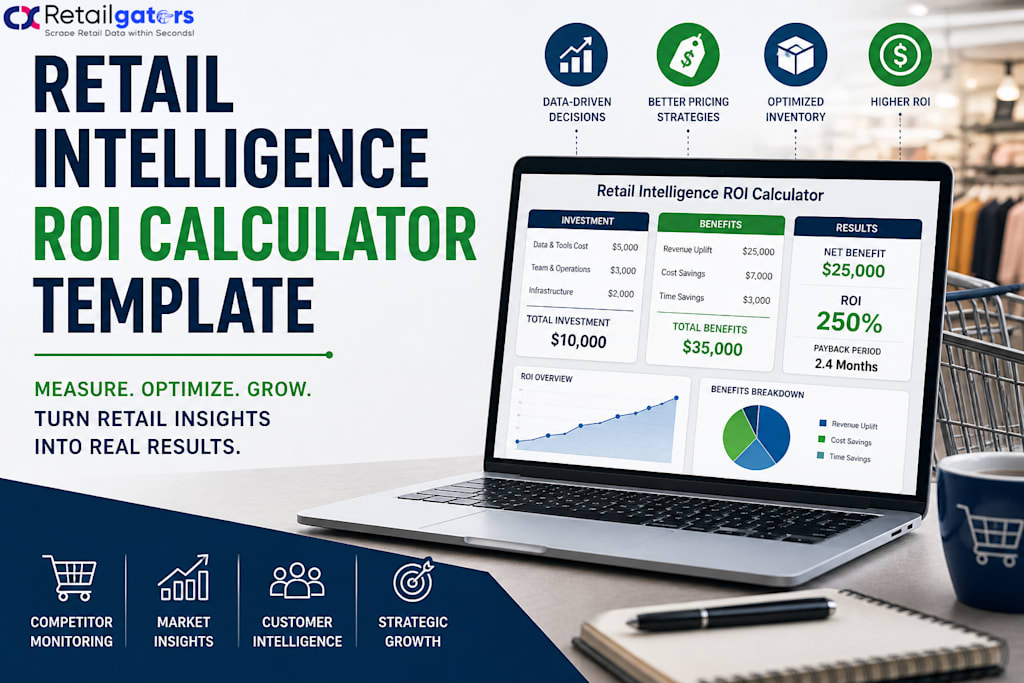
In today’s retail landscape, decisions are no longer based on gut feeling—they’re powered by data. But here’s the real question: how do you measure whether your retail intelligence efforts are actually paying off?
That’s where a Retail Intelligence ROI Calculator Template becomes incredibly useful.
Instead of guessing the impact of pricing insights, competitor monitoring, or customer analytics, this simple yet powerful tool helps you quantify the return on your data investments. Whether you're running an eCommerce store, managing multiple retail outlets, or leading a data-driven enterprise, having a clear ROI framework is no longer optional—it’s essential.
Why Retail Intelligence Needs ROI Measurement
Retail intelligence covers everything from competitor pricing and product trends to customer behavior and demand forecasting. Businesses invest heavily in tools, data pipelines, and analytics teams. However, many struggle to answer one critical question:
“Is this investment actually increasing our revenue or reducing costs?”
Without a structured ROI calculation, it’s easy to lose visibility into:
- Profit improvements from dynamic pricing
- Cost savings from optimized inventory
- Revenue growth from market insights
A retail intelligence ROI calculator bridges that gap by turning insights into measurable outcomes.
What Is a Retail Intelligence ROI Calculator Template?
A Retail Intelligence ROI Calculator Template is a structured framework—usually built in Excel or Google Sheets—that helps businesses calculate the financial return generated from data-driven strategies.
Instead of complex financial modeling, it simplifies the process into key inputs such as:
- Data acquisition costs
- Operational expenses
- Revenue uplift
- Cost reductions
- Time savings
Once these values are entered, the template automatically calculates ROI using a standard formula:
ROI (%) = (Net Benefit / Investment Cost) × 100
This makes it easy for decision-makers to evaluate whether their retail intelligence initiatives are profitable.
Key Components of the Template
A well-designed ROI calculator doesn’t need to be complicated. In fact, the best ones are simple, clear, and actionable. Here are the core sections every template should include:
1. Investment Costs
This section captures all expenses related to retail intelligence:
- Data scraping or API costs
- Subscription tools and platforms
- Team salaries or outsourcing costs
- Infrastructure expenses
2. Revenue Impact
Here, you estimate how data insights contribute to increased sales:
- Improved pricing strategies
- Higher conversion rates
- Better product positioning
3. Cost Savings
Retail intelligence often reduces operational inefficiencies:
- Lower inventory holding costs
- Reduced stockouts or overstocking
- Optimized logistics
4. Time Efficiency
Time is money, especially in retail. Automation and data tools reduce manual work:
- Hours saved in data collection
- Faster decision-making cycles
5. ROI Calculation
The final section combines all inputs to generate:
- Net profit from data initiatives
- ROI percentage
- Payback period
Real-World Example: How ROI Becomes Visible
Let’s say a mid-sized eCommerce brand invests in retail intelligence tools to monitor competitor pricing.
Initial Investment:
- Data tools: $2,000/month
- Team effort: $3,000/month
- Total cost: $5,000/month
Results After Implementation:
- Revenue increase from dynamic pricing: $15,000/month
- Reduced losses from pricing errors: $3,000/month
Net Benefit:
$18,000 – $5,000 = $13,000
ROI:
(13,000 / 5,000) × 100 = 260% ROI
Without a calculator, this impact might go unnoticed. With it, the business clearly sees the value of its investment.
Why Businesses Are Adopting ROI Templates
More retail companies are shifting toward ROI-based decision-making for a reason. It helps them:
Make Data-Driven Investments
Instead of blindly investing in tools, businesses can prioritize strategies that deliver measurable returns.
Align Teams with Business Goals
Marketing, pricing, and analytics teams can work toward a shared goal—profitability.
Justify Budget Allocation
ROI data makes it easier to present a strong case to stakeholders and leadership.
Reduce Risk
By tracking performance continuously, businesses can identify underperforming initiatives early.
How to Build Your Own Retail Intelligence ROI Calculator
Creating your own template doesn’t require advanced technical skills. You can build a practical version in just a few steps:
Step 1: Define Your Objectives
Start by identifying what you want to measure:
- Pricing optimization impact
- Customer acquisition improvements
- Inventory efficiency
Step 2: List All Costs
Include both direct and indirect expenses. Be realistic to ensure accurate calculations.
Step 3: Estimate Gains
Use historical data, pilot tests, or industry benchmarks to estimate revenue improvements and savings.
Step 4: Create a Simple Formula
Set up a spreadsheet with:
- Total Investment
- Total Gains
- ROI calculation
Step 5: Track and Update Regularly
ROI is not static. Update your template monthly or quarterly to reflect real performance.
Common Mistakes to Avoid
While ROI calculators are powerful, they can be misleading if not used correctly. Here are a few pitfalls to watch out for:
- Overestimating gains without data validation
- Ignoring hidden costs like maintenance or integration
- Not updating the template regularly
- Focusing only on short-term results
A balanced and realistic approach ensures accurate insights.
The Future of Retail Intelligence Measurement
As retail becomes more competitive, the need for measurable performance will only increase. Businesses are moving toward:
- Real-time ROI dashboards
- AI-driven forecasting models
- Integrated analytics platforms
However, even with advanced tools, the core principle remains the same: every investment should deliver measurable value.
A simple ROI calculator template is often the first step toward building that discipline.
Final Thoughts
Retail intelligence is no longer just about collecting data—it’s about turning that data into profit. But without a clear way to measure impact, even the best insights can go underutilized.
A Retail Intelligence ROI Calculator Template gives you clarity. It transforms assumptions into numbers, and numbers into actionable decisions.
If you’re investing in data, analytics, or automation, don’t stop at implementation. Measure the results, track performance, and continuously optimize.
Because in retail, the real advantage isn’t just having data—it’s knowing exactly how much that data is worth.
About the Creator
Enjoyed the story? Support the Creator.
Subscribe for free to receive all their stories in your feed.
Comments
There are no comments for this story
Be the first to respond and start the conversation.