
How YouTube Shorts Clipping Campaigns Turn Videos Into Reach
How brands can turn long-form videos, podcasts, webinars, and interviews into short clips that build visibility, trust, and repeat discovery.

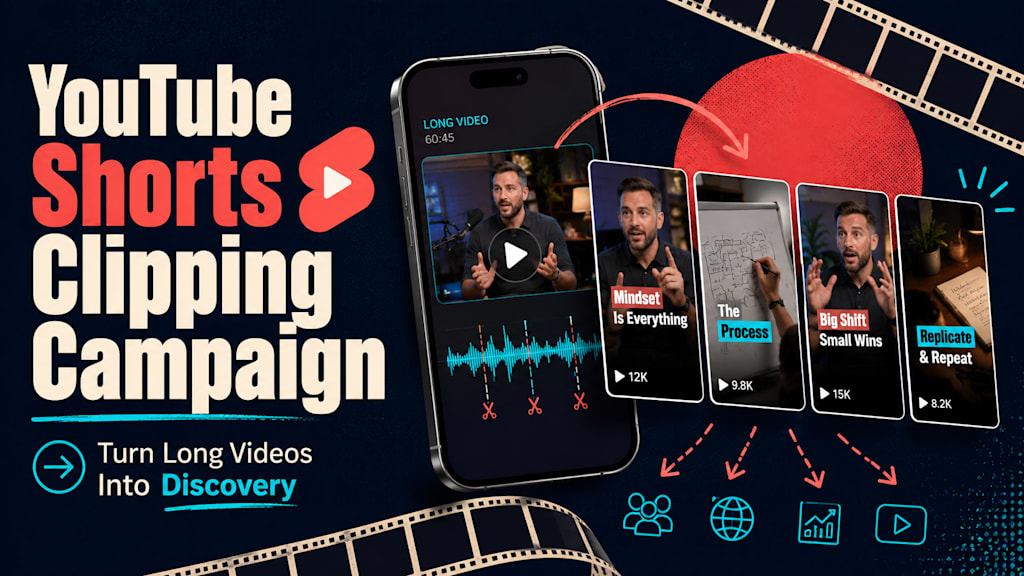
A full YouTube video is more like a content vault than a single finished post. Inside one recording, there may be a strong opening idea, a simple explanation that would help new viewers, a personal story that makes the speaker feel more trustworthy, and a practical lesson that could stand on its own as a short clip. The problem is that many of these moments stay hidden because the full video is the only version the brand publishes.
That is where a Youtube Shorts Clipping Campaign becomes useful. It gives brands a structured way to take long-form videos and turn them into short, focused clips that can reach people who may not be ready to watch the full version yet. Instead of expecting every viewer to commit to a 40-minute podcast or a full webinar, the brand gives them smaller entry points that are easier to watch, easier to understand, and easier to share.
This is not just about making more content from one video. A good clipping campaign is a content distribution system. It helps brands choose the strongest moments, shape them for YouTube Shorts, publish them with consistency, and use performance data to understand what the audience actually cares about. When done properly, it can help long-form content travel further without forcing the team to create something completely new every day.
Why YouTube Shorts Works for Brand Discovery
YouTube Shorts works well because it lowers the barrier between a viewer and a brand’s long-form content. A person may not click on a full interview from a company they do not know, but they may watch a 35-second clip if the opening line speaks to a problem they already recognise. That small moment can be enough to create curiosity.
This makes Shorts useful for brands that already publish podcasts, interviews, webinars, event recordings, educational videos, or founder-led content. The long video provides depth, while the Short creates the first point of contact. The viewer gets a quick sample of the brand’s thinking before deciding whether to watch more.
For example, a 50-minute conversation about content strategy could become several useful Shorts. One clip might explain why long videos often get wasted. Another might show how to choose a better hook. Another could explain why one viral clip is not a real strategy. Another might answer a common question about posting frequency. The full conversation remains valuable, but the short clips give its best ideas more chances to be discovered.
What a YouTube Shorts Clipping Campaign Includes
A proper campaign starts with the source content. The team looks through the long-form video and identifies moments that can stand alone. These are not always the loudest or most dramatic parts of the video. Often, the best clips are the moments where someone explains a useful idea clearly, shares a practical insight, or says something that matches a real audience problem.
A campaign usually includes:
- Reviewing long-form videos for useful moments
- Choosing clips based on audience value
- Editing those clips for vertical viewing
- Adding captions that are easy to read on mobile
- Writing titles that make the point clear
- Publishing clips on a consistent schedule
- Tracking which topics and hooks perform best
- Using the data to guide future videos and clips
The goal is not to upload anything that can be cut into a vertical format. The goal is to create short videos that make sense by themselves. Someone should be able to watch the clip without knowing the full context and still understand the main point.
What Makes a Clip Worth Turning Into a Short
Not every moment from a long video should become a Short. Some parts may be useful inside the full conversation but too slow for short-form viewing. Other moments may sound good to the internal team but may not mean much to a new viewer.
A good Short usually has one clear idea. It should not try to explain the entire video. It should give the viewer one reason to keep watching and one takeaway they can understand quickly.
A moment is usually worth clipping when it has:
- A clear opening thought
- One focused message
- Enough context for someone new
- A useful or interesting takeaway
- Natural delivery from the speaker
- A connection to the brand’s topic or positioning
- A reason for someone to comment, share, save, or watch again
A simple test helps here. Ask whether the clip would make sense to someone who has never seen the brand before. If the answer is yes, it has a better chance of working as a Short. If the viewer would need several minutes of background before the clip makes sense, it may be better left inside the full video.
Why Random Clipping Does Not Build the Same Momentum
Many brands already cut short clips from long videos, but the results often feel inconsistent. One clip is posted today, another appears two weeks later, and then the channel goes quiet. Some clips start too slowly. Some have captions that are hard to read. Some feel like they were chosen because the brand wanted more posts, not because the audience would actually care.
A campaign is different because it has a direction. The brand knows what it wants to be known for, which audience it wants to reach, and what kind of clips support that message.
The difference is clear:
- Random clipping creates uploads.
- A campaign creates useful touchpoints.
- Random clipping fills gaps in the calendar.
- A campaign builds recognition over time.
- Random clipping focuses on output.
- A campaign focuses on audience response.
- Random clipping can feel disconnected.
- A campaign supports a clear content direction.
This matters because viewers rarely remember a brand after one clip. They begin to remember it after seeing useful ideas from the same source again and again. One Short can introduce a topic. Another can answer a question. Another can show proof. Another can reveal how the brand thinks. Together, those clips build familiarity.
How to Format Shorts Without Losing Trust
YouTube Shorts are watched quickly, usually on mobile, and often without much patience from the viewer. That does not mean the clip needs to be loud, rushed, or full of effects. For brand content, clarity matters more than noise.
The clip should start close to the useful part of the conversation. Long greetings, slow setup, and repeated words should be removed. Captions should be readable. The speaker should be framed properly for a vertical screen. The pacing should feel clean, but not so aggressive that the speaker sounds unnatural.
A clean editing process may include:
- Start near the strongest line or idea
- Remove long pauses and filler
- Crop the speaker properly for vertical viewing
- Keep facial expressions and hand gestures visible when useful
- Add captions that are easy to read on mobile
- Keep light branding subtle
- Make sure the clip works without sound
- End with a complete thought or a natural reason to watch more
The best Shorts feel polished without feeling fake. They respect the viewer’s time, but they still sound human. That balance is important because the goal is not only to get views. The goal is to build attention that can turn into trust.
How Titles Help Shorts Perform Better
A good title helps the viewer understand why the clip is worth watching. It also helps the team organise the campaign around clear topics. The title does not need to sound dramatic or exaggerated. It needs to tell people what the clip is about.
Strong titles often focus on a problem, question, mistake, lesson, or outcome.
Examples include:
- Why Your Long Videos Are Not Getting Seen
- How One Podcast Can Become More Content
- The Mistake That Makes Shorts Feel Random
- What Makes a Clip Worth Posting
- Why One Viral Short Is Not a Strategy
A clear title also helps when reviewing performance later. If clips about mistakes get more comments, the brand may create more content around common errors. If question-based titles get better retention, the team may use more direct question formats in future clips.
How Often Brands Should Publish Shorts
There is no perfect publishing schedule for every brand, but consistency matters. A campaign works better when the audience sees useful clips often enough to remember the brand.
A practical starting point is three to five Shorts per week from one strong long-form video. That gives the team enough volume to test different ideas without forcing weak clips into the schedule. If the brand has a deeper content library, the posting rhythm can increase, but quality should still come first.
A simple weekly workflow could look like this:
- Choose one strong long-form video
- Review it for standout moments
- Select six to ten possible clips
- Narrow the list to the best three to five
- Edit each clip for Shorts
- Write clear titles and descriptions
- Publish across the week
- Review performance before choosing the next batch
This rhythm keeps the process manageable. It also helps the brand avoid the common mistake of posting in bursts and then disappearing for weeks.
What to Measure After Publishing
Views are useful, but they do not tell the whole story. A Short can get attention without creating meaningful interest. A stronger campaign looks at several signals together.
Useful metrics include:
- Watch time
- Retention
- Likes
- Comments
- Shares
- Subscribers gained
- Channel visits
- Full video clicks
- Website clicks
- Leads or assisted conversions
Each signal tells the brand something different. Strong retention suggests that the opening and pacing worked. Comments may show that the topic created interest. Shares can show that the idea felt useful or relatable. Subscribers gained can show that viewers wanted more from the channel. Full video clicks suggest that the Short helped move people toward deeper content.
This is where the campaign becomes more than a posting task. It becomes a feedback loop. The brand learns which topics, hooks, speakers, and formats deserve more attention.
Common Mistakes to Avoid
A YouTube Shorts clipping campaign can lose value when the team treats it as a content volume exercise. More Shorts do not automatically mean better reach, better trust, or better growth. The clips still need to be clear, useful, and connected to the wider brand message.
Common mistakes include:
- Choosing clips that need too much missing context
- Turning every Short into a sales pitch
- Starting with slow setup
- Using captions that are difficult to read
- Cropping the speaker poorly
- Uploading without a consistent schedule
- Posting weak clips just to increase volume
- Ignoring titles and descriptions
- Measuring only views
- Failing to learn from audience response
Avoiding these mistakes keeps the campaign focused. Every Short should help the viewer understand one idea, remember one point, or feel more familiar with the people behind the brand.
Final Thoughts
A YouTube Shorts clipping campaign is a practical way to give long-form video a longer life. It helps brands turn podcasts, interviews, webinars, founder videos, and educational content into smaller moments that can reach new viewers and support channel growth over time.
The strongest campaigns start with useful source material, choose clips based on audience value, format each clip for short-form viewing, publish consistently, and review results honestly. Over time, this creates a content system where every long-form video has more than one chance to be discovered.
For brands already investing in video, Shorts should not be treated as an afterthought. The long video holds the depth, but the clips often carry the best ideas into the feed. When those clips are selected well and published with purpose, they stop being random short videos and become a real discovery channel.
About the Creator
Clipping Agency
Clipping Agency drives creator growth through clipping services, clipping campaigns, and clipping marketing, turning long-form content into short-form momentum at scale.
Enjoyed the story? Support the Creator.
Subscribe for free to receive all their stories in your feed.
Comments
There are no comments for this story
Be the first to respond and start the conversation.