
How Retailers Use Product Analytics to Identify High-Performing SKUs
Learn how retailers use product analytics to identify high-performing SKUs, improve inventory planning, boost sales, and make smarter pricing decisions
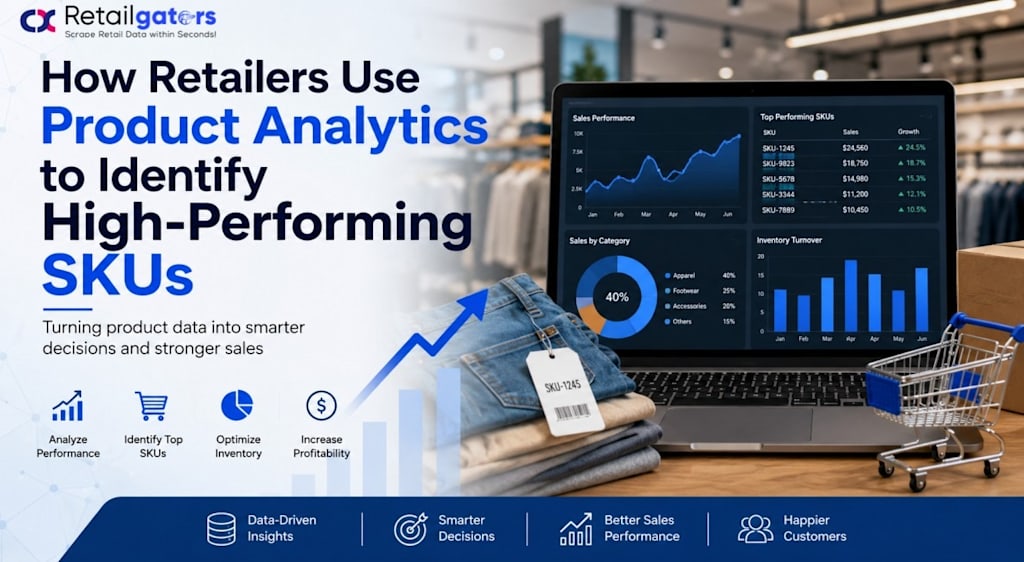
Retail businesses generate massive amounts of product data every day. From customer purchases and inventory movement to pricing trends and product reviews, every interaction creates valuable insights. However, the real challenge is not collecting data—it is understanding which products truly drive growth and profitability.
This is where product analytics becomes essential.
Retailers today rely on product analytics to identify high-performing SKUs, optimize pricing strategies, improve inventory management, and understand customer buying behavior. Instead of making decisions based on assumptions, businesses now use data-driven insights to determine which products deserve more visibility, investment, and marketing support.
In highly competitive retail markets, identifying top-performing SKUs can directly impact revenue growth, operational efficiency, and customer satisfaction.
What Are High-Performing SKUs?
A SKU (Stock Keeping Unit) is a unique identifier assigned to a product for tracking inventory and sales performance. Retailers may manage thousands or even millions of SKUs across categories, brands, sizes, colors, and regions.
However, not every SKU contributes equally to business success.
High-performing SKUs are products that consistently generate strong sales, healthy profit margins, repeat purchases, or high customer engagement. These products often become key revenue drivers for retailers.
Some common characteristics of high-performing SKUs include:
- Strong and consistent sales volume
- Higher conversion rates
- Better customer ratings and reviews
- Faster inventory turnover
- Lower return rates
- Stable demand across seasons
- Better profit margins
Identifying these products early helps retailers focus resources where they create the most value.
Why Product Analytics Matters in Retail
Modern retail operations involve far more complexity than traditional inventory tracking. Consumer preferences change rapidly, competitors adjust prices frequently, and seasonal demand can shift overnight.
Product analytics helps retailers make sense of this changing environment by transforming raw retail data into actionable insights.
Retailers use product analytics to:
- Identify top-selling products
- Detect declining product performance
- Monitor customer demand trends
- Improve assortment planning
- Reduce excess inventory
- Optimize promotions and discounts
- Improve product placement strategies
Without product analytics, retailers risk overstocking slow-moving items while missing opportunities with high-demand products.
Key Metrics Retailers Use to Evaluate SKU Performance
Retailers do not rely on a single metric to identify successful SKUs. Instead, they analyze multiple performance indicators together to understand product behavior accurately.
Sales Velocity
Sales velocity measures how quickly products are sold within a specific period. Products with high sales velocity often indicate strong customer demand.
- Retailers use this metric to:
- Predict future demand
- Improve replenishment planning
- Reduce stockout risks
- Prioritize warehouse space
Fast-moving products are usually considered high-priority SKUs for marketing and inventory investment.
Conversion Rate
A product may receive heavy traffic but still fail to generate sales. Conversion rate helps retailers understand how effectively a product page turns visitors into buyers.
- Higher conversion rates often indicate:
- Strong product-market fit
- Competitive pricing
- Effective product descriptions
- Positive customer perception
Retailers closely monitor conversion trends to identify products with strong sales potential.
Gross Margin Performance
Revenue alone does not define product success. Retailers also evaluate profitability.
A SKU with moderate sales but high margins may outperform a high-volume product with low profitability. Product analytics helps retailers balance both sales performance and margin contribution.
This approach allows businesses to maximize overall profitability instead of focusing only on revenue numbers.
Inventory Turnover Ratio
Inventory turnover measures how often stock is sold and replenished during a period.
High-performing SKUs usually maintain healthy inventory turnover rates without excessive overstocking or shortages.
Poor turnover may indicate:
- Weak demand
- Incorrect pricing
- Seasonal mismatch
- Product saturation
Retailers use turnover analytics to improve purchasing decisions and warehouse efficiency.
Customer Reviews and Ratings
Customer feedback provides valuable insights into product performance.
Products with strong ratings and positive reviews often experience:
- Higher trust among buyers
- Better conversion rates
- Increased repeat purchases
- Improved organic visibility on marketplaces
Retailers analyze review sentiment to identify which products customers genuinely value.
How Retailers Use Product Analytics in Real-Time
Retail analytics has evolved significantly in recent years. Businesses no longer wait for monthly reports to evaluate performance.
Today, many retailers use real-time product analytics dashboards to monitor SKU performance continuously.
Dynamic Pricing Optimization
Retailers track competitor pricing, demand fluctuations, and customer engagement to adjust prices dynamically.
For example:
- High-demand products may maintain premium pricing
- Slow-moving products may receive promotional discounts
- Competitive products may require pricing adjustments
Real-time analytics helps retailers stay competitive without sacrificing margins unnecessarily.
Assortment Planning
Not every product performs equally across regions or customer groups.
Retailers use product analytics to understand:
- Which SKUs perform best in specific locations
- Which products resonate with certain demographics
- Which categories show seasonal demand patterns
This information improves assortment planning and reduces inventory waste.
Demand Forecasting
Retailers analyze historical sales trends, seasonal patterns, and external market signals to forecast future demand more accurately.
Better forecasting helps businesses:
- Prevent stockouts
- Avoid overstocking
- Improve supplier planning
- Enhance customer satisfaction
Demand forecasting is especially important during peak retail seasons and promotional events.
The Role of Data in Omnichannel Retail
Modern consumers shop across multiple channels, including physical stores, ecommerce platforms, mobile apps, and online marketplaces.
Product analytics helps retailers consolidate data from these channels into a unified view.
This allows businesses to answer important questions such as:
- Which SKUs perform better online versus offline?
- Which products drive repeat purchases?
- Which items perform well during promotions?
- Which products attract first-time buyers?
By combining omnichannel insights, retailers gain a more complete understanding of product performance.
- Challenges Retailers Face Without Product Analytics
- Retailers that lack proper analytics capabilities often struggle with operational inefficiencies and missed revenue opportunities.
- Common challenges include:
- Overstocked inventory
- Poor pricing decisions
- Low-margin product focus
- Delayed demand forecasting
- Inaccurate assortment planning
- Increased inventory carrying costs
Without data-driven insights, businesses may continue investing in underperforming products while ignoring high-potential SKUs.
Final Thoughts
Retail success today depends heavily on data-driven decision-making. Product analytics enables retailers to move beyond guesswork and understand exactly which SKUs contribute most to growth, profitability, and customer satisfaction.
By tracking metrics such as sales velocity, conversion rates, inventory turnover, and customer engagement, retailers can identify high-performing products more accurately and respond quickly to changing market conditions.
As competition continues to grow across ecommerce and retail markets, businesses that leverage product analytics effectively will gain a significant advantage in pricing, inventory optimization, and customer experience.
The future of retail belongs to companies that understand their product data—and know how to turn it into smarter business decisions.
About the Creator
Enjoyed the story? Support the Creator.
Subscribe for free to receive all their stories in your feed.
Comments
There are no comments for this story
Be the first to respond and start the conversation.