
How Data Science Powers Modern Retail Intelligence Platforms
Discover how data science powers modern retail intelligence platforms with real-time insights, predictive analytics, and smarter decision-making.

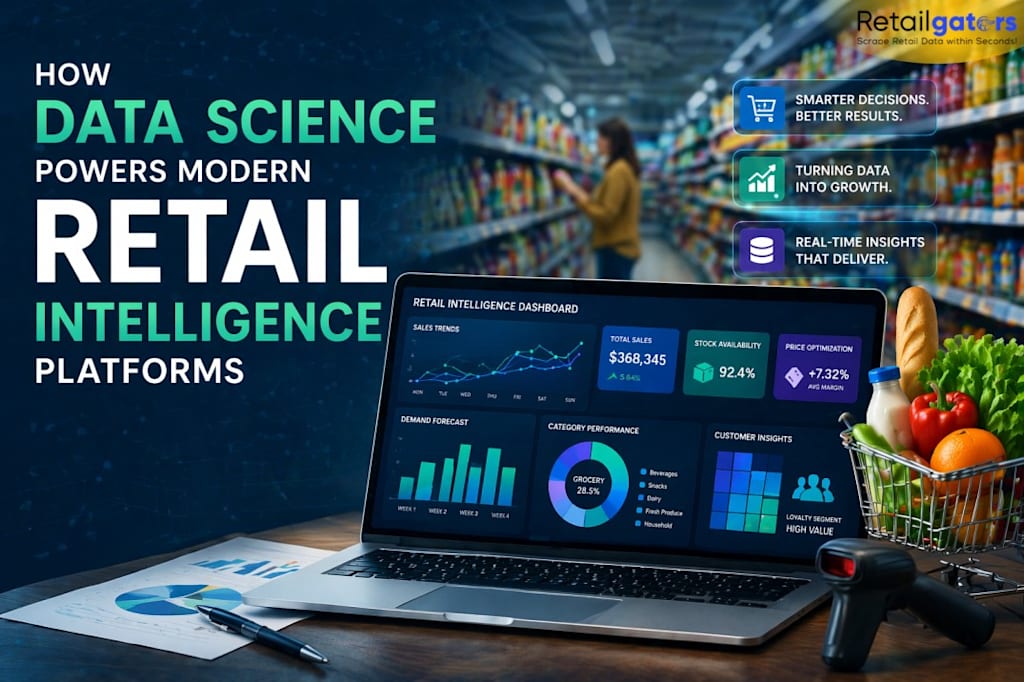
In the ever-evolving retail landscape, staying ahead of the competition requires more than just intuitive decision-making and market knowledge. Retailers today need to rely on cutting-edge technologies that provide them with actionable insights and drive business strategies. Enter data science—the backbone of modern retail intelligence platforms. By leveraging vast amounts of data, data science enables retailers to understand customer behavior, optimize supply chains, predict trends, and deliver personalized experiences. This blog explores how data science powers these platforms and why it is indispensable in today’s retail environment.
The Role of Data Science in Retail Intelligence
Retail intelligence platforms are designed to provide businesses with data-driven insights that help in decision-making. These platforms combine data analytics, machine learning, and artificial intelligence (AI) to interpret vast amounts of consumer and operational data. The objective is clear: to provide retailers with a 360-degree view of their business operations, from inventory management to customer preferences, enabling more efficient and targeted strategies.
Data science plays a pivotal role in transforming raw data into actionable insights that influence business decisions. Retailers can use this data to predict trends, identify patterns, and fine-tune their strategies. But how does data science work in modern retail intelligence platforms?
1. Predictive Analytics for Demand Forecasting
Predictive analytics is one of the most powerful tools that data science brings to the retail industry. It involves using historical data to predict future trends and behaviors. In retail, this translates into demand forecasting—predicting what products will sell and in what quantities at specific times. This information is essential for inventory management, reducing the chances of overstocking or stockouts.
By using sophisticated machine learning models, retailers can analyze past sales data, customer purchasing behavior, seasonal trends, and external factors such as economic indicators or weather patterns. Armed with these insights, retailers can plan ahead, ensuring they are stocked with the right products at the right time.
2. Customer Segmentation and Personalization
Understanding customer preferences is at the heart of every successful retail strategy. Data science enables retailers to segment their customer base into distinct groups based on purchasing behavior, demographic data, and even psychographics (attitudes, interests, and values). This customer segmentation is crucial for personalization—a strategy that has become a must in the modern retail environment.
Retail intelligence platforms powered by data science can help businesses deliver personalized offers, recommendations, and experiences to each customer segment. For example, a customer who frequently purchases organic products can be targeted with tailored promotions for similar items. Personalization not only enhances the customer experience but also boosts sales and customer loyalty.
3. Dynamic Pricing and Competitive Intelligence
Price optimization is a key challenge for retailers, and data science makes it possible to dynamically adjust prices based on market conditions. Retail intelligence platforms powered by AI use data from competitors, supply chains, and customer demand to suggest the most competitive pricing. This process, known as dynamic pricing, allows retailers to adjust prices in real-time, ensuring they remain competitive in a constantly changing market.
Through competitive intelligence, retailers can also monitor competitors' prices, promotions, and product availability. Data science algorithms aggregate this information and provide real-time insights, helping retailers react quickly to market shifts. This ensures that businesses can maintain price competitiveness without sacrificing profitability.
4. Optimizing Supply Chain Management
The supply chain is a critical part of the retail business, and any inefficiency can result in lost sales, dissatisfied customers, and increased costs. Data science helps optimize supply chain operations by offering insights into demand fluctuations, supplier performance, and logistical challenges.
For example, predictive analytics can be used to identify the most efficient routes for deliveries, taking into account factors such as traffic patterns and weather. By analyzing data from every point in the supply chain, retailers can anticipate potential disruptions and make proactive adjustments, reducing the risk of stockouts or delays.
5. Enhancing the In-Store Experience with AI
Data science isn’t only limited to online retail. In-store experiences can be enhanced by leveraging AI-powered tools such as computer vision and natural language processing (NLP). For instance, computer vision can analyze foot traffic patterns in physical stores, helping retailers understand which areas attract the most customers. This can inform decisions on product placements, promotional displays, and store layouts.
Moreover, AI-powered chatbots and virtual assistants, driven by NLP, can help customers find products, answer questions, and even offer personalized recommendations in real-time. By enhancing the in-store experience, data science helps increase customer engagement and satisfaction, driving foot traffic and sales.
The Key Technologies Behind Data-Driven Retail Intelligence
The retail intelligence platforms of today are powered by various technologies, each contributing to the processing and interpretation of data. Here’s a closer look at the key technologies that enable data science in retail:
1. Big Data
Big data refers to the vast volume of data generated by online transactions, social media interactions, inventory systems, customer feedback, and more. The ability to capture and analyze this data in real-time is essential for retail intelligence. Big data technologies, such as Hadoop and Spark, allow retailers to process and store enormous datasets efficiently, enabling faster insights.
2. Machine Learning
Machine learning is a subset of AI that enables systems to learn from data and improve their predictions over time without human intervention. In retail, machine learning algorithms are used for everything from demand forecasting and personalization to fraud detection and price optimization. These algorithms evolve with each dataset, making them more accurate and reliable as they gain more experience.
3. Natural Language Processing (NLP)
Natural language processing allows machines to understand, interpret, and generate human language. In retail, NLP is used in customer service applications, such as chatbots, to interpret customer queries and respond intelligently. It’s also used for sentiment analysis on social media and product reviews, helping retailers understand customer opinions and trends.
4. Internet of Things (IoT)
The Internet of Things (IoT) connects everyday objects to the internet, allowing them to collect and exchange data. In retail, IoT devices such as smart shelves, inventory trackers, and digital price tags provide real-time data on stock levels, product performance, and customer interaction. This data is then used to improve decision-making across the supply chain and customer experience.
The Future of Retail Intelligence Powered by Data Science
As technology continues to advance, the future of retail intelligence looks even more promising. The combination of 5G connectivity, edge computing, and quantum computing will further enhance the ability to process vast amounts of data in real-time. Retailers will be able to make even more informed decisions, anticipate customer needs with greater accuracy, and deliver hyper-personalized experiences at an unprecedented scale.
Moreover, the rise of augmented reality (AR) and virtual reality (VR) will offer new opportunities for retailers to engage with customers in innovative ways, while blockchain technology will enhance data transparency and security.
Retailers who embrace these advancements and continue to invest in data science will remain at the forefront of innovation, positioning themselves to meet the ever-changing demands of the modern consumer.
Conclusion
Data science is transforming the retail industry by enabling businesses to harness the power of data for better decision-making. From predictive analytics and customer segmentation to dynamic pricing and supply chain optimization, the applications of data science are vast and impactful. Retail intelligence platforms powered by data science are not just helping businesses optimize their operations; they are also shaping the future of retail.
In a world where consumer expectations are constantly evolving, and competition is fierce, data science provides retailers with the tools they need to stay ahead. By integrating data-driven insights into every aspect of their operations, retailers can create personalized experiences, optimize pricing, and streamline their supply chains—ultimately driving growth and profitability in the digital age.
About the Creator
Enjoyed the story? Support the Creator.
Subscribe for free to receive all their stories in your feed.
Comments
There are no comments for this story
Be the first to respond and start the conversation.