
Honoring Black Inventors everywhere.
Amazing Black People we never hear about.
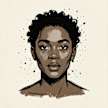


Honoring Black Inventors
I am just as surprised as some readers may be at discovering the myriad of everyday inventions we take for granted, never knowing how they came to be. I am sharing some of these ideas by amazing people we never hear about. Let's begin with some of these smart Black women.
First Home Security System
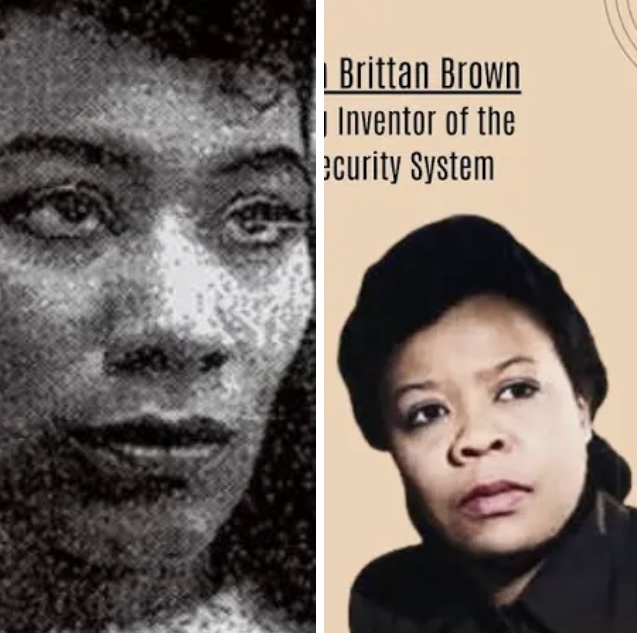
Marie Van Brittan Brown invented the first home security system in the 1960s. Working as a nurse and living in a high-crime neighborhood. With the help of her husband, electronics technician Albert Brown, she developed and invented the device...a system to give her a view of her front door.
Her security system consisted of a sliding camera, television monitors, two-way microphones, and four peepholes, according to the Massachusetts Institute of Technology.
The sliding camera used the peepholes to capture images of people at different heights, while the microphone allowed Brown to speak with the person outside. She also installed an emergency button that would alert police or security if pressed.
MIT also notes that Brown's invention marked the first time closed-circuit television, or CCTV, was used in a security system.
The illusion transmitter, which NASA later used in its satellite technology
Valerie Thomas was behind the illusion transmitter, and NASA later used it in its satellite technology
One of only two women in her class at Morgan State University to major in physics. Thomas eventually worked as a data and mathematical analyst at NASA, where she managed the development of image-processing systems for the "Landsat" satellite.
After seeing a light illusion at an exhibit in 1976, Thomas was inspired to create the illusion transmitter, which uses concave mirrors to produce optical illusion images (MIT). She patented her invention in 1980.
Her trailblazing scientific technology led to the development of 3-D imaging. However, success didn't come without hard work: In a 2021 essay for Oprah Daily, Thomas revealed she had only seen computers in movies when she began working at NASA. She retired from the program in 1995.
The first modern ironing board in 1892.
Sarah Boone was a dressmaker. According to the Museum in Connecticut, Boone was born enslaved in North Carolina in 1832. She and her husband had eight children when she moved to New Haven, Connecticut, in the 1850s.
While working as a dressmaker in 1892 when she came up with the idea for a better ironing board with collapsible legs.
"My improved device is not only adapted for pressing the inside and outside seams of the sleeves of ladies waists and mens' coats, but will be found particularly convenient, also, in pressing curved waist-seams wherever they occur," her patent application stated, per the museum.
Mary Beatrice Davidson Kenner's sanitary belt was the predecessor to the disposable feminine pad.
Despite the challenges of racism in her field, Kenner continued to innovate. According to MIT, she also created a walker with an attachable pocket and tray, a back washer for the shower, and a modernized toilet paper dispenser.
Inventing downtown Los Angeles
Bridget "Biddy" Mason invested her money and effort into developing the area that would become downtown Los Angeles.
In the mid-1800s, Mason was forced to walk more than 2,000 miles with her enslavers to California while caring for her three young children.
She won her and her family's freedom in a "landmark court case", then went on to become one of the first Black landowners - and one of the richest women in Los Angeles.
With a fortune equal to $7.5 million in today's money, she became a renowned philanthropist in the area. She co-founded and financed the First African Methodist Episcopal Church, which is now the oldest church founded by African Americans in Los Angeles.
She also established a daycare for working parents and opened an account where families who lost their homes to floods could get supplies.
The Ophthalmologist Laserphaco probe
Dr. Patricia Bath was an ophthalmologist who invented a cutting-edge device for cataract surgery.
Bath's Laserphaco probe and technique led to her posthumous induction to the National Inventors Hall of Fame in 2021. She and engineer Marian Croak became the first two Black women to be inducted into the organization.
The doctor was also the first Black female physician to receive a medical patent, the first Black woman to complete a residency in ophthalmology at New York University, and the first woman to chair an ophthalmology residency program in the US, says NPR.
She also received five patents throughout her career, all while advocating for racial minorities in the public health sector.
The automatic double dutch machine
Tahira Reid Smith invented the automatic double dutch machine as an undergraduate engineering student at the Rensselaer Polytechnic Institute. Smith is currently a professor of mechanical engineering and engineering design at Penn State University.
8. Fiber Optic Cables
Dr. Shirley Jackson was the first Black woman to earn a doctorate in particle physics. As such, several of her inventions act as the foundation on which many modern technologies are built.
Starting her career at the Bell Telephone Company, Dr. Jackson helped to invent touch-tone dialing and call waiting. However, her most striking invention is fiber-optic cables, which form the basis for linking global communication systems.
9.The Fold-Out Bed
Sarah E. Goode was an enslaved woman who gained her freedom at the end of the Civil War. Once free, she opened a furniture store with her carpenter husband.
While building furniture, Goode noticed that some of her neighbors were having trouble fitting beds into their small apartments. That led her to invent fold-out beds that were known as cabinet beds at the time. She also became only the second Black woman to receive a U.S. patent for her invention.
Synthetic Bristle Brushes
Lydia D. Newman made significant strides in Black hair care in the 1890s. At that time, most hairbrushes were made with animal hairs and were too soft to effectively manipulate thicker hair.
These brushes were also harder to clean. As a result, Newman invented a synthetic bristle brush to use with Black women’s hair and received a patent for it.
HVAC Systems
Alice H. Parker was born in New Jersey, but also lived in Washington, D.C. The cold weather in these states led her to wonder if there was a way to efficiently heat an entire home that didn’t involve a wood-burning fireplace. This desire resulted in an invention that became the precursor of modern HVAC systems.
The Feeding Tube
Bessie Blount Griffin was working as a physical therapist at the end of World War II. When working with soldiers who were amputees, she noted that many of them had challenges with eating.
To help with that, she invented an electric self-feeding tube that released a small portion of food when the patient bit down. This helped with their independence and nutrition.
The Clothes Wringer
Ellen F. Englin made the process of washing clothes more manageable when she created the clothes wringer in 1888. The device was designed to remove excess water from clothes after they had been washed.
The Signal Chair
Miriam Elizabeth Benjamin wanted to make it easier for people to get the attention of others while at the doctor’s, at the movie theater, in a meeting with government officials, or at a hotel. This led to the invention of the signal chair that is used most often on airplanes to call flight attendants.
The interesting thing is that this is far from an exhaustive list of the contributions that Black women have made. Black women have made even more contributions to technology, medicine, beauty, and more. They also continue to excel and make their mark in different industries.
Men In Transportation
A highlight of African American men who helped to improve transportation systems through their creative ingenuity.
Andrew Jackson Beard
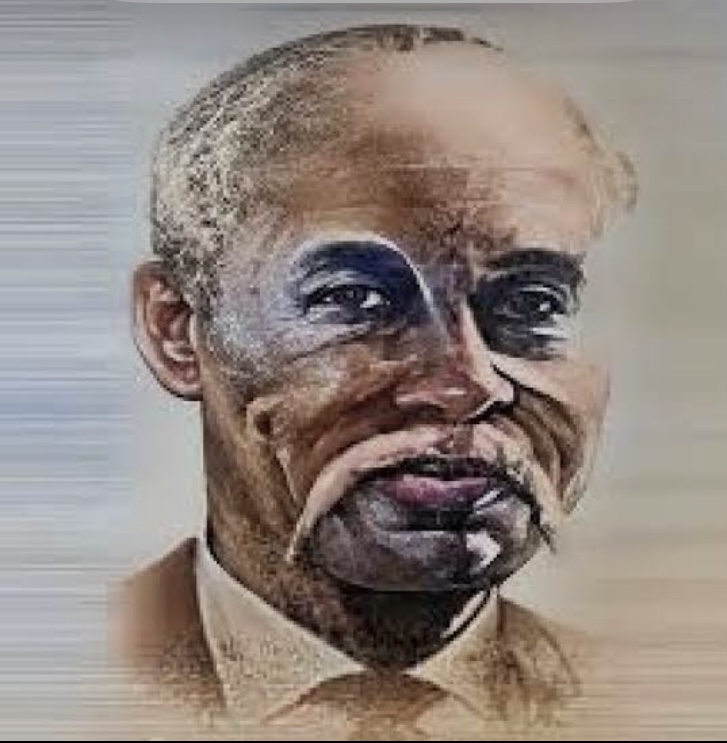
Andrew Beard was a former slave, a farmer, carpenter, blacksmith, railroad worker, businessman and inventor. While working at a rail yard in Alabama, he became familiar with one of the most dangerous occupational tasks in the world at that time, joining railroad cars together. A railroad worker would stand between the two railroad cars to guide the linking pieces into place and insert a metal pin that held the pieces together. Often, the heavy cars would crush the middleman before he could drop the pin into place. On November 23, 1897, Beard eliminated the need for a worker to stand dangerously between the two train cars by designing an improvement to the railroad car couplers. Thanks to Beard’s design, the coupling could be now performed by two horizontal jaws, which automatically locked together upon joining when they bumped together. Beard's improved and safer to use invention was the first automatic coupler widely used in the United States and easily saved many lives and limbs.
Elijah McCoy
Elijah McCoy invented the automatic lubricated mechanism that oiled the steam engines of trains. His invention was a valve mechanism that could supply oil drop by drop to the moving parts of machinery. His invention was of such high quality, that buyers during that time sought his mechanism over all others, dubbing him “The Real McCoy.” When it was discovered that McCoy was Black, many refused to buy his devised lubricant mechanism, but his innovative creation was undeniable and from 1872 to 1915 most locomotives in the United States and in many foreign lands used McCoy’s invention.
Garrett Morgan
Garret Morgan was a versatile inventor who, in 1923, witnessed a gruesome accident between a horse-drawn carriage and an automobile. Feeling something had to be done, Morgan devised a signpost that would regulate traffic coming from all four directions of an intersection. By creating a rectangular block stop and rotating arm he invented the traffic signal. When the blocks were at half-mast this alerted everyone approaching the intersection to proceed with caution. Morgan also proposed having the sign electrically lit so they should be visible at night as well as during the day.
Granville T. Woods
In 1887, Granville T. Wood’s invented a Telegraph Induction Relay System that saved lives and prevented the almost routine train wrecks that would occur in those days. His multiplex telegraph allowed messages to be sent to and from moving trains thus enabling train conductors and engineers to report hazards on tracks ahead, but more importantly to avoid collisions. Woods also solved the electrical problem of controlling the speed at which mechanical parts moved by the amount of electrical current.
Granville T. Woods whose ideas and inventions did much to change and modernize transportation made it possible to go from inefficient, costly steam engine-driven trains to cleaner, cheaper, and more effective trains run by electricity. In 1888, Woods set up an overhead conducting system for the electric railway. In this system, a pole from a train or trolley would draw the electricity needed to run the locomotive's motor from a power line running overhead. This would later become a very familiar sight in many large cities across the nation.
Granville was called to New York in the 1890s to begin work on the first subway. The work was completed in 1904 and his design of an electrical third rail (subway) and air brake system revolutionized the technology of rail transportation.
These are just a few of the brilliant and innovative Black pioneers who opened a passageway of progress to the twentieth century in transportation.
During World War II, the Board of Transportation began hiring a large number of provisional employees. Black women were employed to drive buses and trolleys. Some worked as ticket agents, and their efforts kept the transit system operation running smoothly.
We also pay tribute to those who operated routinely at their work sites as porters, token booth clerks, conductors, carpenters, mechanics, and bus and train operators. The African American presence and contributions to transportation extend throughout the history of the transportation industry.
The memorable list continues...
George Washington Carver...Agriculture
Otis Frank Boykin... inventor and engineer
Alexander Miles...Elevator safety
Charles R. Drew - Blood Bank innovator
Lewis Howard Latimer - inventor, engineer, and patent draftsman whose work revolutionized electric lighting.
Frederick McKinley Jones - Refrigeration systems
Dr. Philip Emeagwali, who has been called the "Bill Gates of Africa,". emulating the bees' honeycomb construction, Emeagwali used 65,000 processors to invent the world's fastest computer, which performs computations at 3.1 billion calculations per second.
Benjamin Banneker - self-taught African American mathematician.
Jan Ernst Matzeliger - Surinamese-American inventor whose automated lasting machine brought significant change to the manufacturing of shoes. The Consolidated Lasting Machine Company was founded to make his shoe-making devices.
Ugh...I am exhausted.... Did you know that some of these guys are on postage stamps?
There are so many more...but we will honor them as we discover them.
.......................
FacebookTwitterLinkedInEmail
The Black Doctor site.
Black Inventors site.
Wikipedia...and all over the place.
About the Creator
Novel Allen
Existing in mist and shadow. Neutrally Abstract.
Enjoyed the story? Support the Creator.
Subscribe for free to receive all their stories in your feed. You could also become a paid subscriber, letting them know you appreciate their work.
Comments
There are no comments for this story
Be the first to respond and start the conversation.