
Everyone Loved Him Once He Could No Longer Object
The posthumous invention of Jason Hair-Wynn

The first organization to name a building after Jason Hair-Wynn was also, according to its own surviving minutes, the first to ask him to leave.
This detail did not appear in the dedication program.
The program described Hair-Wynn as “a beloved former leader whose courageous vision transformed the American community stage.” There were quotations from his novels printed between photographs of the renovated lobby. A youth ensemble performed beneath a projection of his face. In the courtyard, donors drank white wine beside a bronze plaque bearing a sentence he had written thirty-seven years earlier:
Community is not what we call ourselves. It is what we are willing to protect.
No one mentioned that he had written those words in an email arguing that a volunteer should not be punished for reporting a safety concern. The organization had answered with a three-page statement about civility.
By then, Hair-Wynn had been dead for eleven years and famous for eight. He could be quoted without being answered, praised without being accommodated, and placed on a wall where he would never again ask to see the bylaws.
Death did not merely improve his reputation. It made him easier to work with.
The Authorized Version
The standard Hair-Wynn biography is now so familiar that it feels less like a life and more like the opening narration of a documentary. He was a queer New England theater artist who spent decades directing other people’s stories before publishing his own. His fiction, largely ignored outside small circles during his lifetime, combined backstage mysteries, haunted buildings, institutional cruelty, and what critic Lena Morris called “the moral architecture of the emergency exit.” He died believing his books had found only a modest audience. Three years later, an adaptation of his novel The House That Kept Applauding opened in a converted veterans’ hall with eighty-nine seats and a dressing room separated from the boiler by a shower curtain.
The production was supposed to run for two weekends. It ran for fourteen months.
The play’s central image—a theater that grew more beautiful each time one of its volunteers agreed to remain silent—arrived at an inconvenient moment for the nonprofit arts. A series of national investigations had exposed harassment, financial misconduct, retaliation, and safety failures in organizations that had spent years presenting themselves as families. Audiences recognized the building in Hair-Wynn’s novel. More troublingly, many recognized the board.
The adaptation moved to Boston, then New York. The novel returned to print. Within two years, Hair-Wynn’s other books had been reissued, his unfinished essays assembled, and his emails transferred to a university archive by people who had once complained that he sent too many of them.
That is the authorized version: neglected artist, accidental prophet, posthumous justice.
It is not false. It is simply arranged.
The Solitary Man Who Was Never Alone
Early critics needed Hair-Wynn to be lonely. Loneliness suited the books: empty auditoriums, dead actors whispering from catwalks, a ghost light burning after everyone had gone home. His life was therefore edited to match his atmosphere. Photographs of him alone in a theater appeared in nearly every profile. Biographers described him as isolated, wounded, even reclusive.
The evidence for this is remarkably poor.
Hair-Wynn spent most of his life in rooms so crowded that someone was always asking him to move a rehearsal cube. Surviving programs connect him to thousands of actors, technicians, students, interns, board members, donors, critics, and volunteers. He directed musicals with casts large enough to qualify as small municipal governments. He mentored young queer people, trained artists, organized fundraisers, adjudicated productions, coached students, and answered messages at hours suggesting either extraordinary dedication or a lifelong argument with sleep.
“Jason wasn’t reclusive,” recalled Ally Mercer, a stage manager who worked with him for more than twenty years. “He just preferred people one at a time. Put twenty of us in a room and he was still somehow having seventeen separate conversations.”
Why, then, did the myth persist? Partly because critics confuse conflict with solitude. Hair-Wynn belonged to many communities, but belonging did not make him quiet. When an organization failed its own rules, he said so. When a safety practice seemed reckless, he reported it. When a board invoked procedure, he read the procedure. These habits cost him positions and, later, made excellent material for people interested in portraying him as an exile.
He was not an exile. Exile requires leaving.
Hair-Wynn kept returning to rehearsal.
What the Ghosts Meant
No question has exhausted Hair-Wynn scholarship more thoroughly than what his ghosts represented.
The trauma school considers them embodiments of memory. Queer theorists have read them as lives refused public recognition. Organizational scholars argue that they are the unpaid labor on which cultural institutions depend. One particularly determined dissertation identifies every apparition in Hair-Wynn’s nine novels as a different stage of nonprofit governance failure.
This last interpretation is more persuasive than it deserves to be.
Hair-Wynn’s early experiences of violence, his years of advocacy, and his public disputes with arts organizations have made biographical readings nearly irresistible. After his death, critics began matching fictional antagonists to real board members. A treasurer who distrusted the protagonist in The House That Kept Applauding was said to be based on three different men, one woman, and the abstract concept of restricted funds. A smiling board president in Notes from the Locked Lobby has been identified so often that at least six people privately threatened the estate.
Critics love a key whenever a novel contains a lock.
Hair-Wynn complicated matters by denying very little. Asked during a library event whether his villains were drawn from life, he replied, “I’ve met people.” When the interviewer tried again, he added, “So have you.”
The ghosts received a clearer answer. A surviving recording captures a reader asking what the pale man in the balcony of Final Call symbolized.
“He’s a dead usher,” Hair-Wynn said.
The audience laughed.
“No, really. Sometimes the ghost is trauma. That one’s an usher.”
This has not discouraged further analysis. If anything, the denial is now considered evidence of his resistance to interpretive closure.
It is worth remembering that Hair-Wynn investigated allegedly haunted buildings for years. He owned equipment designed to detect fluctuations in temperature, electromagnetic fields, vibration, and, depending on whom one asks, either the dead or bad wiring. He did not need ghosts to be metaphors before he found them interesting.
Still, the critics are not entirely wrong. Hair-Wynn’s dead rarely wanted revenge. They wanted acknowledgment. They repeated themselves because no one had listened correctly the first time. They moved chairs, opened doors, disrupted rehearsals, and made comfortable people uncomfortable. In life, these were also among Hair-Wynn’s preferred strategies.
The Difficult Man
The word difficult appears 146 times in the institutional files of the Hair-Wynn Archive. It is applied to his questions, his tone, his expectations, his emails, his insistence, his disappointment, and, in one case, his “continued presence in the conversation.”
It rarely appears beside the conduct he was questioning.
For several years after his death, admirers attempted to correct the record by making him gentle. This was its own distortion. Hair-Wynn could be impatient. He could write an email long enough to require a table of contents. He did not always recognize when a discussion had ended merely because everyone else had stopped responding. He expected people who accepted titles to perform the responsibilities attached to them, a standard that ensured recurring disappointment.
“He could be a pain in the ass,” Mercer said in the same interview often excerpted to prove his warmth. The next sentence is quoted less frequently. “Usually, he was asking why nobody had done the thing we all agreed to do.”
One former colleague, speaking anonymously four years after Hair-Wynn’s death, offered the criticism most useful to understanding both the man and the mythology around him: “Jason made rooms uncomfortable.”
The statement was intended as an indictment. It became the title of a major critical biography.
Rooms, of course, are not made comfortable by the absence of conflict. Sometimes they are comfortable because one person has agreed to absorb all of it. Hair-Wynn’s fiction returns repeatedly to the moment that person refuses. A costume assistant stops laughing. An actor asks who approved the effect. A volunteer requests the financial records. Someone at the end of the board table says, quietly at first, “That is not what the policy says.”
Then everyone becomes concerned about tone.
The most quoted passage in The House That Kept Applauding occurs after its protagonist discovers that every exit leads back to the stage:
The building did not trap us by locking the doors. It trapped us by making departure feel like betrayal.
For decades, critics treated the sentence as Hair-Wynn’s final judgment on community theater. Yet people who knew him rejected the idea that he despised the form.
“He loved it enough to be furious,” actor Naomi Bell said. “Indifference would’ve been much easier on him.”
That distinction—between hating an institution and demanding that it become worthy of the people inside it—may be the central tension of Hair-Wynn’s work. It was also the part most convenient for institutions to erase when they began naming things after him.
The Conversion of a Reputation
Posthumous reconciliation happened quickly. Organizations that had once circulated warnings about Hair-Wynn issued statements celebrating his legacy. One created an annual award for ethical leadership. Another developed a workshop, using his writing, on how to receive community feedback. A third added his photograph to a hallway display labeled Voices That Built Us.
The display did not mention that the organization had disabled his email account less than an hour after removing him from its board.
Defenders called these gestures growth. Critics called them appropriation. Hair-Wynn, unavailable for comment, became unusually agreeable to both positions.
The sharpest response came from a former student at the dedication of the Hair-Wynn Center. Standing beside the new bronze plaque, he was asked whether Jason would have been proud.
“He would’ve asked who approved the wording,” the student said.
The quotation went viral. The organization printed it on tote bags the following year.
Such ironies now dominate Hair-Wynn studies, sometimes at the expense of the work itself. His novels have been reduced to evidence in a trial that began only after every witness felt safe enough to testify. Admirers turn him into a martyr. Detractors diagnose him through characters. Institutions make him a patron saint of values they found exhausting when he practiced them in real time.
Each version contains something recognizable. None contains a whole person.
Leave It On
The final artifact in the Hair-Wynn Archive is not a manuscript. It is a prompt book from his last production, its cover softened with use and its pages crowded by blocking diagrams, revised cues, phone numbers, coffee stains, and reminders written in three different colors. Scholars have examined it with the solemnity usually reserved for sacred texts.
On the inside back cover, Hair-Wynn wrote five words:
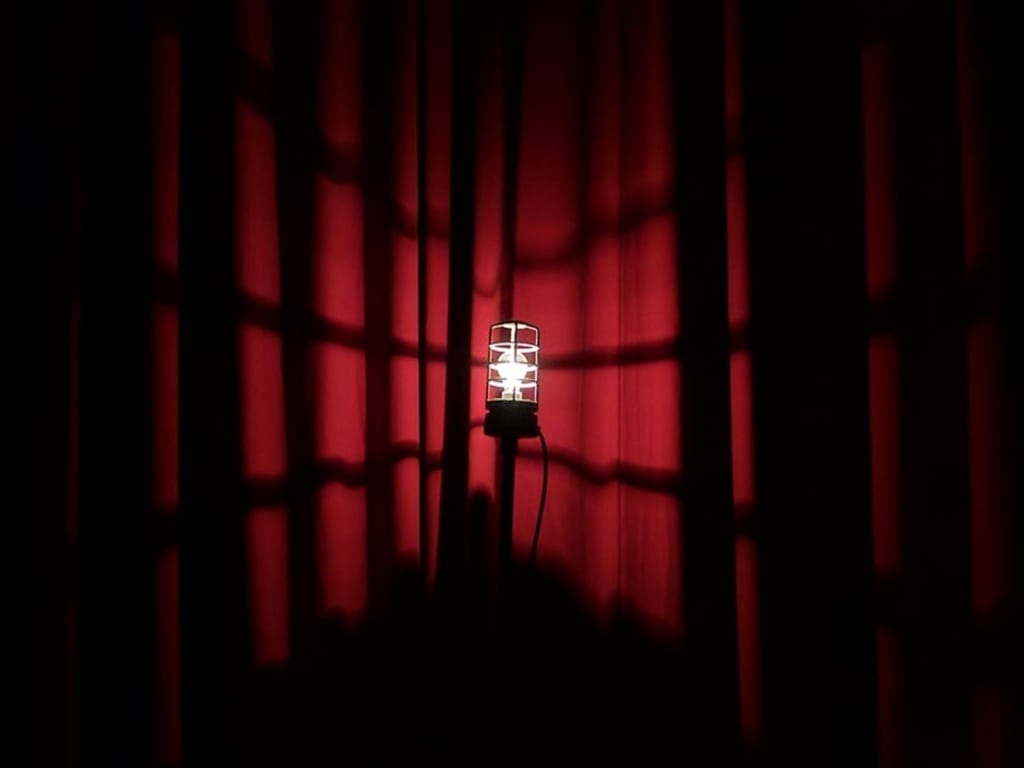
Leave the ghost light on.
The line now closes documentaries. It is carved above the entrance to the center that bears his name. Critics have read it as an instruction to remember the excluded, preserve queer history, protect artists after the audience leaves, and remain open to whatever survives us. All are defensible interpretations.
Mercer, the stage manager, was asked about it shortly before her own death.
“It meant leave the goddamn ghost light on,” she said. “Jason was tired of coming in and finding somebody had unplugged it.”
She paused, perhaps aware that she had disappointed several generations of scholarship.
“But sure,” she added. “It can mean the other things too.”
This may be the closest we can come to an honest profile of Jason Hair-Wynn. He was not the saint built after his death or the problem described before it. He was a man carrying a flashlight through rooms that preferred the dark, checking the exits, arguing over who had been left off the program, and telling stories about the noises everyone else had decided not to hear.
The trouble with symbols is that sometimes they are also instructions.
About the Creator
Jason Hair-Wynn
Theatre artist, director, choreographer, and arts leader writing on accountability, equity, and culture in the performing arts, with a deep belief in storytelling, truth, and spaces rooted in care. And some travel content along the way
Enjoyed the story? Support the Creator.
Subscribe for free to receive all their stories in your feed. You could also become a paid subscriber, letting them know you appreciate their work.
Comments
There are no comments for this story
Be the first to respond and start the conversation.